


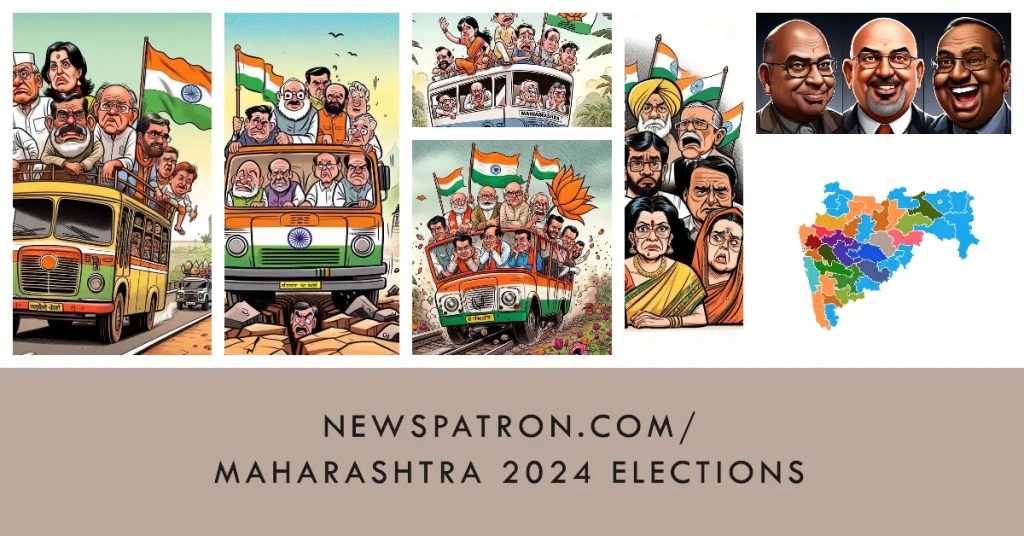

Lok Sabha Election Result Analysis 2024: The Maharashtra Scenario
editor@newspatron.com
Introduction: A Political Rollercoaster
The Lok Sabha Election of 2024 was a true test of strategy, alliances, and public sentiment. Maharashtra, with its pivotal role in Indian politics, emerged as a battleground state with surprising outcomes. This analysis delves into the factors that shaped the election results in Maharashtra, offering insights into the electorate’s mindset and the political manoeuvres that played out. If you haven’t so far, feel free to go through the five-part blog post series.
Read previous posts.
Lok Sabha Election 2024 Result Analysis
Part 1– [Lok Sabha Elections Result Analysis – 1: A New Political Era]
Part 2 – [Analysing the 2024 Lok Sabha Election Results]
Part 3 [Unravelling Lok Sabha Election Dynamics 2024]
Part 4 [Elections 2024 Insight]
Recommended Product
Amazon Renewed — Best Deals of the Day
🛒 View on Amazon →As an Amazon Associate, we earn from qualifying purchases. Price and availability may vary.
Part 5 [Lok Sabha Elections: The Verdict]
[bbp-single-topic id=5955]
Read About Lok Sabha – The Lower House of Indian Parliament
[Read about Lok Sabha Elections: India’s Democratic Pulse]
[Read about Lok Sabha Elections: A History of Indian Politics]
Read articles about Politics
Read the BJP Manifesto of 2024: A Vision for India’s Progress [Download]
Download the Congress Manifesto of 2024 [Download]
The Power Trio: UP, Maharashtra, and Bihar
Traditionally, the party dominating Uttar Pradesh has often led the government at the center. Maharashtra, too, contributes significantly to the party tally, but in this election, we saw some unexpected twists. Let’s unpack the key takeaways from Maharashtra’s post-election landscape.
Alliance Dynamics: NCP and BJP’s Half-Hearted Union
The NCP-BJP alliance seemed to lack legitimacy in the public eye.

[Read about the Maratha Andolan – Maratha Reservation: Fight for Equality in India]
Leadership and Anti-Incumbency: A Silent Wave
Maharashtra’s election in-charge needs a revamp. The silent anti-incumbency wave suggests that by-elections and municipal elections could have served as early indicators for the BJP, potentially preventing a larger impact on the Lok Sabha Elections.
The Numbers Game: BJP’s Unexpected Dip
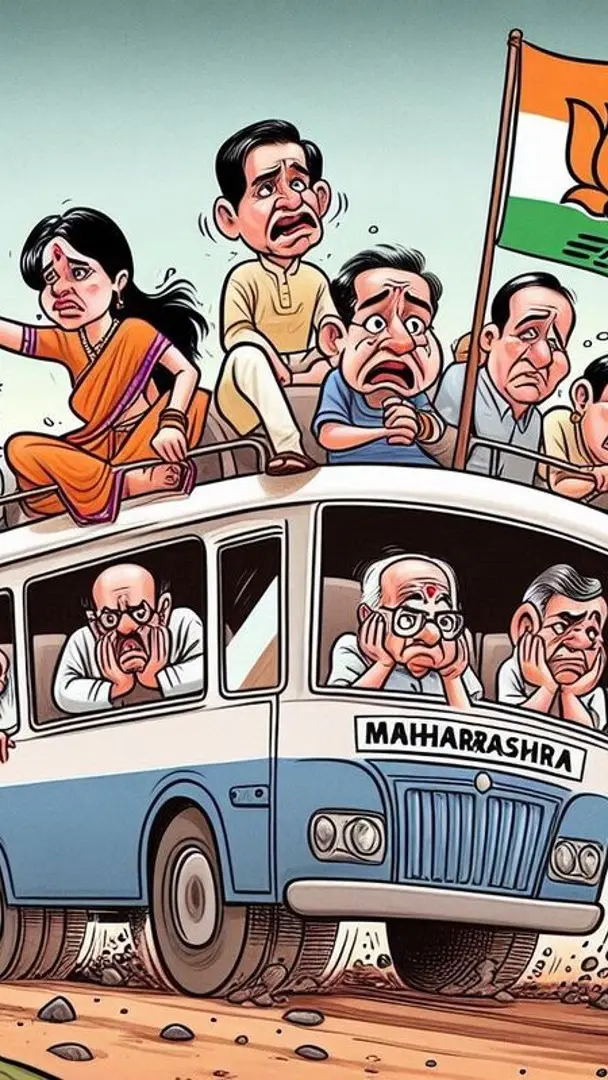
From a commanding 23 seats down to 9, the BJP’s loss of 14 seats in Maharashtra was a shocker.
[Read about Water Scarcity Chokes India’s Cities: The Crisis Is Now]
The Positives Amidst the Chaos
Eknath Shinde’s breakaway faction of Shiv Sena contested 15 seats and secured 7, showcasing a strong performance. Meanwhile, Ajit Pawar’s NCP was reduced to a single seat, reflecting the electorate’s disapproval of unnatural alliances.
Modi’s Campaign: Missing the Pulse of Maharashtra
Despite BJP’s claims, it became clear that Prime Minister Modi’s campaign failed to resonate with the Maharashtrian electorate.


The Shiv Sena Split: A Game of Sympathy
The breakup of the Shiv Sena-BJP alliance led to a sense of betrayal among voters. Uddhav Thackeray and Sharad Pawar garnered individual sympathy, which BJP struggled to counter. The loss of the party symbol and name to breakaway factions only intensified public support for the original leaders.
The Legal Expertise Void
The absence of a legal expert like the late Arun Jaitley was felt in the BJP’s handling of the situation in Maharashtra. The finesse with which Article 370 was abrogated is a testament to Jaitley’s expertise, something that was missing in the recent political turmoil.
The Alliance Conundrum
Voters generally disapprove of elected leaders switching sides, especially to diametrically opposite parties. Sharad Pawar’s efforts to secure 8 out of 10 seats without the original NCP name and symbol demonstrate his political acumen, contrasting with Ajit Pawar’s unsuccessful bid despite having the party name and symbol.
The Maratha Andolan: A Missed Opportunity for BJP
The Maratha Andolan aimed to alienate Maratha and OBC voters from the BJP, and it succeeded. The BJP’s inability to address this movement reflects in the election results.
Communication Breakdown: BJP’s Missed Message
After a decade in power, the BJP needed to rebrand or introduce fresh initiatives to connect with voters. The new BJP-Shiv Sena coalition, despite its strength, failed to communicate its achievements effectively. Confusion over Eknath Shinde’s appointment as Chief Minister and the perception of inconsistent decision-making hurt the BJP’s standing with voters.
The Declining Support Base
The BJP’s support base in Maharashtra has been waning over the last three terms. The significant drop in Lok Sabha seats this time around is indicative of this trend. The party’s performance in Maharashtra has historically been a bellwether for its ability to secure a majority at the centre.
The Road Ahead: BJP’s Organizational Overhaul
The BJP must undertake a comprehensive restructuring of its Maharashtra organization. The upcoming municipal and state assembly elections present an opportunity for renewal, but it may take up to a decade for the BJP to re-establish its state unit fully.
Modi’s Commitment to Maharashtra
Prime Minister Modi’s mention of adopting Chatrapati Shivaji Maharaj’s management style signals his commitment to Maharashtra’s future. However, the charisma that once worked wonders for Modi may no longer be enough to sway the state’s electorate.
The Long Game: Rebuilding Trust
The BJP’s top brass needs to address the functioning of the ED and CBI, as their actions have instilled fear among investors and affected the vote in various segments. Timely elections and addressing the Asmita factor on a regional basis—caste, region, and religious practice—could have mitigated some of the damage.
Conclusion: Lok Sabha Election Result Analysis Maharashtra 2024
A Lesson in Humility and Adaptation
The BJP’s experience in Maharashtra serves as a lesson that popularity with the electorate takes decades to build and can be quickly eroded. The party must learn from its failures and implement corrective measures swiftly. Like the Congress, which took decades to revive itself, the BJP must start by rebuilding from the grassroots level. Political leaders must recognize that the electorate’s support is not unconditional, and that governance must reflect the people’s will.
Moving Forward: Embracing Cooperative Federalism
Leaders like Shivraj Singh Chauhan {Mamaji} should be given critical portfolios and independence to operate.
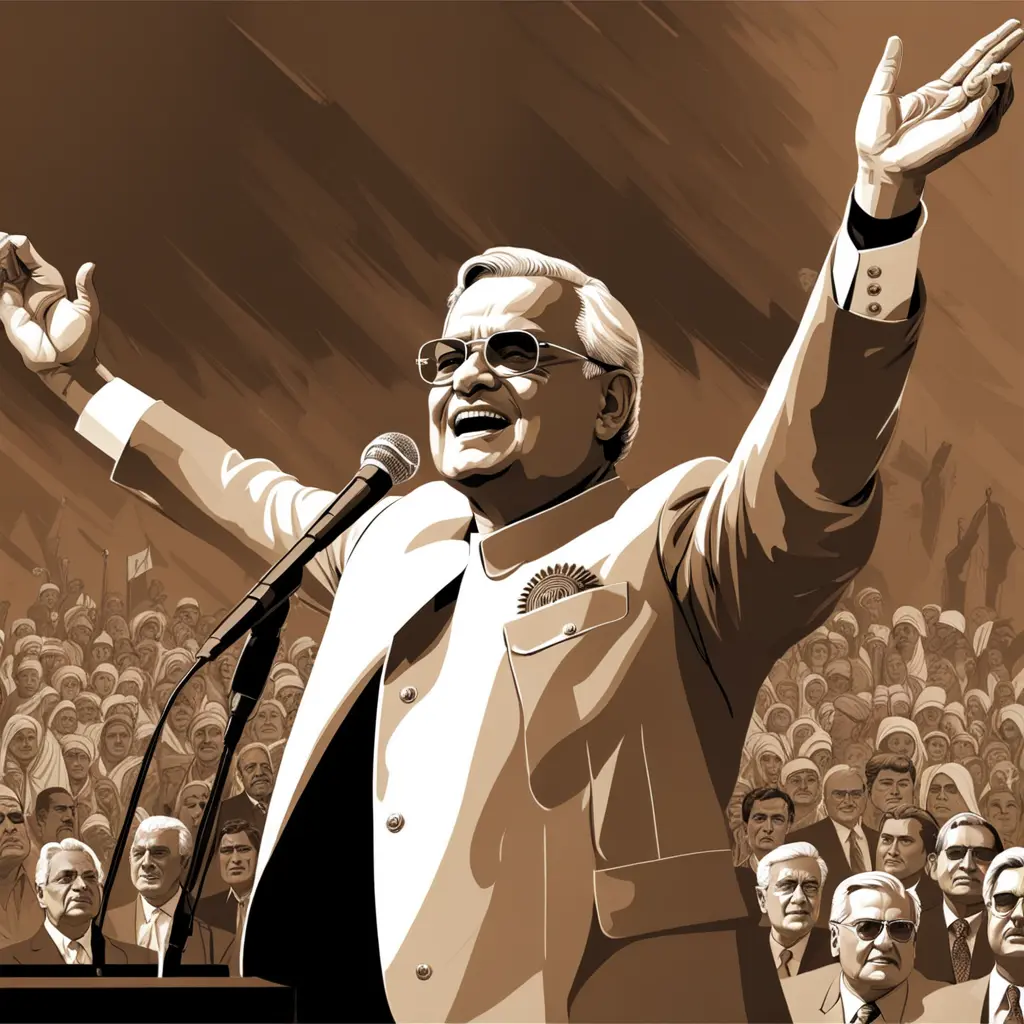
[Read about Beyond Vajpayee: Main Atal Hoon Explores Legacy & Future]
Final Thoughts: Strengthening the Fabric of Indian Democracy
As the BJP looks beyond Modi 3.0, it must adapt a leadership style that fosters cooperation and respects the voices of states and their leaders. The party’s future success will depend on its ability to work harmoniously with diverse voices and to rectify its image concerning encouraging breakaway groups.
This comprehensive analysis aims to provide a clear picture of the political dynamics at play in Maharashtra during the Lok Sabha Election of 2024. By understanding the electorate’s preferences and the strategic decisions made by political parties, we can gain deeper insights into the democratic process in India.
