


editor@newspatron.com
Lok Sabha elections in India are not merely a political event; they represent the strength of democracy in a country of immense scale and diversity. The act of hundreds of millions of citizens participating in Lok Sabha elections serves as a beacon of hope in a world where democratic values are often under threat. These elections also highlight the intricacies of governance, the burden of history, and the aspirations and concerns of a nation trying to balance its ambitions with the everyday realities of its people.
Lok Sabha Elections: The Pulse of India’s Democracy
The Lok Sabha, or the ‘House of the People’, is the lower house of India’s two-tier parliament. As the primary legislative body of the world’s largest democracy, it is responsible for enacting laws, approving the national budget, and holding the executive branch of government accountable. Lok Sabha elections in India are a testament to the resilience and magnitude of democracy. With hundreds of millions of eligible voters, these elections often set records for the largest democratic exercises in human history. They serve as a reminder that the voice of the people, regardless of a nation’s size or diversity, can and should play a central role in shaping its future. To accommodate India’s vast electorate, Lok Sabha elections are conducted in phases across the country. In the 2019 Lok Sabha elections, over 900 million people were eligible to vote, making it a logistical marvel on an unprecedented scale. [Read an article on how to Get Your Voter Card: A Simple Guide]
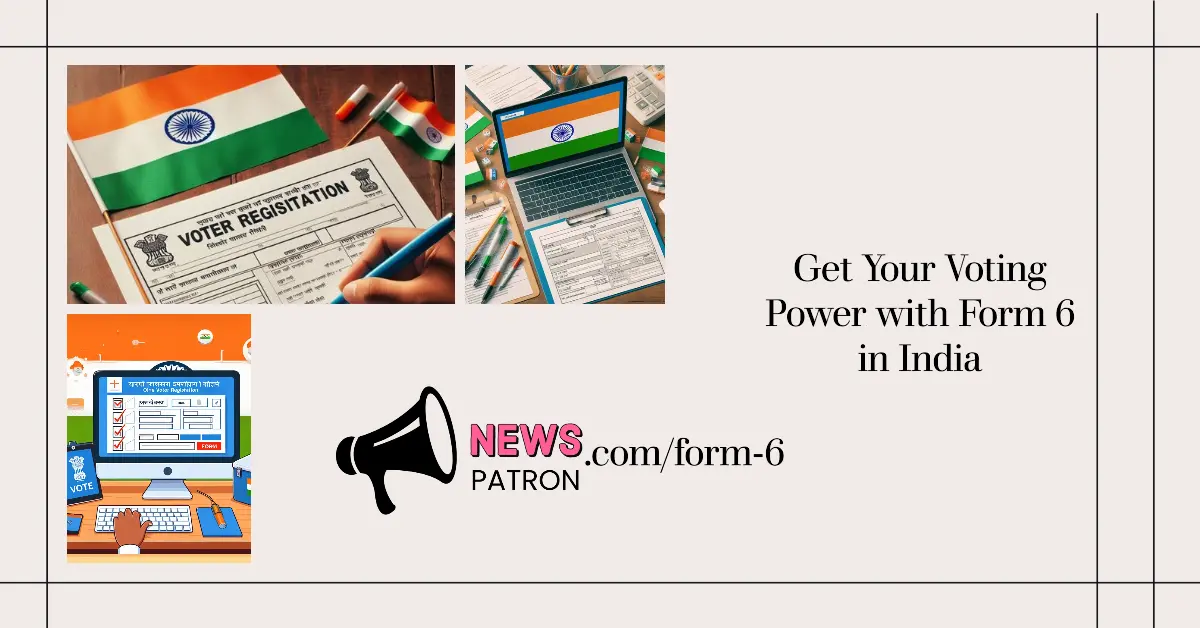
[Unlock Your Voting Power by filling Form 6 offline or online in India]
The Election Trail: Pledges, Alliances, and Tactics
India’s political landscape is vibrant and diverse, featuring a mix of national parties like the Bharatiya Janata Party (BJP), with its Hindu nationalist platform, and the Indian National Congress (INC), a historically dominant center-left party. Powerful regional parties, such as the All India Trinamool Congress (TMC) in West Bengal and the Dravida Munnetra Kazhagam (DMK) in Tamil Nadu, also play a crucial role in determining national outcomes. Given the diversity of India’s electorate, a single party rarely wins a clear majority of seats in the Lok Sabha. This leads to a post-election scramble where parties form coalitions sometimes based on shared ideology, sometimes based on pure necessity, and occasionally based on who managed to annoy their rivals the least during the campaign. Economic prosperity, an end to corruption, and social programs designed to uplift every sector of society – the scale of campaign promises often rivals the scale of India itself. As voters sift through the pledges, they must decide which promises to ring true and which are likely to fade into the din of everyday politics once the elections are over. [Read more on the Election Commission of India Website] [https://www.eci.gov.in/media-publication]
High-Stakes States: Where Votes Matter Most
In India, the concept of an ‘important state’ plays out on a grander scale.
Certain states consistently hold the key to determining the national outcome of Lok Sabha elections. With populations often rivaling those of entire countries, key states like Uttar Pradesh, West Bengal, Maharashtra, and Bihar wield immense electoral power. Understanding why these states are so pivotal goes beyond demographic basics like caste, religion, or economic development. It’s crucial to examine factors like access to healthcare, the state of local infrastructure, and the track record of incumbent parties. Are campaign promises being fulfilled, or is there a sense of unaddressed grievances among the population?
Key Issues Shaping the Lok Sabha Elections
India’s Lok Sabha elections are shaped by a dynamic set of concerns that touch upon the lives of every citizen. Economic anxieties, social tensions, and India’s evolving place in the world resonate deeply across the nation.
Beyond the Ballot Box: India’s Path Forward
The ink on the ballots will dry, the campaign posters will fade, and the echoes of speeches will subside. Yet, the decisions made at the polling booths will reverberate across the nation for years to come. Will the promises made find their way into policies implemented? Will the elected government bridge deep social divides or exacerbate them? Will India’s stance on the world stage reflect assertiveness or careful diplomacy? The answers lie in the collective actions of both those who rule and those who are ruled. For in a democracy as vast and vibrant as India’s, the true work of nation-building falls upon every single citizen long after the election season ends.
Recommended Product
Casio Vintage A168WA Digital Watch – Classic Retro Style
🛒 View on Amazon →As an Amazon Associate, we earn from qualifying purchases. Price and availability may vary.