




Water. The essence of life itself. Yet, as our cities swell and temperatures rise, this precious resource is increasingly elusive. India, a land of vibrant cultures and rapid development, faces a water crisis of unprecedented scale. From the bustling streets of Bengaluru to the sprawling metropolis of Mumbai, taps are running dry, and the very future hangs in the balance. It’s time to explore the causes of urban water scarcity, the looming threat of groundwater depletion, potential solutions, and the actions we must all take to secure a sustainable future.
editor@newspatron.com
Understanding Water Scarcity in India
Urban Areas
Defining the Dilemma Water scarcity, a term that often evokes images of parched fields and long queues at wells, is increasingly becoming an urban phenomenon. In the bustling cities of India, water scarcity manifests as both a physical shortage and an economic inability to ensure a reliable supply of clean water. This distinction between physical water scarcity, where water resources are insufficient to meet demands, and economic water scarcity, where institutional and financial frameworks fail to ensure an equitable water supply, is crucial. As we delve deeper into this crisis, we uncover the layers that contribute to the scarcity and the multitude of factors that turn a drop of water into a drop of gold.
The Indian Context, City Snapshots, Urbanization, Climate Change, Socio-economic Consequences
India’s urban water crisis is a complex interplay of insufficient supply, burgeoning demand, and faltering distribution mechanisms. With rapid urbanization, the strain on water resources has intensified. The country’s urban population is projected to balloon to over 600 million by 2031, accounting for nearly 40% of the total population, exacerbating the demand for water in cities already grappling with shortages. Climate change compounds the issue, with altered rainfall patterns and increased frequency of droughts and floods.
Cities in Focus: Bengaluru, Pune, Mumbai
Bengaluru, Pune, and Mumbai, three of India’s major cities, serve as prime examples of the urban water crisis. Bengaluru, known as the Silicon Valley of India, faces a dire future with predictions of running out of groundwater. Pune, despite its proximity to major water bodies, struggles with equitable water distribution and quality issues. Mumbai, India’s financial hub, grapples with seasonal flooding and water contamination, which disrupts the lives of millions.
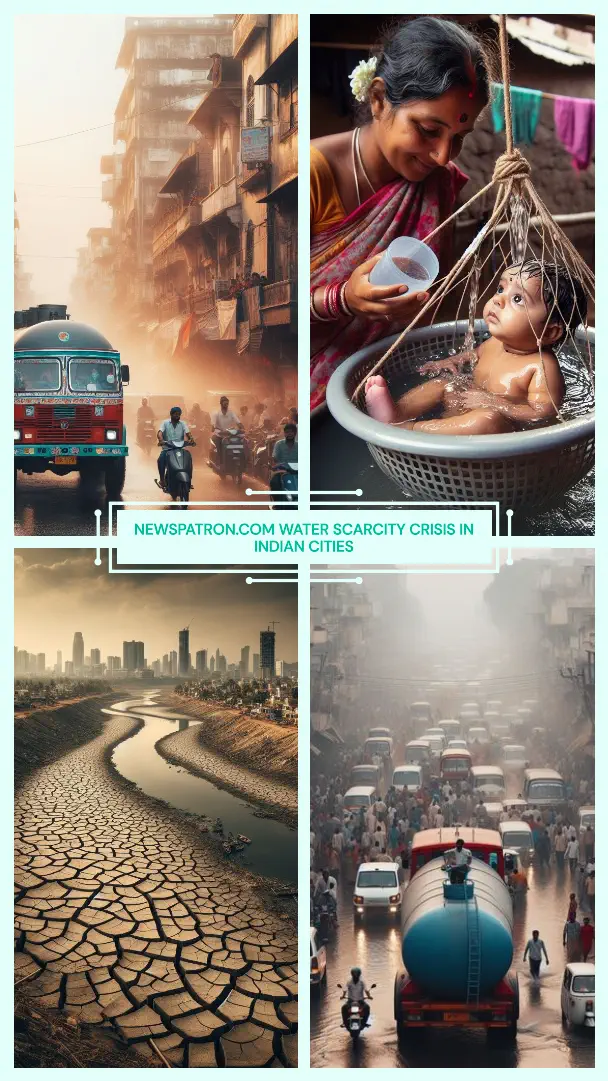
Case Study: Chennai’s Water Crisis
Chennai, the capital city of Tamil Nadu, faced an acute water crisis in 2019, serving as a stark reminder of the challenges posed by urban water scarcity.
Despite receiving an average annual rainfall of 1,400mm, Chennai’s water sources dried up, leading to severe shortages affecting its 11 million inhabitants. The crisis was a culmination of:
- Urbanization and Poor Planning: Rapid development led to the paving over of the city’s flood plains, crucial for groundwater recharge. Between 1893 and 2017, Chennai’s water bodies shrank from 12.6 square kilometres to about 3.2 square kilometres.
- Extreme Weather Events: Chennai relies heavily on monsoon rains, making it vulnerable to droughts during years of insufficient rainfall.
- Overexploitation of Water Resources: Unsustainable water management practices led to overexploitation of both surface and groundwater resources.
- Pollution: Chennai’s main rivers are heavily polluted, limiting their use as a water source.
The crisis forced Chennai to truck in millions of litres of water daily. It highlighted the need for sustainable water management, including conservation of water bodies, pollution control, and alternative water sources like desalination.
[Read about Thorium Power: The Future of Clean Energy?]
Recommended Product
Magnesium Body Spray – Muscle Recovery & Lavender Scent
🛒 View on Amazon →As an Amazon Associate, we earn from qualifying purchases. Price and availability may vary.
Urbanization, Climate Change, Socio-economic Consequences
Urban growth has directly impacted the hydrological cycle and water resources in Indian cities. Increased impervious surfaces reduce natural recharge areas. Urbanization has led to the over-extraction of groundwater, increased flooding, and degradation of water quality from industrial and agricultural pollutants.
Climate change acts as a force multiplier. In India, the dependence on increasingly erratic monsoon rains adds to the vulnerability. The country is witnessing a shift in rainfall patterns, with some regions experiencing prolonged dry spells while others face intense floods. Cities like Chennai and Delhi have faced severe water shortages due to failed monsoons, while others like Mumbai experience annual flooding that disrupts water supply and quality.
The repercussions of water scarcity in urban India extend beyond mere inconvenience. It hampers economic activities, particularly affecting water-intensive industries like textiles and agriculture. This leads to production losses, job cuts, and increased costs. The lack of water also affects public health, leading to waterborne diseases and impacting the quality of life.
[Read an article about Whooping Cough Alert: Protect Yourself and Your Family]
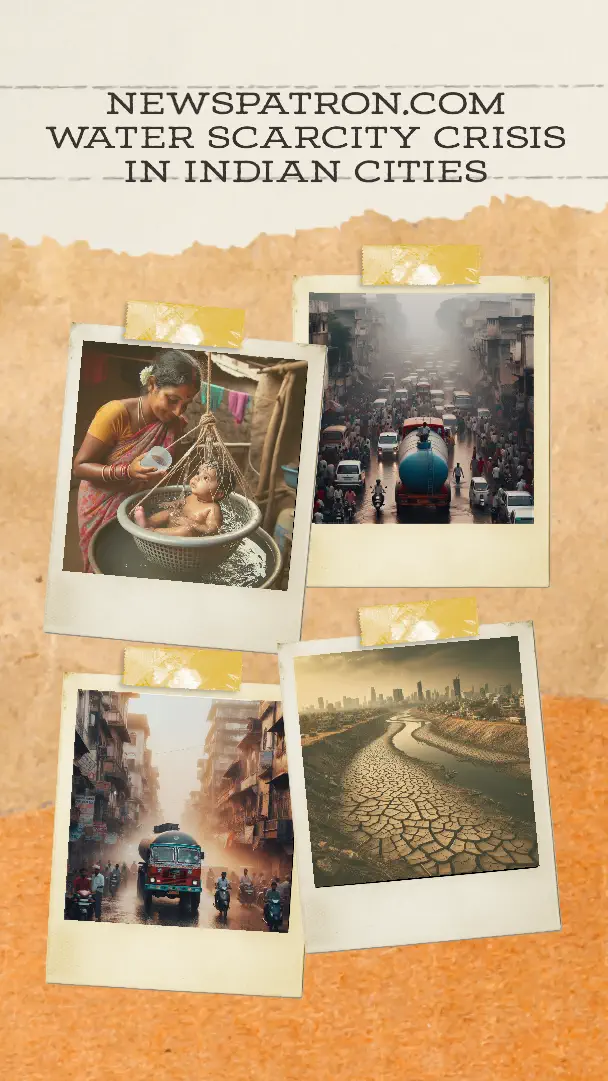
The Silent Crisis: Groundwater Depletion
Groundwater depletion is a silent crisis unfolding beneath India’s cities. The nation’s urban population surged, and the demand for groundwater has skyrocketed, leading to a dramatic decline in water tables.
Groundwater, the invisible lifeline, is being pumped out at an unsustainable rate to meet the needs of households, industries, and agriculture.
The Numbers Speak Volumes
India is one of the world’s largest groundwater users, with an annual extraction of 248.69 billion cubic meters as of 2017. This intense reliance is evident in the fact that 85% of the rural and 50% of the urban population depend on it for their daily needs. However, this has led to a staggering 61% decline in groundwater levels between 2007 and 2017, with more than 1,000 blocks across the country now water stressed. The situation is so dire that by 2030, there is a strong possibility that 40% of India’s population will have no access to drinking water.
[Read about Interest Rates : What You Need to Know]
The Ripple Effect of Groundwater Depletion
The consequences of groundwater depletion extend far beyond dry wells:
- Subsidence: The sinking of land due to groundwater removal poses a significant risk to infrastructure.
- Water Quality: The quality of the remaining groundwater is a concern, with contamination from fluoride, iron, salinity, nitrate, and arsenic becoming increasingly prevalent.
- Treatment Costs: This contamination affects the health of millions and increases the treatment costs for making water potable.
Towards Sustainable Groundwater Management
Addressing groundwater depletion requires a multi-faceted approach:
- Sustainable Agricultural Practices: Promoting water-efficient technologies and less water-intensive crops.
- Regulatory Frameworks: Enforcing regulations to control over-extraction.
- Urban Planning: Prioritizing the conservation and recharge of groundwater through the revival of traditional water bodies and rainwater harvesting.
Mumbai: Battling the Extremes
Mumbai faces unique water-related challenges due to its geography and climate, including monsoonal flooding and severe shortages during dry seasons, which strain the city’s water infrastructure.
Bengaluru’s Water Woes: A Case Study
Bengaluru, once known as the “City of Lakes,” now faces a dire water crisis. The city’s rapid urbanization and population explosion have severely strained its water infrastructure, leading to growing concerns about its sustainability and the well-being of its residents.
Factors Contributing to the Crisis
- Population Growth & Urbanization: Bengaluru’s population has skyrocketed, increasing the demand for water for residential and commercial purposes. Studies indicate a significant increase in Bengaluru’s population over the last few decades.
- Over-reliance on Groundwater: The city’s insufficient Cauvery River water supply has led to the widespread use of borewells, drastically depleting groundwater levels. Groundwater levels in some areas of Bengaluru have seen a marked decline in recent years.
- Climate Change and Rainfall Variability: Erratic monsoons and reduced rainfall have compounded the water scarcity.
- Water Distribution Inequities: Uneven distribution of water resources leaves peripheral areas facing acute shortages due to a lack of infrastructure and illegal connections.
- Health and Economic Consequences: Bengaluru’s water crisis has led to serious health risks, with residents lacking access to safe drinking water. Industries are also paying a heavy price, purchasing costly water at exorbitant rates from tankers to maintain operations.
Consequences
- Depleting Groundwater Levels: Groundwater levels are plummeting at an alarming rate, posing a severe threat to the city’s long-term water security.
- Increasing Water Scarcity: Many residents receive water for only a few hours each day, while others are forced to rely on expensive and unregulated water tankers.
- Water Pollution and Contamination: Industrial effluents and untreated sewage have further degraded water quality.
- Tanker Costs: The government has sought to regulate water tanker prices to combat price gouging; however, the lack of a centralized, efficient water supply system often leaves residents vulnerable to exploitation with concerns about water quality and safety.
Pune, Mumbai, and Beyond: Expanding the Urban Water Crisis
Pune: Water Struggles Amidst Growth
Pune faces similar challenges to Bengaluru, with rapid development straining its historic reliance on rivers and lakes.
Key Challenges
- Unequal Water Distribution: Certain areas of Pune face acute water shortages, highlighting a need for a more equitable distribution system.
- Reliance on Distant Water Sources: The city depends heavily on dams located far outside its limits, making it vulnerable to supply disruptions.
- Water Management and Infrastructure Issues: Aging infrastructure and inefficient water management practices lead to significant losses and contamination.
- Health and Economic Consequences: Half of the city relies on unregulated and potentially unhygienic water tanker supplies, leading to health risks. Studies show a high prevalence of waterborne diseases in India, underscoring the health risks posed by water scarcity and contamination. The financial burden on housing societies due to expensive tanker-supplied water is a major concern.
Local Example: Jeevitnadi Living River Foundation
The Jeevitnadi Living River Foundation is a remarkable example of a Pune-based initiative focusing on river restoration and community engagement in water conservation efforts. Their core philosophy of “My River, My Responsibility” empowers and encourages residents to take ownership of their river ecosystems. Biome Environmental Trust’s Million Wells for Bengaluru campaign is another excellent initiative working towards sustainable water management through groundwater recharge in Bengaluru.
Mumbai: Battling the Extremes
Mumbai’s unique geography and climate expose it to water-related extremes, from monsoonal flooding to severe shortages during dry seasons. This puts a severe strain on the city’s water infrastructure.
Key Challenges
- Weather Extremes: Mumbai must manage the yearly deluge of monsoon rain and the subsequent water shortages between monsoons. This leads to issues with public health, infrastructure damage, and water contamination.
- Insufficient Water Storage Capacity: The city’s limited water storage capabilities limit its ability to effectively conserve water during the monsoon months to offset dry periods.
- Water Loss and Leakage: Mumbai loses a sizeable portion of its water supply due to leakages in the distribution network, exacerbating scarcity.
- Local Example The Mumbai Water Conclave 2024 focuses on water conservation, treatment, and sustainable use of water resources. Organizations like this and various water recycling initiatives are crucial for the city’s water security.
- Health and Economic Consequences Studies show that a sizeable portion of Mumbai’s population lacks access to safe water sources, leading to widespread waterborne illnesses. The water service delivery failures have a negative impact on household economy, employment, education, health, and community cohesion.
Beyond the Megacities
The Widening Crisis Smaller cities and towns across India also grapple with water scarcity due to rapid urbanization and inadequate water infrastructure.
Interconnected Vulnerabilities Water shortages in smaller urban areas impact agriculture, industry, and the overall ecological health of a region, highlighting the need for a nationwide strategy to address urban water management.
Urgent Call to Action
The water crisis is not a distant threat; it is a present reality. It’s time for each of us to step up and take responsibility. Our actions, no matter how small, can ripple out to create waves of change.
Individual Responsibility
- Fix Leaks Promptly: A dripping tap can waste a surprising amount of water over time.
- Install Water-Saving Devices: Low-flow showerheads and dual-flush toilets can significantly reduce water usage. Switching to low-flow showerheads can make a significant impact, with studies indicating potential water savings of 8000 litres per year for a household.
- Mindful Water Use: Turn off the tap while brushing teeth or shaving and opt for showers over baths.
- Rainwater Harvesting: Collect and use rainwater for gardening and other non-potable uses.
- Educate and Influence: Share water-saving tips with friends and family, encouraging them to join the cause.
National Water Mission
Follow – NATIONAL WATER MISSION – MINISTRY OF JAL SHAKTI, DEPARTMENT OF WATER RESOURCES, RD & GR
Community Action
- Support Local Initiatives: Organizations like Jeevitnadi in Pune and Biome Environmental Trust in Bengaluru are making strides in water conservation and need community backing.
- Participate in Local Clean-Ups: Join efforts to clean rivers, lakes, and beaches, improving water quality and habitat health.
- Start a Conservation Project: Whether it’s a community garden or a neighborhood rainwater collection system, collective efforts have a substantial impact.
Advocacy
- Engage with Decision-Makers: Write letters, make calls, or schedule meetings with local representatives to voice your concerns and suggestions for sustainable water management.
- Support Policies and Reforms: Advocate for policies that protect water resources, improve infrastructure, and regulate water extraction.
- Stay Informed and Vote: Educate yourself on the water policies of electoral candidates and support those committed to sustainable practices.
Organizations to Support
- Biome Environmental Trust: Spearheading the Million Wells project in Bengaluru to recharge groundwater.
- Mumbai Water Conclave: Fostering discussions and actions towards water sustainability in Mumbai.
- Urban Forest Initiative: Transforming urban spaces into green havens in Pune.
[Read about Ramakrishna Mission: Empowering Lives Through Education]
Throughout this blog post, we have illuminated the water challenges facing India’s cities. Understanding these challenges is crucial for finding solutions. The following Q&A addresses some frequent questions about water conservation, management practices, and the innovations helping to tackle the crisis. Let us learn more and discover how we can each play a role in protecting this precious resource…
Frequently Asked Questions About the Water Crisis in India
Q1: What is the recommended water consumption for household utilities? A: A simple wash basin in a household should consume 4 litres per minute. A sink in a toilet should have a 6 litres per minute capacity, and a shower should use 7 litres per minute.
Q2: Which city in India has the highest water consumption? A: Pune has the highest water consumption in the country. The average is at 250 litres per capita per day, which is significantly higher than the Indian city average of 135 litres per capita per day.
Q3: What is competitive extraction in the context of groundwater? A: Competitive extraction refers to the practice where if one person digs a borewell, another person will also dig a borewell, often deeper than the first. This leads to a situation where the more people dig borewells, the less water will be extracted, necessitating deeper and deeper wells.
Q4: How do we value water? A: We often do not value water throughout the year and only realize its importance when we face a shortage, typically in the summer.
Q5: Which country is leading in water management? A: Singapore is considered to be at the forefront of water management. They have implemented measures such as recycling and treating sewage water so it can be used as drinking water again.
Q: Is it technically possible to drink treated sewage water? A: Yes, it is technically possible. The technology has reached a level where you can drink the flushed sewage that comes out of the plant. However, it will take time for people to psychologically accept this practice.
Q: What is the current use of treated sewage water in Bengaluru? A: In Bengaluru, treated sewage water is used for lake recharge. The water is given to the lakes in the STPs, which are all the ponds in Bengaluru. From there, the groundwater is recharged.
Q: How does the cost of desalination compare to sand water purification? A: Desalination costs around 40 to 60 rupees per kilolitre if you look at the Arabian Sea or the Bay of Bengal. In contrast, sand water purification can cost around 20 to 25 rupees per kilolitre.
Q: What is the current situation with water scarcity in India? A: The availability of water has definitely decreased due to population growth and increased demand from other economic activities. The focus of the current government is on how to increase the supply. However, there is also a need for demand management and understanding the value of water.
Q: What is the role of water tariffs and sustainable water pricing policy in managing water scarcity? A: A sustainable and implementable water tariff and pricing policy can help break the cycle of forgetting about water scarcity after the rains in June and July. It can help people understand the value of water and adjust their usage accordingly.
Q: How are water tanks constructed and managed? A: The most important thing in water tank construction is to identify where the rainwater collects first. This water is then supplied to various areas and eventually returns to the river, either treated or untreated. The water we use is not just for us; it also needs to be available for other people downstream.
Q: What societal struggles are being created due to water scarcity? A: There is a struggle to balance urban consumption and rural consumption. There are also issues with migration from areas with water scarcity to areas with water availability. Cropping patterns, such as the large-scale cultivation of sugarcane in Maharashtra, also contribute to this struggle.
Q: Is river interlinking a solution to water scarcity? A: River interlinking is not a magic wand. It can be used to purify water or reduce flooding, but it also affects aquatic life and biodiversity. It should be done in some way, but it should not be seen as the only solution.
Q: What are some home-made solutions to water scarcity? A: Some home-made solutions include being aware of our habits, such as not keeping the tap running while brushing teeth, using aerator nozzles to reduce the flow of water, reusing the rejected water from RO systems, collecting and reusing water used to wash vegetables, and starting rainwater harvesting.
Q: What changes should be made in the standards and policies to manage water scarcity? A: The central government should bring in water efficiency standards, similar to those in Singapore and Australia. Manufacturers of taps and showers should be given a mandate that the water coming out of their products should not exceed a certain consumption flow rate. Small water purification at the corporation level and reuse of treated wastewater can also be implemented. The introduction of a sustainable and implementable water tariff and pricing policy can also make a big difference.
[Read about Lok Sabha Elections: A History of Indian Politics]
[Lok Sabha Elections: India’s Democratic Pulse]
[Unlock Your Voting Power with Form 6 in India]
[Get Your Voter Card: A Simple Guide]
