


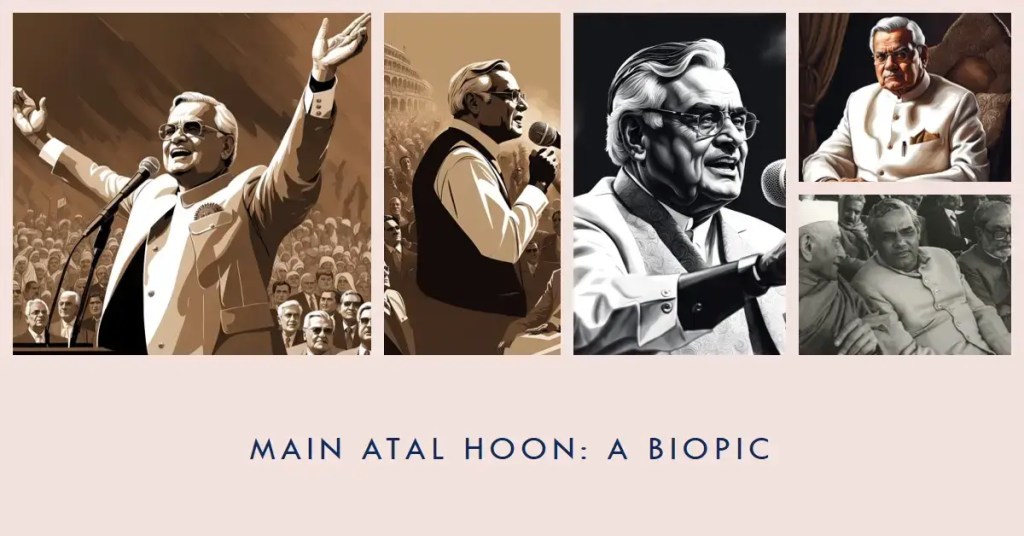

Dive deep into India’s political past & present with “Main Atal Hoon.” Uncover Atal Bihari Vajpayee’s life, leadership, and lasting impact on the nation. Explore his legacy’s influence on today’s political landscape and ponder the future of Indian democracy.
Main Atal Hoon is a 2024 Hindi language biographical film directed by Ravi Jadhav and written by Rishi Virmanu. It stars Pankaj Tripathi as former Prime Minister of India, Atal Bihari Vajpayee. The film is a tribute to Vajpayee’s life and political journey, highlighting his role in leading India during some of its most challenging times, such as the Kargil War and the Pokhran nuclear tests. It also explores his personal struggles, relationships, and love for poetry and literature.
The film was theatrically released in India on 19 January 2024, coinciding with the death anniversary of Vajpayee. It received a lukewarm response at the box office, earning ?1 crore on its opening day. It also faced online piracy issues, as it was leaked on various websites for free download.
The film’s cast includes Piyush Mishra, Daya Shankar Pandey, Raja Rameshkumar Sevak, Pramod Pathak, Paayal Kapoor Nair, Harshad Kumar, Prasanna Ketkar, Haresh Khatri, Paula McGlynn, and Gauri Sukhtankar, playing various prominent figures from Indian politics and history. The film’s music is composed by Salim–Sulaiman, Payal Dev, Kailash Kher and Amitraj, while the background score is composed by Monty Sharma. The film features songs such as “Desh Pehle”, “Ram Dhun”, and “Hindu Tan-Man”. The film’s first look was released on 25 December 2022, on the occasion of Vajpayee’s 98th birthday. The film’s teaser was released on 12 January 2024, followed by the trailer on 16 January 2024. The film is expected to be released on OTT platforms such as Netflix, Zee5, or SonyLiv in April 2024, after its theatrical run. [IMDB Page]
In this article, we will review the film and its portrayal of Vajpayee’s life and legacy. We will also discuss the historical and political context of the film and the relevance and impact of Vajpayee’s leadership on India and the world. We will also compare and contrast the film with other biopics and documentaries on Vajpayee, and evaluate its strengths and weaknesses. Finally, we will reflect on the message and the meaning of the film, and how it inspires and challenges us to follow Vajpayee’s footsteps and fulfill his dreams.
Main Atal Hoon: A Tribute to the Life and Legacy of Atal Bihari Vajpayee
The film begins with a flashback scene of Vajpayee’s childhood in Gwalior, where he is shown as a curious and intelligent boy, who is fascinated by poetry and literature. He is also influenced by his father, Krishna Bihari Vajpayee, who is a school teacher and a freedom fighter, and his mother, Krishna Devi, who is a devout Hindu and a caring mother. The film then shows Vajpayee’s involvement in the Quit India Movement and his association with the Rashtriya Swayamsevak Sangh (RSS), a Hindu nationalist organization. The film also depicts his friendship and mentorship with Lal Krishna Advani, who later becomes his political partner and rival.

The film then moves to the post-independence era, where Vajpayee enters politics as a member of the Bharatiya Jana Sangh (BJS), a precursor of the Bharatiya Janata Party (BJP).
He was elected to the Lok Sabha for the first time in 1957 from the Balrampur constituency in Uttar Pradesh. He impresses everyone with his eloquence and charisma and earns the respect and admiration of both his friends and foes.
He also develops a rapport with Jawaharlal Nehru, the first prime minister of India, who recognizes his potential and talent. The film shows some of the memorable speeches and debates of Vajpayee in the Parliament, where he criticizes the policies and actions of the Congress governments, but also praises their achievements and vision.
Recommended Product
Casio Vintage A168WA Digital Grey Unisex Watch
🛒 View on Amazon →As an Amazon Associate, we earn from qualifying purchases. Price and availability may vary.
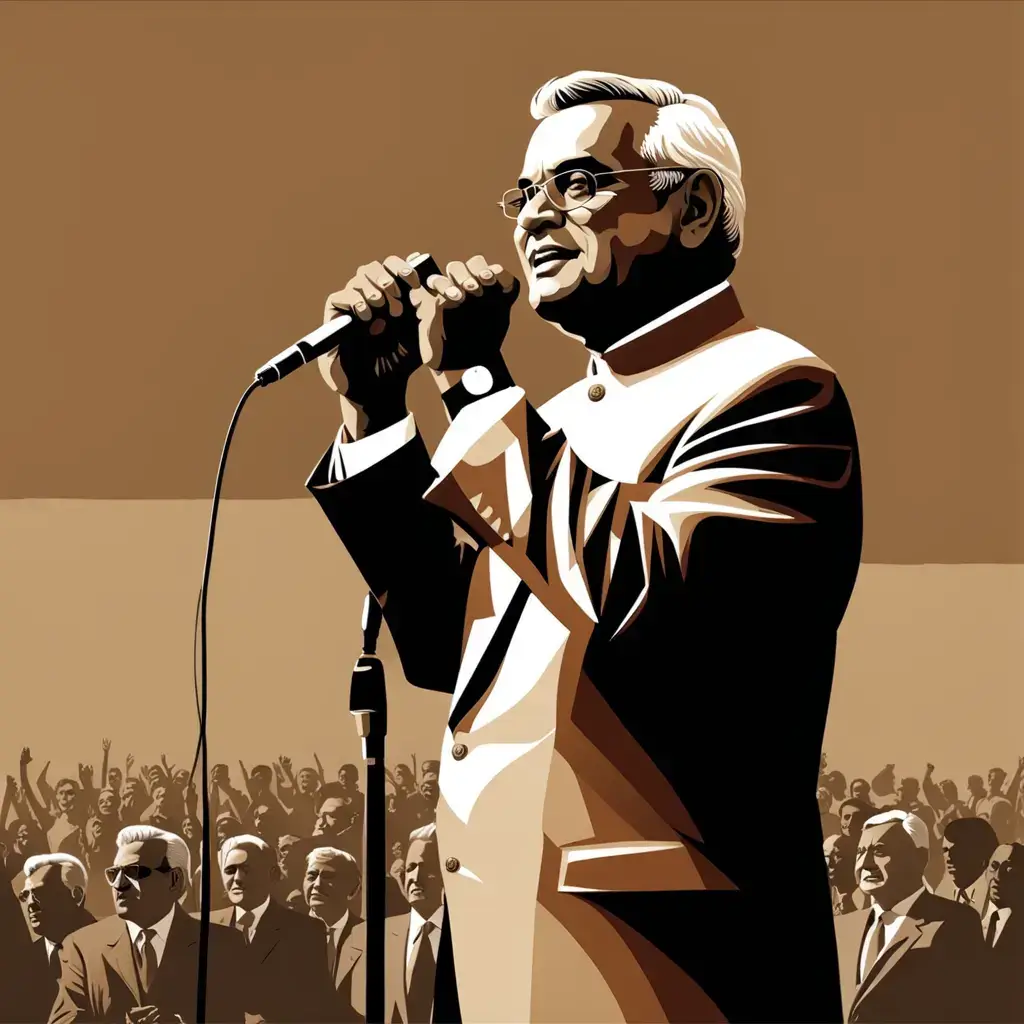
The film then covers the major events and turning points of Vajpayee’s political career.
The Emergency imposed by Indira Gandhi in 1975, the formation and collapse of the Janata Party government in 1977-79, the creation and rise of the BJP in 1980, the Ram Janmabhoomi movement and the demolition of the Babri Masjid in 1992, the 1996 general elections and Vajpayee’s 13-day tenure as the prime minister, the 1998 general elections and Vajpayee’s second term as the prime minister, the Pokhran-II nuclear tests and the international sanctions, the Lahore Declaration and the bus journey to Pakistan, the Kargil War and the victory of India, the 1999 general elections and Vajpayee’s third term as the prime minister, the 2001 Indian Parliament attack and the Agra Summit, the 2002 Gujarat riots and the criticism of Narendra Modi, the 2003 SARS outbreak and the economic reforms, the 2004 general elections and the defeat of the NDA, and the retirement and ill-health of Vajpayee.
The film also shows the personal and emotional aspects of Vajpayee’s life, such as his love for poetry and literature, his relationship with his adopted daughter Namita and her family, his friendship and rivalry with Advani and other BJP leaders, his admiration and respect for his political opponents, such as Nehru, Indira Gandhi, Rajiv Gandhi, and Manmohan Singh, his bond and affection with his colleagues and staff, such as Brajesh Mishra, Shakti Sinha, and Sudheendra Kulkarni, his romance and heartbreak with Rajkumari Kaul, his teacher and lover, his spirituality and faith in Hinduism, his generosity and compassion for the poor and the needy, his humour and wit in dealing with difficult situations, and his courage and resilience in facing challenges and adversities.
The film ends with a montage of scenes from Vajpayee’s life and legacy, accompanied by his voice reciting one of his famous poems, “Maut ki umar kya hai, do pal bhi nahi, Zindagi silsila, aaj kal ki nahi” (Death has no age, not even a moment, life is a chain, not of today or tomorrow). The film also pays tribute to Vajpayee by showing his funeral procession and the outpouring of grief and respect from the people of India and the world. The film also mentions about the abrogation of Article 370, the construction of the Ram temple, and the enactment of the CAA, which are seen as the fulfillment of Vajpayee’s dreams and vision.
Main Atal Hoon: The Cast, Crew, and Music of the Biopic
The film boasts of a stellar cast and crew, who have done justice to the portrayal of Vajpayee and his contemporaries. Pankaj Tripathi, who plays the role of Vajpayee, has delivered a brilliant performance, capturing the essence and the nuances of Vajpayee’s personality, voice, and mannerisms. He has also done extensive research and preparation for the role, such as reading Vajpayee’s books and speeches, watching his videos and interviews, and meeting his associates and family members. He has also undergone a physical transformation, such as wearing prosthetics and makeup, to resemble Vajpayee at different stages of his life.
The other actors who play the roles of various prominent figures from Indian politics and history have also done a commendable job, such as Piyush Mishra as Lal Krishna Advani, Daya Shankar Pandey as Morarji Desai, Raja Rameshkumar Sevak as Jawaharlal Nehru, Pramod Pathak as Indira Gandhi, Paayal Kapoor Nair as Rajkumari Kaul, Harshad Kumar as Rajiv Gandhi, Prasanna Ketkar as Manmohan Singh, Haresh Khatri as Narendra Modi, Paula McGlynn as Sonia Gandhi, and Gauri Sukhtankar as J. Jayalalithaa. The film also features some cameo appearances by actors who play the roles of other international leaders, such as Bill Clinton, Nawaz Sharif, Pervez Musharraf, and Atal Bihari Vajpayee.
The film is directed by Ravi Jadhav, who is known for his acclaimed Marathi films, such as Natarang, Balak-Palak, and Timepass. He has also directed some Hindi films, such as Banjo and Rannbhoomi. He has said that he was inspired by Vajpayee’s life and leadership, and wanted to make a film that would showcase his achievements and challenges, as well as his human and emotional side. He has also said that he wanted to make a film that would appeal to the masses as well as the classes, and that would be relevant and inspiring for the present and future generations.
The film is written by Rishi Virmanu, who is a renowned screenwriter and novelist. He has written several popular and critically acclaimed films, such as Raazi, Uri: The Surgical Strike, and Shershaah. He has also written several books, such as The Spy Chronicles, The Accidental Prime Minister, and The Paradoxical Prime Minister. He has said that he was fascinated by Vajpayee’s life and personality, and wanted to write a script that would capture his essence and spirit. He has also said that he did extensive research and interviews for the script, and consulted various sources, such as Vajpayee’s books, speeches, interviews, biographies, and documentaries.
The film’s music is composed by Salim–Sulaiman, Payal Dev, Kailash Kher and Amitraj, while the background score is composed by Monty Sharma. The film features songs such as “Desh Pehle”, “Ram Dhun”, and “Hindu Tan-Man”, which are inspired by Vajpayee’s poems and patriotic themes. The film also features some of the original songs and poems of Vajpayee, such as “Geet Naya Gata Hoon”, “Kya Khoya Kya Paya”, and “Atal Bihari”. The film’s music is a blend of classical, folk, and modern genres, and reflects the diversity and richness of Vajpayee’s culture and legacy.
The film’s cinematography is done by Aseem Mishra, who is known for his work in films such as Bajrangi Bhaijaan, Sultan, and Tiger Zinda Hai. He has said that he wanted to create a realistic and authentic look for the film, and used various techniques and locations to achieve that. He has also said that he tried to capture the mood and the atmosphere of the different eras and events that the film covers, and used different colors and tones to convey that. He has also said that he was inspired by some of the iconic images and videos of Vajpayee, such as his bus journey to Lahore, his speech at the Minar-e-Pakistan, and his funeral procession.
The film’s editing is done by Apurva Asrani, who is known for his work in films such as Satya, Aligarh, and Simran. He has said that he wanted to make the film engaging and coherent, and used various techniques and transitions to achieve that. He has also said that he tried to balance the historical and political aspects of the film, with the personal and emotional aspects of Vajpayee’s life. He has also said that he faced some challenges and difficulties in editing the film, such as the length, the pace, and the continuity of the film.
The film’s production is done by Ronnie Screwvala and Siddharth Roy Kapur, who are the founders of RSVP Movies and Roy Kapur Films, respectively. They are known for producing films such as Rang De Basanti, Barfi, and The Sky Is Pink. They have said that they wanted to make a film that would celebrate and honor the life and legacy of Vajpayee, and that would appeal to the national and international audience. They have also said that they faced some challenges and difficulties in producing the film, such as the budget, the casting, and the permissions for shooting at various locations.
The film’s direction, writing, music, cinematography, editing, and production are all commendable and praiseworthy, and have contributed to the success and quality of the film. The film is a well-made and well-researched biopic, that showcases the life and legacy of Vajpayee in a respectful and realistic manner. The film is also a tribute and a homage to Vajpayee, who was one of the most influential and respected leaders of India, who shaped the country’s political and economic landscape with his vision, courage, and pragmatism.

Main Atal Hoon: The Historical and Political Context of the Biopic
The film is set in the backdrop of the historical and political events that took place in India from the pre-independence era to the present day. The film covers some of the most significant and turbulent periods of Indian history, such as the freedom struggle, the partition, the wars with Pakistan and China, the Emergency, the liberalization, the nuclear tests, the Kargil War, the 2001 Parliament attack, the 2002 Gujarat riots, the 2008 Mumbai attacks, the 2014 general elections, and the 2019 abrogation of Article 370. The film also depicts the evolution and transformation of the Indian political system, from a one-party dominance to a multi-party democracy, from a centralized to a federal structure, from a socialist to a market-oriented economy, and from a secular to a Hindu nationalist ideology.
The film also shows the role and impact of Vajpayee’s leadership on India and the world, and how he shaped and influenced the political and economic landscape of the country.
The film highlights some of the achievements and challenges of Vajpayee’s governments, such as the Pokhran-II nuclear tests, which made India a nuclear weapon state and invited international sanctions and criticism, the Lahore Declaration, which was a landmark agreement with Pakistan to resolve the Kashmir dispute and other issues peacefully, the Kargil War, which was a military conflict with Pakistan that ended with a decisive Indian victory and a withdrawal of Pakistani forces, the Pradhan Mantri Gram Sadak Yojana, which was a rural road scheme that connected millions of villages across the country, the Golden Quadrilateral project, which was a highway development project that linked the four major cities of India, the New Telecom Policy, which liberalized and deregulated the telecom sector and led to a boom in mobile phone and internet penetration, and the Sarva Shiksha Abhiyan, which was a universal education movement that aimed to provide free and compulsory education to all children up to the age of 14.
The film also shows the relevance and significance of Vajpayee’s leadership for the present and future generations, and how his vision and legacy live on in the hearts and minds of millions of Indians, who aspire to follow his footsteps and fulfill his dreams. The film also shows how some of the current leaders of India, such as Narendra Modi and Amit Shah, who are the prime minister and the home minister respectively, have been influenced and inspired by Vajpayee, and how they have implemented some of the long-pending goals and agendas of the BJP and the RSS, such as the abrogation of Article 370 and Article 35A, which granted special status and rights to Jammu and Kashmir, the construction of the Ram temple in Ayodhya, which is believed to be the birthplace of Lord Rama, and the enactment of the CAA, which granted citizenship to persecuted religious minorities from Pakistan, Bangladesh, and Afghanistan.
The film also shows the challenges and criticisms that Vajpayee and his successors have faced and continue to face, from their political opponents, the media, civil society, and the international community, on various issues, such as communal violence, human rights violations, the economic slowdown, the environmental degradation, the social inequality, and the regional instability. The film also shows the diversity and complexity of the Indian society and polity, and the need for dialogue and consensus among the various stakeholders and actors, to achieve the common goals and aspirations of the nation.
The film is a comprehensive and balanced portrayal of the historical and political context of Vajpayee’s life and leadership and provides valuable insight and perspective on the past, present, and future of India and the world. The film is also a timely and relevant reminder of the values and principles that Vajpayee stood for, such as democracy, diversity, and dialogue, and how they are essential and indispensable for the survival and progress of humanity.
Main Atal Hoon: A Comparison and Contrast with Other Biopics and Documentaries on Vajpayee
Main Atal Hoon is not the first film or documentary that has been made on Vajpayee and his life and leadership. There have been several other works that have attempted to capture and portray the essence and spirit of Vajpayee, from different perspectives and angles. Some of these works are:
The Life and Times of Atal Bihari Vajpayee:
A 2004 documentary film directed by Gopal Krishna and produced by Prasar Bharati, the public broadcaster of India. The film is a comprehensive and chronological account of Vajpayee’s life and career, from his childhood to his retirement. The film features interviews with Vajpayee himself, as well as his family, friends, colleagues, and rivals. The film also showcases some of the rare and archival footage and photographs of Vajpayee, as well as some of his poems and speeches. The film is narrated by Amitabh Bachchan, the legendary actor and a close friend of Vajpayee.
Atal Bihari Vajpayee: A Man for All Seasons:
- A 2018 book written by Kingshuk Nag, a senior journalist and author. The book is a biographical and analytical work that explores the personality and politics of Vajpayee, and how he shaped and influenced the destiny of India and the world. The book covers some of the major events and themes of Vajpayee’s life and leadership, such as his role in the Janata Party government, his nuclear diplomacy, his peace initiatives with Pakistan, his economic reforms, his coalition management, and his legacy and impact. The book also provides a critical and balanced assessment of Vajpayee’s achievements and failures, and his strengths and weaknesses.
Atal Bihari Vajpayee: The Making of a Legend:
- A 2019 web series directed by Umesh Shukla and produced by Eros Now, a digital entertainment platform. The web series is a fictionalized and dramatized depiction of Vajpayee’s life and journey, from his childhood to his prime ministership. The web series features actors such as Faizal Khan, Ashish Sharma, Mahesh Thakur, and Ram Sethi, playing the roles of Vajpayee and other prominent figures from Indian politics and history. The web series also features some of the original songs and poems of Vajpayee, as well as some of the recreated scenes and dialogues from his speeches and interviews. The web series is divided into 10 episodes, each focusing on a different aspect or phase of Vajpayee’s life and career.
These works are different from Main Atal Hoon in various ways, such as the format, the genre, the style, the tone, the perspective, the focus, the scope, and the audience. However, they also have some similarities and commonalities, such as the theme, the subject, the source, the inspiration, and the message. They all aim to celebrate and honor the life and legacy of Vajpayee and to provide a glimpse and an insight into his personality and politics. They all also try to be authentic and realistic and to use various sources and references to verify and support their claims and portrayals.
However, Main Atal Hoon stands out from these works in some ways, such as:
- It is the first feature film on Vajpayee, which has a wider reach and appeal than a documentary, a book, or a web series.
- It is the most recent and updated work on Vajpayee, which covers his death and funeral, and also shows the achievements and initiatives of the Modi government, which are seen as the fulfillment of Vajpayee’s dreams and vision.
- It is the most creative and innovative work on Vajpayee, which uses various techniques and elements, such as flashbacks, montages, voice-overs, songs, and poems, to create a captivating and engaging narrative and experience for the viewers.
- It is the most balanced and nuanced work on Vajpayee, which shows both his positive and negative sides, and also acknowledges and addresses the challenges and criticisms that he and his successors have faced and continue to face, on various issues and fronts.
Main Atal Hoon is a unique and original work on Vajpayee, that adds to the existing literature and media on him, and also offers a fresh and new perspective and interpretation on him. It is also a work that can be enjoyed and appreciated by anyone, regardless of their political affiliation, ideology, or preference. It is a work that transcends the boundaries of time, space, and culture, and connects with the universal values and emotions of humanity. It is a work that pays a fitting and deserving tribute to Vajpayee, who was a man for all seasons, and a legend for all times.

From Atal’s Vision to Modi’s Rise: A Journey of BJP’s Triumph
While “Main Atal Hoon” offers a glimpse into the life and legacy of Atal Bihari Vajpayee, the story of the Bharatiya Janata Party (BJP) goes far beyond the confines of a single film. It’s a saga of resilience, ambition, and ultimately, triumph.
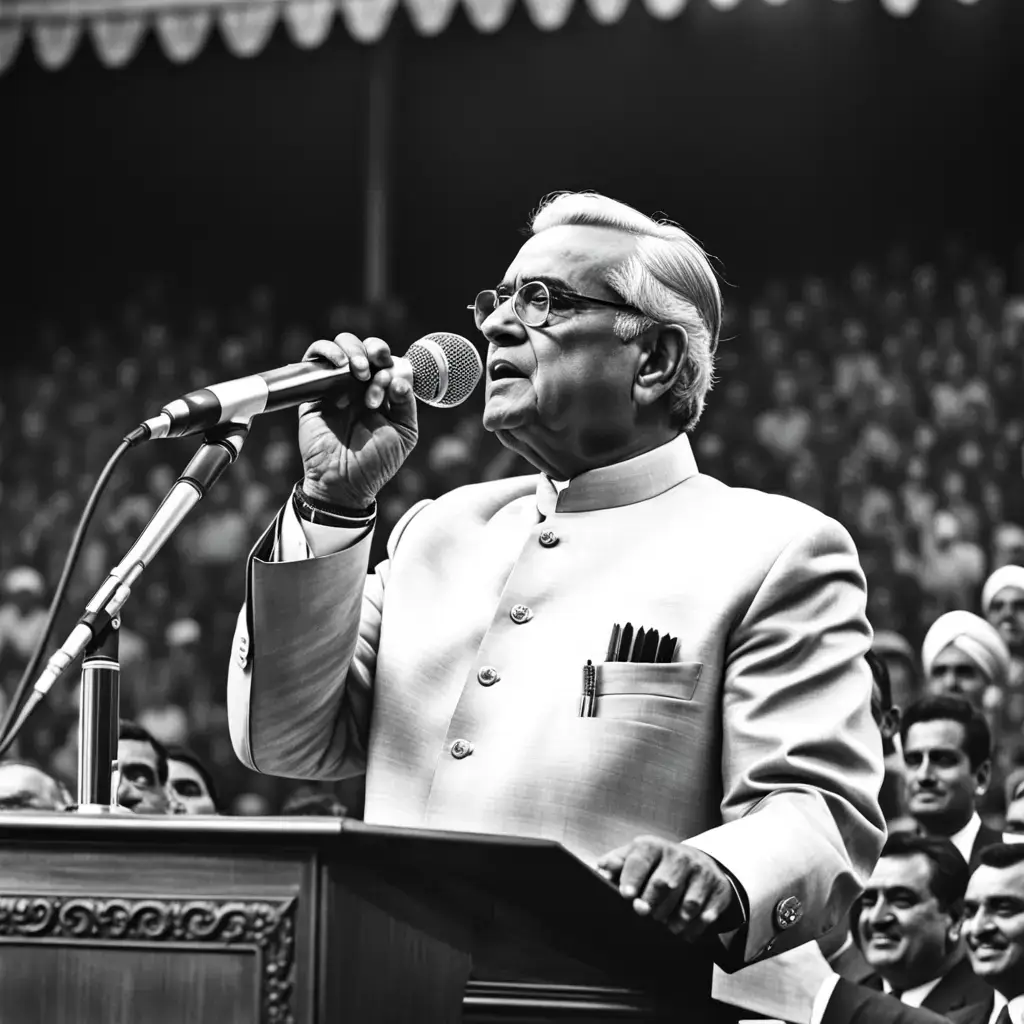
Vajpayee’s first brush with a BJP government was in 1996, albeit a brief 13-day stint. Yet, his eloquent resignation speech, vowing to return with a mandate, resonated deeply. The nation witnessed a period of political instability, with a fractured parliament leading to short-lived governments by unstable alliances.
However, the seeds sown by Vajpayee during his first term bore fruit in 1999. The BJP, in alliance with other parties, formed the National Democratic Alliance (NDA) and Vajpayee became India’s first non-Congress Prime Minister to complete a full five-year term. His era saw India achieve significant economic growth, nuclear tests bolstering national security, and a golden age of diplomacy.
Vajpayee’s legacy wasn’t just about tangible achievements. He was a statesman, known for his inclusive leadership and his ability to forge consensus across political divides. His famous words, “Sarkaare ayengi aur jayengi, lekin desh rahega” (Governments will come and go, but the nation will remain), resonated with millions, solidifying his image as a national icon.
But the journey wasn’t without its challenges. The NDA lost the 2004 elections, and the following years saw Congress back in power. Yet, the BJP remained a formidable force, steadily growing its base.
Enter Narendra Modi, a young leader who had transformed Gujarat into a model state. His charisma, administrative acumen, and no-nonsense approach resonated with a nation yearning for stability and progress. In 2014, Modi led the BJP to a historic landslide victory, ushering in a new era of governance.
Modi’s government built upon Vajpayee’s foundation. Long-standing promises like the Ram Mandir construction, the abrogation of Article 370, and the implementation of a Uniform Civil Code were finally fulfilled. India’s economic and strategic prowess soared to unprecedented heights, earning global recognition and respect.
Through Modi and Shah, the BJP has achieved meteoric growth, rising from just 2 seats in the early days to a behemoth with over 300 members in Parliament. Yet, Vajpayee’s role remains pivotal in shaping the party’s ideology and laying the groundwork for its success.
As India prepares for the upcoming Lok Sabha elections, the question remains: will the nation continue on the path set by Vajpayee and Modi? Will it choose stability, progress, and the fulfillment of long-held aspirations?
The decision rests with the people. But one thing is certain: the journey from Atal’s vision to Modi’s rise is a testament to the BJP’s unwavering commitment to the national interest, its ability to adapt and evolve, and its enduring appeal to the Indian electorate.
Unveiling India’s Journey: A Glimpse into My Newspatron Articles
Beyond the captivating film “Main Atal Hoon,” a wealth of stories lies tucked away in the archives of history. My own exploration of these narratives took me to Newspatron, where I’ve penned several articles delving into the lives and legacies of India’s illustrious figures.
For those who resonate with the towering presence of Sardar Vallabhbhai Patel, two of my pieces delve into his remarkable contributions to nation-building. One explores his pivotal role in unifying India’s fragmented princely states, while the other sheds light on his unwavering commitment to national security and internal integration. Through his unwavering spirit and astute leadership, Patel laid the groundwork for a strong and united India.
My journey then led me to the Mahatma himself, Mahatma Gandhi. In a dedicated article, I delve into his revolutionary philosophy of nonviolence and its enduring impact on India’s struggle for independence. From his Satyagraha movements to his unwavering advocacy for truth and justice, Gandhi’s legacy continues to inspire generations around the world.
But the story doesn’t end there. In another piece, I examine the fascinating parallels between Gandhi’s vision and Prime Minister Narendra Modi’s concept of “Sabka Saath, Sabka Vikas” (Together we grow, Together we develop). Just as Gandhi envisioned a harmonious society where every citizen thrives, Modi’s inclusive approach seeks to uplift all sections of Indian society. This article ponders the evolution of Gandhi’s ideals and their contemporary relevance in today’s India.
Turning to a landmark moment in recent history, I also chronicled the passage of the Jammu and Kashmir bills in Parliament. This piece highlights the crucial role of Home Minister Amit Shah in navigating complex political terrain and ushering in a new era for the region. His unwavering dedication and decisive leadership are explored, showcasing how his efforts paved the way for a brighter future for Jammu and Kashmir.
My exploration then shifts to the heart of Indian culture – the Ayodhya Ram Janmabhoomi. In a dedicated article, I unravel the rich history of this sacred site and its profound connection to the soul of the nation. The piece also details the journey leading to the construction of the Ram Mandir, a pivotal moment that fulfilled not only the BJP’s long-held promise but also a decades-long wish of the Indian people.
But the story doesn’t end with one dream fulfilled. Another article explores how Narendra Modi is carrying the torch of unfulfilled dreams, inherited from leaders like Sardar Vallabhbhai Patel and Atal Bihari Vajpayee. The piece highlights how Gujarat, the land that gifted India Mahatma Gandhi and the Iron Man, has once again risen to the occasion, providing the nation with two visionary leaders – Narendra Modi and Amit Shah. Their unwavering dedication to fulfilling the grand dreams of their predecessors, from national security to economic prosperity, is a testament to their commitment to building a stronger, more united India.
And as we stand at this pivotal juncture, it’s important to remember the enduring wisdom of Atal Bihari Vajpayee: “Sarkaare ayengi aur jayengi, lekin desh rahega” (Governments will come and go, but the nation will remain). My Newspatron articles are simply an invitation to join the conversation, to delve deeper into the stories that have shaped India and continue to influence its future. So, why not embark on this journey of discovery yourself? Explore these articles and join me in celebrating the richness and resilience of the Indian narrative.
Here are some links to Late Shri Vajpayee’s speeches
Watch all the speeches of the Late former PM of India Shri Atal Bihari Vajpayee. [Sansad TV]
1977 – Then Foreign Minister Atal Bihari Vajpayee as 1st Indian leader to address UNGA in Hindi
Samagrah Atal ji : Chunaoti Bharstachaar Ki: Shri Atal Bihari Vajpayee [Full]
Best Speeches of Atal Bihari Vajpayee [Sansad TV]
What the World Can Learn from Mahatma Gandhi in 2023
Sardar Patel: Unifier of India, Visionary of Progress Sardar Patel: The Iron Man of India Finally Gets His Due
Sardar Vallabhbhai Patel: The Iron Man of India
How Narendra Modi is a Great Leader Who Fulfills the Dreams of India’s Great Leaders
Echoes of Resilience: The Untold Story of Kashmiri Pandits
How Jammu and Kashmir Bills Passed by Modi-Shah Government Will Transform the Region
Co-operative Ministry of India & the Extraordinary Vision of Amit Shah
Ram Temple in Ayodhya | A Symbol of Faith and Struggle for Hindus
How former bureaucrats in Modi government are transforming India
Let’s keep the stories alive, the conversations flowing, and the nation-building.
