


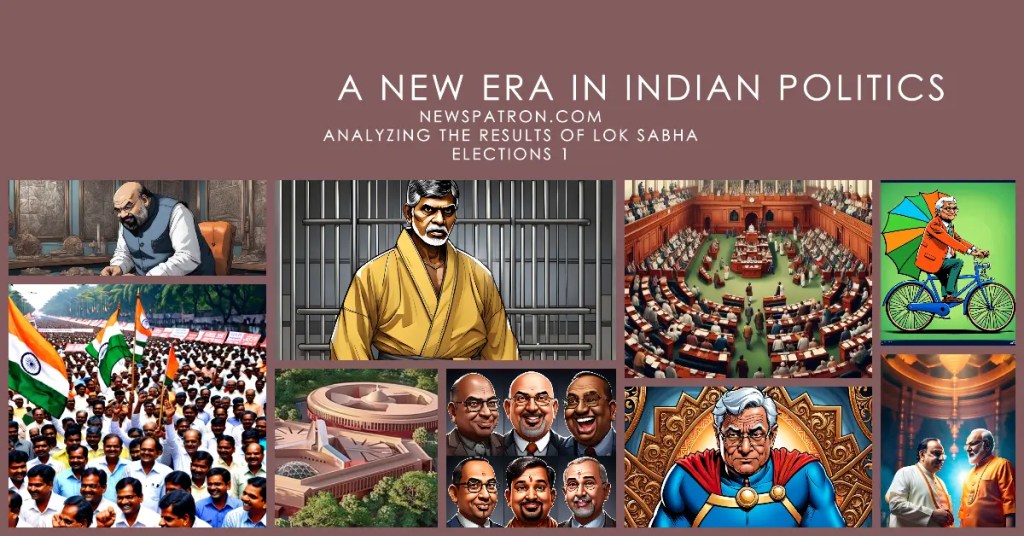

The charisma of Prime Minister Narendra Modi, once a driving force for the Bharatiya Janata Party (BJP), appears to have waned, leading to significant setbacks for the party. Concurrently, the resurgence of the Congress party is viewed as a positive development for India’s political landscape.
The BJP has experienced losses across various social demographics due to changes in its leadership. This Lok Sabha Elections Result Analysis series will explore Modi’s influence on the political landscape and the aspirations of the youth, particularly his ability to engage the 18-25 age group and their response to Rahul Gandhi’s political campaign. We will also discuss the decline in support from the SC-ST community and other perspectives on the election results, Modi and BJP party.
editor@newspatron.com #LokSabhaElections, #ResultAnalysis1, #BJP, #Congress, #NarendraModi, #RahulGandhi, #ElectionResults, #PoliticalAnalysis
The Diminishing Support for BJP
The electorate has communicated a clear message to the government: their support for the BJP and Modi is not as unwavering as it once was.
This suggests that the government should reconsider its approach towards these voters.
The Revival of Congress
The second takeaway from the Lok Sabha Election is the resurgence of the Congress party. This revival is a positive sign for India, not merely because it benefits the Congress, but because a robust opposition is vital for a healthy democracy.
[Read about the BJP Manifesto 2024 and a vision for India’s Progress] [Download]
[Read about the Congress Manifesto 2024 and their vision for India’s Progress] [Download]
Misinterpretation of BJP’s Campaign
The BJP’s campaign tone has been significantly misinterpreted and manipulated by their political adversaries. These rivals successfully constructed a narrative suggesting that a re-elected BJP would alter the constitution, leading to disastrous consequences. This message was effectively disseminated by the Congress party.
Recommended Product
Amazon India – Shop Today's Best Offers
🛒 View on Amazon →As an Amazon Associate, we earn from qualifying purchases. Price and availability may vary.
Centralized Leadership in BJP
The BJP, much like the Congress during the era of late Prime Minister Indira Gandhi, functioned with a centralized high command, with Shri Amit Shah and Shri Modi at the helm.
Unfulfilled Expectations Despite Achievements
Despite fulfilling long-standing national expectations, such as the rebuilding of the Shri Ram Mandir, the BJP suffered a loss in Ayodhya. The sentiment of the voters was clear: the candidate fielded during the election was more important than the construction of the temple. [Read more about Ram Temple in Ayodhya | A Symbol of Faith and Struggle for Hindus]
The BJP’s Achievements and Setbacks
The BJP has achieved a great deal between 2014 and 2024, accomplishing most of its election agenda, including Article 370, the Shri Ram Temple, and the Uniform Civil Code. However, the electorate has reprimanded the BJP for its actions, despite not completely voting it out. [Read How Jammu and Kashmir Bills Passed by Modi-Shah Government Will Transform the region]
[Read about Echoes of Resilience: The Untold Story of Kashmiri Pandits]
The Third Term: A Significant Achievement
Securing power for a third term after two full terms from 2014 to 2024 is a significant achievement, a feat only accomplished in India after 1962.
Decoding the Lok Sabha Elections Result Analysis
The election results of 2024 raise several questions: Who has won or lost? Did the BJP win, or did the NDA (National Democratic Alliance) win? Has PM Narendra Modi actually won, or is this his personal failure? If this is a victory for the NDA, BJP, and PM Modi, why was it not as expected? Why not 400 for the NDA and at least 300 for the BJP?
Make your voice heard
[bbp-single-topic id=5820]
[Read about the dreams fulfilled by Shri Modi during 2014 to 2024].
The 2024 Election Results
The 2024 election results are markedly different from those of 2004 when the NDA’s momentum stalled, and the alliance was ousted from power.
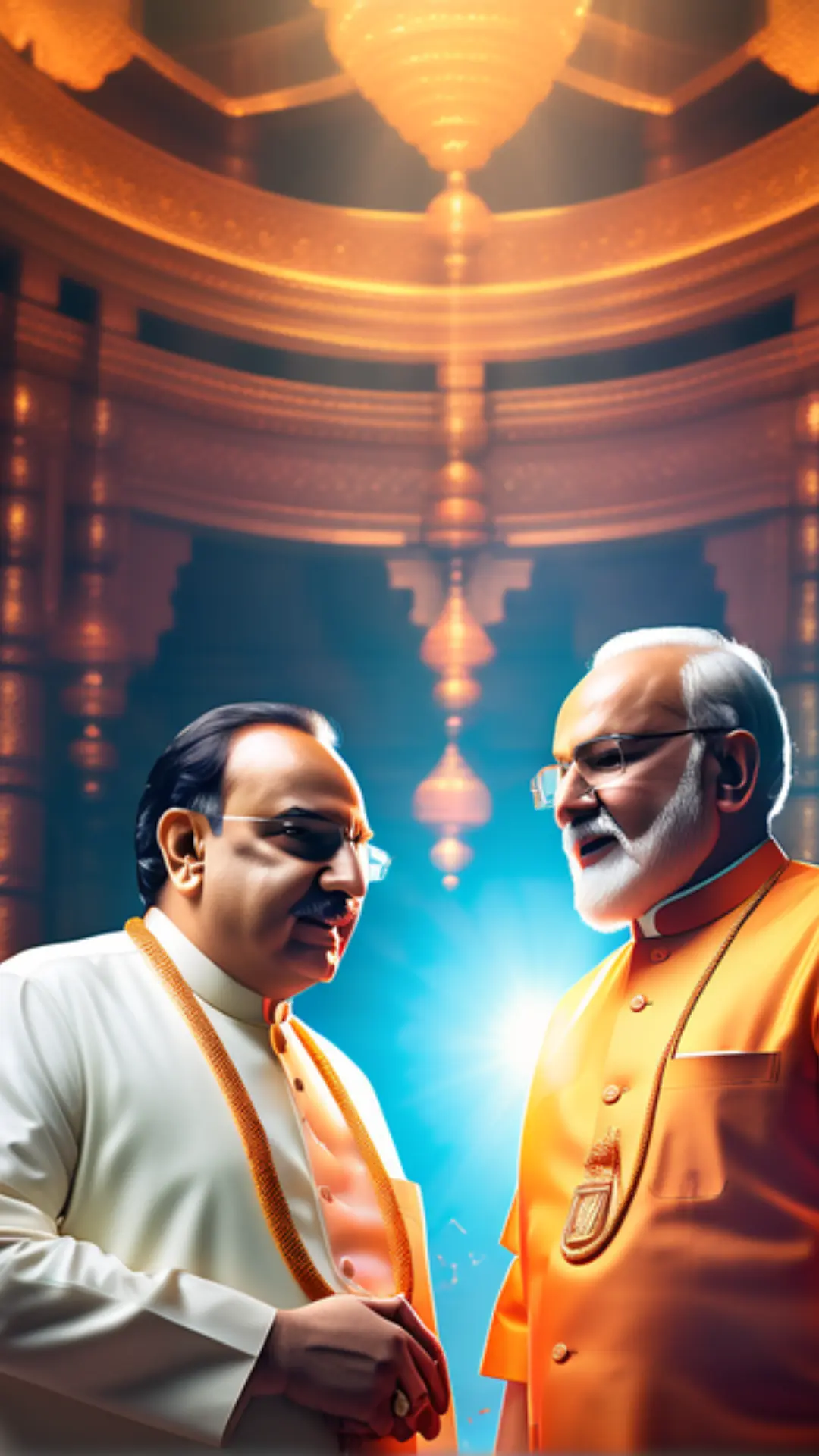
Factually speaking, the NDA has won the election, securing 295 seats, but Modi himself has failed to secure a majority for the BJP. The NDA, under Modi’s leadership, has secured seats above the majority mark.
Not securing 272 seats and stopping at 240 is a significant loss.
The Modi Charisma: A Fading Influence
There was nothing wrong with Modi being admired by most of the countrymen, and his charisma. We all said that he would likely come back to power, and I am also one of them, I am not denying. But the sad reality was that a large group of voters was slowly moving away from Modi, or was moving away from BJP. We will talk about the reason later in this or other blogs following this series. [Read about Demystifying Exit Polls: Navigating the Complex Political Landscape]
The Overall Poll Results of 2024
The overall poll results of 2024 have communicated a clear message: the public’s support for Modi and the BJP has diminished. This suggests that the BJP should not rely on the same level of support from the electorate.
[Read about Lok Sabha Elections: A History of Indian Politics]
Geographical Trends in the Poll Results
When examining these poll results geographically, it becomes apparent that the trendline is not consistent across each state. For instance, while the state of Uttar Pradesh has issued a warning to the BJP, the neighbouring state of Madhya Pradesh has reaffirmed its trust in the party.
Key Takeaways from the Election
There are several important takeaways from this election. The results provide a broad overview, which can be further understood by engaging with neutral experts. By doing so, one can gain insights into the experts’ expertise.
The Largest Blocks in India


The largest blocks of people in India are in Uttar Pradesh, Maharashtra, and Bihar. In all these three places, the BJP has been negatively impacted.
The Shift in Support from SC-ST Community
A significant development is the shift in support from the SC-ST community, who have moved away from the BJP and towards the Congress.
The Failed Social Engineering Efforts
The social engineering efforts jointly performed by the Rashtriya Sevak Sangh (RSS) and the BJP seem to have lost their synergy, as if the fabric binding them has been torn.
[Read about Savarkar: The Man Behind the Myth]
The Untapped Potential of Young Voters
Another significant point that emerges from the data is the untapped potential of young voters. Those who became eligible to vote after 2014, specifically the 18-25 age group, have not had their aspirations and expectations adequately addressed by Modi. This generation, with little knowledge of the Congress’s background, has been exposed to one or two election cycles with a clean political slate. Many in this age group have been drawn to Rahul Gandhi’s foot march, or Padayatra, for various reasons.
The Revival of Congress
Another noteworthy point is the revival of the Congress. Political experts view this as a positive development for India, believing that there should be two equal parties at the centre. Fortunately, the Congress seems to be moving in this direction. While we may have differing views on its economic policy or that of other parties like the Samajwadi party, that’s a topic for another discussion.


The Party Leading the Central Government
Returning to the main point, the party leading the Central Government must be a political force that has been active and influential in India from the beginning, or even before independence.
The Congress Cadre
While it’s true that the Congress has lost focus over the past few decades, it still maintains a cadre across states. This fact is undeniable. Recently, in 2024, it was observed that the cadre is being revived in states like Uttar Pradesh and Maharashtra, among others.
The 2024 Results
The 2024 results are starkly different from those of 2014 and 2019. Narendra Modi’s ambitious plan to secure 400 seats in 2024 seems to have backfired. Perhaps the narrative wasn’t directed correctly, or it was built on overconfidence or shortsightedness.
[Read about Lok Sabha Elections: India’s Democratic Pulse]
The BJP’s Aim
The BJP aimed to establish a strong presence across the nation and create a pan-India political system, much like the Congress did from 1952 to 1966. However, given India’s diversity, the Congress began to decline steadily from 1967. Will 2024 mark the beginning of a similar decline for the BJP?
Stay tuned to our other posts on Politics and stay connected with Newspatron. Let curiosity guide you. Join our forums and make your voice heard.
That’s all for the Part 1 of this blog post. Follow us on various platforms to stay updated.
Drone Mitra – Blogs by a Vlogger, Editor, Creator & Drone Video Photographer (art.blog)
