


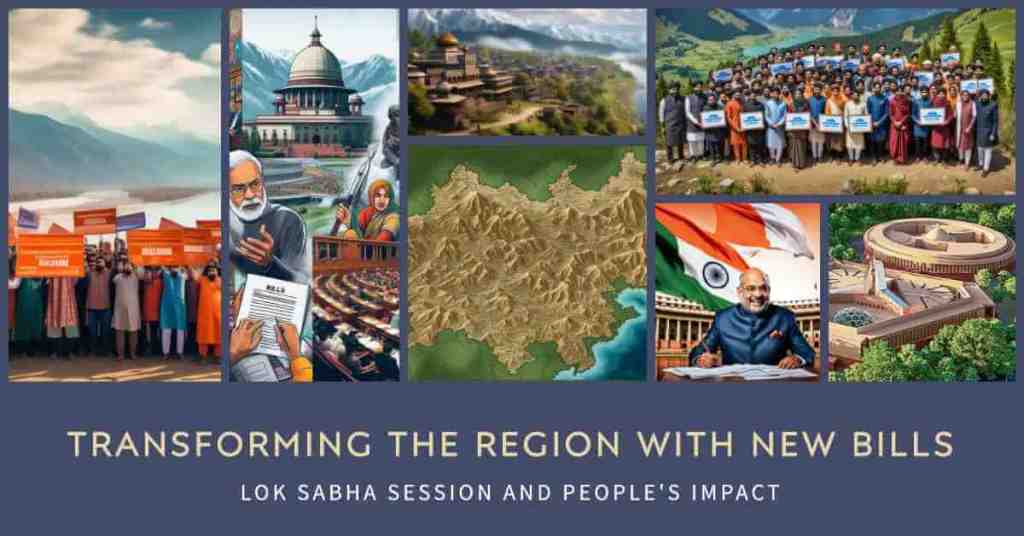

In this article, you will learn about the two historic Jammu Kashmir Bills Modi Shah government passed in the Lok Sabha that aim to address the long-standing issues in Jammu and Kashmir. You will also discover the history, administration, and strategic significance of PoK, the region that has been a bone of contention between India and Pakistan for decades. Read on to find out how these bills will bring hope and justice to the people of J&K and change the regional dynamics for the better.
Kashmiri Bills Address Historic Injustices and Provide Hope for the Future
During the winter session of the Lok Sabha, two historic bills were passed aimed at addressing long-standing issues in Jammu and Kashmir. Union Home Minister Amit Shah, while presenting the bills, highlighted “two big mistakes” made by former Prime Minister Jawaharlal Nehru that had a lasting impact on the region.
According to Shah, Nehru’s decision to declare a ceasefire while the Indian Army was gaining ground in the 1947 war was a “historical blunder.” He believes that if the ceasefire had been delayed by three days, PoK (Pakistan-occupied Kashmir) would be part of India today.
Furthermore, Shah criticized Nehru’s decision to take the Kashmir issue to the United Nations, claiming it weakened India’s position. He emphasized that these missteps led to decades of suffering for the people of J&K.
The Home Minister also addressed the issue of the Kashmiri Pandit exodus, blaming past governments for failing to protect the community. He expressed hope that the new bills will bring justice to those who have been deprived of their rights for decades.

Providing Representation and Remedying Past Wrongs
The two bills, the Jammu and Kashmir Reservation Amendment Bill and the Jammu and Kashmir Reorganisation Amendment Bill aim to provide much-needed representation and address historical injustices.
The Reservation Bill offers reservations in government jobs and professional institutions for various reserved categories, including Scheduled Castes, Scheduled Tribes, and the economically weaker sections.
It specifically seeks to grant representation to Kashmiri migrants, displaced persons from PoK, and Scheduled Tribes in the J&K assembly.
The Reorganisation Bill increases the number of assembly seats from 107 to 114, allocating 24 seats for the PoK region, 7 for Scheduled Castes, and 9 for Scheduled Tribes. Notably, the bill proposes to reserve 43 seats for the Jammu region and 47 for Kashmir.
Recommended Product
Alpino Peanut Butter Chocolate Protein Bar – Gluten Free
🛒 View on Amazon →As an Amazon Associate, we earn from qualifying purchases. Price and availability may vary.
The bills also empower the Lieutenant Governor of the Union Territory of J&K to nominate up to three members to the assembly from the communities of Kashmiri migrants and displaced persons from PoK. These communities have been facing discrimination and neglect for decades, and have been demanding political representation and rehabilitation.
The bills also change the nomenclature of “weak and under-privileged classes (social castes)” to “other backward classes” as declared by the UT of J&K. This is based on the recommendations of the Jammu and Kashmir Socially and Educationally Backward Classes Commission (SEBCC), and will enable the implementation of the Constitution (One Hundred and Fifth Amendment) Act, 2021, which gives states and UTs the power to identify and list OBCs.

Addressing Backward Classes and Ending Terrorism
Shah also targeted the Congress party for hindering the progress of the Other Backward Classes (OBC) in the country.
AI-Generated Image for representative purpose [Read About Us to know more]
He highlighted Prime Minister Narendra Modi’s commitment to empowering marginalized communities, drawing a contrast to the previous administration.
Expressing confidence in the Modi government’s success, Shah predicted its return to power in 2024. He further expressed hope that by 2026, terrorism will be eradicated in J&K.
He cited the recent ceasefire agreement between India and Pakistan as a positive sign and said that the government is committed to restoring peace and normalcy in the region. He also assured that the government will hold elections in J&K as soon as the delimitation process is completed.
The two J&K bills represent a significant step towards addressing historical injustices and paving the way for a brighter future for the region. By providing representation to marginalized communities, promoting economic growth, and prioritizing security, these bills offer hope for a more peaceful and prosperous Jammu and Kashmir.
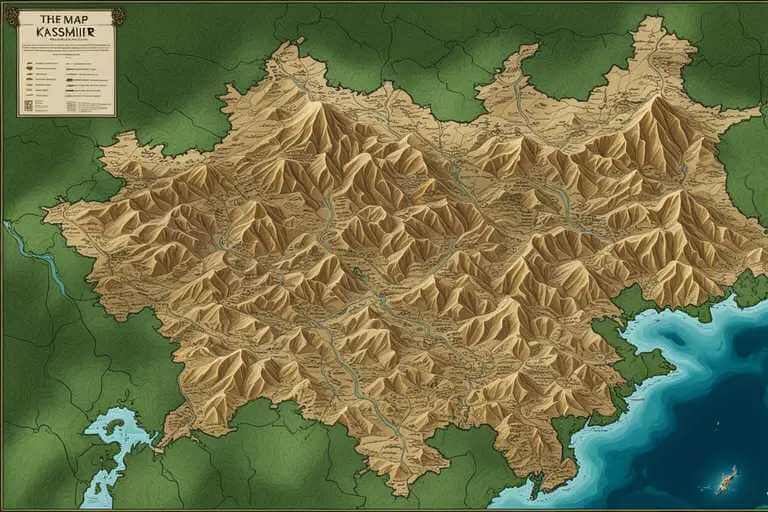
A Closer Look at PoK: History, Administration, and Strategic Significance of
AI-Generated Image for representative purpose [Read About Us to know more]
Jammu Kashmir Bills Modi Shah Government passed
Pakistan-occupied Kashmir, or PoK, refers to the portion of Kashmir under Pakistani administration. This region, encompassing Azad Jammu and Kashmir (AJK) and Gilgit-Baltistan, spans roughly 78,114 square kilometres and houses a population of 4.6 million people.
Historical Context and Territorial Disputes:
Historically, PoK belonged to the princely state of Jammu and Kashmir ruled by Maharaja Hari Singh. Following India and Pakistan’s independence in 1947, princely states were granted the choice of joining either country or remaining independent. Hari Singh initially chose independence but faced an invasion by Pakistan-backed militants aiming to annex Kashmir to Pakistan. This prompted Hari Singh to sign an instrument of accession with India, entrusting India with control over defence, foreign affairs, and communications in Jammu and Kashmir.
The subsequent war between India and Pakistan ended with a ceasefire in 1949, leaving a part of Kashmir under Pakistani administration. This region became known as PoK. India maintains PoK as an integral part of its territory and demands its complete vacation from Pakistan. Conversely, Pakistan views PoK as a self-governing entity and advocates for the Kashmiri people’s right to self-determination. This dispute has been a major source of tension and conflict between the two nations, leading to numerous wars and skirmishes. The United Nations has also attempted to resolve the issue without significant progress.

Internal Administration and Political Landscape:
PoK’s political and administrative structure is complex, and characterized by limited autonomy and representation. While AJK possesses its own elected president, prime minister, legislative assembly, and supreme court, its authority remains subordinate to the Pakistan-administered Kashmir Council headed by the Pakistani Prime Minister. Similarly, Gilgit-Baltistan follows a similar structure with a governor instead of a president.
AI-Generated Image for representative purpose [Read About Us to know more]
Both regions rely heavily on Pakistan for financial and military assistance and face challenges such as human rights violations, corruption, poverty, and terrorism.
Strategic Importance and Regional Dynamics:
PoK’s strategic importance stems from its proximity to China and Afghanistan, coupled with its abundance of natural resources and crucial infrastructure. The region boasts numerous rivers, glaciers, mountains, and forests, offering water, energy, and potential for tourism development. Additionally, PoK hosts the China-Pakistan Economic Corridor (CPEC), a multi-billion dollar project connecting China’s Xinjiang province with Pakistan’s Gwadar port through a network of roads, railways, pipelines, and power plants. India objects to the CPEC’s construction through PoK, considering it an infringement on its sovereign territory.
Understanding PoK’s historical background, administrative structure, and strategic significance is crucial for comprehending the complexities of the Kashmir issue and its enduring impact on regional dynamics.
Read An Article About Hon. Home Minister Shri Amit Shah
Co-operative Ministry of India & the Extraordinary Vision of Amit Shah
How former bureaucrats in Modi government are transforming India
Download the Amit Shah Wallpaper and Images Link Here
References:
1: India: Lok Sabha Passes Jammu and Kashmir Reservation Bill, J&K Reorganisation (Amendment) Bill
2: Jammu and Kashmir Reservation Bill, J&K Reorganisation (Amendment) Bill Passed in Lok Sabha | DETAILS
3: HM Amit Shah speaks on Jammu & Kashmir Reservation (Amendment) Bill 2023 in Lok Sabha | Live
4: THE JAMMU AND KASHMIR RESERVATION (AMENDMENT) BILL, 2023
5: The Jammu and Kashmir Reservation (Amendment) Bill, 2023
6: JK Reorganisation (Amendment) Bill, JK Reservation (Amendment) Bill passed by Lok Sabha
7: The Jammu and Kashmir Reorganisation (Amendment) Bill, 2021
8: THE JAMMU AND KASHMIR REORGANISATION (AMENDMENT) BILL, 2023

[…] It was a surgical strike on black money and FICN. The move, supported by strategists like Amit Shah, rendered 86% of India’s currency worthless overnight, turning the Khanani network’s […]
[…] How Jammu and Kashmir Bills Passed by Modi-Shah Government Will Transform the Region […]