




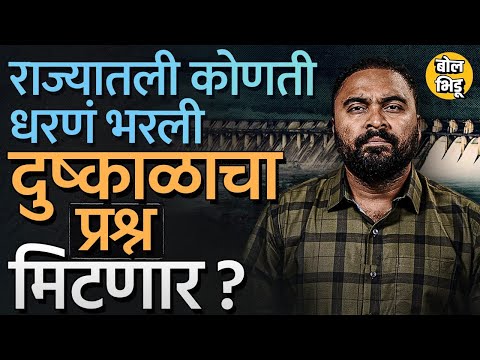
Maharashtra, the land of dreams and opportunities, is also a land of contrasts. While some regions are drenched in monsoon showers, others are parched and thirsting for relief. This year, the water situation in the state’s dams paints a picture as diverse as its landscapes. From overflowing reservoirs to worryingly low levels, the story of Maharashtra Dam Water Level is one of both abundance and scarcity.
But hey, we’re not here to just rain on your parade (pun intended ?). In this blog post, we’ll dive deep into the data, exploring the water levels in various regions, the impact on local communities, and the ongoing efforts to secure a drought-free future for Maharashtra. We’ll even sprinkle in some humor and insights along the way. So, grab a glass of water (if you’re lucky enough to have it) and let’s embark on this journey on Maharashtra Dam Water Level together!
And hey, if you’re interested in learning more about water conservation and how to make the most of this precious resource, be sure to check out my YouTube channel [link to your channel].
[We’ve got some great tips and tricks to share! Lets Connect on Facebook]
[Read about 5 Ways to Combat Urban Flooding in Pune]
Introduction: Thirsty for Relief
Maharashtra’s dams are like a patchwork quilt, each holding a different story of water abundance or scarcity. Recent reports from the Water Resources Department reveal a state average of 36.07% water storage, a number that seems promising until you zoom into regions like Chhatrapati Sambhaji Nagar, where dams are languishing at a meager 15.26%. Meanwhile, areas like Kolhapur, Satara, Sangli, Vidarbha, and North Maharashtra are practically singing in the rain, with overflowing rivers and dams brimming with life-giving water.
This stark contrast begs the question: Can Maharashtra ever truly achieve freedom from drought? The answer, it seems, lies in understanding the complex interplay of monsoon patterns, regional variations, and the ever-present shadow of climate change. So, let’s dive deeper into the data and see what the numbers reveal.
The Monsoon’s Mixed Blessings

Pune and its surrounding areas haven’t been left out of the party either. The region has seen good rainfall, resulting in well-filled dams that offer a sense of security for the near future. However, the monsoon’s blessings haven’t been evenly distributed. While some areas rejoice in the rain’s abundance, others continue to grapple with the harsh reality of drought.
Recommended Product
Casio Vintage A168WA Digital Watch – Classic Retro Style
🛒 View on Amazon →As an Amazon Associate, we earn from qualifying purchases. Price and availability may vary.
Let’s not get too carried away with the overflowing dams just yet. The situation in Marathwada and other drought-prone regions remains a concern. While some regions are swimming in water, others are still thirsting for relief.
[Read about 7 Surreal Beaches You Won’t Believe Exist]
Maharashtra’s Water Infrastructure: A Regional Breakdown
Latest Update: Mumbai Dam Levels Reaching Capacity
Mumbai’s water worries seem to be easing, with several dams nearing or exceeding their capacity as of July 28, 2024. Let’s take a quick look at the numbers:
| Dam Name | Current Level (%) | Full Capacity (million liters) | Overflow Status |
|---|---|---|---|
| Modak Sagar | 100.00 | 27,698 | Overflowing |
| Tansa | 99.29 | 107,644 | Nearly Overflowing |
| Tulsi | 100.00 | 8,623 | Overflowing |
| Vihar | 100.00 | 27,698 | Overflowing |
| Bhatsa | 77.00 | 717,037 | |
| Upper Vaitarna | 43.10 | 227,047 | |
| Middle Vaitarna | 72.29 | 182,794 |
With the monsoon in full swing, Modak Sagar, Tansa, Tulsi, and Vihar dams are already overflowing or on the verge of it. This is excellent news for Mumbai, as it signifies a robust water supply for the upcoming months. However, it’s important to note that not all dams are at full capacity. Bhatsa and Upper Vaitarna, for example, still have room to fill up.
The city’s water authorities are closely monitoring the situation and may consider lifting water restrictions if the trend of heavy rainfall continues. While the current situation is encouraging, it’s crucial to continue practicing water conservation to ensure long-term water security for Mumbai.
Latest Update: Nashik Dams’ Water Levels (July 28, 2024)
| Dam Name | District | Water Level (%) | Full Capacity (million litres) | Compared to Last Year |
|---|---|---|---|---|
| Nilwande | Ahmadnagar | 42.66 | 232,180 | ? 10.63% |
| Bhandardara | Ahmadnagar | 80.97 | 304,090 | ? 2.08% |
| Mula | Ahmadnagar | 45.13 | 608,810 | ? 2.84% |
| Waghur | Jalgaon | 63.57 | 248,210 | ? 7.32% |
| Upper Tapi Hatnur | Jalgaon | 36.47 | 255,000 | ? 17.49% |
| Kadwa | Nashik | 91.86 | 47,790 | ? 46.62% |
| Waki | Nashik | 39.93 | 70,570 | ? 8.51% |
| Arjunsagar | Nashik | 45.36 | 36,990 | ? 5.42% |
| Mukane | Nashik | 32.09 | 204,980 | ? 25.59% |
| Bham Dam | Nashik | 100.00 | 69,760 | ? 31.06% |
| Chankapur | Nashik | 9.63 | 68,720 | ? 19.77% |
| Girna | Nashik | 11.83 | 523,550 | ? 10.82% |
| Palkhed | Nashik | 36.67 | 18,490 | ? 8.29% |
| Upper Vaitarna | Nashik | 50.35 | 331,310 | ? 3.98% |
| Waghad | Nashik | 25.50 | 65,180 | ? 6.18% |
| Bhavali | Nashik | 99.58 | 40,790 | ? 0.01% |
| Darna | Nashik | 83.45 | 202,420 | ? 5.44% |
| Tisgaon | Nashik | 0.00 | 12,760 | ? 0.02% |
| Ozarkehd | Nashik | 0.00 | 60,320 | ? 26.32% |
| Karajwan | Nashik | 19.04 | 152,090 | ? 14.85% |
| Gangapur | Nashik | 56.88 | 159,420 | ? 5.49% |
| Punegaon | Nashik | 10.47 | 17,570 | ? 25.09% |
This update reveals a mixed picture in Nashik. While some dams like Bham Dam and Kadwa are overflowing, others like Tisgaon and Ozarkehd are completely dry. This underscores the importance of continuous monitoring and adaptive water management strategies.
The water situation in Maharashtra’s dams continues to evolve, with some notable changes in Nashik as of July 28, 2024. Let’s take a closer look at the recent data:

For updated information please visit website [https://numerical.co.in/numerons/collection/598537df1d6090dc136dc372]
Maharashtra Dam Water Level July 2024
| Region | No. of Dams (Major) | Usable Water Storage (%) | No. of Dams (Medium) | Usable Water Storage (%) |
| Nagpur | 16 | 63.04 | 42 | 76.22 |
| Nashik | 22 | 45.60 | – | – |
| Pune | 35 | 69.68 | – | – |
| Konkan | 11 | 80.36 | – | – |
| Amravati | – | – | 25 | 62.59 |
| Chhatrapati Sambhajinagar | 44 | 14.60 | – | 21.24 |
| State Average | 138 | 56.14 | – | – |
As you can see, the water storage situation varies significantly across regions. While Nagpur, Nashik, Pune, and Konkan enjoy relatively comfortable levels, Chhatrapati Sambhajinagar is facing a dire situation with only 14.60% usable water storage in its major dams. This highlights the need for a nuanced understanding of the water crisis in Maharashtra, as solutions may need to be tailored to the specific challenges faced by each region.
It’s also worth noting that while the state average for major projects seems decent at 56.14%, this figure can be misleading. It masks the severe water scarcity in certain areas and emphasizes the importance of looking beyond the overall numbers to grasp the ground reality.
Spotlight on Specific Dams
To understand the diverse water situation in Maharashtra, let’s shine a spotlight on a few key dams:
Gosekhurd (Bhandara District):
Located in the Nagpur region, this dam is currently at 100% capacity, a testament to the ample rainfall the area has received. Gosekhurd plays a crucial role in irrigation and water supply for the surrounding communities, and its full reservoir is a welcome sight for farmers and residents alike.
Jayakwadi (Paithan):
This major project in the Chhatrapati Sambhajinagar region tells a different story. With a mere 5.21% water storage, Jayakwadi is a stark reminder of the drought’s grip on the area. As the largest irrigation project in Maharashtra, its low water level raises serious concerns about agricultural productivity and water availability for millions of people.
Radhanagari (Kolhapur):
Nestled in the Western Ghats, this dam boasts a healthy 91.59% water storage, thanks to the region’s consistent rainfall. Radhanagari not only supplies water for irrigation and drinking but also contributes to hydroelectric power generation, making it a vital asset for the region.

[Water Scarcity Chokes India’s Cities: The Crisis Is Now]
The Drought’s Lingering Shadow
While the overflowing dams in some regions offer a glimmer of hope, it’s crucial to remember that Maharashtra’s battle with drought is far from over. The high water levels in certain areas don’t automatically translate to water security for the entire state.
Marathwada, in particular, remains a cause for concern. Despite some rainfall, the region’s dams are still struggling to reach adequate levels. The situation is particularly dire in Chhatrapati Sambhaji Nagar, where the Jayakwadi dam’s low storage capacity poses a significant threat to agriculture and livelihoods.
The consequences of continued low water levels in these regions are far-reaching. Farmers may struggle to irrigate their crops, leading to reduced yields and potential food shortages. Drinking water scarcity could also become a pressing issue, impacting the health and well-being of millions of people.
The drought’s lingering shadow serves as a stark reminder that Maharashtra’s water crisis requires a multifaceted approach. While celebrating the overflowing dams, it’s equally important to acknowledge the ongoing challenges and work towards sustainable solutions that ensure water security for all.
[Read about 8 Amazing Wetland Adventures]
A Path to Water Security?
Join the Discussion
Your opinion matters! We invite you to express your views. Join our forum, engage in thoughtful discussions, share information, and submit your content. Let’s delve into diverse perspectives together.
[bbp-single-topic id=6308]
Maharashtra’s journey towards water security is a complex one, fraught with challenges but also brimming with potential solutions. The government, along with local communities and organizations, are actively working to address the water crisis and build a more resilient future.
One key approach is the implementation of innovative water management strategies. Rainwater harvesting, for example, is gaining traction across the state. By capturing and storing rainwater, communities can reduce their reliance on dams and reservoirs, especially during dry spells. Additionally, projects focused on water conservation and efficient irrigation techniques are helping to optimize water usage in agriculture, a sector that consumes a significant portion of the state’s water resources.
The government is also investing in infrastructure development, such as the construction of new dams and the repair of existing ones. However, it’s important to strike a balance between infrastructure development and ecological sustainability. Large-scale dam projects can have adverse environmental impacts, so careful planning and consideration of alternatives are essential.
Climate change, unfortunately, adds another layer of complexity to the water crisis. Maharashtra, like many other regions, is experiencing the effects of a changing climate, including erratic rainfall patterns and prolonged droughts. This underscores the need for adaptive strategies that can withstand the challenges posed by a warming planet.
Despite the obstacles, there are reasons for optimism. The growing awareness about water scarcity is driving a shift towards more sustainable practices at both the individual and community levels. People are becoming more conscious of their water consumption, adopting water-saving habits, and supporting initiatives that promote water conservation.
The path to water security may be winding and challenging, but Maharashtra is taking steps in the right direction. By combining innovative solutions, sustainable practices, and a collective commitment to water conservation, the state can overcome the drought’s shadow and secure a water-rich future for its people.
Conclusion: Hope on the Horizon?
Maharashtra’s water situation is a tale of two realities: abundant rainfall and overflowing dams in some regions, while others grapple with the harsh grip of drought. The data reveals a complex picture, with regional disparities highlighting the need for tailored solutions.
The monsoon’s mixed blessings have brought relief to some areas, but the drought’s shadow still looms large over others. The low water levels in Marathwada and other regions serve as a stark reminder that the journey to water security is far from over.
However, there are reasons for hope. The government, communities, and organizations are actively working to address the water crisis through innovative solutions, sustainable practices, and a growing awareness of the importance of water conservation.
The road ahead may be challenging, but with a collective commitment and a focus on sustainable water management, Maharashtra can overcome the drought and ensure a water-secure future for its people. The question remains: Can the state truly achieve freedom from drought? The answer lies in our hands, in our choices, and in our collective efforts to protect and preserve this precious resource.
Read about Maharashtra Politics on Newspatron.
