




Summer is here. The heat is brutal. And somewhere on a busy street corner, a man is selling you something cold, something sweet, something your child is already reaching for.
But before you hand over that ten-rupee note — you might want to read this first.
The Video That Left Everyone Speechless
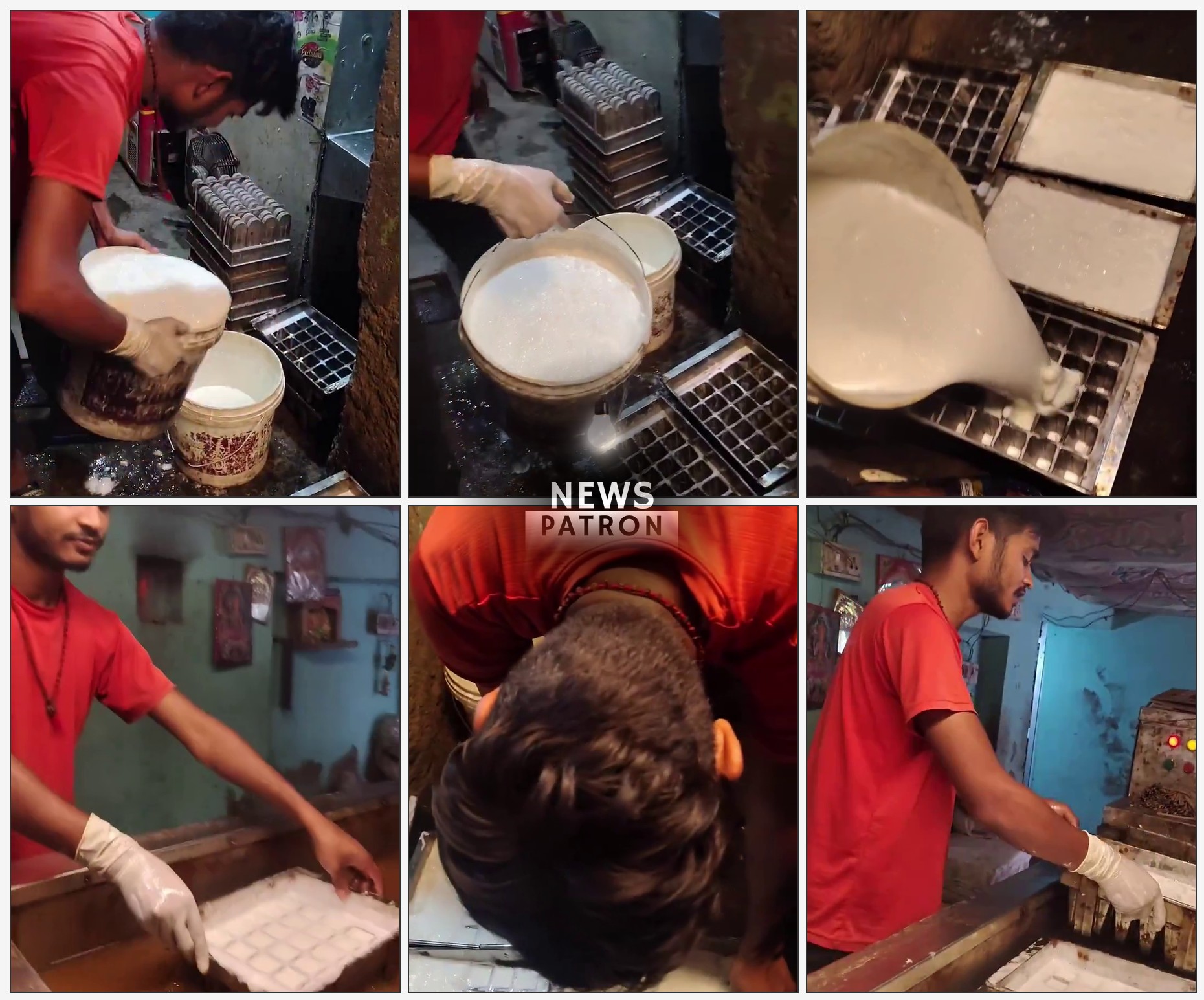
A short video clip began circulating online recently, shared by an independent journalist who clearly couldn’t stay quiet about what he’d seen. The footage, less than a minute long, shows a worker inside what appears to be a makeshift food production unit. He is mixing a thick, foamy white substance in dirty buckets, then pouring it into kulfi moulds. Branded posters of well-known names line the walls in the background.
The irony was hard to miss — premium brand posters. Filthy floor. Foam in the batter.
The caption that came with it didn’t mince words. It called it poison. It called out the country’s food regulator — FSSAI — for sleeping on the job. And online, the reaction was swift. One commenter summed it up with a phrase that stuck: “Poison is being sold in the name of cold drinks while the administration sleeps with sleeping pills.”
Another, more darkly comic reaction doing the rounds: “Don’t fear missiles or anything — you definitely have to fear the FSSAI.”
Harsh? Yes. Exaggerated? Not entirely.
FSSAI, We Need to Talk
Let’s be clear about what FSSAI is supposed to do. The Food Safety and Standards Authority of India exists for one reason: to make sure what goes into your mouth won’t kill you. It has the authority to raid, test, fine, and shut down food operations across the country.
So why does it feel like every summer brings a fresh wave of adulteration scandals — and every winter, the same regulator quietly moves on?
People are no longer giving FSSAI the benefit of the doubt. One person, in a comment that reflects what thousands feel, put it plainly: “I have written to them, I have sent messages, I have tried every channel — they do nothing.” Another cut even deeper: “FSSAI has everyone trapped — eat, drink, enjoy — just be ready for the hospital in a few days.”
That is not satire. That is lived experience.
And then there’s the darkest joke of all, floating around online with uncomfortable frequency: FSSAI — is population control just your contract?
We are not endorsing that framing. But we understand why people reach for it.
What This Editor Found When He Simply Asked
Here is where it gets closer to home.
Curious — and frankly, a little unsettled — the Newspatron editor did something simple. He walked up to a roadside ice cream cart and started asking questions.
What followed was one of the more quietly shocking conversations of recent memory.
The vendor explained, without hesitation, that when there is no electricity, the cart just moves — to wherever. The assumption being that things are “settled” further up the chain, with middlemen ensuring no one gets removed from their pitch.
The freezing method? Ice blocks. Bought from wherever they’re available. Not food-grade ice. Not made for consumption. Just ice — packed around the containers to keep things cold for a couple of hours.
And what happens when the power cuts run long, or the ice runs out, and the kulfi begins to melt?
It gets saved. Mixed back in. Sold the next day — or converted into rabdi or some other form.
Let that settle for a moment.
The vendor wasn’t defensive about this. There was no shame in the telling. Because from where he stood, this was just how things work.
I guarantee municipal authorities would be shocked by a lab test on these samples. Not because anyone is being deliberately malicious — but because an entire system of street food operates completely outside the reach of any hygiene standard, and nobody in authority has been paying attention.
The Full Picture Is Worse Than the Video
The video is alarming. But the everyday reality of street-side kulfi, mawa, and rabdi is arguably more alarming — because it isn’t dramatic. It’s just routine neglect.
Consider:
- No electricity connections: Many of these carts have no access to deep freezing at all. The kulfi is kept cold through improvised ice packing — for a few hours, at best.
- The water bucket: Plates, containers, spoons — all rinsed in the same bucket of water. The same water used for hours, across dozens of servings. No running water. No soap. No replacement.
- No toilet access: The vendors, who spend full days on the street, have no access to sanitation facilities. When nature calls, they manage as best they can — and then return to handling your food. This is not a criticism of the vendors. This is a systemic failure that has been allowed to persist.
- No cutlery washing station: If there is washing to be done, it happens when — and only if — the vendor reaches a place where that is possible. Which may be the end of the day. Or not at all.
And then there is the myth this editor would like to formally put to rest: the idea that consuming this food regularly builds immunity.
It doesn’t. Consistently eating from unhygienic sources does not produce strong constitutions. It produces quiet, cumulative damage — to the gut, to the liver, to children who are still developing. Acche din do not come to those who binge on unclean food. The body simply absorbs the cost silently, until it can’t.
What Needs to Happen — And Who Needs to Do It
This is not a call to panic. It is a call to accountability.
Municipal bodies need to wake up. Not just the FSSAI at the national level, but the local civic authorities who are, frankly, even closer to the problem. They walk past these carts every day. They know exactly where these vendors operate. And yet — no samples are collected. No data is published. No public health warnings are issued that a citizen can actually access.
The public has a right to know what is in their street-side kulfi. A right to see lab results. A right to understand the specific risks — not just vague warnings, but actual data.
Here is what municipal authorities must commit to:
- Shut down vendors who cannot demonstrate basic hygiene compliance. Not threaten. Not warn repeatedly. Shut down.
- Conduct and publish lab tests on samples from roadside ice cream, kulfi, mawa, and rabdi sellers — and make that data publicly accessible, not buried in government portals.
- Create enforceable minimum standards for mobile food vendors — including verified access to clean water, hygienic utensil practices, and cold chain requirements.
And to the vendors themselves — many of whom are working under difficult, underpaid, and unsupported conditions — there is no blame here directed at individuals trying to earn a living. The blame sits squarely with the system that trained no one, equipped no one, and holds no one accountable.
The Bottom Line This Summer
Someone posted something online that is worth pausing on: “Bilkul ab toh band karna hi padega.” Absolutely, now it has to stop.
And they are right.
You cannot build a healthy population on contaminated kulfi. You cannot build public trust on a regulator that sends emails into a void. You cannot keep calling this country a food powerhouse while children eat melted-and-refrozen milk solids from buckets rinsed in grey water.
The cold season — ironic as that sounds in 40-degree heat — is over for FSSAI’s long nap. It is time to do the job.
And until they do? Be careful what you hand your child this summer. Ask questions. Push your local municipal councillor. Demand published data. And if you see something that looks wrong — say so, loudly.
Because the vendors aren’t the only ones who should fear accountability.
Related Read: The Great Indian Unhygienic Industry — No Palm Oil Guaranteed
Read how Palm oil quietly replaced milk fat in India’s frozen desserts:

[…] https://newspatron.com/fssai-kulfi-adulteration-video-unhygienic-factory-india-summer-2026/ […]
[…] The Great Indian Unhygienic Kulfi Factory: Is Someone Selling You Poison This Summer? […]