




You are at a restaurant. A popular one, on a well-known stretch of road in one of India’s most prosperous cities. You order something simple — a plate of chana puri. Street food done indoors. Comfort food. The kind of thing you have eaten a hundred times without a second thought.
The plate arrives.
And inside the gravy, there is a dead lizard.
This is not a story about a remote dhaba in an unmonitored corner of rural India. This is CG Road, Navrangpura, Ahmedabad. Municipal Market. A food joint that presumably passed whatever checks were required to remain open and serving customers on a weekday afternoon.
A customer found it. Photographed it. Reported it.
And when officials arrived to inspect the premises — the dead lizard in the food was not even the worst thing they found.
What the Inspection Actually Found
At approximately 12:30 PM on March 5, 2026, a customer at Wah Pizza & Bhel House contacted the Ahmedabad Municipal Corporation to report what he had found in his food.
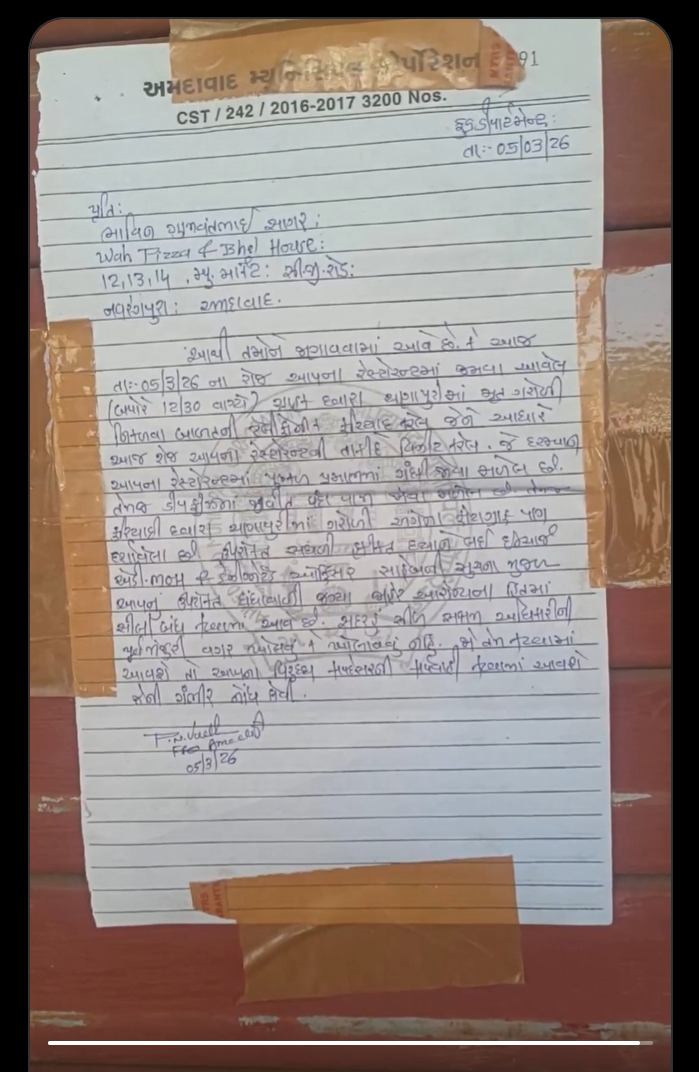
The AMC’s Food Safety Officer responded and visited the premises under the authority of the Food Safety and Standards Act and the Gujarat Provincial Municipal Corporations Act.
The complainant’s photograph was verified on-site. The lizard was real. The complaint was confirmed.
Recommended Product
Alpino Peanut Butter Chocolate Protein Bar – Gluten Free
🛒 View on Amazon →As an Amazon Associate, we earn from qualifying purchases. Price and availability may vary.
But then the inspectors went further — and what they found in the rest of the establishment explained a great deal about how a lizard ends up in a plate of food in the first place.
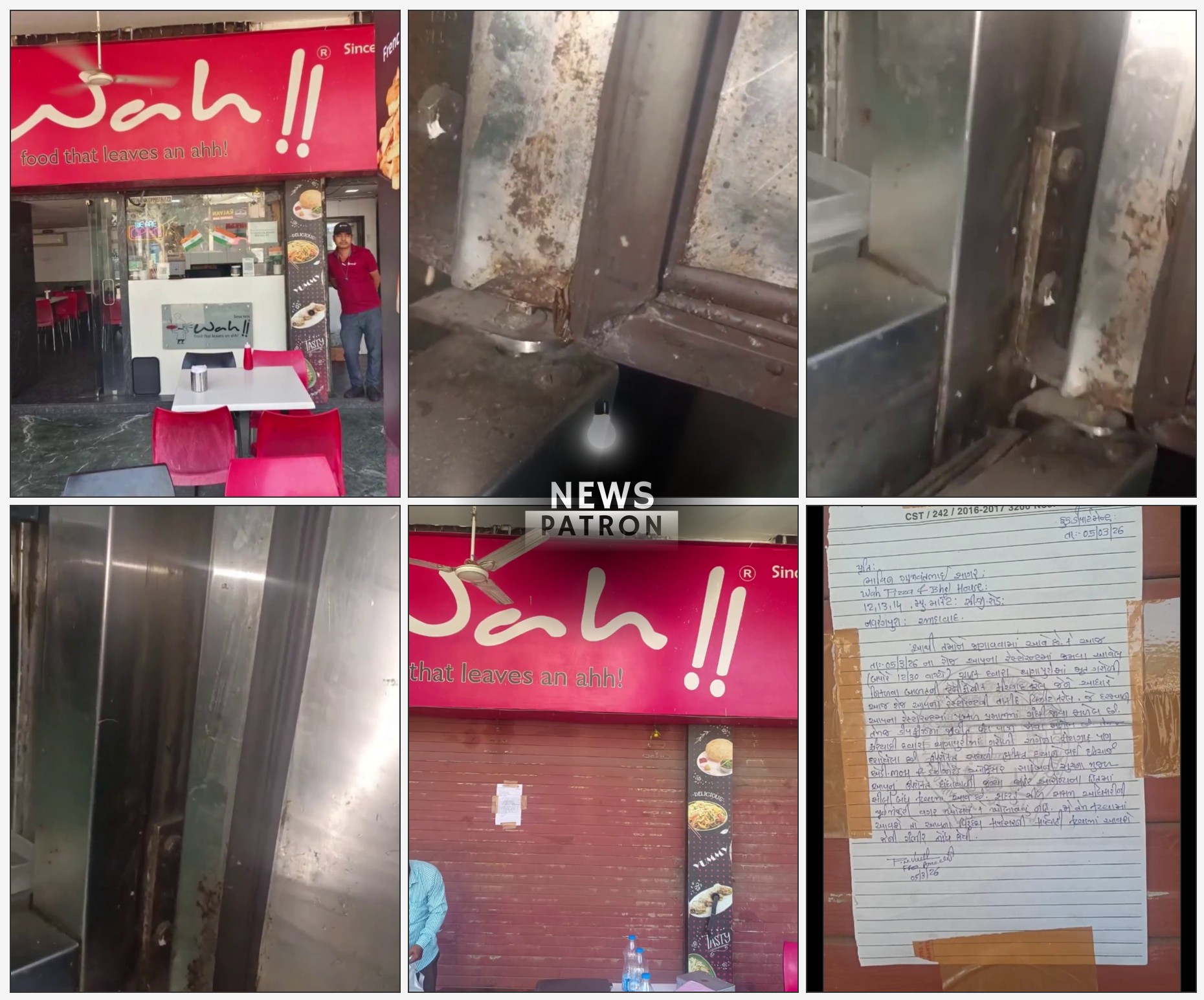
Inside the deep freezer: significant dirt accumulation. And live insects.
Read that again. The appliance designed to preserve food at safe temperatures — the cold storage that is supposed to be one of the cleanest parts of any food preparation area — was contaminated with filth and living insects.
This is not a one-off slip. This is not a busy day when someone forgot to clean up. A deep freezer does not accumulate significant dirt and a live insect colony overnight. This is the condition of a food operation that has not been adequately maintained, inspected, or held accountable — until a customer’s photograph forced the issue.
The AMC acted immediately. The food unit was sealed with indefinite effect.
The Seal Is Necessary. It Is Not Sufficient.
The sealing of this establishment is the correct immediate response. Officials moved on the same day the complaint was received. The inspection was real, the violations were documented, and the closure was executed.
That is how the system is supposed to function. And when it functions that way, it deserves acknowledgment.
But a seal on a shutter does not address the deeper question — which is how this establishment was operating in this condition on an ordinary weekday, with customers ordering food, on one of Ahmedabad’s busiest commercial stretches.
CG Road is not a hidden lane. Municipal Market is not an unregulated footpath. This is a formal food business, presumably with licences, registration, and whatever documentation the authorities required before it was permitted to serve the public.
Someone was responsible for checking on this establishment. Periodically. Consistently. Before a customer found a reptile in his lunch.
That somebody — and that system — needs to answer questions that the sealing order does not answer by itself.
(Read the full story in our previous blog about the Great Indian Unhygienic Kulfi Factory — another case of what actually goes into the food you eat this summer, and why FSSAI’s enforcement record demands scrutiny)
The Law Exists. The Penalties Do Not Fit the Crime.
India has food safety legislation. The Food Safety and Standards Act provides for financial penalties — up to ten lakh rupees in the most serious cases. In practice, most violations result in notices, temporary closures, and fines at the lower end of that range.
One local observer, who did not wish to be named, put the frustration plainly: Gujarat — regardless of what other states are doing — needs a food adulteration and hygiene law with genuine teeth. Fines that a commercial establishment can absorb and treat as an operating cost are not deterrents. They are licensing fees for continued negligence.
The argument being made publicly, and with growing force, is this: a food safety violation that puts a customer’s health at serious risk should carry the possibility of criminal liability — not just a financial penalty. Arrest. Non-bailable warrant provisions. Jail, in cases of deliberate or repeated violation.
This is not a disproportionate demand. It is, in fact, the standard applied in several countries where food safety enforcement is taken seriously. The reasoning is straightforward: the person who sold contaminated food to an unsuspecting customer did not merely make a paperwork error. They put that person’s health — and potentially their life — at genuine risk.
A fine of a few lakh rupees, payable after reopening, does not communicate that this is unacceptable. Criminal liability communicates that.
Gujarat’s state government, and the officials being tagged in the ongoing public debate about this incident, should hear this clearly: the demand for stronger legislation is not outrage for its own sake. It is a demand for a legal framework that matches the actual seriousness of what happens when food safety fails.
What Happens Inside the Kitchens You Never See
The lizard is the visible part of this story. The visible, photographable, undeniable part.
But the insects in the deep freezer are the part that should concern you more — because they represent the everyday operating condition of a food establishment that was, until yesterday, serving customers without incident.
Or at least, without documented incident.
Here is what the presence of live insects in a deep freezer tells you about a kitchen:
It tells you that cleaning schedules, if they existed, were not being followed. It tells you that the gap between how the front of the restaurant appeared to customers and how the back of the restaurant actually functioned was significant. It tells you that whoever was responsible for hygiene compliance — internal management, external inspection, or both — had not been doing their job.
And it raises an uncomfortable question that applies not just to this eatery but to every food establishment operating under the same inspection regime: how many others are in the same condition, simply without a customer who happened to photograph their lunch?
This is not a hypothetical designed to induce panic. It is a structural question about whether the current frequency and rigour of food safety inspections in Gujarat — and across India — is adequate to the actual scale of the problem.
Per data compiled by FSSAI, over ten thousand food safety violations were recorded nationally in 2025 alone. That number reflects only what was caught. It does not reflect what was not inspected, not reported, or not pursued after a notice was issued.
The lizard in the chana puri is not an anomaly in a well-functioning system. It is a window into the gap between what that system is supposed to deliver and what it actually provides to the person sitting down for lunch.
What the Customer Did Right — and What It Should Not Require
The customer who found this did everything correctly.
He did not stay silent. He did not post his photo and move on. He contacted the municipal authority directly, provided documentation, and cooperated with the inspection. Because of that, an establishment with serious hygiene violations was closed before it could harm anyone else.
That outcome is good. The process that led to it is worth examining.
It required one customer to order a contaminated plate. To notice. To photograph. To report. To follow up. And then to be present and cooperative during an official visit.
Every step in that chain could have broken. He could have not noticed. He could have noticed and said nothing, not wanting the hassle. He could have reported it and received no response.
The fact that the system worked in this case reflects well on the customer’s resolve and on the AMC officials who responded. It does not reflect a food safety infrastructure that is catching problems before they reach a customer’s plate.
Proactive inspection — not reactive complaint-driven enforcement — is the standard that public health requires. Waiting for a customer to find a lizard and report it is not food safety. It is damage control after the fact.
What Needs to Change — Beyond This One Sealed Shutter
The closure of Wah Pizza & Bhel House is appropriate. It is the floor of what a responsible municipal authority should do.
Above that floor, there is considerably more work to do.
- Mandatory unannounced inspections — not announced visits that give establishments time to prepare, but genuine surprise inspections of all registered food businesses at meaningful frequency.
- Public disclosure of inspection results — a database, accessible to any resident, showing the inspection history, violations found, and penalties issued for every food establishment in the city. If you can check a restaurant’s rating before you walk in, you should be able to check its compliance record.
- Graduated criminal liability — first serious violation: heavy fine and mandatory retraining. Repeat violation or deliberate adulteration: criminal proceedings, non-bailable provisions, and licence cancellation without reinstatement option.
- Whistleblower protections for food service workers — the people who see what happens in kitchens are employees. They face real professional consequences for reporting. A protected reporting channel, with guaranteed anonymity and follow-up, would surface problems before they become viral incidents.
Gujarat has the administrative capacity to do all of this. The question is whether the political will exists to treat food safety as the public health priority it actually is — rather than as a regulatory function that springs into action when a photograph makes headlines.
The Bottom Line
A man sat down for lunch on a Wednesday in Ahmedabad and found a dead lizard in his food.
The photograph he took and the report he filed led to an inspection that confirmed what the photograph implied: this was not a clean kitchen. This was an establishment with insects in its freezer and, apparently, reptiles in its gravy.
The AMC sealed it. That was right.
Now comes the harder part — building a food safety system that does not depend on a customer’s luck, or courage, or presence of mind to catch what inspectors should have found long before the plate ever reached the table.
The people of Ahmedabad — and every city in India — deserve food safety that works on the days nobody is watching.
Not just on the days someone takes a photograph.
Newspatron — Let Curiosity Be Your Guide.

[…] https://newspatron.com/amc-seals-cg-road-eatery-dead-lizard-chana-puri-ahmedabad-food-safety-2026/ […]