


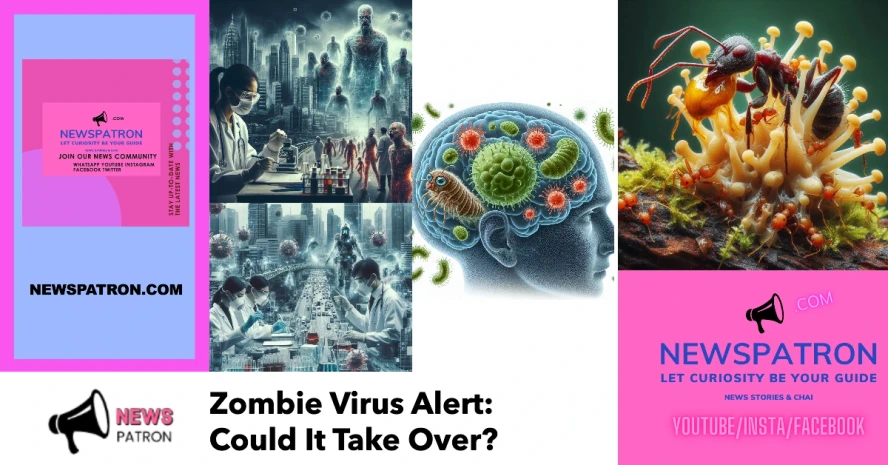

ALERT! New Zombie Virus Taking Over the World
#zombievirus #killerants #cordycepsfungus #toxoplasmagondii #globalwarming #parasiticorganisms #brainparasite #climatechange #newspatron
In recent years, the world has witnessed some alarming developments in the realm of parasitic organisms. Killer ants are turning into zombies. There is also the potential threat of fungi adapting to human hosts. The implications are both fascinating and terrifying. This blog delves into the science behind these phenomena. It explores whether a new zombie virus will indeed take over the world. Stay informed, stay curious, and let’s dive into this intriguing topic.
[Whooping Cough Alert: Read on How to Protect Yourself and Your Family]
Introduction
Killer ants, known for their fierce nature, have exhibited a bizarre behavior that has left scientists baffled. Occasionally, these ants drag their fellow colony members away and abandon them. The reason? These sacrificed ants are turning into living zombies due to a notorious fungus called Cordyceps. This phenomenon has sparked interest and concern. The American series The Last of Us made an eerie prediction in 2013. It suggested that by 2023, the Cordyceps fungus trigger a zombie apocalypse in humans.
Understanding Parasitic Organisms
Parasitic organisms, whether bacteria, fungi, protozoa, or viruses, are notorious for their ability to switch hosts. A prime example is HIV, which originated in non-human primates like apes. Initially, people thought that the human immune system was stronger than that of apes. They believed that the virus wouldn’t affect humans. However, by the 20th century, HIV began infecting humans, eventually turning into the deadly disease we know as AIDS.
[Read about Mental Healthcare in India: A Holistic Approach]
Another fascinating yet worrying parasite is Toxoplasma gondii, which originally affected only rats. Recent research shows that it is now manipulating human brains. Its influence is linked to a significant rise in road accidents. Scientists estimate that 60% of the human population is already infected by this parasite.
More Examples of Human Parasites
Human parasites come in various forms, including protozoa, helminths (worms), and ectoparasites. Here are some notable examples:
- Malaria (Plasmodium spp.)
- Malaria is caused by protozoan parasites of the genus Plasmodium, transmitted through the bites of infected Anopheles mosquitoes. It causes fever, chills, and flu-like symptoms and can be fatal if not treated[1].
- Giardiasis (Giardia lamblia)
- This protozoan parasite infects the small intestine, causing diarrhea, abdominal pain, and weight loss. It spreads through contaminated water or food[2].
- Amoebiasis (Entamoeba histolytica)
- This parasite infects the intestines, leading to severe diarrhea and liver abscesses. It is transmitted through contaminated food and water[2].
- Tapeworms (Taenia spp.)
- Tapeworms are flatworms that live in the intestines of their hosts. They can grow several meters long and cause nutritional deficiencies and digestive issues. Humans can get infected by consuming undercooked meat[2].
[Read about Unlocking Gut Health: Your Ultimate Guide to a Thriving Microbiome]
Recommended Product
Casio Vintage A168WA Digital Watch – Classic Retro Style
🛒 View on Amazon →As an Amazon Associate, we earn from qualifying purchases. Price and availability may vary.
- Hookworms (Ancylostoma duodenale and Necator americanus)
- These parasitic worms infect the small intestine, causing anemia and malnutrition. They enter the body through the skin, usually from walking barefoot on contaminated soil[2].
- Trichomoniasis (Trichomonas vaginalis)
- This sexually transmitted infection arises from a protozoan parasite. It affects the urogenital tract. This leads to itching, discharge, and discomfort[2].
[Vagus Nerve Gut Health: Your Key to Healing]
The Case of Toxoplasma Gondii
Another fascinating yet worrying parasite is Toxoplasma Gondii, which originally affected only rats. Recent research shows that it is now manipulating human brains. Its influence is linked to a significant rise in road accidents. Scientists estimate that 60% of the human population is already infected by this parasite.
How Toxoplasma Gondii Impacts Humans
This parasite first manipulates a rat’s brain, making it wander near its predator—cats. Once the cat preys on the infected rat, the parasite reproduces inside the cat and exits via its feces. From there, it enters humans through contaminated water or food. Once in a human body, the parasite affects brain cells. It alters behavior, leading to risky actions. These include increased road accidents. A study in Prague surveyed 446 people, of which 146 were involved in road accidents. The findings revealed that those involved in accidents had significantly higher levels of Toxoplasma Gondii. Scientists discovered that this parasite slows down reaction times in humans, making it difficult to avoid accidents. Though it hasn’t fully controlled our movements yet, parasites like Cordyceps are known to take total control of their hosts.
Cordyceps Fungus: Turning Ants into Zombies
Cordyceps doesn’t attack the ant’s brain directly. Instead, it uses specialized structures called hyphal tubes to control the ant’s muscles. These tubes pierce through the muscles, secreting chemicals like sphingosine and guanidine butyric acid, which manipulate the ant’s motor neurons. The fungus essentially hijacks the ant’s body. It forces the ant to move to an ideal environment for fungal growth. This environment could be a leaf at a specific height, temperature, and humidity. The fungus locks the ant’s jaws onto the leaf. Then it begins to grow its fruiting body from the ant’s head. Once mature, the fungus bursts open, releasing spores into the environment to infect other ants. The cycle continues.
Studies on Cordyceps Fungus
Cordyceps fungi have been the subject of many studies due to their unique parasitic behavior and potential health benefits. Research has shown that Cordyceps species possess various pharmacological properties. Examples include immunostimulatory, anti-cancer, anti-inflammatory, and antioxidant effects. Species such as Cordyceps militaris and Cordyceps sinensis are known for these properties[3][4]. These fungi produce bioactive compounds like cordycepin, adenosine, and polysaccharides, which contribute to their medicinal properties[3].
For instance, a study published in Frontiers in Pharmacology highlighted the immune-stimulatory potential of Cordyceps. It noted Cordyceps’ ability to enhance cytokine production and stimulate immune cell activity[3]. Another study in Fermentation discussed the genetic and metabolic aspects of Cordyceps militaris. It emphasized its therapeutic potential. The study also highlighted challenges in large-scale cultivation[4].
Could Humans Be Next?
Thankfully, most fungi, including Cordyceps, don’t affect warm-blooded creatures like humans because of our body temperature. But, global warming is changing this. Some fungi are now adapting to survive at higher temperatures. Hypothetically, if Cordyceps adapts to our body temperature in the next 10–20 years, it start infecting humans. In such a scenario, our innate immune system would detect the fungus. It would trigger mechanisms like macrophages and T-helper cells to fight it.
The Impact of Global Warming on Fungi
Global warming is having a profound impact on fungi, including their ability to infect new hosts. Rising temperatures and changing weather patterns are creating environments where fungi can thrive and adapt. Here are some key points on how global warming affects fungi:
- Temperature Adaptation
- As global temperatures rise, some fungi are evolving to survive in warmer conditions. This includes adapting to human body temperatures, which can increase the risk of fungal infections in humans[5].
- Geographic Expansion
- Climate change is expanding the geographic range of many fungi. For example, the fungus that causes Valley fever, Coccidioides, has been found in new regions due to changing climate conditions[5].
- Increased Fungal Virulence
- Higher temperatures and extreme weather events can increase the virulence of fungi, making them more capable of causing severe infections. This includes fungi like Candida auris, which has emerged as a significant health threat[5].
- Impact on Agriculture
- Climate change is affecting fungal pathogens in agriculture, leading to increased crop contamination and economic losses. Fungi like Fusarium and Aspergillus are becoming more resilient and producing more mycotoxins under changing environmental conditions[6].
- Biodiversity and Ecology
- Fungi play a crucial role in ecosystems, and climate change is disrupting these roles. Mycorrhizal fungi form symbiotic relationships with plants. Changes in soil temperature and moisture affect them. This impacts plant health and biodiversity[6].
The Worst-Case Scenario
Some fungi, like ringworm, have already found ways to bypass the human immune system. Recently, scientists discovered an extraordinary alien fungus capable of replacing the human brain. This discovery paves the way for creating artificial brains, but it also raises concerns about potential threats.
Conclusion
The world of parasitic organisms is both fascinating and terrifying. From killer ants turning into zombies to the potential threat of fungi adapting to human hosts, the implications are profound. As we continue to explore these phenomena, it’s crucial to stay informed and vigilant. If you found this post insightful, don’t forget to like and share it. Stay curious, keep learning, and keep growing. Jai Hind!
References
[1] List of parasites of humans – Wikipedia
[2] Types of human parasite: Worms, infections, and causes – Medical News Today
[3] Frontiers | Cordyceps spp.: A Review on Its Immune-Stimulatory and …
[4] Research Progress in Understanding the Molecular Biology of Cordyceps …
[5] Climate and Fungal Diseases | Fungal Diseases | CDC
[6] Impact of climate change on fungi | Microbiology Society
