


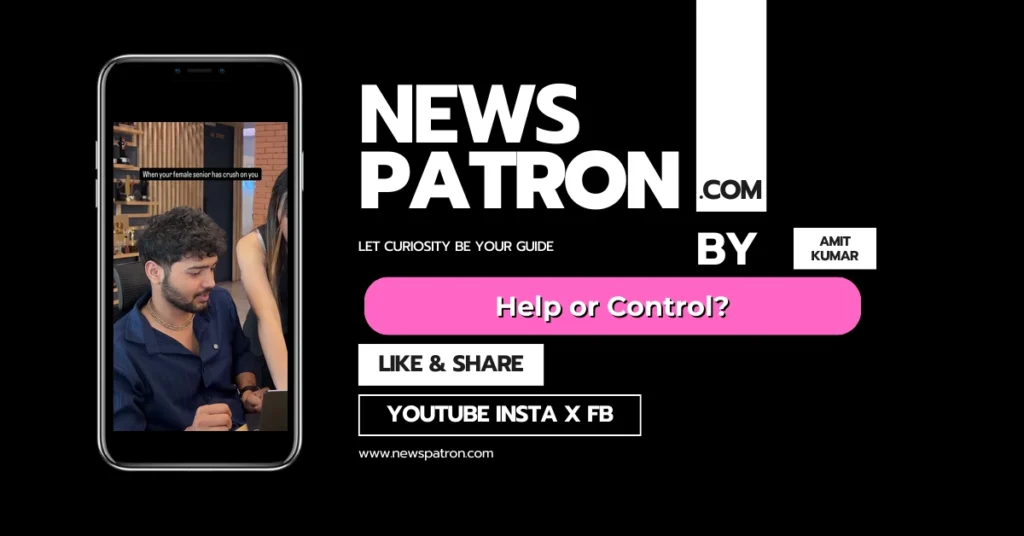

When Office Help Starts Feeling Like Control
Every workplace has moments that feel awkward but harmless on the surface. A senior offering help too eagerly. A colleague insisting on guidance that was never asked for. Compliments that linger longer than they should. Laughter that hides discomfort.
A short humorous video included in this post exaggerates these moments for effect. It makes people laugh because the situations feel familiar. But beneath the humor lies a reality many employees quietly deal with—toxic office behavior that disguises itself as concern, mentorship, or friendliness.
(Video Created by: Nikhil Kumar on Facebook)
Toxic Office Behavior Often Hides Behind Good Intentions
Not all problematic behavior looks aggressive. Much of it arrives wrapped in politeness. “I’ll guide you, you’re new.” “Don’t worry, I’ll handle this for you.” On paper, these sound supportive. In reality, they can signal control.
Corporate Exploitation: Why Your Office Job Feels Like a Trap
Awkward Office Interactions New Employees Recognize Instantly
New employees are especially vulnerable. They are still learning systems, people, and power structures. They hesitate to speak up because they do not want to be seen as difficult or ungrateful.
Power Imbalance at Work Turns Small Acts Into Pressure
The same action feels very different depending on who performs it. An invitation from a peer feels optional. The same invitation from a senior feels compulsory. This is the core issue behind power imbalance at work.
Beat Toxic Micromanagement: Reclaim Work!
This Is Not About Gender It Is About Power
It is important to say this clearly. Boundary violations are not exclusive to one gender. They happen wherever power is uneven and accountability feels distant. Humor often flips roles to make a point, but the underlying issue remains the same.
Recommended Product
Trylo Riza T-Fit Women's Bra – Comfortable Daily Wear
🛒 View on Amazon →As an Amazon Associate, we earn from qualifying purchases. Price and availability may vary.
Toxic Office Culture Thrives When HR Becomes a Threat
In healthy organizations, HR is a support system. In unhealthy ones, it becomes a warning sign. A former compliance officer revealed that fear of HR retaliation keeps many people quiet.
Achieving Work-Life Balance: Can You Have It All?
Workplace Boundary Issues People Laugh About But Live With Daily
Comedy works because it reflects truth. When office skits exaggerate possessiveness, over-helping, or awkward compliments, people laugh because they recognize the pattern. But laughing does not remove the stress.
How Employees Try To Protect Themselves Without Escalation
Most people do not jump to formal complaints. They try softer strategies first. They redirect conversations to work. They avoid one-on-one situations. They maintain excessive formality. They stay busy to seem unavailable.
Work Life Balance Crisis Exposing Harsh Reality of Indian IT Sector
Why Silence Is Often Misread As Consent
One of the most damaging misunderstandings in offices is this—silence does not mean comfort. People stay quiet because they fear labels. When silence is mistaken for approval, behavior escalates.
What Healthy Workplace Boundaries Actually Look Like
Healthy offices do not depend on guesswork. They rely on clarity. Help is offered, not imposed. Feedback is professional, not personal. Compliments stay relevant to work. Access respects hierarchy and consent.
Let Us Keep This Conversation Honest
If parts of this article felt familiar, you are not alone. Many professionals experience these moments but struggle to name them. For visual reflection, check out the calm aerial videos on the DroneMitra YouTube channel.
