




India is a vast and diverse country, with a rich and complex history. It is home to more than 1.3 billion people, who speak hundreds of languages and follow various religions and cultures. It is also a vibrant democracy, with a strong constitution and a federal system of government. How did India become what it is today? How did it achieve its independence from British colonial rule? How did it manage to unite its diverse regions and peoples into a single nation? The answer to these questions lies in the lives and works of some of the greatest leaders that India has ever produced. One of these leaders was Sardar Vallabhbhai Patel, also known as the Iron Man of India.
Sardar Patel was one of the most influential leaders of the Indian independence movement and the first Deputy Prime Minister of India. He played a crucial role in unifying the hundreds of princely states into a single nation and laying the foundations of modern India. He was also a visionary leader who made significant contributions to the fields of agriculture, education, and infrastructure development. He was a true patriot who sacrificed his personal ambitions for the sake of his country.
However, for many years, Sardar Patel’s contributions were overshadowed by the dominant Congress party, which favored other leaders like Jawaharlal Nehru and his descendants. It was only after Narendra Modi became the Prime Minister of India in 2014 that Sardar Patel’s legacy began to be truly recognized and celebrated. In this article, we will explore how the Modi government has honored Sardar Patel’s legacy through various initiatives, such as the Statue of Unity, the Sardar Sarovar Dam, and the Ekta Nagar project.
editor@newspatron.com
Sardar Patel: The Iron Man of India
Sardar Vallabhbhai Patel was born on October 31, 1875, in Nadiad, Gujarat. He belonged to a humble farmer family and had a modest education. He was married at the age of 18 and had two children. He worked as a lawyer and became a successful and respected advocate. He was also interested in politics and social issues and joined the Indian National Congress in 1917.
He was inspired by Mahatma Gandhi’s principles of non-violence and civil disobedience and became one of his closest associates. He participated in various freedom movements, such as the Non-Cooperation Movement, the Salt Satyagraha, the Quit India Movement, and the Civil Disobedience Movement. He was arrested several times by the British authorities and spent many years in jail. He also led many campaigns for peasants’ rights, farmers’ welfare, women’s empowerment, and communal harmony.
He was a strong leader who had a commanding presence and a charismatic personality. He was known for his courage, determination, pragmatism, and organizational skills. He was also a master strategist who could negotiate and persuade effectively. He earned the respect and admiration of his colleagues and followers, as well as his opponents and adversaries. He was given the title of “Sardar”, which means “chief” or “leader” in Hindi.
He played a pivotal role in the final stages of India’s independence from British rule. He was a member of the Constituent Assembly that drafted the Constitution of India. He also served as the first Home Minister and Deputy Prime Minister of India under Jawaharlal Nehru’s leadership. He was responsible for overseeing the internal security, law and order, defense, and foreign affairs of the newly independent nation.
However, his most remarkable achievement was the integration of the princely states into the Indian Union. At the time of independence, there were more than 560 princely states that were ruled by local kings or nawabs who had varying degrees of autonomy from the British government. Some of these states were large and powerful, such as Hyderabad, Kashmir, Mysore, and Travancore. Some of them wanted to join India, some wanted to join Pakistan, some wanted to remain independent, and some were undecided.
Sardar Patel took charge of this complex and challenging task with great skill and determination. He used a combination of diplomacy, persuasion, incentives, threats, and force to convince or coerce the rulers of these states to accede to India. He also ensured that the rights and interests of the people of these states were protected and respected. He faced many difficulties and oppositions from various quarters, such as the British government, the Muslim League, some Congress leaders, some regional parties, some separatist movements, and some foreign powers.
However, he overcame all these obstacles and succeeded in creating a united and strong India. He is widely regarded as the chief architect of modern India and the maker of its political map. He is also credited with laying the foundations of India’s federal system of government, which balances the powers and responsibilities of the central government and the state governments.
Recommended Product
Magnesium Body Spray – Muscle Recovery & Lavender Scent
🛒 View on Amazon →As an Amazon Associate, we earn from qualifying purchases. Price and availability may vary.
Book Tickets to Statue of Unity Statue Of Unity | Statue Of Unity

The Statue of Unity: A Symbol of National Pride
One of the most visible examples of how the Modi government has honored Sardar Patel’s legacy is the Statue of Unity, the world’s tallest statue, which was built in Patel’s honor in Kevadia village, Gujarat. The statue overlooks the Sardar Sarovar Dam, a massive hydroelectric project that was originally envisaged by Patel but stalled for decades by political parties with vested interests.
The Statue of Unity is a colossal bronze sculpture that stands at a height of 182 meters (597 feet), which is almost twice as tall as the Statue of Liberty in New York. It depicts Sardar Patel in his characteristic attire, with a shawl draped over his shoulders and a stern expression on his face. The statue is designed to withstand earthquakes, wind, and corrosion. It is also equipped with a high-speed elevator that can take visitors to a viewing gallery at a height of 153 meters (502 feet), which offers a panoramic view of the surrounding landscape.
The Statue of Unity was inaugurated by Prime Minister Narendra Modi on October 31, 2018, which marked the 143rd birth anniversary of Sardar Patel. The project cost about Rs. 2,989 crore (US$ 420 million) and took about four years to complete. The project involved more than 3,000 workers and 250 engineers. The statue was built using about 70,000 tonnes of steel, 18,500 tonnes of bronze, and 1,700 tonnes of bronze cladding.

The Statue of Unity is not just a monument, but also a cultural and educational center. It houses a museum that showcases the life and achievements of Sardar Patel, as well as the history and culture of India. It also has an audio-visual gallery that presents a light and sound show on Sardar Patel’s role in India’s freedom struggle. It also has a research center that focuses on subjects related to Sardar Patel’s vision and values.
The Statue of Unity is also an eco-friendly and sustainable project. It has been built using recycled materials and local resources. It has also implemented various measures to conserve water and energy, such as rainwater harvesting, solar panels, and LED lighting. It has also developed a green belt around the statue, which includes a botanical garden, a forest, and an orchard. It has also created a habitat for various species of birds and animals.
The Statue of Unity is not only a tribute to Sardar Patel’s greatness but also a symbol of national pride and unity. It represents the spirit and strength of India and its people. It also inspires future generations to follow Sardar Patel’s ideals and aspirations. It is a landmark that attracts millions of visitors from India and abroad every year. It is also a source of income and employment for the local people.
The Statue of Unity is one of the most remarkable achievements of the Modi government and one of the most impressive monuments in the world. It is a fitting homage to Sardar Patel: The Iron Man of India.
Read about How former bureaucrats in Modi government are transforming India
Co-operative Ministry of India & the Extraordinary Vision of Amit Shah
The Sardar Sarovar Dam: A Dream Come True
Another example of how the Modi government has honored Sardar Patel’s legacy is the completion and extension of the Sardar Sarovar Dam, a massive hydroelectric project that was originally envisaged by Patel but stalled for decades by political parties with vested interests. The dam is located on the Narmada river, which is the fifth largest river in India and flows through four states: Gujarat, Madhya Pradesh, Maharashtra, and Rajasthan.
The Sardar Sarovar Dam is one of the largest and most complex engineering projects in the world. It has a length of 1.2 kilometers (0.75 miles) and a height of 138 meters (453 feet). It has a reservoir capacity of 9.5 billion cubic meters (2.5 trillion gallons) and a power generation capacity of 1,450 megawatts. It also has a network of canals that extends for more than 75,000 kilometers (46,600 miles) and irrigates more than 1.8 million hectares (4.4 million acres) of land.
The Sardar Sarovar Dam was first proposed by Sardar Patel in 1946, when he was the chairman of the Central Waterways, Irrigation and Navigation Commission. He recognized the potential of the Narmada river to provide water and electricity to millions of people in the drought-prone and backward regions of western and central India. He also envisioned the dam as a symbol of national integration and cooperation among the states.
However, the project faced many hurdles and delays due to various reasons, such as lack of funds, inter-state disputes, environmental concerns, legal challenges, and political opposition. The project was also opposed by some activists and NGOs who claimed that it would displace thousands of people and destroy their livelihoods and culture. The project was also criticized by some international organizations and celebrities who questioned its feasibility and sustainability.
The Modi government was finally able to complete and extend the project, overcoming all these obstacles and challenges. The government secured the necessary funds, resolved the inter-state issues, addressed the environmental and social impacts, and obtained the legal clearances. The government also ensured that the affected people were adequately compensated and rehabilitated. The government also launched various schemes and programs to promote the development and welfare of the people living in the vicinity of the dam.
The Modi government inaugurated the Sardar Sarovar Dam on September 17, 2017, which coincided with the 67th birthday of Prime Minister Narendra Modi. The inauguration marked the completion of the dam’s construction and its full reservoir level. The inauguration also marked the extension of the dam’s power generation capacity from 1,200 megawatts to 1,450 megawatts, as well as the extension of its canal network from 57,000 kilometers (35,400 miles) to 75,000 kilometers (46,600 miles).
The Sardar Sarovar Dam is not just a project, but also a lifeline for millions of people in India. It provides water for drinking, irrigation, industry, and domestic use to more than 40 million people in Gujarat, Madhya Pradesh, Maharashtra, and Rajasthan. It also provides electricity to more than 20 million people in these states. It also helps in flood control, drought mitigation, fisheries development, tourism promotion, and wildlife conservation.
The Sardar Sarovar Dam is also a tribute to Sardar Patel’s vision and determination. It fulfills his dream of harnessing the Narmada river for the benefit of India and its people. It also reflects his spirit of national integration and cooperation among the states. It is a landmark that showcases India’s engineering prowess and development potential.
The Sardar Sarovar Dam is one of the most remarkable achievements of the Modi government and one of the most impressive projects in the world. It is a fitting homage to Sardar Patel: The Iron Man of India.
The Ekta Nagar Project: A World-Class Tourist Destination
Another example of how the Modi government has honored Sardar Patel’s legacy is the launch of the Ekta Nagar project, which aims to develop Kevadia village, where the Statue of Unity is located, into a world-class tourist destination. The project includes a new city center, a museum, and a riverfront development.
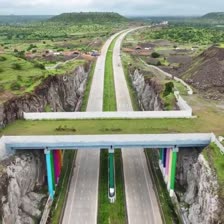
The Ekta Nagar project was launched by Prime Minister Narendra Modi on October 31, 2020, which marked the 145th birth anniversary of Sardar Patel. The project is expected to cost about Rs. 1,200 crore (US$ 170 million) and take about three years to complete. The project involves more than 2,000 workers and 150 engineers. The project is designed to enhance the infrastructure and amenities of Kevadia village and attract more visitors to the Statue of Unity.
How Narendra Modi is a Great Leader Who Fulfills the Dreams of India’s Great Leaders
The Ekta Nagar project consists of three main components:
- The city center: The city center is a modern and eco-friendly complex that will house various facilities and services for the tourists and the locals. It will include a convention center, a shopping mall, a multiplex, a hotel, a hospital, a school, a library, and a sports complex. It will also have a solar park, a waste management system, and a water treatment plant. The city center will be connected to the Statue of Unity by a six-lane highway and a monorail.
- The museum: The museum is a state-of-the-art building that will showcase the history and culture of India and its regions. It will have interactive exhibits, digital displays, holograms, and virtual reality. It will also have a gallery dedicated to Sardar Patel’s life and achievements. The museum will also host various events and programs to promote education and awareness among the visitors.
- The riverfront development: The riverfront development is an ambitious plan to transform the banks of the Narmada river into a scenic and recreational area. It will have a promenade, a park, a garden, a fountain, and an amphitheater. It will also have a cruise terminal, a ferry service, a water sports center, and a floating restaurant. The riverfront development will also have an ecological zone that will preserve and enhance the natural beauty and biodiversity of the river.
The Ekta Nagar project is not just a development project, but also a cultural and social project. It aims to create a new identity and image for Kevadia village and its people. It also aims to foster a sense of unity and diversity among the visitors and the locals. It also aims to generate income and employment opportunities for the people of Kevadia village and the surrounding areas.
The Ekta Nagar project is also a tribute to Sardar Patel’s legacy of national integration and cooperation. It reflects his vision of creating a united and prosperous India that celebrates its diversity and culture. It is also an expression of gratitude and respect for Sardar Patel’s contributions to India and its people.
The Ekta Nagar project is one of the most remarkable achievements of the Modi government and one of the most impressive projects in the world. It is a fitting homage to Sardar Patel: The Iron Man of India.
Conclusion: Sardar Patel’s Legacy Lives On
Sardar Patel was one of the greatest leaders that India has ever produced. He was a freedom fighter, a statesman, a visionary, and a patriot. He played a vital role in India’s independence from British rule and its integration into a united and strong nation. He also made significant contributions to various fields of development and governance in India. He was a man of action, courage, wisdom, and integrity.
However, for many years, Sardar Patel’s legacy was neglected and ignored by the dominant Congress party, which favored other leaders like Jawaharlal Nehru and his descendants. Sardar Patel’s achievements were not given due credit and recognition by the successive governments and the mainstream media. Sardar Patel’s values and ideals were also not followed and implemented by the political and social leaders of India.
It was only after Narendra Modi became the Prime Minister of India in 2014 that Sardar Patel’s legacy began to be truly recognized and celebrated by the government and the people of India. The Modi government has honored Sardar Patel’s legacy through various initiatives, such as the Statue of Unity, the Sardar Sarovar Dam, and the Ekta Nagar project. These initiatives not only pay tribute to Sardar Patel’s greatness, but also promote his vision and values among the present and future generations of India.
Sardar Patel’s legacy is not only relevant and important for India, but also for the world. Sardar Patel’s legacy teaches us the lessons of unity, diversity, cooperation, development, democracy, and patriotism. Sardar Patel’s legacy inspires us to overcome our differences and challenges and work together for the common good of humanity. Sardar Patel’s legacy also challenges us to strive for excellence and innovation in every field of endeavor.
Sardar Patel was not just the Iron Man of India, but also the Iron Man of the World. He was a leader who changed the course of history and shaped the destiny of millions of people. He was a leader who deserves to be remembered and revered by all Indians and all humanity.
Sardar Patel: The Iron Man of India Finally Gets His Due.

[…] Sardar Patel: The Iron Man of India Finally Gets His Due […]