




Shri Ram V. Sutar’s passing on December 17, 2025, at the age of 100, marked the end of an era in Indian public art. The widespread tributes that followed—cutting across political leadership, artists, historians, and regional communities—revealed an unusual consensus. Sutar was not only a sculptor of monuments, but a sculptor of India’s collective memory.
The repeated references to his Padma Bhushan award (2016) in official statements are significant. They position the honour as recognition of a lifetime devoted to shaping how modern India represents its history, leaders, and values in physical form.
National Recognition and the Padma Bhushan
Government tributes consistently cited the Padma Bhushan as affirmation of Sutar’s contribution to Indian cultural heritage. The award is repeatedly linked to his most visible work, the Statue of Unity, while also acknowledging a broader body of monumental sculpture that spans decades.
Senior leaders referenced the Padma Bhushan alongside the Maharashtra Bhushan (2025), awarded earlier this year, reinforcing that Sutar’s relevance was not confined to a single project or political moment. There are no conflicting accounts regarding the award; all official sources confirm the 2016 conferment for excellence in sculpture.
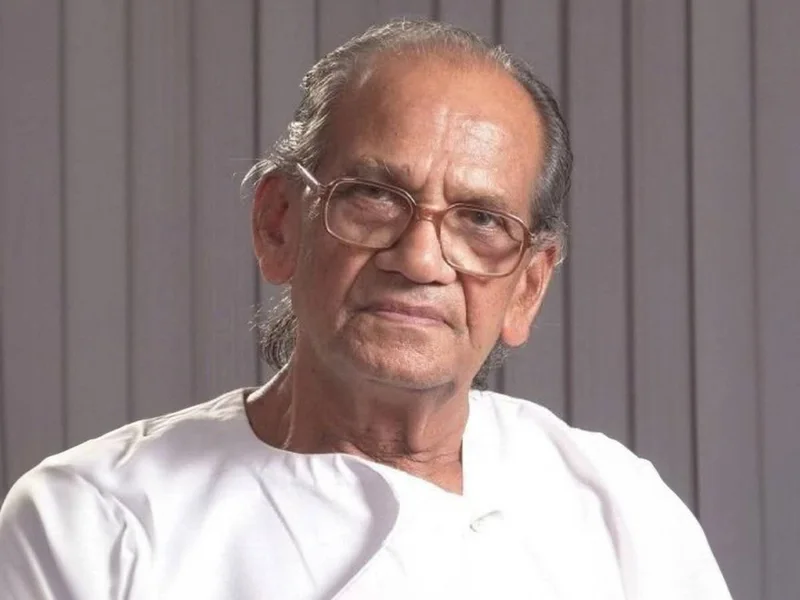
Biography: Life, Training, and Artistic Philosophy
Ram Vanji Sutar was born on February 19, 1925, in Dhulia district, Maharashtra. His early life was modest, far removed from the monumental scale he would later master. His formal training began at the Sir J. J. School of Art, Mumbai, where he emerged as a gold medallist and developed a rigorous foundation in realism, proportion, and anatomy.
From the outset, Sutar chose a path distinct from many of his contemporaries. Rather than focusing on gallery-based or abstract art, he committed himself to public sculpture—art meant to exist in shared civic spaces and to be encountered by ordinary citizens in daily life.
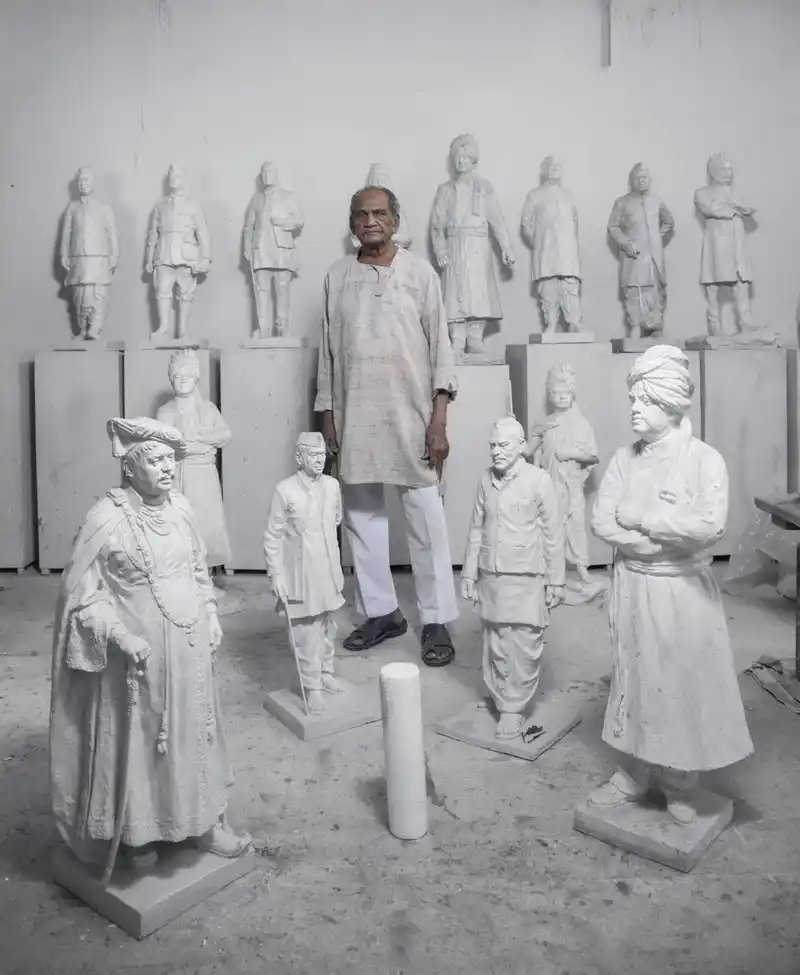
Over a career spanning more than seven decades, Sutar created hundreds of sculptures, ranging from intimate busts to some of the largest monuments ever built. His work combined classical sculptural discipline with modern engineering, allowing him to execute projects at unprecedented scale without sacrificing realism or symbolic clarity.
He was awarded the Padma Shri in 1999, followed by the Padma Bhushan in 2016, and later the Maharashtra Bhushan in 2025, reflecting sustained recognition across different phases of his career.
Recommended Product
Magnesium Body Spray – Muscle Recovery & Lavender Scent
🛒 View on Amazon →As an Amazon Associate, we earn from qualifying purchases. Price and availability may vary.
The Visual Proof: See For Yourself
Major Works and Enduring Legacy
Public discourse around Sutar’s legacy frequently centres on the Statue of Unity, inaugurated in 2018 and standing 182 metres tall. Designed to honour Sardar Vallabhbhai Patel, the monument is repeatedly described as both an engineering achievement and a symbolic representation of post-independence national unity.
However, tributes also emphasise the breadth of his work:
* More than 450 statues of Mahatma Gandhi installed across India and internationally
* Prominent sculptures of Shivaji Maharaj, Dr. B. R. Ambedkar, Vinayak Savarkar, and Kempegowda
* Contributions to heritage preservation at Ajanta and Ellora
* Late-career works such as the 77-foot Ram statue in Goa, completed in collaboration with his son
These works are consistently framed not as isolated commissions, but as elements of a coherent national visual language.
Influence on the Next Generation
A notable aspect of the current discourse is the emphasis on continuity. Sculptor Arun Yogiraj, whose Ram Lalla idol was installed in Ayodhya in January 2024, publicly acknowledged Sutar as a role model. Many observers describe Yogiraj as carrying forward Sutar’s emphasis on realism, restraint, and symbolic responsibility.
This framing positions Sutar as the foundation of a modern Indian monumental tradition rather than a solitary figure.
Regional Pride and Civic Ownership
Regional-language tributes add depth to the national response. Marathi posts refer to Sutar as “Khandesh’s son,” Gujarati users highlight the Statue of Unity’s impact on tourism and employment, and Kannada tributes connect him to Bengaluru’s Kempegowda statue.
These narratives show how Sutar’s work was absorbed into local identity. His monuments became civic fixtures rather than distant symbols.
A Legacy Without Contestation
Strikingly, there is little criticism or controversy in the discourse following Sutar’s death. In a digital environment often marked by polarisation, the near-universal tone of respect suggests that his work transcended ideological divides.
Shri Ram V. Sutar’s Padma Bhushan now stands as shorthand for a deeper trust—trust placed in an artist to represent history with permanence and restraint. His sculptures do not provoke debate; they endure it.
Reader Discussion:
Which of Ram V. Sutar’s monuments do you believe best represents modern India? Share your view below.
