




Sardar Vallabhbhai Patel, also known as the Iron Man of India, was one of the most influential leaders of the Indian freedom struggle and the architect of modern India. He played a pivotal role in uniting the hundreds of princely states into a single nation, creating the Indian civil service, and shaping India’s secular and democratic constitution. Sardar Vallabhbhai Patel was one of the founding fathers of India. Although he is best known for his role in integrating the princely states into the Indian Union after independence. However, he also made significant contributions to the fields of agriculture, education, and infrastructure development. He was also a close associate and a trusted lieutenant of Mahatma Gandhi, the father of the nation.
In this article, we will explore the life and legacy of Sardar Vallabhbhai Patel, who was born on October 31, 1875, and died on December 15, 1950. We will discuss his early life and education, his career as a lawyer and a politician, his contribution to India’s freedom struggle and integration, his vision for India, and his impact on Indian politics and society. We will also look at some of the facts, quotes, books, movies, and documentaries about Sardar Patel that will help you learn more about this great leader.
editor@newspatron.com
Sardar Vallabhbhai Patel: The Iron Man of India
Sardar Vallabhbhai Patel was one of the most influential leaders of the Indian freedom struggle and the architect of modern India. He was born on October 31, 1875, in a small village called Nadiad in Gujarat, a state in western India. He belonged to a farmer family and had a humble upbringing. He was a brilliant student and had a keen interest in law and politics. He studied law in London and became a successful lawyer in India. He joined the Indian National Congress, the main political party that fought for India’s independence from British rule, and became a close associate and a trusted lieutenant of Mahatma Gandhi, the father of the nation.
Sardar Patel played a pivotal role in India’s freedom struggle and integration. He participated in various movements and campaigns launched by Gandhi, such as the Salt March and the Civil Disobedience Movement. He was arrested several times by the British authorities for his involvement in these activities. He also led the Quit India Movement in 1942, which was a mass uprising against British rule. He was one of the members of the interim government that was formed in 1946 to prepare for India’s independence. He was also one of the negotiators who discussed the terms of partition with the British and the Muslim League, which demanded a separate state for Muslims.
After India gained independence on August 15, 1947, Sardar Patel became the first Deputy Prime Minister and Home Minister of India. He was also in charge of the States Department, which was responsible for dealing with the hundreds of princely states that existed within India. Sardar Patel used his diplomatic skills, political acumen, and persuasive power to convince most of these states to join the Indian Union. He also used force when necessary to deal with those states that resisted or rebelled against India. He is credited with creating a united and integrated India out of diverse and fragmented regions.
Sardar Patel also contributed to the development of India’s constitution, civil service, and foreign policy. He was a member of the Constituent Assembly that drafted India’s constitution, which is one of the longest and most detailed constitutions in the world. He advocated for a strong and centralized federal system that would ensure unity and stability in India. He also supported secularism and democracy as the core values of India’s polity. He established the Indian Administrative Service (IAS), which is the elite civil service that runs India’s bureaucracy. He also shaped India’s foreign policy by maintaining cordial relations with other countries and defending India’s interests and sovereignty.
Sardar Patel died on December 15, 1950, at the age of 75, due to a heart attack. He was cremated with full state honors at Raj Ghat in Delhi, where his memorial is located. He was posthumously awarded the Bharat Ratna, which is India’s highest civilian honor, in 1991. He is widely regarded as one of the greatest leaders and statesmen in Indian history. He is also known as the Iron Man of India for his strength of character and determination.
In this article, we will explore more about Sardar Vallabhbhai Patel’s life and legacy. We will discuss his early life and education, his career as a lawyer and a politician, his contribution to India’s freedom struggle and integration, his vision for India, and his impact on Indian politics and society. We will also look at some of the facts, quotes, books, movies, and documentaries about Sardar Patel that will help you learn more about this great leader.
Book Tickets to The Statue of Unity Statue Of Unity | Statue Of Unity
Sardar Patel’s Early Life and Education
Sardar Patel’s early life and education were marked by his determination and perseverance. He was born in a small village called Nadiad in Gujarat, a state in western India. He belonged to a farmer family and had a humble upbringing. He had five siblings and was the fourth child of his parents. His father, Jhaverbhai Patel, was a farmer and a village headman. His mother, Ladba, was a devout Hindu woman who taught him the values of honesty and courage.
Recommended Product
Casio Enticer Men's Analog Green Dial Watch MTP-VD01D
🛒 View on Amazon →As an Amazon Associate, we earn from qualifying purchases. Price and availability may vary.
Sardar Patel had a keen interest in learning from a young age. He attended a local school in his village, where he studied Gujarati, Sanskrit, and Persian languages. He also learned English by borrowing books from a local library. He was a brilliant student and excelled in his studies. He also participated in sports and debates and developed his leadership skills.
Sardar Patel had a dream of becoming a lawyer and serving his country. He decided to pursue his law degree in London, which was the center of legal education at that time. However, he faced many challenges and obstacles in fulfilling his dream. He had to save money for his travel and tuition fees by working as a pleader (a lawyer who can argue cases in lower courts) in Godhra, a town near his village. He also had to convince his elders and relatives, who were opposed to his idea of going abroad. He also had to overcome his own fears and doubts about leaving his family and homeland.
Sardar Patel finally managed to go to London in 1910, at the age of 35. He enrolled in the Middle Temple Inn, one of the four professional associations for barristers in England. He studied law for two years and passed the final examination with flying colors. He topped the exam among all the candidates from India. He also impressed his teachers and peers with his intelligence and eloquence.
Sardar Patel returned to India in 1913 as a barrister (a lawyer who can argue cases in higher courts). He started his practice in Ahmedabad, the largest city in Gujarat. He soon became one of the most successful and respected lawyers in India. He handled many civil and criminal cases and earned a reputation for his honesty, integrity, and professionalism.
Sardar Patel’s early life and education shaped his personality and character. He learned to be self-reliant, hard-working, and ambitious. He also developed a sense of patriotism and justice. He was ready to serve his country and fight for its freedom from British rule.
Sardar Patel’s Career as a Lawyer and a Politician
Sardar Patel’s career as a lawyer and a politician was marked by his dedication and leadership. He was one of the most successful and respected lawyers in India, who handled many civil and criminal cases. He was also one of the most influential and prominent leaders of the Indian National Congress, the main political party that fought for India’s independence from British rule.
Sardar Patel joined the Indian National Congress in 1917, after being inspired by Mahatma Gandhi, the father of the nation. He met Gandhi for the first time in Ahmedabad, where Gandhi had established his ashram (a place for spiritual and social activities). He was impressed by Gandhi’s philosophy of non-violence, truth, and self-reliance. He became a close associate and a trusted lieutenant of Gandhi and followed his guidance and advice.
Sardar Patel participated in various movements and campaigns launched by Gandhi, such as the Non-Cooperation Movement, the Kheda Satyagraha, the Bardoli Satyagraha, the Salt March, and the Civil Disobedience Movement. He mobilized the masses, especially the peasants and farmers, to join these movements and protest against British policies and taxes. He also organized relief work and social service during famines, floods, epidemics, and communal riots. He was arrested several times by the British authorities for his involvement in these activities.

Sardar Patel also held various positions and responsibilities within the Indian National Congress. He was elected as the president of the Gujarat Pradesh Congress Committee in 1920. He was also elected as a member of the All India Congress Committee, which was the highest decision-making body of the party. He became one of the members of the Working Committee, which was the executive body of the party. He also served as the president of the Indian National Congress in 1931 and 1947.
Sardar Patel played a crucial role in shaping the strategy and direction of the Indian National Congress. He was a pragmatic and realistic leader, who balanced the idealism of Gandhi with the realism of Jawaharlal Nehru, who was another prominent leader of the party. He was also a strong and decisive leader, who resolved many conflicts and disputes within the party and among its allies. He was respected and admired by his colleagues and followers for his honesty, integrity, and loyalty.
Sardar Patel’s career as a lawyer and a politician shaped his vision and contribution to India’s freedom struggle and integration. He learned to be courageous, assertive, and persuasive. He also developed a sense of nationalism and justice. He was ready to sacrifice his personal interests and ambitions for the sake of his country and its people.

How Narendra Modi is a Great Leader Who Fulfills the Dreams of India’s Great Leaders
Read an article on this website about Co-operative Ministry of India & the Extraordinary Vision of Amit Shah
Sardar Patel’s Contribution to India’s Freedom Struggle and Integration
Sardar Patel’s contribution to India’s freedom struggle and integration was immense and unparalleled. He was one of the key leaders who fought for India’s independence from British rule and united the hundreds of princely states into a single nation.
Sardar Patel led the Quit India Movement in 1942, which was a mass uprising against British rule. He was appointed as the leader of the movement by Mahatma Gandhi, who gave him the title of “Sardar”, which means “chief” or “leader” in Hindi. He mobilized the people, especially the youth and the women, to join the movement and resist British oppression. He also coordinated with other leaders and organizations, such as Subhash Chandra Bose and the Indian National Army, who were fighting for India’s freedom from outside India. He was arrested and imprisoned by the British for his role in the movement.
Sardar Patel was one of the members of the interim government that was formed in 1946 to prepare for India’s independence. He was also one of the negotiators who discussed the terms of partition with the British and the Muslim League, which demanded a separate state for Muslims. He opposed the idea of partition, as he believed that it would lead to violence and division. However, he accepted it as a necessary compromise to avoid civil war and achieve independence. He also played a key role in securing favorable terms for India, such as retaining Kashmir, Hyderabad, and Junagadh, which were disputed territories.
After India gained independence on August 15, 1947, Sardar Patel became the first Deputy Prime Minister and Home Minister of India. He was also in charge of the States Department, which was responsible for dealing with the hundreds of princely states that existed within India. These states were ruled by local kings or nawabs, who had varying degrees of autonomy and allegiance to the British. Some of these states wanted to join India, some wanted to join Pakistan, some wanted to remain independent, and some wanted to form their own unions.
Sardar Patel used his diplomatic skills, political acumen, and persuasive power to convince most of these states to join the Indian Union. He offered them various incentives and guarantees, such as protection, privileges, subsidies, and internal autonomy. He also used force when necessary to deal with those states that resisted or rebelled against India. He sent military troops to annex Hyderabad and Junagadh, which were ruled by Muslim rulers who wanted to join Pakistan. He also sent troops to Kashmir, which was ruled by a Hindu ruler who wanted to join India but was invaded by Pakistan. He is credited with creating a united and integrated India out of diverse and fragmented regions.
Sardar Patel’s contribution to India’s freedom struggle and integration was immense and unparalleled. He sacrificed his personal interests and ambitions for the sake of his country and its people. He is widely regarded as one of the greatest leaders and statesmen in Indian history. He is also known as the Bismarck of India for his role in unifying India.

Sardar Patel’s Vision for India
Sardar Patel’s vision for India was based on his ideals and principles. He envisioned a strong and united India that would be free from foreign domination and internal strife. He also envisioned a secular and democratic India that would respect the diversity and rights of its people.
Sardar Patel advocated for a strong and centralized federal system that would ensure unity and stability in India. He believed that a weak and fragmented India would be vulnerable to external threats and internal conflicts. He also believed that a strong and centralized India would be able to achieve faster economic and social development. He opposed any attempts to divide or weaken India, such as the demand for a separate state for Sikhs or the demand for more autonomy for states. He also opposed any interference or influence from foreign powers, such as the United States or the Soviet Union, in India’s affairs.
Sardar Patel supported secularism and democracy as the core values of India’s polity. He believed that secularism was the best way to ensure harmony and tolerance among India’s diverse religious and cultural groups. He also believed that democracy was the best way to ensure the representation and participation of India’s diverse political and social groups. He respected the constitution of India, which is one of the longest and most detailed constitutions in the world. He also respected the rule of law, which is the principle that everyone is equal before the law and subject to the same laws.
Sardar Patel’s vision for India was based on his ideals and principles. He wanted to create a strong and united India that would be free from foreign domination and internal strife. He also wanted to create a secular and democratic India that would respect the diversity and rights of its people. He worked hard to realize his vision and left a lasting legacy for India.
Read an article about How former bureaucrats in Modi government are transforming India
Sardar Patel’s Impact on Indian Politics and Society
Sardar Patel’s impact on Indian politics and society was profound and lasting. He was one of the founding fathers of the Republic of India, who shaped its political and administrative structure. He was also one of the most popular and respected leaders of the Indian people, who inspired them with his courage and charisma.
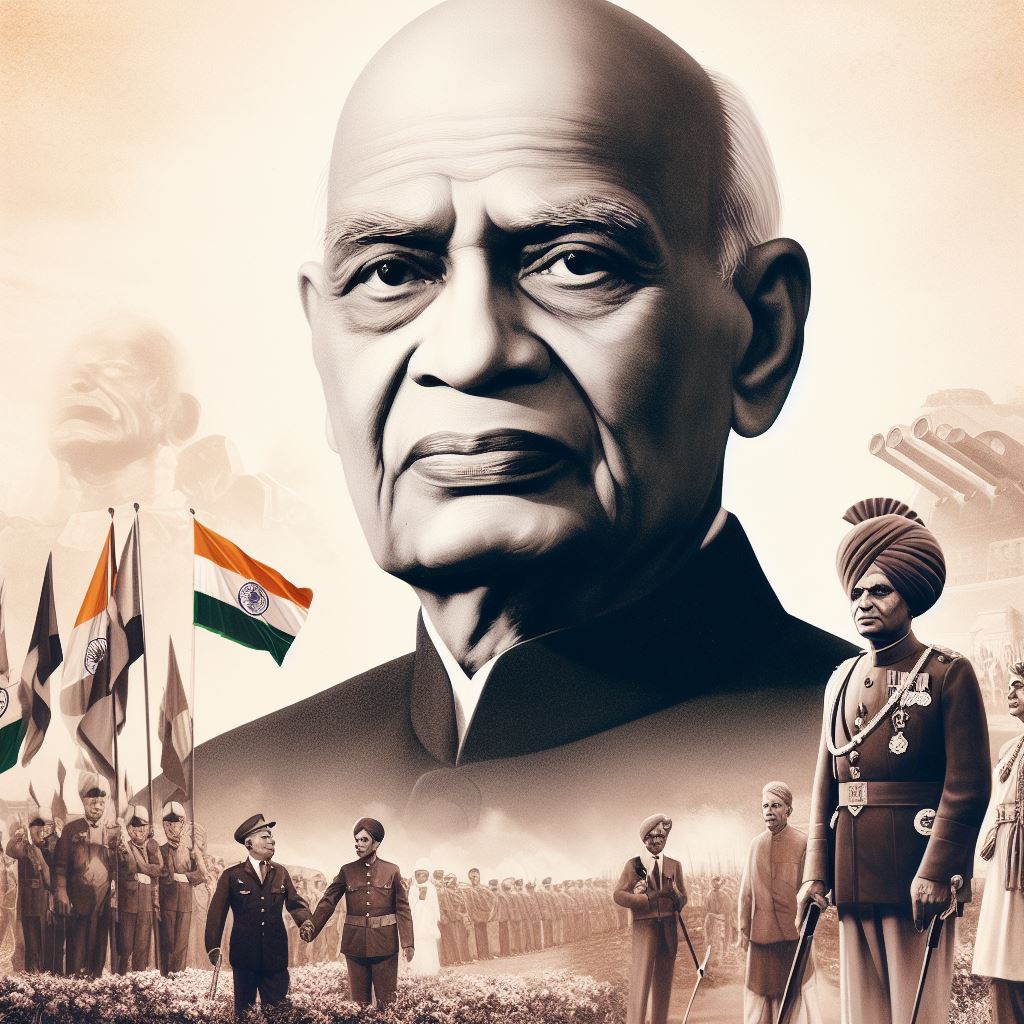
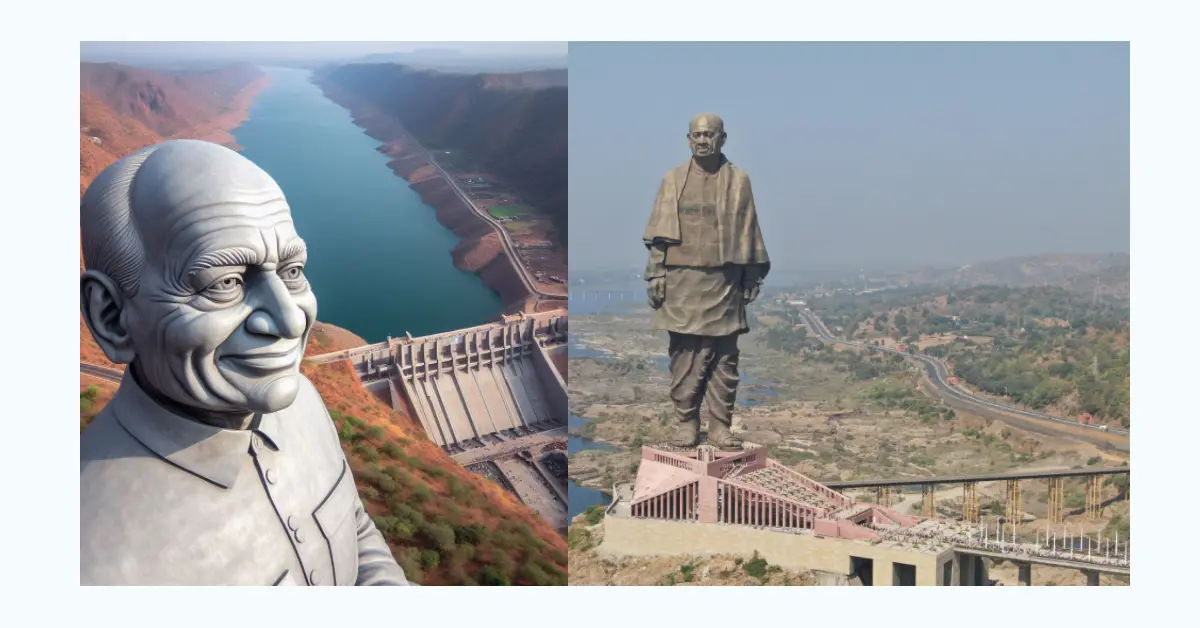
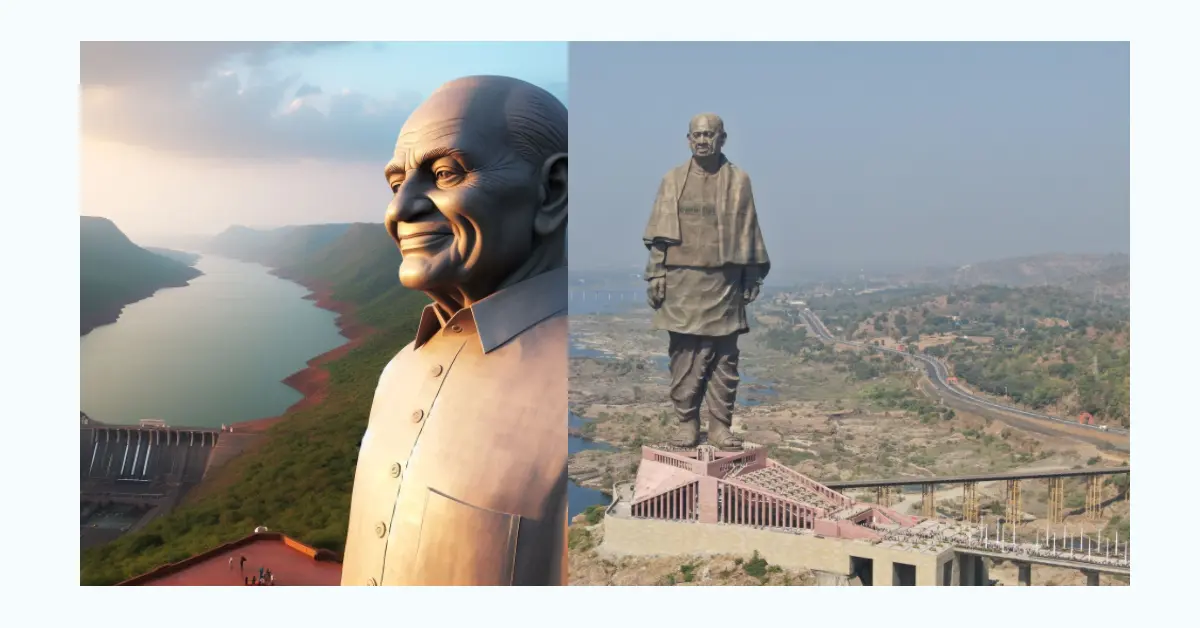
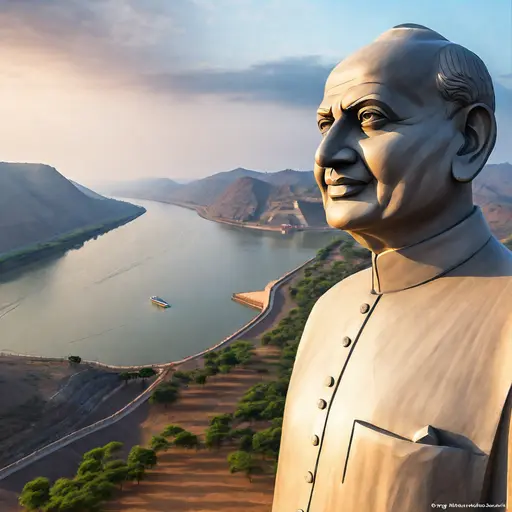
Sardar Patel’s impact on Indian politics and society was profound and lasting. He left a lasting legacy for India that is still relevant and influential today. He is widely regarded as one of the greatest leaders and statesmen in Indian history. He is also honored and celebrated by various institutions and monuments in India, such as the Sardar Vallabhbhai Patel National Memorial in Ahmedabad, the Sardar Vallabhbhai Patel International Airport in Ahmedabad, the Sardar Sarovar Dam in Gujarat, and the Sardar Vallabhbhai Patel Statue of Unity in Gujarat, which is the tallest statue in the world.
Sardar Patel influenced the political and administrative structure of India by creating a strong and centralized federal system that ensured unity and stability in India. He also established the Indian Administrative Service (IAS), which is the elite civil service that runs India’s bureaucracy. He also shaped India’s foreign policy by maintaining cordial relations with other countries and defending India’s interests and sovereignty. He also contributed to the development of India’s constitution, which is one of the longest and most detailed constitutions in the world. He advocated for secularism and democracy as the core values of India’s polity.
Sardar Patel influenced the Indian people by inspiring them with his courage and charisma. He was a mass leader, who mobilized the people, especially the peasants and farmers, to join the freedom struggle and protest against British oppression. He was also a pragmatic leader, who resolved many conflicts and disputes within the party and among its allies. He was also a loyal leader, who sacrificed his personal interests and ambitions for the sake of his country and its people. He was respected and admired by his colleagues and followers for his honesty, integrity, and loyalty.
Conclusion
Sardar Vallabhbhai Patel was one of the most influential leaders of the Indian freedom struggle and the architect of modern India. He was born on October 31, 1875, and died on December 15, 1950. He was a brilliant student and a successful lawyer. He joined the Indian National Congress and became a close associate and a trusted lieutenant of Mahatma Gandhi. He participated in various movements and campaigns launched by Gandhi, such as the Salt March and the Civil Disobedience Movement. He also led the Quit India Movement in 1942, which was a mass uprising against British rule. He was one of the members of the interim government that was formed in 1946 to prepare for India’s independence. He was also one of the negotiators who discussed the terms of partition with the British and the Muslim League.

After India gained independence on August 15, 1947, Sardar Patel became the first Deputy Prime Minister and Home Minister of India. He was also in charge of the States Department, which was responsible for dealing with the hundreds of princely states that existed within India. He used his diplomatic skills, political acumen, and persuasive power to convince most of these states to join the Indian Union. He also used force when necessary to deal with those states that resisted or rebelled against India. He is credited with creating a united and integrated India out of diverse and fragmented regions.
Sardar Patel also contributed to the development of India’s constitution, civil service, and foreign policy. He was a member of the Constituent Assembly that drafted India’s constitution, which is one of the longest and most detailed constitutions in the world. He advocated for a strong and centralized federal system that would ensure unity and stability in India. He also supported secularism and democracy as the core values of India’s polity. He established the Indian Administrative Service (IAS), which is the elite civil service that runs India’s bureaucracy. He also shaped India’s foreign policy by maintaining cordial relations with other countries and defending India’s interests and sovereignty.
Sardar Patel’s life and legacy are an inspiration for all Indians and people around the world. He was a man of courage, integrity, and loyalty. He sacrificed his personal interests and ambitions for the sake of his country and its people. He was a visionary leader who had a clear and realistic understanding of India’s problems and potential. He was a pragmatic leader who had a practical and effective approach to solving India’s challenges and achieving its goals.
In this article, we have explored Sardar Vallabhbhai Patel’s life and legacy in detail. We have discussed his early life and education, his career as a lawyer and a politician, his contribution to India’s freedom struggle and integration, his vision for India, and his impact on Indian politics and society. We have also looked at some of the facts, quotes, books, movies, and documentaries about Sardar Patel that will help you learn more about this great leader.
We hope that you have enjoyed reading this article and learned something new about Sardar Vallabhbhai Patel. We also hope that you will share this article with your friends and family who might be interested in knowing more about this great leader. Thank you for your time and attention. ?
Read an article on this website Why Saudi Prince’s comparing Hamas to Indian Freedom Struggle?
