


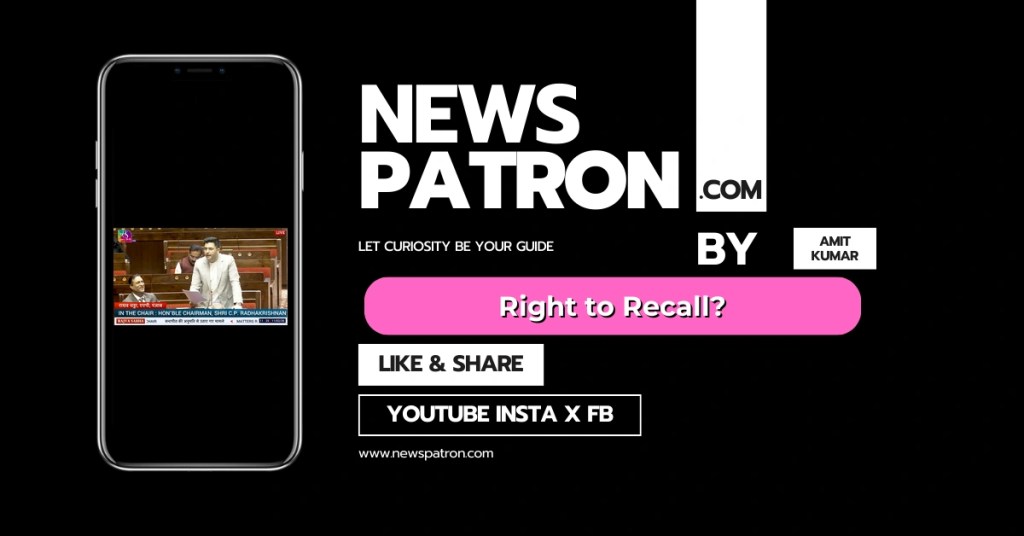

THE UNFAIR CONTRACT: WHY VOTERS NEED A EXIT CLAUSE
The current Indian democratic model is a one-way street. We give our votes. We grant five years of absolute power. But we have no way to take it back. Think about it. In every other part of life, underperformance leads to a pink slip. You fire a bad employee. You cancel a bad subscription. Yet, a non-performing MLA can sit in office for 1,825 days with zero accountability.
The Unfair Contract: Why Voters Need a “Right to Recall” Exit Clause in Indian Democracy
Lok Sabha Elections: India’s Democratic Pulse
🛍Recommended Product
Jockey Women's Hipster Brief – Comfort Fit, Assorted Colors
🛒 View on Amazon →As an Amazon Associate, we earn from qualifying purchases. Price and availability may vary.
This is not a democracy. This is a five-year contract with no exit clause. We need the Right to Recall India now. The digital age demands a Voter Recall Portal to bridge this gap. Our Citizen Accountability Dashboard should be as real-time as our UPI payments. Explore our YouTube channel, DroneMitra, for aerial views of the infrastructure these leaders often fail to build.
THE HIRE-FIRE MANDATE: FIXING THE BROKEN PROMISE
Indian voters have the right to elect. This is a fundamental truth. However, they lack the corresponding power to de-elect. The Right to Recall India is not just a radical idea. It is a necessary insurance policy for our democracy. Currently, politicians chase the public before the elections. After the win, the public chases the politicians.
Five years is too long to tolerate a mistake. If a leader fails to discharge their duty, the voters should not be forced to wait. We can trust voters to choose a leader. Therefore, we must trust them to correct that choice when things go south. A Citizen Accountability Dashboard would turn this trust into a measurable metric. This shift ensures that politicians remain public servants, not elected masters.
Lok Sabha Elections: A History of Indian Politics
LESSONS FROM CALIFORNIA: THE ARNOLD SCHWARZENEGGER FACTOR
Critics claim that the Right to Recall India would cause chaos. Look at California for a different story. In 2003, Governor Gray Davis faced a massive energy crisis and budget mismanagement. The public did not wait for the term to end. Over 1.3 million constituents signed a petition. They triggered a recall. On October 7, 2003, the voters expelled Davis with a 55% majority. They replaced him with Arnold Schwarzenegger.
The state did not collapse. Instead, it demonstrated that the Voter Recall Portal concept—even in a physical form back then—works. It forces a performance review that no politician can ignore. If California can do it, why can’t the world’s largest democracy?
Lok Sabha Elections: India’s Democratic Pulse
DIGITAL ACCOUNTABILITY: THE VOTER RECALL PORTAL AS THE NEXT FRONTIER
The “Gold Mine” of this debate is the technical feasibility. We already have the India Stack. We have Aadhaar and UPI. The Election Commission is already piloting Remote Voting Machines (RVM). A digital Voter Recall Portal is the logical next step. This Citizen Accountability Dashboard would allow for real-time, verified petition signing. Imagine a system where 35% of a constituency can trigger a review through a secure app. This removes the “litigation hell” that usually kills such reforms. Technology has solved the scale problem. Now, we just need the political will to implement the Right to Recall India digitally. Why should we use 19th-century laws for a 21st-century electorate?
SAFEGUARDS OR SHACKLES: BALANCING THE POWER TO FIRE
Accountability requires strict safeguards to prevent political vendettas. The proposed Right to Recall India bill suggests a 35-40% threshold for a recall trigger. A cooling-off period of 18 months is essential. This gives the representative time to deliver without the constant threat of removal. Grounds for removal must be specific, such as fraud, corruption, or proven neglect. A Voter Recall Portal would handle these filters automatically. It ensures that the Citizen Accountability Dashboard is not used for frivolous complaints. If the final recall vote exceeds 50%, the leader goes home. This is not about harassment. It is about setting a high bar for performance.
EDITORIAL DISCLAIMER
This content is for informational and educational purposes. The views expressed represent an editorial analysis of parliamentary transcripts and user-generated discussions. This article does not constitute legal or official political advice. All data regarding international recall laws and Election Commission pilots are based on publicly available records as of 2026.

[…] The Unfair Contract: Why Voters Need a “Right to Recall” Exit Clause in Indian Democracy […]