




Let us be honest about something that rarely gets said plainly.
In India, an unwanted hand — on a bus, in an office corridor, at a family gathering, in a crowded market, on a morning run — is so common that most women have stopped calling it exceptional. It happens during the commute. It happens at work. It happens from strangers, from colleagues, from people who are supposed to be trusted. It happens in broad daylight, in full view of others, and it happens so often that the shock has, for many, worn thin.
What has not worn thin is the damage it does. Every single time.
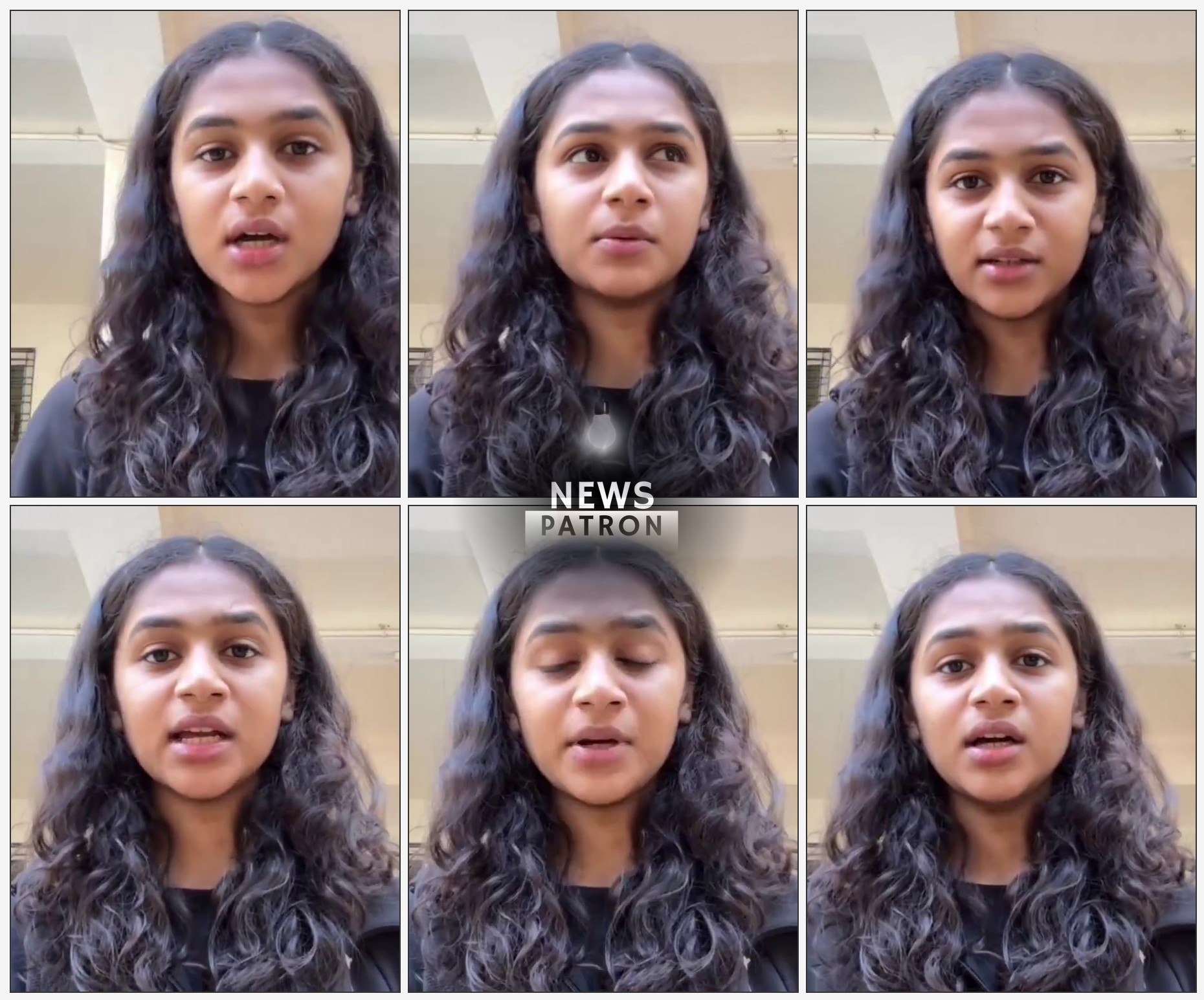
On the morning of March 5, 2026, a 17-year-old girl laced up her shoes, stepped out at 6:30 AM, and ran 10 kilometres through her own neighbourhood in Nashik. She was near the Vidya Vikas Circle, close to the pumping station, when a man on a grey Jupiter scooter came from behind, touched her inappropriately, and fled toward Dosa Point.
She cried for help. No one came.
She recorded a video. She posted it herself. And within hours, Nashik Police had made an arrest.
This is a story about all three of those things — the assault, the silence of bystanders, and the speed of what came after. Each one matters. None of them should be glossed over.
She Said It Herself. In Her Own Words. On Her Own Camera.
The transcript of what she said is direct and without drama.
She had gone for a run at 6:30 AM. By 8:00 AM, she had covered 10 kilometres — a serious athletic effort for anyone, let alone a Class 12 student beginning her day. Near Vidya Vikas Circle, a boy on a grey Jupiter scooter approached from behind, touched her, and sped away. She turned for help. People watched. Nobody moved.
Recommended Product
Alpino Peanut Butter Chocolate Protein Bar – Gluten Free
🛒 View on Amazon →As an Amazon Associate, we earn from qualifying purchases. Price and availability may vary.
Advertisement“I couldn’t do anything, and no one came to help me. I was crying. I was all alone.”
“I feel like Nashik has become very unsafe. This happened in my own city, in my own neighbourhood. As a female, I feel very unsafe.”
She did not collapse inward. She did not stay quiet. She recorded herself, spoke clearly, named the location, described the scooter, and tagged the police directly.
That took courage. Real courage. The kind that most adults — in far more comfortable situations — rarely manage.
The Bystanders: The Uncomfortable Question Nobody Wants to Answer
Here is the part that should bother us most.
This happened at 8 AM. On a public road. In a neighbourhood. People were present. And not one of them stepped in.
There is a conversation that surfaces every time a story like this breaks — and it goes something like this: “Men want to help, but they are afraid of being falsely accused. What if intervening leads to a case against them?”
This is a real concern in some contexts. It is also, in this case, an excuse.
A teenage girl was crying in the street. She had just been assaulted. She was visibly distressed and asking for help. The man who assaulted her had already fled.
In that moment, the risk of a bystander being falsely accused of anything was zero. The risk to the girl of being left alone was not.
The fear of false cases is a legitimate policy discussion. It is not a justification for watching a child cry on a public road and doing nothing.
We need to separate those two conversations — and we need to stop letting one be used to avoid the other.
Nashik Police: What Swift Action Actually Looks Like
Within hours of the girl’s post going live, this appeared on the official Nashik City Police account:
“Noted. Action already taken within hours. Our teams got in touch with her, tracked and nabbed the accused — a 24-year-old law student.”
Read that again. Hours.
Not days. Not weeks. Not a complaint filed, a follow-up ignored, a case number issued and forgotten. Hours.
The police tracked the accused using the description of the scooter, the location details in her video, and direct contact with the victim. The arrest was made. The case was registered under applicable sections including POCSO.
This is what accountability looks like when it actually functions. And it is worth acknowledging directly — because the IAF crash we reported yesterday, the insurance denials we have covered, the regulatory failures we have documented — this beat is built on calling out what goes wrong.
When something goes right, we say so. Nashik Police moved fast. That matters.
The Law Student in the Room
The accused is a 24-year-old law student.
A person enrolled in an institution that trains people to understand rights, dignity, due process, and the protection of the vulnerable.
It would be easy to be sarcastic here. The irony writes itself. But let us be precise instead.
The accused is not yet convicted. He has been arrested and will face the legal process. That process should be allowed to run its course correctly and completely.
What can be said is this: someone studying law — studying the very system designed to protect people from exactly this kind of violation — had allegedly chosen, on a Tuesday morning, to violate a teenager on her morning run.
If proven, that is not just a crime. It is a particular kind of betrayal — of education, of professional intent, and of every argument that awareness of the law translates into respect for it.
The residents of Nashik have a reasonable question. The arrest was made. The public knows the general profile of the accused. But why does accountability flow in only one direction?
The girl had the courage to show her face on camera and describe what was done to her. The police confirmed the arrest. The accused, if the case proceeds and conviction follows, should face consequences that are visible, not administrative.
Public confidence in the system is not built on case numbers. It is built on visible outcomes.
Caption: Related coverage — from our previous report on a Pune college campus incident where a father took matters into his own hands after the institution failed his daughter. Watch for context on the pattern of institutional and public inaction on harassment.
This Did Not Happen in a Vacuum
Just 24 hours before this post, we reported a story from Pune — a father who physically pinned down a man allegedly harassing his daughter, after the college administration ignored repeated pleas for help.
Two cities. Two incidents. One day apart. One common theme.
Women — and in both cases, young women — reaching a point where the systems around them had failed to respond, and taking the only avenue left to them: direct action, public posting, or a parent stepping in because no one else would.
(Read the full story from yesterday)
The pattern matters. Individual stories can be dismissed as exceptions. Patterns cannot.
What Nashik — and Every Indian City — Must Do Next
This story ended well, relative to how it could have ended. The police acted. An arrest was made. The girl is safe.
But the conversation cannot end with the arrest.
For residents and bystanders:
Stop treating public harassment as someone else’s problem. If you see a woman in distress on a public road, in broad daylight, you do not need to be a hero. You need to stop, ask if she is okay, and stay present. That alone changes the equation. That alone might have prevented the girl from feeling, as she put it, completely alone.
For educational institutions:
A law student allegedly committed this offence. If the conviction holds, that institution needs to ask hard questions about what it is producing — not just legally competent graduates, but people who understand why the law exists.
For police departments across Maharashtra:
Nashik set a standard. Hours, not days. Direct contact with the victim, not a complaint counter. Track, act, arrest. This model is replicable. It should be the baseline — not the exception worth celebrating.
For the broader public debate on false cases:
The fear is real and deserves proper legal reform. It does not deserve to be used as cover for inaction when a crying teenager is standing in the street asking for help. These are different conversations. Keep them separate.
To the Young Woman Who Posted That Video
You ran 10 kilometres before most people had their first cup of tea. You were assaulted on a public road and left to cry alone. And then — instead of going home and staying quiet — you picked up your phone and spoke.
You described exactly what happened. You named the location. You tagged the authorities. You demanded accountability.
And it worked.
Not because the system is perfect. Not because this should have been necessary. But because you did not accept that silence was the only option available to you.
That courage matters. It will matter to other women in Nashik who watch your video and feel a little less alone. It will matter to the next girl who has to decide whether to report something or absorb it quietly.
You reported it. Loudly. In your own words, on your own camera.
This city heard you. ?
Newspatron — Let Curiosity Be Your Guide.

[…] 6:30 AM. 10 Kilometres Run. One Grey Scooter. No One Helped. […]
[…] 6:30 AM. 10 Kilometres Run. One Grey Scooter. No One Helped. […]
[…] 6:30 AM. 10 Kilometres Run. One Grey Scooter. No One Helped. […]