




Content warning: This article discusses alleged fraud, poor food quality, brand misuse, and health concerns around ultra?processed train snacks.
Video Credit: Rajneeti Tadka
The Viral Clip: Haldiram?Style Packet, C?Grade Smell
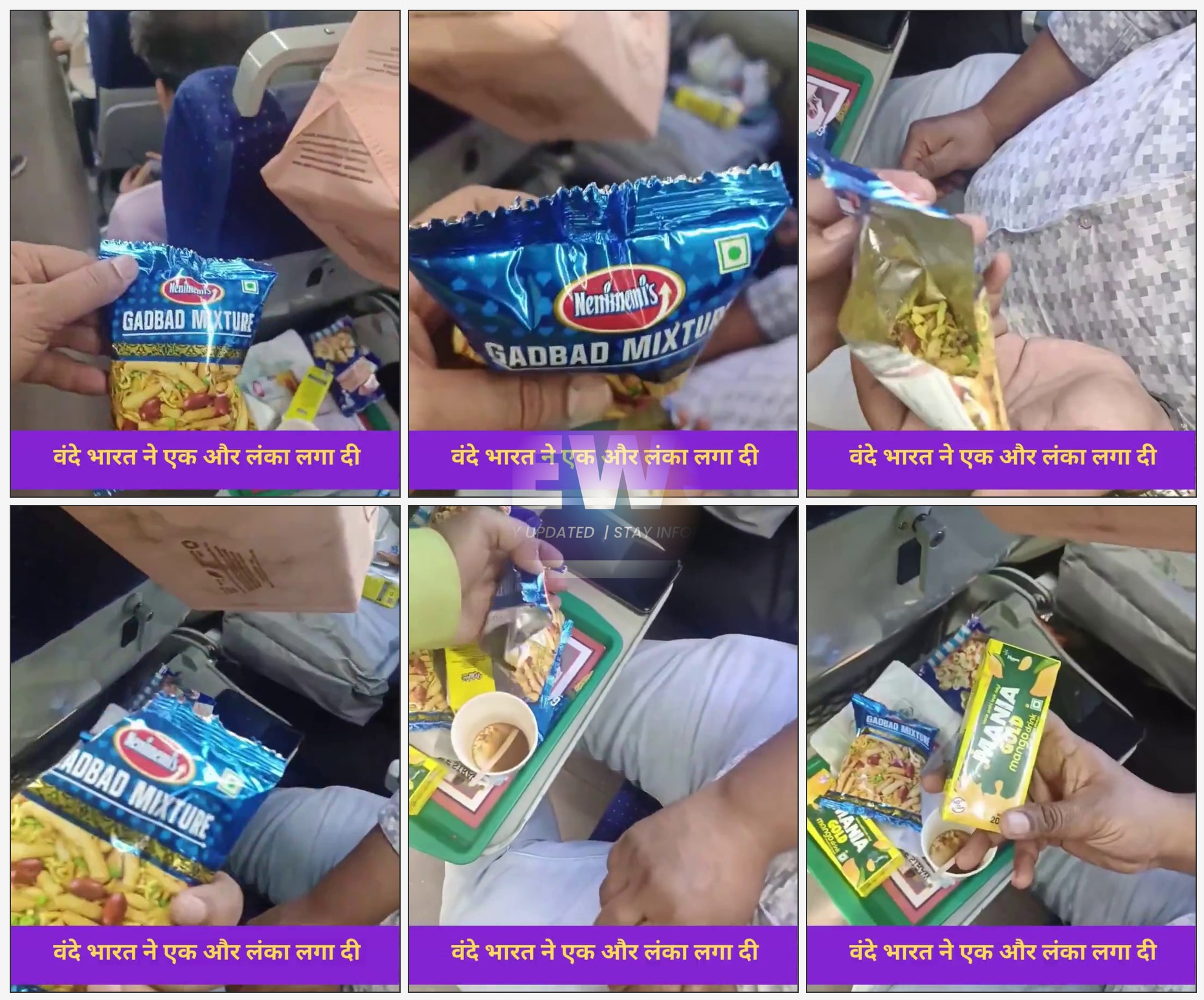
On the Mumbai–Ahmedabad Vande Bharat Express, a passenger filmed what is now becoming every rail commuter’s nightmare:
- A snack packet handed out on the train with branding and colours that strongly resemble Haldiram?style packaging.
- On opening it, the mixture inside looks and smells, in the passenger’s words, like a “C?grade” generic namkeen, not what you expect from a premium brand or a premium train.
- The allegation in the video and caption: the catering provider has copied the logo/packaging style to make it look like a trusted brand, but is actually serving low?quality, cheap product to passengers who have paid a premium fare.
The post bluntly calls the catering provider “a fraud company indulged in all types of malpractices”, and tags IRCTC to demand an explanation.
As of now, there is no public response from IRCTC or Haldiram on this specific incident. The video shows what passengers experienced and what they believe — not an officially adjudicated case of trademark violation.
“They’re Just Here To Loot Passengers”: What Travellers Are Saying
Under the clip, the pattern of comments will feel familiar to anyone who has eaten on Indian trains lately:
- Many say Indian Railways and IRCTC catering contractors are “just there to loot passengers”, especially on express and “premium” services where food is bundled into the fare and hard to avoid.
- People describe third?class food items and service on first?class tickets — stale snacks, tasteless mains, poor hygiene, and zero accountability once the tray is on your table.
- Some specifically call the IRCTC–Haldiram tie?up a “disaster”, not because the brand is unknown, but because the implementation on trains feels like a bad joke:
- You see a familiar name.
- You pay premium pricing.
- You get something that tastes, smells and feels like it came from the bottom shelf of a wholesale godown.
One passenger shares a story that mirrors your own experience:
- They bought parathas on the faith of the brand name, thinking it would be “good and healthy”.
- On checking the packet later, they found the manufacturing and expiry dates uncomfortably close, with the product clearly towards the end of its shelf life.
- The taste confirmed their suspicion that they were not eating anything close to fresh.
The verdict in the comments is blunt: “This needs complete overhaul change.”
IRCTC’s Food Problem Didn’t Start Today
This isn’t an isolated rant. Official data shows that food quality complaints on trains — including Vande Bharat — are already a big, documented issue.
Recommended Product
Waterproof Car Body Cover for Maruti Dzire 2017-2023
🛒 View on Amazon →As an Amazon Associate, we earn from qualifying purchases. Price and availability may vary.
- In 2024–25, IRCTC received 6,645 complaints related to poor food quality across trains, and fines were imposed on caterers in over 1,300 cases.
- Earlier, incidents on other Vande Bharat routes have led to contractors being fined and even contracts cancelled after passengers found disgusting contaminants (like human nails) or reported “rotten” meals.
- An RTI reply about Southern Railway’s Vande Bharat services revealed:
- Hundreds of complaints on just a handful of trains.
- Fines running into tens of lakhs of rupees against base kitchens that were dirty, poorly documented and using unsafe practices.
Despite this, IRCTC continues to quietly tweak booking flows in ways that make the “No Food” option harder to find on premium trains, effectively nudging passengers into paying for meals many would rather skip, while insisting publicly that there are no major food issues even as complaint numbers climb.
Against that backdrop, your Mumbai–Ahmedabad clip lands on soil that’s already dry and crackling with anger.
When “Brand” Becomes A Smokescreen
The outrage here isn’t only about bad taste; it’s about trust.
In India, names like Haldiram have become shorthand for consistent flavour, perceived hygiene, and a safer choice compared to unknown loose namkeen.
But several commenters point out two uncomfortable truths:
1. Even big brands are not automatically “healthy”
- Many mass?market snacks rely on palm oil or palmolein and other refined oils, plus high sodium and sugar.
- European food safety authorities have flagged certain contaminants formed when palm oil is overheated and refined as a potential health concern, especially for children.
- Nutrition deep?dives show that a lot of these snacks are heavy on saturated fat, salt and cheap fillers, making them more of a treat than a daily staple.
That’s why one reaction under your clip says, paraphrased:
“Haldiram is made from palm oil. Stop calling it a brand like it’s automatically a badge of health.”
They’re also pointing back to your earlier blog on palm oil and why calling something “branded” doesn’t magically make it good for your body.
2. Copying the ‘look’ of a brand is even worse than just serving a generic snack
- If a contractor serves a clearly generic namkeen in a no?name packet, you at least know what you are getting.
- If they mimic a brand’s colours, fonts or packaging style to piggyback on its trust — while filling it with lower?grade product — they are not just cutting corners; they are weaponising your trust.
That’s why the language in the video is so strong: words like “fraud” and “scam” capture the sense that this isn’t just bad food; it’s deliberate deception of passengers who can’t easily verify the supply chain while the train is rolling at 130 km/h.
To be legally precise: Only a court or regulator can formally declare that a specific contractor has committed fraud or trademark violation. What we can say with confidence is that passengers feel cheated, and that both IRCTC and any brands whose reputations are being used have a responsibility to investigate and respond.
Why This Hurts Vande Bharat’s Promise So Much
The Vande Bharat Express was sold to the public as a premium, modern, semi?high?speed experience, with better seats, better timings, and better onboard service.
Food is part of that promise:
- Ticket prices on many Vande Bharat routes are significantly higher than conventional trains.
- In a lot of cases, meal charges are bundled into the fare, with the “no food” option either hidden or difficult to select.
- Passengers are effectively locked in to whatever the contracted caterer chooses to serve.
So when people encounter C?grade namkeen in Haldiram?style packaging, near?expiry parathas on supposedly upgraded services, and zero visible consequence until a clip goes viral, they understandably feel like:
“We paid for a Vande Bharat experience and got a Jugaad Express pantry.”
In other words, the food issue isn’t a small side complaint. It goes to the heart of whether these trains are genuinely an upgrade, or just old habits in a new blue wrapper.
What Needs To Happen Next (Beyond Just One Viral Video)
If IRCTC and Indian Railways are serious about fixing this, a few steps are obvious:
- Immediate, transparent audit of the Mumbai–Ahmedabad catering chain
- Trace exactly which contractor supplied those packets.
- Verify whether any brand names, logos or trade dress were used without proper authorisation.
- Publish the findings and actions — not just internally, but where passengers can see them.
- Real consequences for repeat offenders
- Fines in the tens of thousands or lakhs are already happening; complaint numbers and RTI replies show that.
- What’s missing is blacklisting and contract cancellation for those who keep failing basic food safety and quality checks.
- Honest clarity about what you’re serving
- If the snack is truly from Haldiram or any other brand, the packet, supply chain and dates should clearly show it.
- If it’s a generic product, it should look and say so — no brand mimicry, no confusion.
- Menus and booking pages should tell passengers what they’re paying for instead of burying them in fine?print and “smart” defaults.
- Stop trapping people into meals they don’t want
- Move the “No Food” option back into a clear, upfront position on IRCTC and partner portals for all premium trains.
- If you truly believe the food is good, you shouldn’t be afraid of giving people a visible choice.
For frequent travellers, one more step is always there: Document and report everything. Photos and videos of packets, labels, and food condition. Complaints filed via RailMadad and written feedback. Copies of bills and ticket details.
Official numbers show that when passengers persist, fines and inspections do happen. The goal is to push the system from reluctant reaction to proactive standards.
Bottom Line: Premium Trains Deserve Premium Honesty
Right now, the viral Mumbai–Ahmedabad clip isn’t just about one smelly namkeen.
It’s about:
- Passengers who feel trapped into paying for bundled meals they don’t trust.
- Contractors who seem to believe they can cut corners behind glossy packaging.
- A rail ecosystem that reacts only when embarrassed online instead of enforcing standards daily.
Whether you love or hate brands like Haldiram, the minimum expectation on a flagship train is simple: Call food what it is. Serve what you promise. Respect the passenger’s nose, stomach and intelligence.
Until that happens, people will keep doing exactly what this video did: Opening packets on camera. Sniffing the truth out. And asking the question out loud that IRCTC should be asking itself:
“If this is what we’re serving on our showcase trains, what does that say about the journey we’re really on?”

[…] Also Read: “Fake Haldiram” On Mumbai–Ahmedabad Vande Bharat? Passengers Call IRCTC Catering A Scam […]
[…] “Fake Haldiram” On Mumbai–Ahmedabad Vande Bharat? Passengers Call IRCTC Catering A Scam […]