




Subscribe to @newspatron on YouTube. Let Curiosity Be Your Guide.
You book your tickets weeks in advance. You plan around a family occasion. You board the train with eleven people — including small children — headed for a religious ceremony. A mundan. A joyful occasion.
And somewhere between one station and the next, two strangers sit in your confirmed seats and refuse to move.
Sound familiar? ?
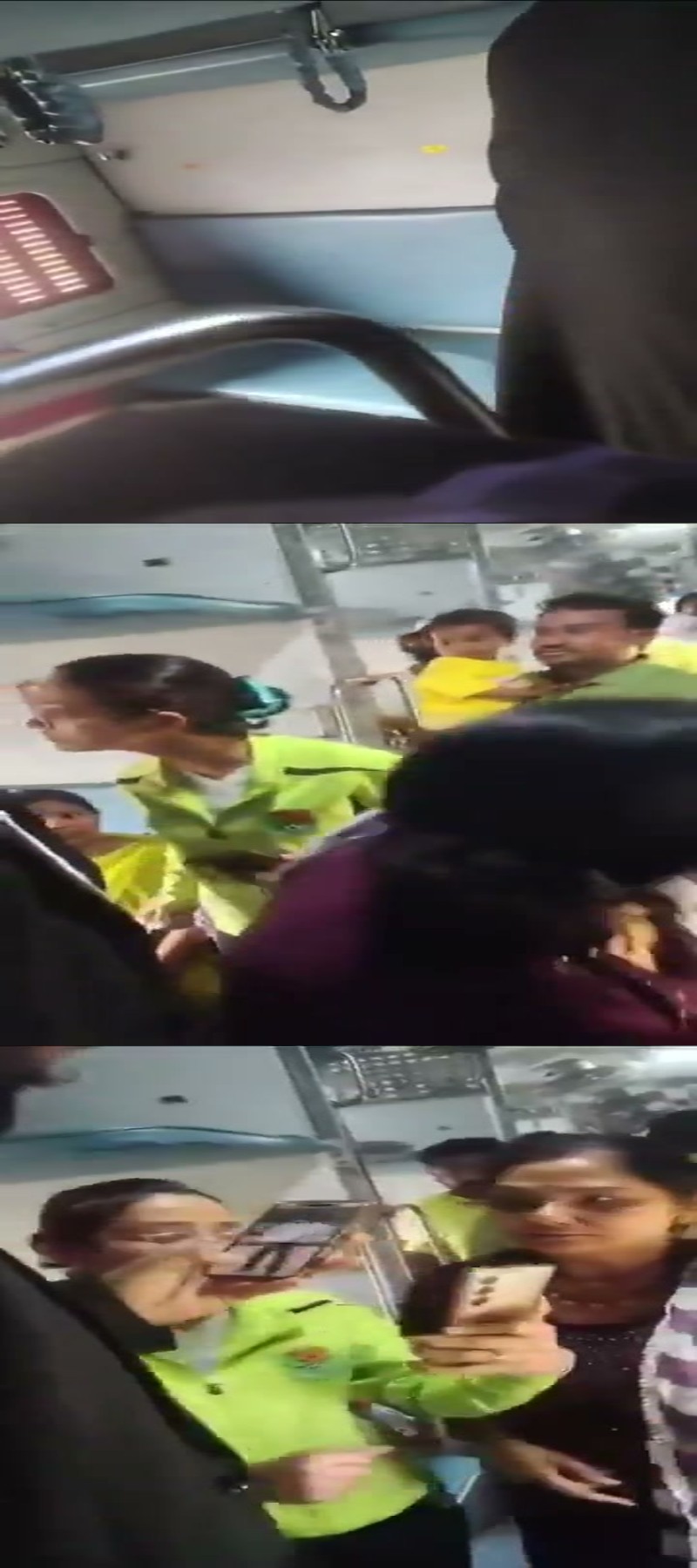
If you have ever travelled on an Indian long-distance train, you already know how this story goes. But this time, it was captured on video — from multiple angles. And what those videos show is not just a seat dispute. It is a front-row seat to everything that is broken about passenger safety and accountability on Indian Railways.
What Actually Happened on the Hemkunt Express
A family of eleven was travelling on the Hemkunt Express — a busy train running on the Delhi-Haridwar corridor — for a child’s mundan ceremony. Their berths were confirmed. Their documents were in order.
Mid-journey, a mother-daughter pair occupied the family’s reserved middle berth and flatly refused to vacate. When the family asserted their right to their own seat, things escalated fast.
A slap was delivered to one of the family members.
Recommended Product
Casio Vintage A168WA Digital Grey Unisex Watch
🛒 View on Amazon →As an Amazon Associate, we earn from qualifying purchases. Price and availability may vary.
Threats followed — including references to legal connections, specifically a family member in government legal service. The implication was clear: “We have influence. Back off.”
When the train reached Saharanpur station, railway police arrived on the scene. The outcome? The victim family — including women and children — was asked to deboard. The aggressors remained on the train, in someone else’s confirmed berth, headed to their destination.
Whether the full picture has layers we do not yet know — it sometimes does — the structural failures on display here are real, documented, and repeat themselves across this country’s railways every single day.
March 2026: This Is Not One Incident. It Is a Pattern.
The Saharanpur confrontation is not standing alone. In the first two weeks of March 2026, Indian Railways experienced what can only be described as an eruption of seat-related violence across the northern network.
Baghpat, March 9, 2026. A 37-year-old passenger was allegedly beaten to death by a group of nearly 20 men over a seat dispute on a Delhi-Saharanpur passenger train near Khekra station. Five arrested under provisions for murder and rioting. A man is dead. Over a seat.
Thane Station, March 11, 2026. An 18-year-old female passenger allegedly assaulted a Head Ticket Collector with her mobile phone during a dispute over a ticket and ID verification.
Increased surveillance after a death is not a system. It is a reaction.
The Seat-Grabbing Culture: Old Problem, Zero Solutions
Let us be real. ? This is not new. It is practically a culture.
Passengers board without a valid reservation. Sometimes without a ticket at all. They occupy reserved berths citing a hundred reasons — or simply saying nothing and staring back at you while sitting on your confirmed berth.
The confirmed ticket holder stands in the aisle, booking printout in hand, wondering if that piece of paper means anything. It often does not. Because enforcement is absent, inconsistent, or heavily influenced by who shouts louder, who claims more connections.
In this case, the aggressor invoked legal family connections. That threat should have meant nothing against a confirmed reservation. Instead, eleven people were put off the train.
Where Is the Police? How Many Should Be on Every Train?
On most Indian express and mail trains, the prescribed deployment includes at least one RPF escort per train, with additional personnel on sensitive routes and night trains. Women police officers in this escort system are rarer still.
The reality? Deployment is inconsistent. Escorts tend to cluster near the engine end or guard’s van. On a 24-coach train, trouble in coach S7 takes time to reach — and by the time someone arrives, the platform clock is already winding down.
When they do arrive, as happened here, the response often takes the path of least resistance. Asking a family to deboard takes thirty seconds. Verifying a berth, taking a complaint, detaining an aggressor, filing documentation — all of this takes time, effort, and institutional courage.
You are on your own until the train stops.
The Helpline Problem: Press 1 for Frustration
Rail Madad (139) exists precisely for situations like this. In theory. In practice: the operator takes your details, logs a complaint, tells you help is being arranged. Meanwhile the train has crossed two more stations.
What If You Do Not Have a Smartphone?
What if you are travelling with an elderly parent, or you are the elderly parent yourself, and the only device you have is a basic phone without internet?
The system should not require PNR recitation under stress. If the Railways have your booking details — and they do, because you paid — then a single call with your name and train number should be enough.
The passenger in distress should only need to say: “I am on train 14673. My name is this. Someone is threatening me in my coach.” Everything else is already in the database.
The System We Actually Need: No Middlemen, No Chatbots
Step 1: One unified alert channel — app, call, or SMS. System auto-fetches booking details from PNR database on the passenger’s registered mobile.
Step 2: Alert goes directly to the on-duty escort on that train — not a call centre three states away. Coach and berth appear on their screen. They move.
Step 3: Supervisor automatically looped in. Every second of response time is time-stamped.
Step 4: Outcome documented. “We spoke to both parties” is not a resolution. On record, accessible to the passenger and railways.
This is not futuristic. These are basic coordination tools that already exist. What is missing is the will to implement them.
A Passenger ID Linked to Their Booking: The Flagging System Railways Need
Every passenger who books through an official or Aadhaar-verified channel has a booking identity. That identity should carry a travel conduct record.
If a passenger has a verified complaint against them — physical assault, berth occupation, threatening behaviour — their booking profile should be flagged. When a flagged passenger books their next journey, the on-duty TTE and RPF escort receive an automatic alert with coach and berth number.
This is how a railway carrying 13 million passengers a day begins connecting individual incidents into systemic accountability rather than treating each episode as isolated and forgotten.
Deboarding Is Not Justice. It Is Convenience.
When a victim is asked to deboard — even temporarily — without a case registered against the aggressor, that is not a resolution. It is a cover-up dressed as peacekeeping.
An FIR must be registered at the point of the physical incident, regardless of which party is “easier” to remove from the platform. Deboarding a victim without documentation is not procedure. It is erasure.
The Uninvited Passengers: Hawkers, Vendors, and the Moving Marketplace Nobody Asked For
Once you have dealt with the seat dispute, the police, and your own rising blood pressure — congratulations. Your journey continues. Now you have to deal with the walking market.
Ice cream sellers with buckets of floating ice — not food-grade cold storage, not a functioning chiller, just ice from wherever they could source it, sitting in whatever that water has become by the time it reaches your coach.
We already wrote about where that kulfi actually comes from. The cold chain is often fictional. When your child is crying for water, you will buy that bottle at twice the MRP because you have no other option. Kuch nahi hota, says the passenger next to you. In reality, kuch zaroor hota hai. Think about it — there is no reliable ilaaz once typhoid takes hold. And the typhoons in your gut are just getting started.
And if you are thinking a sealed biscuit packet is safer — let us talk about what that creme is actually made of. Palmolein ka jawaab nahi — except the Patanjali baba saying it would be far more honest about what he is endorsing.
The Migrant Hawker Problem Goes Deeper
Many unlicensed vendors operating on trains and at stations have established economic footholds on public infrastructure by simply showing up daily until their presence becomes normalised. The modus operandi is simple: please the officials. No badge required. No permission required. The oldest system in civilisation — and it still works.
This same dynamic plays out in every crowded urban space. Here is that courageous woman of Kurla explaining the state of the common man, woman, and children — just trying to cross the road, reach the school bus waiting on the other side, wade through a footpath that no longer belongs to them.
The person selling you contaminated water on a train and the person blocking your path on a footpath are operating from the same logic: occupy the space, monetise it, and resist removal. On a moving train, that becomes genuinely dangerous.
The Pantry Car: One Visit You Should Make, One Photograph You Should Take
Visit the pantry car at least once. Not necessarily to eat. Just to look. Soiled floor, cutlets near prep surfaces, bread placed on containers placed on the floor.
And if you thought the food situation was better outside the train — wait. You step off at a major city, at a market that has been there since the early days — considered the most reliable, the oldest, the Navrangpura municipal market in Ahmedabad. And this is what is waiting for you. You ordered chana puri. You got a dead lizard. And the deep freezer had live insects.
You thought things were good outside? Here is the Vande Bharat experience — the premium train, the flagship service, the one that is supposed to represent a new standard. And then you unwrap your food.
Until there is a system where a passenger photo sent at 2:00 PM triggers an inspection before the 3:00 PM meal service, the pantry car operates on trust — and the current state of many pantry cars suggests that trust is misplaced.
Know Your TTE Before You Board — Not After You Need One
When you board a train, you should know the name and badge number of the TTE assigned to your coach, their contact number, which coaches they cover, and at what station they hand over. Right now, none of this reaches you.
Before departure, your booking confirmation should include:
TTE for Coach [S7]: Name (Badge No. XXXX) — [Station A] to [Station B]. Successor: [Name] from [Station B] onwards.
Contact: [Direct handset / call option]
A TTE asleep at their post while a passenger is assaulted in their coach is not a minor inconvenience. It is a failure of duty.
What Can You Do Right Now If This Happens to You
Document first, escalate second. Film — berth number, aggressors, your ticket confirmation visible in the same shot.
Call Rail Madad: 139. Insist on a complaint reference number before you hang up.
Demand the TTE by badge number. Ask them to formally note the dispute and their action in writing.
If assault occurred, insist on an FIR. Say the word “FIR” clearly and loudly enough that bystanders hear it.
Do not deboard without documentation. Demand the name and badge number of the officer asking you to step off. Confirm your complaint is registered before your feet touch the platform.
If not tech-savvy, call a trusted family member. Give them your train number and your name. A functional system should pull your coach and berth from those two pieces of information alone.
The Digital Watch: We Are Tracking This Case For You
Topic: GRP Saharanpur action on Hemkunt Express seat dispute — March 2026
What we are watching: Whether GRP Saharanpur registers an FIR linked to the physical assault. Whether any parties are formally charged. Whether Northern Railways issues an official statement.
Context: In the 2025 Hemkunt Express case, a ₹5 lakh penalty was imposed on a caterer after a viral complaint. No confirmed penalty or FIR has yet been linked to this specific March 2026 incident.
🔍 Search: GRP Saharanpur Hemkunt Express FIR 2026
🔍 Search: Northern Railways seat dispute action March 2026
🔍 Search: Indian Railways seat assault arrest 2026
We will update this post the moment a verified official action — penalty, FIR, or statement — is confirmed.
The Train Is Moving. The System Is Not.
Indian Railways carries over 13 million passengers every day. They carry confirmed tickets, verified IDs, and the reasonable expectation that the seat they paid for will be theirs for the duration of the journey.
When that expectation is violated — and the system responds by penalising the victim — something fundamental has failed.
The fixes are not complicated. More on-duty escorts, visibly deployed. A direct alert system that bypasses call centres. Mandatory FIR registration for physical assault. TTE contact details before boarding. A travel conduct record that flags repeat offenders. And a pantry car that does not require a strong stomach just to glance at.
These are not big demands. They are basic ones. Until they are met, every family boarding a long-distance train in India is one seat dispute away from finding out that their confirmed ticket means far less than the confidence of whoever is sitting in it. ?
Have you faced something similar? Has a Rail Madad complaint ever resulted in real-time action? Tell us in the comments.
A Note on This Report: Based on publicly circulated video footage and paraphrased witness accounts. No individuals are identified. All reform calls reflect editorial opinion. Newspatron does not endorse targeting of any individual or community.
Newspatron — Let Curiosity Be Your Guide.
