


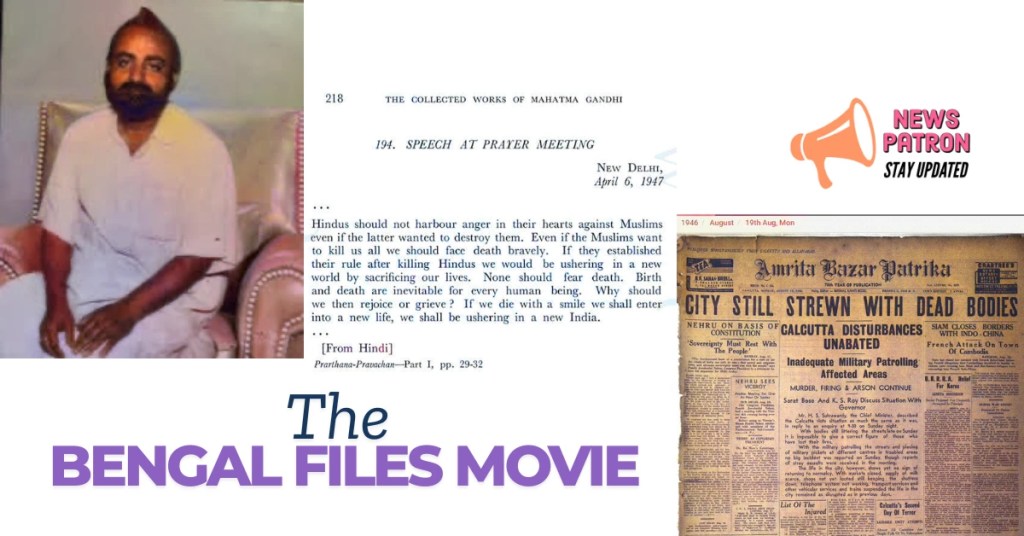

Discover the untold history behind The Bengal Files Movie, a gripping film that unveils the events of the 1946 Calcutta Killings and Suhrawardy’s controversial role. Dive in now!
The Bengal Files Movie: Unveiling the 1946 Calcutta Killings and Suhrawardy’s Shadow
Editorial Preface
The Bengal Files was released on September 5, 2025. It has sparked a global firestorm. This is because it resurrects the harrowing events of Direct Action Day on August 16, 1946. It also revisits the Great Calcutta Killings. Directed by Vivek Ranjan Agnihotri, this film dives into a suppressed chapter of India’s history. It spotlights the alleged role of Huseyn Shaheed Suhrawardy, Bengal’s then-Chief Minister. The movie highlights other backroom operators orchestrating one of the deadliest communal riots in modern history. Thousands were killed. Calcutta was left scarred. The film’s portrayal of a Hindu genocide in Bengal has ignited debates and lawsuits. The resistance led by Gopal Patha has prompted reflections on West Bengal’s identity politics. From Twitter/X reactions in Atlanta to Singapore, the movie bridges past atrocities to current tensions. Subscribe to Newspatron or DroneMitra on YouTube for more untold stories. #newspatron
Introduction to the Bengal Files Movie
The Bengal Files is the final chapter of Vivek Agnihotri’s “Files” trilogy. It follows The Tashkent Files (2019) and The Kashmir Files (2022). This 204-minute Hindi-language period drama confronts the brutal realities of the 1946 Calcutta Killings. The film stars Mithun Chakraborty, Pallavi Joshi, Darshan Kumar, Anupam Kher, and Simrat Kaur. It intertwines historical reenactments with a modern narrative. A CBI officer uncovers corruption linked to partition-era violence. Released amid West Bengal politics debates and 2025 Murshidabad violence, the film has stirred global audiences. Its screenings in 22 countries are drawing emotional responses.
The movie centers on Direct Action Day, when the Muslim League’s push for Pakistan led to riots that killed 5,000–10,000 and injured 15,000 in Calcutta. It portrays Gopal Patha, a local strongman, as a hero who mobilized Hindu resistance, saving Calcutta from falling to Pakistan. Still, controversies abound. An alleged West Bengal ban has caused an uproar. Additionally, Gopal Patha’s grandson has filed a lawsuit for defamation, making it a political lightning rod. A US viewer tweeted, “A gut-wrenching wake-up call to a forgotten genocide”, while critics like Nilanjan Das called it “hate propaganda”. The Great Partition by Yasmin Khan offers context for these events.
Historical Background: Direct Action Day and Suhrawardy’s Role
Direct Action Day marked a catastrophic turning point in India’s independence struggle, igniting the Great Calcutta Killings and accelerating the subcontinent’s partition. Called by Muhammad Ali Jinnah’s All-India Muslim League to demand a separate Muslim homeland, the day was intended as a peaceful hartal (general strike) to showcase Muslim unity. Instead, it unleashed unprecedented communal violence in Calcutta, Bengal’s capital, leaving streets bloodied and communities fractured. The Bengal Files movie frames this as a Hindu genocide in Bengal, spotlighting the pivotal and controversial role of Huseyn Shaheed Suhrawardy, Bengal’s Chief Minister, and other backroom operators who shaped the tragedy.
The Political Climate of 1946
By 1946, India was on the brink of independence, but political unity was crumbling. The British Cabinet Mission, sent to negotiate power transfer, proposed a federal structure grouping provinces by Hindu and Muslim majorities. The proposal was initially accepted by the Muslim League and Indian National Congress (INC). The plan collapsed when Jawaharlal Nehru announced Congress’s intent to modify it. This fueled Jinnah’s fears of Hindu dominance. Jinnah declared, “I will have India divided or India burned,” calling for Direct Action Day, the 18th day of Ramzan, symbolically tied to the Prophet Muhammad’s victory at the Battle of Badr. A tweet from Times Algebra notes, “Jinnah’s call for Direct Action turned Calcutta into a battlefield”.
Bengal, with a 54% Muslim and 44% Hindu population, was a tinderbox. Calcutta, nevertheless, had a 73% Hindu majority, making it a strategic target for the Muslim League’s Pakistan agenda. Suhrawardy was a charismatic Oxford-educated barrister and Muslim League leader. He became Bengal’s Chief Minister in April 1946 after the League’s landslide victory. They won 113 of 119 Muslim seats. His cabinet, devoid of upper-caste Hindus, signaled exclusion to Bengal’s Hindu elite, heightening tensions.
Suhrawardy’s Role: Architect or Scapegoat?
Suhrawardy’s actions before and during Direct Action Day remain deeply contentious. As Chief Minister and Home Minister, he wielded control over Bengal’s police and administration. Critics, including the Bengal Files movie, accuse him of orchestrating the violence, earning the moniker “Butcher of Bengal”. They allege he restrained police, encouraged inflammatory rhetoric, and mobilized Muslim League supporters to intimidate Hindus into accepting Bengal’s inclusion in Pakistan. The film depicts him as a conniving antagonist, with Saswata Chatterjee’s portrayal drawing praise for its menace. @AskAnshul tweeted, “Suhrawardy’s inaction let Calcutta burn—history mustn’t forget”.
On August 16, Suhrawardy declared a public holiday, a decision advised by Chief Secretary Ronald Leslie Walker to minimize picketing conflicts. Critics argue this enabled armed mobs to dominate streets, as police were understaffed or absent. A rally at Ochterlony Monument, attended by tens of thousands, featured fiery speeches, including Mayor Syed Mohammed Usman’s call for “jihad” to emulate Mecca’s conquest. The Muslim League’s mouthpiece, Star of India, urged Muslims to see Ramzan as a time for “jehad,” citing the Battle of Badr. Violence erupted post-rally, with Hindu homes and shops looted, many marked “Pakistan” to spare Muslim properties.
A Canadian user tweeted, “Marked shops show the killings were planned—Vivek Agnihotri”.
Suhrawardy’s defenders, including some Bangladeshi historians, argue he was overwhelmed by the violence’s scale. Cabinet papers from August 24, 1946, reveal Suhrawardy lamenting police withdrawal on August 16–17, claiming he visited Lalbazaar Police Control Room to monitor the situation. He insisted the military was deployed by 2 a.m. on August 17, though British officials delayed full intervention until August 21. Supporters, like those cited in The Wire, portray him as a pragmatic leader who proposed a United Bengal Plan to avoid partition, opposed by Congress. A French user tweeted, “Suhrawardy’s United Bengal vision shows he wasn’t just a communalist—history is complex”.
Backroom Operators: Media, Local Leaders, and Goondas
Beyond Suhrawardy, other backroom operators fueled the violence. Newspapers played a critical role: Asre-Jadid and Star of India (Muslim League-aligned) published inflammatory editorials, while Hindu papers like those cited by Britannica retaliated with anti-Muslim rhetoric. A UK user tweeted, “1946’s media war set Calcutta ablaze—echoes today’s fake news.”
Local Muslim League leaders, including Mayor Usman, incited crowds, with Usman’s pamphlet urging Muslims to “take swords” against “kafirs”. Suhrawardy’s rumored ties to Calcutta’s Muslim underworld, dubbed the “king of the goondas,” amplified mob violence, with smuggling and gambling networks providing muscle.
Hindu leaders also contributed. The Hindu Mahasabha, led by Syama Prasad Mukherjee, mobilized counter-violence, escalating the conflict. Local strongmen like Gopal Patha, backed by Marwari traders and Vyayam Samitis, organized armed Hindu resistance with knives, rods, and revolvers sourced from American soldiers post-World War II.
Times Algebra tweeted, “Gopal Patha’s resistance stopped the League’s plan to claim Calcutta”. These operators, from media to local gangs, turned a political protest into a communal bloodbath.
The Aftermath and Legacy
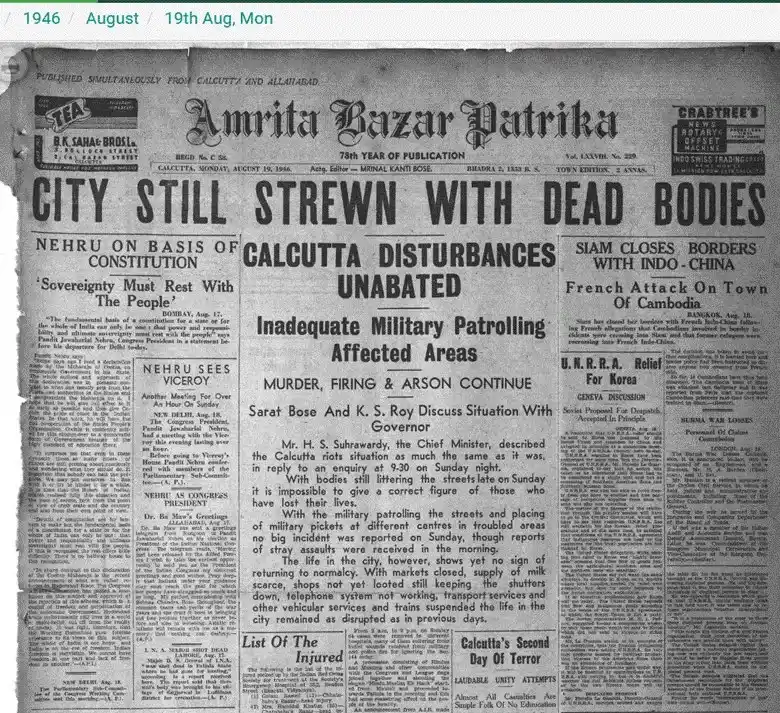
The riots, lasting until August 19, left 5,000–10,000 dead, 15,000 injured, and 100,000–200,000 homeless. Eyewitnesses described lanes “stained red” and bodies piled “like molasses”. Nehru noted a “sadistic desire to kill,” while Gandhi’s efforts to restore peace clashed with Suhrawardy’s communal tactics. The violence spread to Noakhali and Bihar, cementing partition’s inevitability. Hungry Bengal by Janam Mukherjee contextualizes this amid famine and partition. The Bengal Files movie argues these events were a Hindu genocide in Bengal, a view echoed by @theskindoctor13: “Hindus were conditioned to forget their tragedies”.
Suhrawardy’s legacy is polarized. In India, he’s vilified as the “Butcher of Bengal” for his alleged role in the 1943 famine and 1946 killings. In Bangladesh, he’s revered as a founding statesman and mentor to Sheikh Mujibur Rahman. His United Bengal Plan, proposed in 1947, aimed for an independent Bengal but failed against Congress and League opposition. An Australian user tweeted, “Suhrawardy’s vision for a united Bengal complicates his ‘villain’ label”. Making Peace, Making Riots by Anwesha Roy explores these tensions.

Gopal Patha: Hero or Vigilante?

Gopal Chandra Mukherjee, known as Gopal Patha, is central to the Bengal Files movie. Born in 1913 in Calcutta’s Bowbazar, he ran a meat shop, earning the nickname “Patha” (goat), though his family insists it symbolized bravery. A follower of Anushilan Samiti and Netaji Subhas Chandra Bose, Gopal formed the Bharat Jatiya Bahini on August 16, rallying 800 men with knives, swords, and explosives to counter Muslim League mobs. His strategy—retaliating tenfold for each Hindu death—protected Hindu neighborhoods, thwarting the League’s bid for Calcutta.
@HistoryUnveiled in Canada tweeted, “Gopal Patha: hero or vigilante? He saved Calcutta but at what cost?”.
His portrayal is divisive. The film depicts him as a butcher-turned-hero, prompting a lawsuit from Santanu Mukherjee, his grandson, who claims Gopal protected Muslims and followed Netaji’s inclusivity. Santanu filed an FIR, alleging defamation for portraying Gopal as a “Muslim-hating butcher”. Agnihotri defended the depiction, calling Gopal a “hero” and suggesting TMC motives behind the lawsuit.
A UK user tweeted, “Gopal’s story is politicized—truth lies between hero and thug”. Shattered Lands by Sam Dalrymple details his role.
A pivotal moment in Gopal Patha’s history is his 1947 encounter with Mahatma Gandhi. As Gandhi urged rioters to surrender arms, Gopal refused, keeping some weapons to counter ongoing threats. In a 1997 interview, he said, “If the whole area became Pakistan, there would be more torture.” This defiance, shared by @anujdhar, underscores his rejection of non-violence in crisis, aligning with the Bengal Files narrative of necessary resistance. Agnihotri, responding to the lawsuit, respects Gopal but suggests political motives behind the family’s claims, citing Santanu’s alleged TMC ties.
Public Reactions: Global Firestorm on Twitter/X
The Bengal Files movie has polarized audiences worldwide. Supporters hail it as a revelation of suppressed history. India’s @FabulasGuy tweeted, “Another hit exposing India’s hidden past”. US screenings in Atlanta saw emotional responses (see tweets). Chicago viewers said, “We were taught wrong history”. Singapore screenings hit 90% occupancy, sparking late-night debates. A French user tweeted, “It’s a mirror to partition’s pain—hard but necessary”.
Critics decry bias. Nilanjan Das labeled it “BJP propaganda”. @abasu4ever noted low earnings: “₹1.5 crore opening day… India rejected hatred”. Canada’s @JusticeSeekerCA tweeted, “Good intent, but one-sided storytelling”. The trailer’s 1 crore views and Soldier Saffron’s clip with 11,249 likes underscore its reach. The Partition of Bengal by Debjani Sengupta provides context.
Controversies: Bans, Lawsuits, and Political Clashes
The film faced an alleged “unofficial ban” in West Bengal, with Agnihotri claiming TMC pressure on theaters. Kolkata Police halted the trailer launch on August 16, 2025, citing a missing amusement license, not politics. Pallavi Joshi appealed to President Murmu. @IndianDiaspora in the US tweeted, “Censorship hides 1946’s truth”. Former minister Purnendu Basu called it a “distortion of Bengal’s history”.
Santanu Mukherjee’s lawsuit against Agnihotri for defaming Gopal Patha intensified the debate. The Calcutta High Court declined a stay, allowing the release. A Singapore user tweeted, “Lawsuits can’t erase Gopal’s legacy—truth will prevail”. Bengal Divided by Joya Chatterji explores these narrative battles.
Film Reviews and Reception
Critics praised the film’s intensity but criticized its pacing and bias. The Hindu called it “unbridled propaganda” that ignores ordinary Muslims’ suffering. India Today noted strong performances but a “stretched” narrative. Overseas, US audiences found it “gut-wrenching”. London and Singapore screenings saw 90% occupancy, with debates spilling into lobbies. A German user tweeted, “It’s raw, but history deserves this lens”.
Current Implications: Echoes in 2025 West Bengal Politics
The Bengal Files movie resonates amid 2025’s volatile identity politics. TMC-BJP clashes over Hindutva versus Bengali identity mirror 1946’s communal fault lines. Voter purges in Murshidabad, flagging 70,000 applications, and March 2025 violence echo the film’s themes. @TruthSeekerAU tweeted, “Bengal’s 2025 tensions mirror 1946—history repeats”. The Great Partition by Yasmin Khan connects past and present.
Conclusion: Unraveling History’s Shadows
The Bengal Files movie is more than cinema. It’s a global movement exposing the 1946 Calcutta Killings. It reveals Suhrawardy’s complex legacy and Gopal Patha’s defiance. From Atlanta’s tears to Singapore’s debates, it challenges sanitized histories and fuels West Bengal politics discussions. As Bengal Divided by Joya Chatterji argues, understanding these events is crucial for today’s India. Share your thoughts and join the conversation!
Connect with Me
What’s your take on the Bengal Files movie? Connect with Kumar, Editor at Newspatron, on Instagram, Twitter, YouTube, Reddit, Facebook, Tumblr, WhatsApp Channel, Telegram, RSS Feed, or LinkedIn. Links on the Newspatron homepage. #newspatron
#thebengalfilesmovie #calcutta #directactionday #suhrawardy #gopalpatha #bengalpolitics #hindugenocide #vivekagnihotri #partitionviolence #newspatron

[…] Shocking Truth: The Bengal Files Movie Explained […]
[…] If socially relevant films interest you, read our analysis of The Bengal Files, a powerful exploration of trauma and truth:https://newspatron.com/the-bengal-files-movie/ […]
[…] Read on blog or Reader […]