




Investigative Baseline & Context
This is an editorial analysis based on Union Home Minister Amit Shah’s parliamentary statements and official government data as of April 2026. Figures reflect reported trends. All interpretations are editorial. The piece does not constitute legal or policy advice.
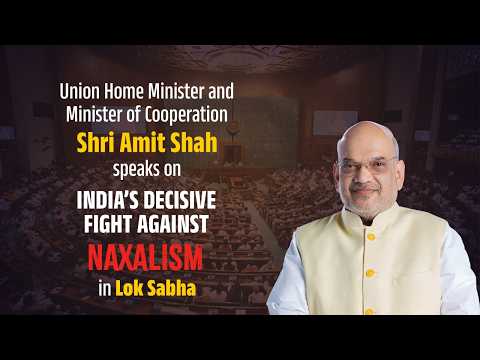
Union Home Minister Amit Shah stood in Parliament and made a direct assertion. Naxalism did not grow because of poverty. Poverty grew because of Naxalism.
Think about it. For decades we heard one story. Left-wing extremism was presented as a natural reaction to backwardness and discrimination in tribal areas. Shah flipped that narrative.
He said the ideology came first. The violence followed. The Red Corridor stretching from Tirupati to Pashupati did not emerge because Maoists wanted to fight injustice. It took root in places where government presence was weak.
What Was The Red Corridor And Why It Mattered?
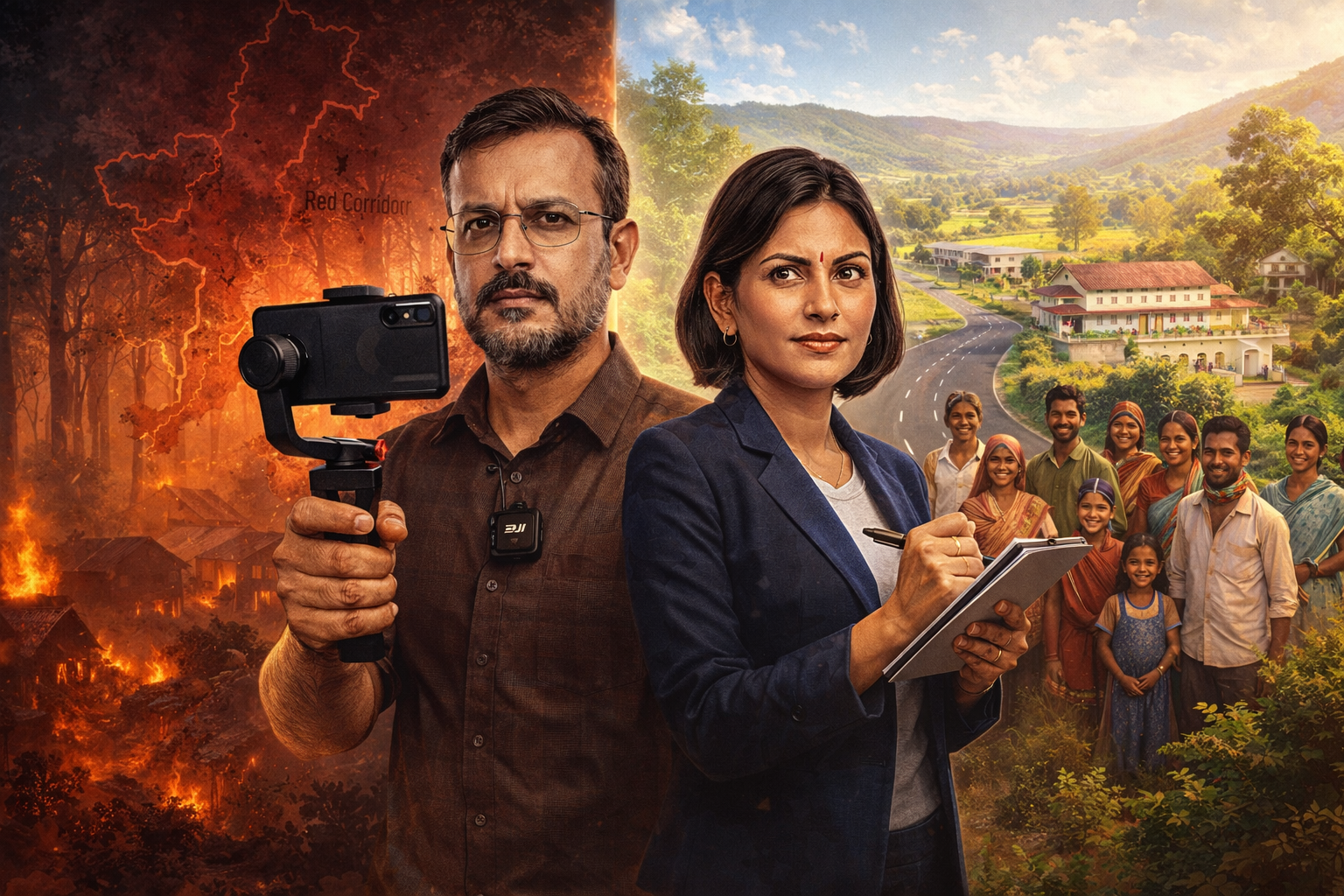
For years, a large stretch of India was referred to as the Red Corridor. It covered 12 states, dense forest regions, tribal-dominated districts, and areas with extremely weak administrative presence.
Think about the scale. This was not a small insurgency. It affected millions across central and eastern India. Which raises the real question. Was this a development failure, or something deeper?
The Trap: How Violence Blocked Development
Here is the thing. Once the guns arrived, development stopped. Let’s break this down clearly. According to the parliamentary argument:
- Schools were destroyed.
- Roads were not allowed to be built.
- Banks were attacked.
- Government officials were targeted.
Now think about the consequence. If institutions cannot enter a region, development cannot follow. This creates a loop: Violence blocks development. No development leads to isolation. Isolation allows more control by armed groups.
Then the same groups turned around and told villagers that the state had failed them.
Recommended Product
Casio Enticer Men's Analog Green Dial Watch MTP-VD01D
🛒 View on Amazon →As an Amazon Associate, we earn from qualifying purchases. Price and availability may vary.
The Ideology vs. Development Debate
The Communist parties in India were not born to fight injustice. They were created to oppose the parliamentary system itself. Amit Shah made this point sharply. A party whose foundation rests on the ideology of another country cannot genuinely serve India’s interests. Its loyalty lies elsewhere.
Supporters of Leftist thought never adopted Bhagwan Birsa Munda, Bhagat Singh, or Subhas Chandra Bose as their ideals. They chose Mao instead.
Their guiding principle was never “Satyameva Jayate”. It was “Power flows from the barrel of the gun”. This ideology created voids in the state, in governance, in the Constitution, and in security. Those voids were then filled with violence and bloodshed.
Shah asked a straightforward question. How can an ideology that rejects India’s democratic framework ever work for the welfare of its people?
The Human Cost Of The Conflict
The human cost was brutal. Mothers lost sons forcibly recruited by Naxalites. Wives became widows when security personnel were killed in ambushes. Yet many intellectuals wrote articles defending the human rights of the Naxalites. Almost none wrote for the grieving mothers or the widows of martyrs.
Post-2014, the government claims a monumental shift in approach. Focus areas included infrastructure expansion, welfare delivery, targeted security operations, and strong surrender policies.
Civilian deaths dropped sharply. Official trends show a reduction of around 60 percent. Security forces casualties also fell significantly, by more than 65 percent in many reports. Affected districts came down from over 126 to just a handful.
These numbers are not abstract. They represent lives saved in the forests and hills of Chhattisgarh, Jharkhand, Odisha, Maharashtra, and Andhra Pradesh.
The Shift: Accountability Backed By Action
Development was deliberately blocked for years. Now the same regions are seeing roads, schools, and hospitals reach every household. The contrast is stark. Where violence once ruled, governance is slowly taking hold.
This is the Modi government. Whoever picks up arms will have to pay the price. The government is not scared of Leftist terrorists. It is a government that delivers justice to all.
The credit for this success belongs to the men and women on the ground. Central Armed Police Forces, especially COBRA and CRPF jawans. State police. District Reserve Guard units. And most importantly, the local tribal communities who risked everything to support security operations.
This pattern matches the broader approach seen in other challenging regions. You can read how the same government is transforming Jammu and Kashmir through key legislative changes here:
How Jammu and Kashmir Bills Passed by Modi-Shah Government Will Transform the Region
It also reflects the long-term vision of institution-building and grassroots empowerment that Amit Shah has pushed in other sectors. See the extraordinary vision behind the Co-operative Ministry here:
Co-operative Ministry of India & the Extraordinary Vision of Amit Shah
Political Patronage and The End Of An Era
Without political support and shelter from those in power, the Red Corridor could never have spread from Tirupati to Pashupati. Amit Shah stated this directly. The corridor survived for decades in the heart of the country only because it received patronage and protection at various levels.
Shah went further. He said that by living in the company of Naxalites, sections of the main opposition have themselves started behaving like Naxalites. Those who provided ideological cover or political shelter enabled the violence as much as those who pulled the trigger.
This game has run for too long. It will not work anymore. Naxal-free India is not a small achievement. It is one of the biggest, most historic successes of the Modi government.
Conclusion
Naxal-Free India is being positioned as a major milestone. But the deeper story is not just about ending violence. It is about understanding what caused it, what sustained it, and what finally reduced it.
India now has a chance to redirect resources from fighting an internal war to building a stronger future. The message from the government is firm. Justice will be delivered to all. Whoever chooses the path of violence will face consequences.
Newspatron — Let Curiosity Be Your Guide.
