


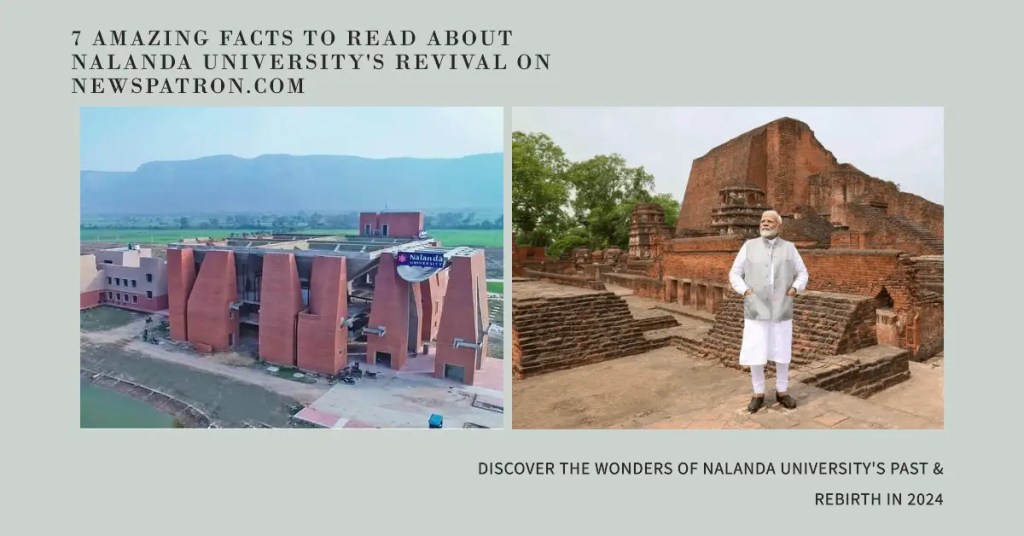



Ever heard of a university so cool, it drew students from all corners of the globe way back when? Well, that was Nalanda University, a knowledge powerhouse that sadly faded away. But guess what? It’s back, and it’s got a shiny new campus, freshly inaugurated by none other than our very own Yashasvi Pradhan Mantri, Modiji!
This isn’t your average school reopening, folks. Nitish Babu, in his heartfelt speech, reminded us that we’re talking about the revival of an institution that was once the intellectual heart of India, where scholars from China to Sri Lanka flocked to learn everything from medicine to philosophy. And now, with a little help from modern technology and a whole lot of ambition, it’s ready to reclaim its place on the world stage.
Nalanda: Where Ancient Wisdom Meets Modern Dreams (and a Respected Prime Minister!)
But hold on to your hats, because this story isn’t just about old books and dusty classrooms. Prime Minister Modi himself called it “a symbol of India’s academic heritage and vibrant cultural exchange” and “a golden age for India.” He sees Nalanda not just as a relic of the past, but as a model for a sustainable future, a place where “progress and environment” go hand in hand, just like Sushasan Babu envisions for Bihar.
So, grab your popcorn (or maybe some samosas, this is India after all), settle in, and get ready for a tale of ancient wisdom, modern aspirations, and a whole lot of hope for the future. We’ll delve into Nalanda’s epic past, its dramatic revival, and the exciting possibilities that lie ahead. Get ready to have your mind blown (and maybe even your heart warmed) by the story of Nalanda.
A Vision for Revival: The Dream Takes Shape
But even in its ruins, Nalanda continued to inspire. Its legacy lived on in the hearts and minds of scholars and historians, who recognized its importance in shaping the intellectual landscape of Asia and beyond.
Nitish Babu, in his speech, passionately described the moment when the dream of Nalanda’s revival began to take shape. It was 2006, and the then-President of India, Dr. A.P.J. Abdul Kalam, visited Bihar. In an address to the Bihar Legislative Assembly, he spoke of the need to re-establish Nalanda University, sparking a renewed interest in this ancient seat of learning. (Watch the YouTube Video)
As Sushasan Babu recounts, “He was the same person for the first time and had come and seen it and when he came there, we were there at that time and later.” This personal connection between the visionary leader and the historic site ignited a passion within the state government to bring Nalanda back to life.
The wheels were set in motion, and the government embarked on a mission to create a new Nalanda University, one that would be world-class and internationally renowned. This was no small feat, as it required navigating bureaucratic hurdles and securing the necessary resources.
Recommended Product
Casio Vintage A168WA Digital Watch – Classic Retro Style
🛒 View on Amazon →As an Amazon Associate, we earn from qualifying purchases. Price and availability may vary.

In 2008, after his retirement, former President Dr. A.P.J. Abdul Kalam returned to Bihar to visit the site chosen for the new Nalanda University. This visit served as a powerful symbol of the commitment to reviving this ancient institution.
The dream of Nalanda’s revival continued to gain momentum, culminating in the passing of the Nalanda International University Bill in the Lok Sabha in 2010. This marked a major milestone in the journey to bring Nalanda back to life.
With the land transferred to the central government and the legal framework in place, the stage was set for the construction of a new Nalanda University. The vision was clear: to create an institution that would not only honour the legacy of its ancient predecessor but also embrace modern ideas and technologies.
Constructing the Future: Building a New Nalanda
The vision of a revived Nalanda University began to materialize with the construction of a new campus near the ancient ruins. The state government, under Nitish Babu’s leadership, had laid the groundwork, and now it was time for the central government to take the reins.

The new campus was designed to be a modern marvel, blending cutting-edge technology with the rich cultural heritage of the region. State-of-the-art classrooms, auditoriums, hostels, and an international centre were built to accommodate a new generation of students from around the world.
In 2016, with the buildings complete, the entire campus was officially inaugurated by Prime Minister Modi. It was a momentous occasion, signifying the rebirth of Nalanda as a centre of learning and a testament to India’s commitment to education and progress.
Today, the university is thriving, with 400 students from 17 countries already enrolled in its various programs. As Nitish Babu proudly stated, “It is a matter of great happiness that all the buildings and campus of the University have expanded a lot and have become very beautiful.”
Nalanda and Bollywood: A Cinematic Connection
Nalanda University’s allure extends beyond the academic realm; it has also captured the imagination of Bollywood filmmakers.
The ruins of the ancient university, with their timeless beauty and historical significance, have served as a captivating backdrop for several iconic movie scenes and songs.
The song, set amidst the picturesque ruins of Nalanda, captures the essence of romance and adventure. It’s a testament to the university’s enduring appeal, even in its dilapidated state.
[YouTube video link to “ O mere Raaja” “Waada To Nibhaya” song]
[You Tube GOP Vlogger Explaining the Nalanda and the Shooting locations and each shot]
Why Nalanda Resonates with Filmmakers?
- Historical and Aesthetic Appeal: The ruins of Nalanda University offer a visually stunning and historically rich setting for filmmakers. The ancient structures, adorned with intricate carvings and inscriptions, transport viewers to a bygone era.
- Cultural and Spiritual Context: Nalanda was a hub for Buddhist studies, philosophy, and comparative religions. Its spiritual legacy resonates with filmmakers seeking depth and meaning in their narratives. The serene surroundings and meditation spots inspire introspective scenes.
- Global Collaboration: The new Nalanda University campus, established near the ancient ruins, is a collaboration between India and East Asia Summit (EAS) countries. Filmmakers appreciate the symbolism of global cooperation and shared heritage.
- Modern Amenities in an Ancient Setting: The revamped campus boasts state-of-the-art infrastructure, including classrooms, auditoriums, hostels, and an amphitheatre. Filmmakers find a balance between historical allure and practical shooting facilities.
Nalanda University ruins offer filmmakers a unique blend of history, aesthetics, spirituality, and global connections. As cameras roll amidst the ancient bricks, they capture not only cinematic frames but also the echoes of centuries past.
We invite our readers to share their knowledge and experiences! Do you know of any other movies or short films that have been shot at Nalanda University? Let us know in the Forums at the end of this below or at the end of this post.
[bbp-single-topic id=6252]
The Spiritual Heart of India: Rajgir’s Divine Tapestry
Nestled amidst the picturesque hills of Bihar, Rajgir isn’t just any town; it’s a place where spirituality and history intertwine, a true melting pot of faiths and beliefs. As Nitish Babu put it, “Rajgir is the confluence of five major religions.” This isn’t an exaggeration; Rajgir is a place where Buddhism, Jainism, Sikhism, Islam, and Hinduism peacefully coexist, each leaving its own unique mark on the town’s cultural landscape.
Buddhism’s Sacred Ground
For Buddhists, Rajgir holds immense significance. It’s here that Lord Buddha spent considerable time, residing in the Venu Vana monastery and delivering sermons on the Gridhakuta Hill [or Vulture Park, read more at Bihar Tourism Website]. Nitish Babu, in his speech, fondly recalls his childhood visits to these sacred sites and the efforts made by his government to improve accessibility and infrastructure for pilgrims. Today, visitors can walk in the footsteps of the Buddha, exploring the ancient ruins and soaking in the peaceful atmosphere of this holy land.
Jainism’s Ancient Temples
Rajgir also boasts a rich Jain heritage, with numerous Jain temples dotting the landscape. Lord Mahavira, the 24th and last Tirthankara of Jainism, is believed to have spent 14 monsoon seasons in Rajgir, meditating and spreading his teachings. The Jain community continues to thrive in Rajgir, playing an active role in the town’s religious and cultural life.
Sikhism’s Tranquil Retreat
The Sikh connection to Rajgir is equally fascinating. Guru Nanak Dev Ji, the founder of Sikhism, visited Rajgir during his travels and established the Sheetal Kund, a sacred pool. A Gurudwara was later built at this site, which continues to be a place of pilgrimage for Sikhs from around the world.[Read more about Guru Nanak Jayanti: Illuminating the Path to Enlightenment and Compassion]
Islam’s Scholarly Legacy
Rajgir also has a significant connection to Islam. Makhdoom Shah Daulah Shahid, a revered Sufi saint, is believed to have received his spiritual education in Rajgir before moving to Bihar Sharif, a nearby town. His legacy as a scholar and spiritual leader continues to inspire Muslims in the region.
Hinduism’s Divine Gathering
Rajgir holds a special place in Hindu mythology as well. It’s believed that during the Malmas Mela, a festival held every three years, 33 crore Hindu gods and goddesses descend upon Rajgir. This belief draws millions of devotees to the town, who come to bathe in the hot springs and seek blessings from the divine. Nitish Babu, in his speech, highlights the massive turnout at the 2023 Malmas Mela, a testament to the deep-rooted faith and devotion of the people.
This unique blend of religious and cultural traditions makes Rajgir a truly special place, a microcosm of India’s diverse spiritual landscape. It’s a place where people of different faiths come together to celebrate their shared humanity and seek spiritual enlightenment.
Rajgir: A Natural and Cultural Gem
Rajgir’s appeal extends far beyond its spiritual significance. Nestled amidst ancient hills and lush forests, this town is a natural wonderland that has captivated visitors for centuries. Nitish Babu, in his speech, paints a vivid picture of Rajgir’s natural beauty, describing “mountains and forests millions of years old.”
The speaker’s words evoke a sense of awe and wonder as he describes the grandeur of Rajgir’s landscape: “How big the mountains are, see how big they are, how big the rust is, everything is there in these hills.” These hills, he notes, are not just a feast for the eyes; they are also a treasure trove of medicinal herbs, thanks to the extensive tree plantation efforts undertaken by the government.
But Rajgir’s allure isn’t limited to its natural splendour. The town has also emerged as a hub for eco-tourism, offering a unique blend of nature and culture. Ghoda Katora and Pandu Pokhar, two picturesque lakes nestled amidst the hills, have been developed into popular tourist spots. Visitors can enjoy boating, picnicking, and simply soaking in the serene ambiance of these tranquil waters.
For those seeking a more adventurous experience, Rajgir offers a world-class zoo and safari, where visitors can observe a diverse range of animals in their natural habitat. The newly built glass bridge, suspended high above the valley, provides breathtaking views of the surrounding landscape.
As Nitish Babu proudly declares, “We have developed so many things in Rajgir, now everyone is happy.” Indeed, the town has become a magnet for tourists of all ages, drawn by its unique blend of natural beauty, cultural heritage, and modern attractions.
With its rich history, spiritual significance, and natural wonders, Rajgir is a true gem of Bihar, a place where the past and present seamlessly merge. It’s a testament to the vision and dedication of leaders like Nitish Babu, who have worked tirelessly to preserve and promote this unique destination.
A Shared Vision for Nalanda’s Future: A Beacon Rekindled
As the sun sets over the newly inaugurated Nalanda University campus, a sense of hope and anticipation fills the air. Nitish Babu’s heartfelt words echo the collective aspiration for this ancient institution to once again become a global hub of knowledge and cultural exchange.
In his speech, he extends a warm welcome to Prime Minister Modi, expressing gratitude for his unwavering support in revitalizing Nalanda. “It is a great pleasure… that you are coming here,” Nitish Babu says, acknowledging the Prime Minister’s third visit to the sacred land of Rajgir.
The Prime Minister’s vision for Nalanda is ambitious yet grounded in the university’s rich history and cultural significance. He sees Nalanda as a “symbol of India’s academic heritage and vibrant cultural exchange,” a place where “the heritage of many countries of the world and Asia is linked.”
Modiji’s words resonate with Nitish Babu’s own aspirations for Nalanda. Both leaders envision a university that not only preserves India’s ancient wisdom but also embraces modern ideas and fosters global collaboration. In the Prime Minister’s words, “This revival is going to start a golden age for India.”
Nitish Babu, in his characteristically humble manner, acknowledges the contributions of others, including the central government and the university’s faculty and staff. He emphasizes the importance of collaboration and continued support, urging everyone to work together to ensure Nalanda’s success.
The speaker also extends a heartfelt invitation to Prime Minister Modi to visit the neighbouring villages and interact with the local people. He highlights the deep-rooted connection between the university and the surrounding communities, emphasizing the importance of mutual respect and understanding.
“If you give some advice to those people, then it would be so nice,” Nitish Babu says, recognizing the Prime Minister’s influence and the positive impact his words can have on the people of Rajgir.
In closing, Nitish Babu reiterates his commitment to supporting Nalanda University, pledging the state government’s full cooperation in its future endeavours. He also encourages the district administration to remain vigilant and provide any assistance needed by the university.
With a shared vision for Nalanda’s future, Nitish Babu and Prime Minister Modi stand united in their belief that this ancient institution can once again become a beacon of knowledge, illuminating the path towards a brighter future for India and the world.
Conclusion: Nalanda’s Renaissance: A Testament to India’s Enduring Spirit
Nalanda University, a name that resonates with centuries of wisdom and learning, stands today as a testament to India’s enduring spirit and its unwavering commitment to education. Its revival, a collaborative effort between the state and central governments, is a symbol of hope and progress, a beacon illuminating the path towards a brighter future.
The inauguration of the new campus by Prime Minister Narendra Modi marks a significant milestone in this journey. His words, filled with pride and optimism, reflect the nation’s collective aspiration for Nalanda to once again become a global centre of knowledge and cultural exchange.
Nalanda’s story is not just about the past; it’s about the present and the future. It’s about nurturing a new generation of scholars and thinkers who will carry forward the university’s legacy of excellence. It’s about fostering an environment where students from diverse backgrounds can come together to learn, collaborate, and make a positive impact on the world.
As Nitish Babu so eloquently put it, “Nalanda University should be promoted a lot.” It’s a call to action for all of us to support this institution and ensure that it continues to thrive for generations to come. It’s a reminder that education is not just a privilege, but a fundamental right, and that knowledge is the key to unlocking a brighter future for all.
The story of Nalanda is a story of resilience, hope, and unwavering determination. It’s a story that inspires us to dream big, to overcome challenges, and to strive for a better tomorrow. And as we look towards the future, we can be confident that Nalanda University will continue to shine as a beacon of knowledge, illuminating the path towards a more enlightened and harmonious world.
The Spiritual Heart of India: Rajgir’s Divine Tapestry
Q & A Glorious Past Nalanda, the Ancient Knowledge Hub
Q: Who established Nalanda University?
A: While the exact founder is debated, Nalanda University is widely believed to have been established during the Gupta Empire, possibly under the patronage of Emperor Kumaragupta I in the 5th century CE. The university flourished under the Gupta and later Pala dynasties, becoming a renowned centre of learning.
Q: When was Nalanda University established?
A: Nalanda University was established in the 5th century CE. The precise year varies depending on sources, but it is generally accepted to have been founded around 427 CE during the reign of the Gupta dynasty.
Q: Was Nalanda University a Buddhist university?
A: While Nalanda University was a major center for Buddhist studies and philosophy, it was not exclusively Buddhist. The university welcomed students and scholars from various religions and backgrounds, fostering a diverse and inclusive learning environment.
Q: Who burnt Nalanda University?
A: The destruction of Nalanda University is attributed to Bakhtiyar Khilji, a Turkic military general, in the late 12th century CE.

The fire lasted 6 months, burning more than 9 million books and manuscripts, killed almost all of the studends and teachers and burnt the Nalanda Mahavihara building to the ground.
Q: What was Nalanda University famous for?
A: Nalanda University was renowned for its comprehensive curriculum, which covered a wide range of subjects, including Buddhist studies, philosophy, grammar, logic, medicine, mathematics, and astronomy. It attracted students and scholars from across Asia, fostering a vibrant intellectual and cultural exchange.
Q: Is Nalanda University a World Heritage Site?
A: Yes, the ruins of ancient Nalanda University were declared a UNESCO World Heritage Site in 2016, recognizing its outstanding universal value and historical significance as one of the world’s first residential universities.
Q: What did Nalanda University look like?
A: Nalanda University was a sprawling complex of buildings, including lecture halls, monasteries, temples, libraries, and residential quarters for students and teachers. Archaeological excavations have revealed intricate sculptures, stupas, and other artifacts that provide insights into the university’s architecture and daily life.
Constructing the Future: Building a New Nalanda
Q: Is Nalanda University a government or private institution?
A: The modern Nalanda University is a public university established by an Act of the Indian Parliament in 2010. It is funded and administered by the Government of India, with the President of India serving as its visitor.
Q: When was the new Nalanda University established?
A: While the idea to revive Nalanda University was conceived in the early 2000s, the new Nalanda University was officially established by an Act of Parliament in 2010 and began admitting students in 2014.
Q: In which state is Nalanda University located?
A: Nalanda University is in the state of Bihar, India, near the town of Rajgir.
Q: Where can I download images of Nalanda University?
A: You can find high-quality images of both the ancient ruins and the new Nalanda University campus on the university’s official website and various online image libraries. Please ensure you respect copyright regulations when using these images.
Q: What is the architecture of Nalanda University like?
A: The new Nalanda University campus features a blend of traditional and modern architectural elements. It incorporates sustainable design principles, with a focus on energy efficiency and environmental conservation. The campus buildings are designed to harmonize with the natural landscape, creating a serene and conducive learning environment.
Q: Where is Nalanda University located?
A: Nalanda University is in Rajgir, a town in the Nalanda district of Bihar, India.
Q: What is the significance of Rajgir?
A: Rajgir holds immense historical and spiritual significance. It was the ancient capital of the Magadha empire and is considered a sacred site for five major religions: Buddhism, Jainism, Sikhism, Islam, and Hinduism.
Q: Is Nalanda University in Bihar?
A: Yes, Nalanda University is in the state of Bihar, India. It is situated near the town of Rajgir, which is in the Nalanda district.
Q: Which religions are prominent in Rajgir?
A: Rajgir is a unique place where five major religions coexist:
- Buddhism: Lord Buddha spent a significant amount of time in Rajgir, residing in the Venu Vana monastery and delivering sermons on Gridhakuta Hill.
- Jainism: Lord Mahavira, the 24th and last Tirthankara of Jainism, is believed to have spent 14 monsoon seasons in Rajgir.
- Sikhism: Guru Nanak Dev Ji, the founder of Sikhism, visited Rajgir and established the Sheetal Kund, a sacred pool.
- Islam: Makhdoom Shah Daulah Shahid, a revered Sufi saint, is believed to have received his spiritual education in Rajgir.
- Hinduism: Rajgir is considered a sacred site for Hindus, and the Malmas Mela, a festival held every three years, attracts millions of devotees.
Q: What is the Malmas Mela in Rajgir?
A: The Malmas Mela is a major Hindu festival held every three years in Rajgir. It is believed that during this time, 33 crore Hindu gods and goddesses descend upon Rajgir. Devotees from all over India flock to the town to participate in the festivities, which include bathing in the hot springs and offering prayers at the various temples.
Q: What are some tourist attractions in Rajgir?
A: Rajgir offers a diverse range of attractions for visitors:
- Historical sites: The ancient ruins of Nalanda University, the Gridhakuta Hill, and the Venu Vana monastery are must-visit destinations for history buffs.
- Religious sites: The numerous temples, mosques, and gurudwaras in Rajgir offer a glimpse into the town’s rich spiritual heritage.
- Natural attractions: The hot springs, mountains, and forests surrounding Rajgir provide ample opportunities for relaxation and rejuvenation.
- Modern attractions: The international-level zoo, safari, and glass bridge are popular among tourists of all ages.

