


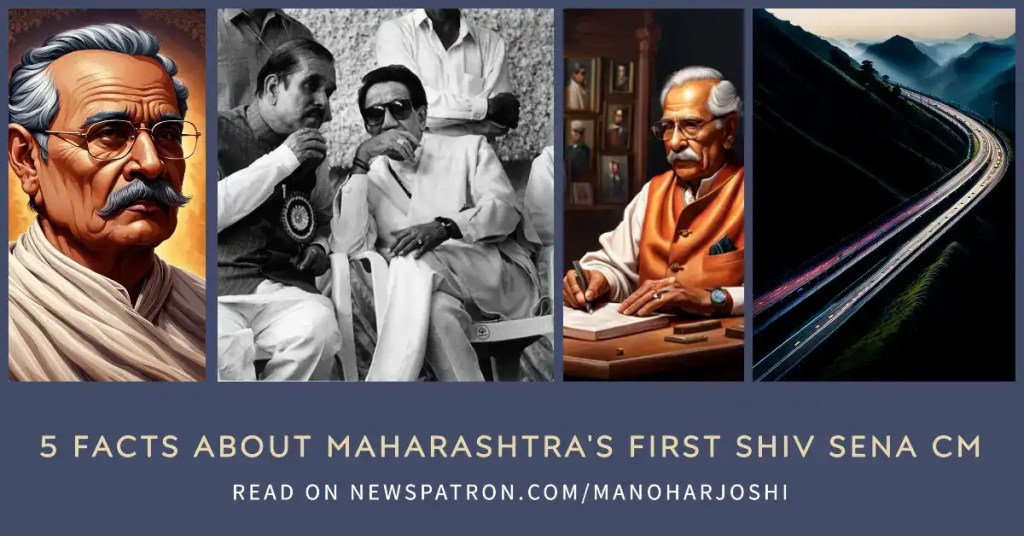

Manohar Joshi: A Glimpse into His Personal Life
Manohar Joshi, who passed away recently, was not only a prominent politician but also a devoted family man, a successful businessman, and a generous philanthropist. In this section, we will delve into aspects of his personal life that shaped his personality and values.
Joshi was born on December 2, 1937, in a middle-class family in Nandavi village in Raighad, Maharashtra [a state in western India]. His father, Gajanan Joshi, was a lawyer and a freedom fighter, and his mother, Malati Joshi, was a homemaker. Along with his three siblings, Joshi grew up in a cultured and patriotic environment, developing a keen interest in politics, education, and social service.
Completing his schooling from New English School in Pune, Joshi graduated from Fergusson College with a Bachelor of Arts degree in History. He furthered his education, obtaining a law degree from the University of Pune and a Master of Arts degree in Political Science from the University of Mumbai. His career began with roles as a teacher and a journalist, working for various publications such as Kesari, Tarun Bharat, and Navakal (Marathi-language newspapers).
In 1964, Joshi married Anagha Joshi, a doctor. They had three children, two sons and a daughter. As a loving husband and supportive father, Joshi encouraged his family to pursue their ambitions. His elder son, Unmesh Joshi, is a businessman and chairman of Kohinoor Group (a conglomerate with interests in real estate and education). His younger son, Sudhakar Joshi, is a doctor and social worker, while his daughter, Shubhada Sukthankar, is a dentist and writer.
Joshi’s visionary leadership extended to the business world. In 1961, he founded the Kohinoor Group, successfully expanding it into sectors including real estate, education, media, hospitality, and health care. Additionally, he established educational institutions like the Kohinoor Business School, Kohinoor Technical Institute, Kohinoor International School, and Kohinoor College of Hotel Management. He also owned Saamana, a Marathi newspaper serving as the Shiv Sena political party’s mouthpiece.
Joshi was a compassionate philanthropist, actively supporting causes and organizations like the Bharat Ratna Dr. Babasaheb Ambedkar Memorial Trust, Lokmanya Tilak Trust, the Shri Sai Baba Sansthan Trust, and the Ramakrishna Mission (philanthropic organizations in India). His contributions to society were recognized with several awards and honors, including the Padma Vibhushan (India’s second-highest civilian award) in 2001 and the prestigious Lokmanya Tilak Award for journalism in 1994.
Joshi’s multifaceted life reflected the balance between his personal and professional pursuits. He possessed a positive outlook, believing in the power of hard work, honesty, and dedication. With a passion for cricket and music, he cherished spending time with his loved ones.
Read More about Maharashtra Chief Ministers: A Comprehensive History

Joshi once said, “Life is a journey, not a destination. Enjoy every moment of it, and make it meaningful and memorable.”
Recommended Product
Casio Enticer Men's Analog Green Dial Watch MTP-VD01D
🛒 View on Amazon →As an Amazon Associate, we earn from qualifying purchases. Price and availability may vary.
Did You Know These Facts About Manohar Joshi?
- A Man Who Rose From the Ranks: Manohar Joshi’s story is one of incredible determination. Starting from a traditional background, he wasn’t handed anything. He worked as a teacher, and tried his hand at various small businesses – some succeeded, some didn’t – but he never gave up. His journey to becoming Maharashtra’s Chief Minister is truly inspiring.
- A Heart for Empowerment: Joshi wasn’t just driven by personal success. He founded Kohinoor Classes, a small venture with a big vision: to give young people the practical skills they needed for good jobs or to become self-employed. It even grew into the Kohinoor Technical Institute! He truly believed in helping others succeed.
- The Business-Savvy Politician: Joshi was a rare breed – a shrewd businessman and a dedicated public servant! Beyond education, he built businesses in real estate and hospitality… he even established major hotels in Mumbai and Chennai!
- Giving a Movement a Voice: Joshi saw the power of the press. He acquired the Marathi-language newspaper Saamana – back then just a local paper – and made it the mouthpiece of the Shiv Sena!
- Called to Serve: Joshi seemed unstoppable! He served as a Mumbai Municipal Councillor, Mayor of the city, a Member of the Legislative Assembly, and even rose to become Speaker of the Lok Sabha. It’s like he was born to lead!
- The Self-Made Man: Here’s a fun fact: before all the big titles, Joshi was so entrepreneurial, that he bought a car and started a rental business! He even drove clients himself, and wouldn’t you know it, one of them happened to be Bal Thackeray! That’s a meet-cute for the history books.
- A Leader’s Respect: Bal Thackeray, the powerful Shiv Sena founder, wasn’t just Joshi’s boss. He admired Joshi’s brains, reportedly saying, “I may not be highly educated, but my driver holds multiple degrees!”
Let’s make this a tribute that truly honours the man!
Manohar Joshi: A Look at His Rise in Maharashtra Politics
Manohar Joshi, a seasoned politician, significantly influenced Maharashtra’s political landscape. Let’s explore his journey from early political involvement to his tenure as Chief Minister.
He joined politics in 1968, becoming a member of the Shiv Sena (a regional political party founded by the charismatic and controversial Bal Thackeray). Advocating for the rights and interests of the Marathi-speaking people of Maharashtra, the party deeply resonated with Joshi. Impressed by Thackeray’s leadership and ideology, he became one of Thackeray’s most loyal and trusted lieutenants. Rising through the Shiv Sena’s ranks, Joshi held various positions, including general secretary, treasurer, opposition leader in the Brihanmumbai Municipal Corporation (BMC) (Mumbai’s governing civic body), and eventually, the mayor of Mumbai.
Joshi played a pivotal role in the Shiv Sena’s growth from a regional to a national party, helping forge coalitions with other parties such as the Bharatiya Janata Party (BJP) (a right-wing party with a pan-Indian appeal). He contributed to expanding the Shiv Sena’s base and influence in Maharashtra’s rural and urban areas, mobilizing support from various sections of society, including youth, women, workers, and entrepreneurs.

Joshi’s Strategic Role in the Shiv Sena
Manohar Joshi played a pivotal role in the Shiv Sena’s growth and transformation from a regional to a national political force in India. A trusted lieutenant of Bal Thackeray, the party’s founder, Joshi implemented strategies to expand the Shiv Sena’s reach in both rural and urban areas of Maharashtra. He played a key role in forging alliances with other political parties, such as the Bharatiya Janata Party (BJP), to gain broader influence. Joshi’s leadership contributed to mobilizing support from diverse sections of Maharashtrian society, including youth, women, and working-class citizens. His strategic initiatives laid the groundwork for the Shiv Sena’s increasing prominence in Indian politics.
Manohar Joshi’s Tenure as Chief Minister
Joshi’s political career reached its pinnacle in 1995 when he became the Chief Minister of Maharashtra. This historic moment followed the Shiv Sena-BJP alliance’s victory in the state assembly elections, making Joshi the first and, so far, only Chief Minister from the Shiv Sena. During his tenure from 1995 to 1999, he initiated developmental projects and reforms aimed at benefiting the people of Maharashtra. Let’s look at some of his major initiatives:

The Mumbai-Pune Expressway: This six-lane, 94-km-long highway significantly reduced travel time between Mumbai and Pune (two major cities in Maharashtra), boosting trade and tourism in the region.
- The Mumbai Metro: Joshi’s government was instrumental in initiating this rapid transit system to ease traffic congestion and improve public transportation in Mumbai. The project’s first phase was completed in 2014, and the second phase is currently under construction.
- Slum Rehabilitation Scheme: This scheme aimed to provide free housing to Mumbai’s slum dwellers, improving their living conditions and access to amenities. It involved private developers who were incentivized to construct and maintain these housing units.
- Employment Guarantee Scheme: Designed to provide employment opportunities to the rural poor, this scheme focused on creating public works projects in areas such as roads, irrigation, and afforestation. It aimed to enhance the income and livelihood of rural communities.
Manohar Joshi: Business Acumen
Alongside his political influence, Manohar Joshi possessed exceptional business acumen, evident in his multifaceted entrepreneurial journey. As a young man, he demonstrated his potential through small business ventures.
One of Joshi’s most significant achievements was founding the Kohinoor Group in 1961. Initially focused on education, the Kohinoor Group rapidly expanded into other sectors, including real estate, hospitality, healthcare, and media.
Joshi’s visionary thinking was exemplified by Kohinoor Classes, offering academic guidance to aspiring students. This endeavour later evolved into the Kohinoor Technical Institute, providing young adults with vocational and technical skills, and equipping them for employment in various industries.
Demonstrating ambition and innovation, Joshi ventured into print media by acquiring Saamana, a Marathi-language newspaper. Under his ownership, Saamana became the Shiv Sena party’s official mouthpiece, disseminating the party’s ideas and ideology to the masses.
Manohar Joshi & Bal Thackeray: A Dynamic Partnership
Manohar Joshi’s rise in the Shiv Sena and Maharashtra politics is inseparable from his close association with Bal Thackeray, the party’s founder and an influential, often controversial figure. Their relationship played a crucial role in Joshi’s ascent to power and shaped the Shiv Sena’s growth and ideology.
Joshi, drawn to the Shiv Sena’s advocacy for the rights of Marathi-speaking people, found a mentor in the charismatic Thackeray. With his loyalty, strategic thinking, and dedication, Joshi quickly rose through the party ranks, becoming one of Thackeray’s most trusted confidantes.
Their relationship extended beyond the political sphere. Joshi shared a deep respect and admiration for Thackeray, while Thackeray recognized Joshi’s political acumen and unwavering support. This bond of trust propelled Joshi’s political ambitions.
The Joshi-Thackeray dynamic was instrumental in transforming the Shiv Sena from a regional force to a major player in Indian politics. Thackeray’s fiery rhetoric and populist appeal resonated with the masses, while Joshi’s organizational skills and strategic mind played a critical role in expanding the party’s reach and influence.
Despite their close association, the Joshi-Thackeray relationship had its complexities. Joshi’s political style was often considered more pragmatic and moderate compared to Thackeray’s assertive and occasionally confrontational approach.
However, their differences were often viewed as complementary, allowing the Shiv Sena to maintain a balance between its ideological core and its expanding political ambitions.
Did you witness this dynamic firsthand? Do you have stories or insights about the Joshi-Thackeray partnership? Share your perspectives in the comments below!
- Email/Newsletter Signup: Want to be the first to know when our in-depth analysis of Joshi, Thackeray, and the controversies is released? Subscribe to our email alerts and get the latest articles delivered straight to your inbox!
- YouTube Channel: For deeper discussions and interviews on Maharashtra politics, subscribe to our YouTube channel. Don’t miss out on exclusive content and expert analysis!
- Comment Invitation: Your thoughts shape our content! Share your opinions, questions, and any personal experiences related to Manohar Joshi’s life and legacy in the comments below.
