


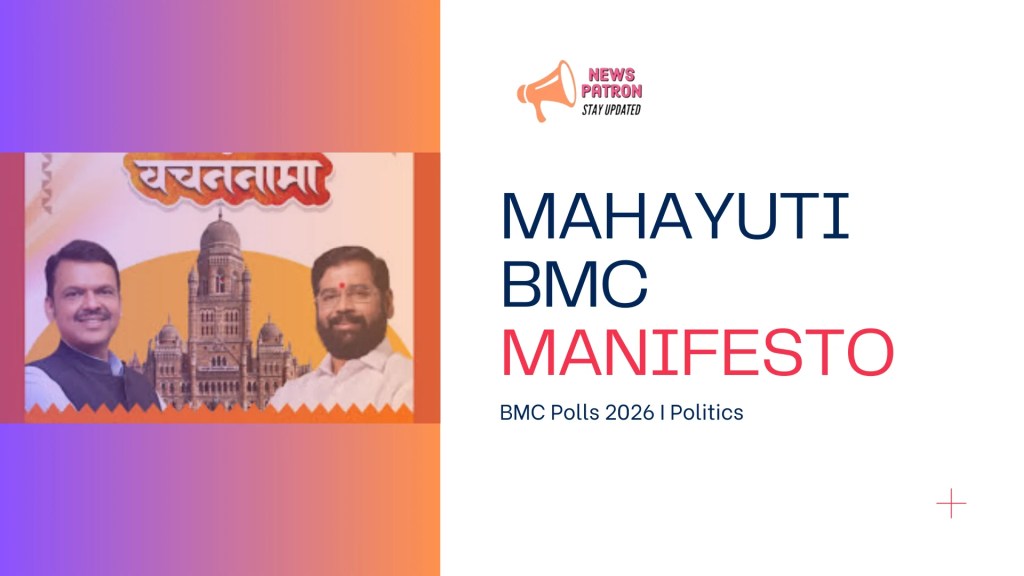

Mahayuti’s 2026 BMC Manifesto: A Pledge for a “Pagdi-Mukt” Mumbai and 35 Lakh Homes
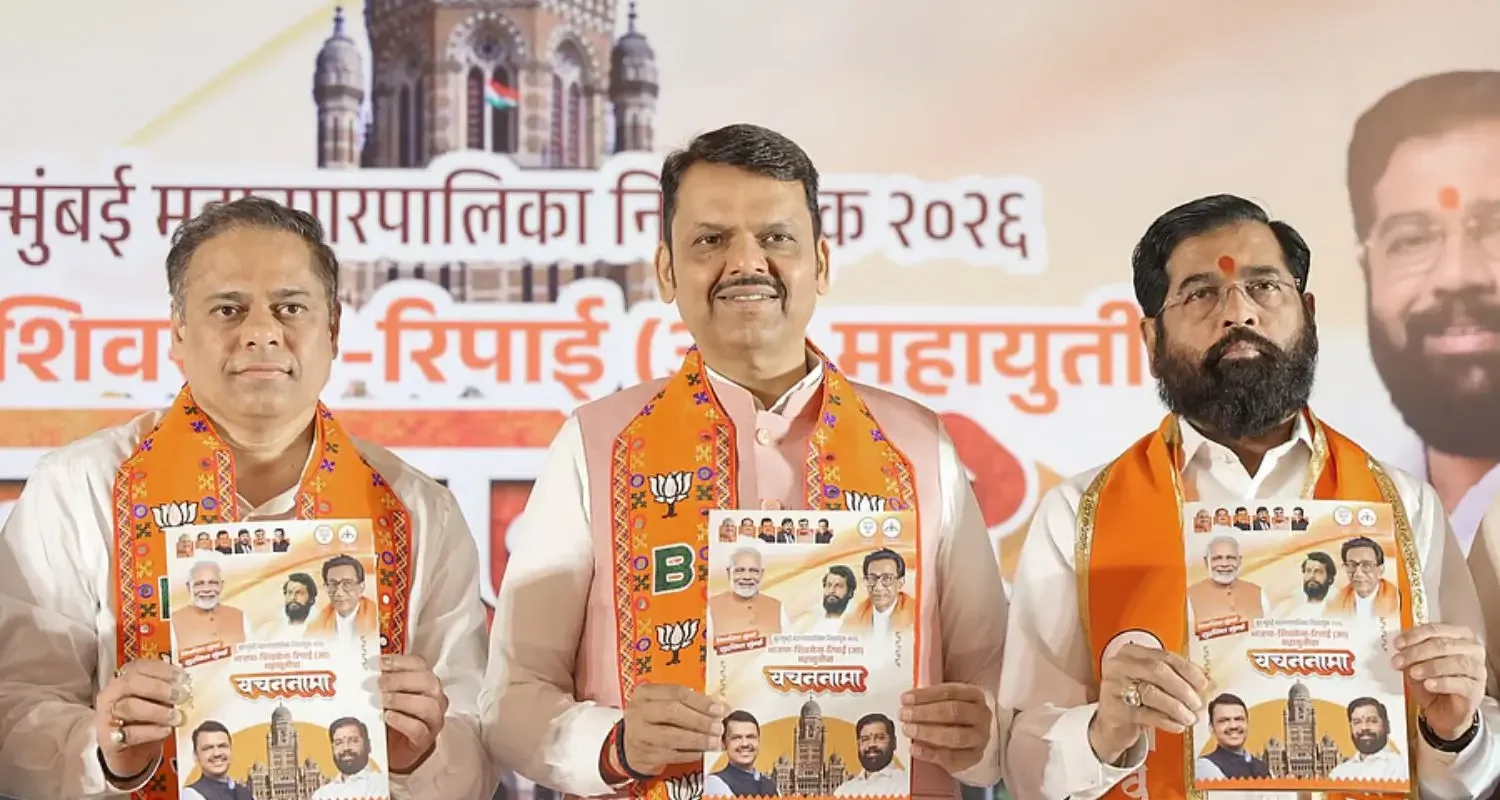
Mumbai, January 12, 2026 – The battle for the Brihanmumbai Municipal Corporation (BMC) has entered its final, critical phase. In a display of unified strength, the ruling Mahayuti alliance—comprising the BJP, Shiv Sena, and RPI (Athawale)—unveiled its 2026 Election Manifesto today. Terming it a “collective resolution” rather than a political document, the launch was spearheaded by Chief Minister Devendra Fadnavis and Deputy Chief Minister Eknath Shinde.
This isn’t just a list of promises; it’s a strategic roadmap crafted from over 2.65 lakh citizen suggestions gathered under the “Voice of Mumbaikars” campaign. From housing reforms to hyper-local welfare, here is a detailed look at what the alliance is promising Mumbai.
The Launch Event: A “People’s Manifesto”
The atmosphere at the press conference was charged with anticipation. The stage coordinator opened proceedings by framing the document as a direct response to the people’s will. “This is a people’s manifesto,” the announcement declared, emphasizing the two-month outreach drive that preceded this moment. With the formal release at the hands of CM Fadnavis, Dy CM Shinde, and Union Minister Ramdas Athawale, the alliance signaled a unified front ready to contest the upcoming polls on the 15th.
Shinde Takes the Stage: The “Real Transformation” Pitch
Deputy Chief Minister Eknath Shinde’s address was the centerpiece of the event. He wasted no time in setting the stakes, declaring that while the Mahayuti government has delivered visible results over the past three and a half years, the “real transformation” of Mumbai would begin only when the “saffron flag flies over the BMC” after the 16th.
His speech systematically addressed the city’s most pain points, categorizing the manifesto’s commitments into clear, actionable pillars:
1. The “Marathi Manoos” & The Housing Revolution

Shinde’s most emotive appeal was to the “original Mumbaikar” who has been economically exiled to distant suburbs like Vasai, Virar, and Badlapur. The manifesto promises a historic reversal of this trend through specific policy shifts:
- End of the Pagdi System: For over a century, tenants in Pagdi buildings lived in limbo—unable to repair, sell, or get loans, yet paying double taxes. The manifesto commits to abolishing this injustice and fast-tracking redevelopment for lakhs of residents.
- Removing Obstacles: Redevelopment hurdles like height restrictions and “funnel zones” have been reportedly cleared to pave the way for vertical growth.
(Read more: Mumbai Textile Strike 1982: How a Silence Changed the City Forever)
2. A “Slum-Free” Mumbai: Revival of Cluster Development
Invoking Balasaheb Thackeray’s dream of housing 40 lakh slum dwellers, Shinde highlighted the revival of stalled SRA and MMRDA projects through “Cluster Redevelopment.”
- Proof of Concept: He cited the Ramabai Ambedkar Nagar project in Ghatkopar, where 17,000 homes are being built and residents received ?1.8 crore in overdue rent compensation.
- Expansion: Similar projects are slated for 17 other locations, including Govandi, Chembur, and Vikhroli.
3. Dignity for Mill & Sanitation Workers
Addressing a long-standing emotional wound, the alliance showcased its track record: 17,000 mill workers have already received homes, with a waitlist of 1 lakh being processed. Crucially, the manifesto reverses a previous government decision, recommitting to providing ownership homes to BMC sanitation workers—the backbone of the city’s hygiene.
Recommended Product
Trylo Riza T-Fit Women's Bra – Comfortable Daily Wear
🛒 View on Amazon →As an Amazon Associate, we earn from qualifying purchases. Price and availability may vary.
This commitment speaks to the deep historical scars of the city’s industrial past, where the closure of mills birthed new social challenges.
(Read more: Mumbai Underworld History: From Mills to Mafia and Movies)
4. The Economic Engine: FinTech & Startups
Shinde firmly rebutted accusations that Mumbai is being separated from Maharashtra. Aligning with Prime Minister Narendra Modi’s vision, the manifesto pledges to:
- Make Mumbai India’s FinTech Capital within five years.
- Strengthen the International Financial Services Centre (IFSC) at BKC.
- Transform the city into a global hub for startups and innovation to generate mass employment.
5. Dharavi: A “Partnered” Redevelopment
On the contentious issue of Dharavi, the manifesto offers precise guarantees to counter opposition narratives:
- Minimum Size: Every eligible resident gets a 350 sq. ft. home (in-situ).
- Business Protection: Small industries will be rehabilitated within the Dharavi ecosystem.
- Ineligible Residents: Will also be rehabilitated, ensuring no one is left homeless, within legal norms.
6. Infrastructure & Quality of Life
The roadmap for a “world-class” Mumbai includes:
- Transport: A 427 km metro network, integrated ticketing across all modes (Rail, Metro, BEST, Water Taxi), and new tunnel projects.
- Environment: A ?17,000 crore Climate Action Plan, 16 new sewage treatment plants, and river rejuvenation projects for the Mithi, Poinsur, and Oshiwara.
- Zero Potholes: A commitment to 100% concrete roads.
- Welfare: 50% bus fare concession for women and interest-free loans up to ?5 lakh for small entrepreneurs.
? Decoding the Manifesto: Beyond the Promises
The Mahayuti manifesto for 2026 represents a strategic pivot from general infrastructure promises to “hyper-local asset creation.” While previous elections focused on the flow of the city (roads, water), this document attempts to solve the stock of the city—specifically, housing.
- The Housing Gambit: By targeting the Pagdi system and promising 35 lakh homes, the alliance is aiming to unlock prime real estate in South and Central Mumbai. This appeals directly to the Marathi middle class who fear displacement, effectively turning “housing policy” into “identity politics.”
- The “Double Engine” Reality: The explicit alignment with the Central Government (FinTech capital, IFSC) is a defensive maneuver against the opposition’s “flight of capital” narrative. It argues that Mumbai’s growth is safer with the Centre than against it.
- Welfare as Strategy: The 50% BEST bus concession for women acknowledges that inflation is a silent vote-mover. It mimics successful welfare models from other states to secure the female vote bank.
?? The Strategy Room: Why This, Why Now?
1. Reclaiming the Legacy:
Eknath Shinde is in a fierce battle with Shiv Sena (UBT) for the ideological legacy of Balasaheb Thackeray. By framing the “Slum-Free Mumbai” and “Mill Worker Housing” as fulfillments of Balasaheb’s dreams, Shinde is attempting to bypass the UBT faction and claim direct lineage to the Sena’s original mission.
2. The “Adani-Dharavi” Shield:
The manifesto tackles the Dharavi controversy head-on. By guaranteeing 350 sq. ft. homes (larger than the standard SRA norm) and ensuring in-situ rehabilitation, the Mahayuti is trying to neutralize the opposition’s “land grab” narrative before it can solidify in the voter’s mind.
3. Development vs. Emotion:
While the opposition leans heavily on emotional narratives (Maharashtra Dharma), Fadnavis and Shinde are betting on tangible delivery—Metro lines, concrete roads, and specific housing numbers—to woo the aspirational class, creating a “Development + Identity” coalition.
? The 60-Second Brief: What You Need to Know
- The Headline: Mahayuti Promises “Pagdi-Mukt” Mumbai & 35 Lakh Homes.
- For the “Original Mumbaikar”: A policy focus on reversing migration to far suburbs.
- For Women: 50% off on BEST bus tickets & interest-free loans up to ?5 lakh.
- For Dharavi: A written guarantee of 350 sq. ft. homes inside Dharavi.
- For Commuters: A promise of pothole-free concrete roads & a single-ticket transport system.
- The Quote: “We want to bring back the original Mumbaikar who was pushed out to Badlapur and Virar.” — Eknath Shinde.
?? The Battle of Narratives: Mahayuti vs. MVA
| Feature | Mahayuti Narrative (Ruling Alliance) | MVA / Opposition Narrative (Sena UBT, NCP-SP, Cong) |
|---|---|---|
| Housing | “End Pagdi System” Legalizing ownership to bring locals back to the city core. |
“Sale of Mumbai” Redevelopment is a ploy to hand prime land to builders. |
| Dharavi | “350 sq. ft. Guarantee” Larger homes and protection for local businesses. |
“TDR Scam” The project benefits the developer at the cost of residents. |
| Economy | “FinTech Capital” Mumbai as a global hub aligned with PM Modi’s vision. |
“Projects Stolen” Major projects (Foxconn, Airbus) were shifted to Gujarat. |
| Identity | “Reversing Exodus” Using housing policy to stop the displacement of Marathi speakers. |
“Separation Agenda” BJP wants to structurally separate Mumbai from Maharashtra. |
? The People’s Questions: FAQs & Search Trends
Q: What is the Pagdi system decision in the 2026 manifesto?
A: The Mahayuti has promised to abolish the century-old Pagdi system, allowing tenants in old buildings to become legal owners and facilitating redevelopment that was previously stuck due to complex laws.
Q: What is the promise for Dharavi residents?
A: Eligible residents are promised a minimum 350 sq. ft. home within Dharavi itself (in-situ), with specific rehabilitation plans for local industries.
Q: When is the BMC Election 2026?
A: According to the manifesto launch speech, the election voting is scheduled for the 15th (of January).
Q: What benefits do women get in this manifesto?
A: Key benefits include a 50% concession on BEST bus fares and interest-free loans of up to ?5 lakh for female entrepreneurs.
Connect with the Editor
What are your thoughts on the Mahayuti’s vision for Mumbai? Share your comments below or connect with me, Kumar, Editor at Newspatron, on your favorite platform:
- For quick updates: Follow me on Instagram, Twitter, YouTube, or Reddit.
- For deeper conversations: My Facebook profile is open to new friends!
- For instant updates: Subscribe to my WhatsApp Channel.
- For professional networking: Let’s connect on LinkedIn.
You can find all the relevant links on the Newspatron homepage too.
