




Hold On Before You Open That Box of Dates
What this post is built on
This story broke on 23 February 2026. Every fact here is verified across India Today, NDTV, and official Uttar Pradesh Food Safety and Drug Administration (UPFSDA) statements. The section on how relabeling actually works draws from a publicly shared account by a food industry professional. This is consumer awareness journalism — not a legal indictment of anyone beyond those named in official records. Read it, share it, and check your pantry. ?
Creme Biscuit Palm Oil: What You Are Really Eating
Just a day ago we spoke about the hidden realities of packaged snacks. Now flip the packet. Read ingredient number three. That is not cream. That is creme biscuit palm oil — and it has been sitting there in plain sight the whole time, dressed up in French spelling so nobody would ask too many questions. Today, we shift our focus from biscuits to the dates you are buying for the festive season.
That Box of Dates in Your Kitchen Deserves a Second Look
Here is a question worth asking right now, as Ramadan iftars fill living rooms and Holi mithai boxes stack up on kitchen counters across North India. You picked up a pack of dates at your local wholesale market or kirana. The expiry date printed on the label says 2026. The box looks fine. The seal looks intact.
But what if that 2026 date was printed last week — over a label that originally said 2022?
That is not a hypothetical. That is exactly what food safety officials found in Kanpur on 23 February 2026. And it is one of the reasons this story matters to every family buying food right now.
Kanpur Expired Dates Raid 2026 — What Officials Found
Acting on a specific tip-off, a team from the Food Safety and Drug Administration raided Rajneesh Traders’ warehouse in the Naubasta area of Kanpur on 23 February 2026. What they found inside was not complicated. It was just brazen.
Approximately 10,000 kilograms — 100 quintals — of dates. Every box in the warehouse had originally carried an expiry date of 2022–23. By the time officials arrived, fresh 2026 labels had been applied over the old ones. The stock, worth an estimated ?50 lakh, was ready to move into markets just as demand for dates hit its annual peak. [India Today, 23 Feb 2026]
Nine samples from different brands and batches were immediately collected and dispatched for laboratory analysis. Officials confirmed that legal action against the traders will be initiated once test results are received. The UPFSDA described the practice as a “direct threat to public health.” [NDTV, 23 Feb 2026]
Recommended Product
Amazon India – Shop Today's Best Offers
🛒 View on Amazon →As an Amazon Associate, we earn from qualifying purchases. Price and availability may vary.
How 10,000 kg of Dates Expired in 2022 Got a 2026 Makeover
The mechanics are straightforward. Old packaging is opened or the outer label is removed. A fresh sticker with a new manufacture and expiry date is printed and applied. The box is resealed. It looks new. It scans as compliant. It sells at festive-season prices.
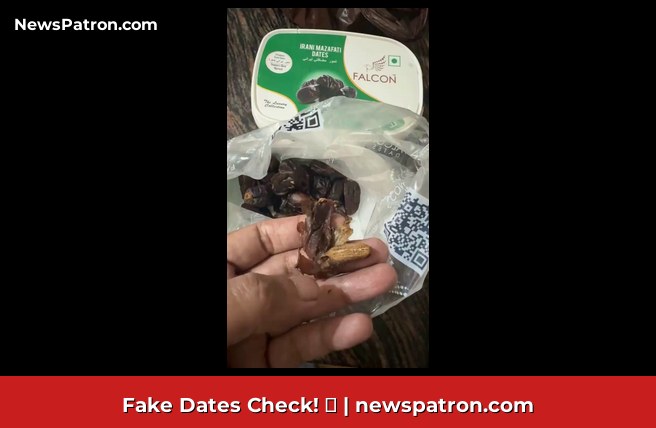
The profit motive is obvious. Dates that could not legally be sold are suddenly worth ?50 lakh. The risk to the buyer — digestive illness, foodborne infection, nutritional loss from years-old fruit — is entirely absorbed by the consumer. The trader pockets the margin. The festive season provides the cover.
This is not a one-off. It is a pattern — and the mechanism behind it is more accessible than most people realise.
The Acetone Trick — How Traders Relabel Expired Food
This section shifts the story from what happened in one Kanpur warehouse to why it keeps happening across India’s food supply chain.
A food industry professional, in a widely shared public post following the Kanpur raid, explained the process with clinical clarity. The key tool is acetone — a common solvent available in hardware stores, used in nail polish removers and industrial cleaning. Many expiry dates are printed on packaging in a way that allows the surface ink to be wiped away with acetone. Once the original date is removed, a batch coding machine prints a new one.
These machines are not black-market items. They are sold openly. They are used legitimately by manufacturers to stamp production dates on packaging lines. And they are also, as the industry professional noted, used by traders to rework expired stock. The same Instagram ads that market batch printers to small manufacturers reach traders with a different use in mind.
Old date. Acetone. New date. Back on shelf.
The UPFSDA noted in official statements that this practice is not isolated to dates. Adulterated oil, fake ghee, and reworked dry fruits are all part of the same pre-festival supply chain problem. [NDTV, 23 Feb 2026]
The reason this continues? Enforcement gaps. FSSAI inspections are not uniform. Small traders in wholesale markets operate with limited scrutiny outside of targeted drives like this one. When the risk of being caught is low and the profit margin is high, the calculation tilts the wrong way. Stricter, continuous monitoring — not seasonal crackdowns alone — is what the food system actually needs.
Kanpur Expired Dates Raid 2026 — The Bigger Crackdown Picture
The dates seizure was not a standalone event. It was part of an intensified pre-festival enforcement drive across Kanpur that has been running for days.
| Date | Item Seized / Destroyed | Quantity | Estimated Value |
|---|---|---|---|
| 21 Feb 2026 | Adulterated oil | 13,972 litres | — |
| 21 Feb 2026 | Coloured waste (fake ghee) | 1,350 kg | ?5.45 lakh |
| 23 Feb 2026 | Expired dates (relabeled) | 10,000 kg | ?50 lakh |
| 23 Feb 2026 | Adulterated khoya | 675 kg | Destroyed |
| 23 Feb 2026 | Adulterated supari | — | ?2 lakh+ |
The scale of the operation shows something important. Food adulteration during festive seasons is not opportunistic in the individual sense — it is systemic. Multiple traders, multiple products, multiple locations, all running parallel operations timed to peak consumer demand.
Health Risks of Eating Expired Dates — What You Need to Know
Dates are a naturally long-shelf-life food. But “long shelf life” is not the same as “infinite shelf life.” Dates expired in 2022 — now being sold in 2026 — present real risks that go beyond a number on a box.
Over time, expired dates can develop mould growth not always visible to the naked eye. They can host bacteria like Salmonella or E. coli if storage conditions were poor during the years of stockpiling. Their natural oils turn rancid, producing compounds that irritate the digestive system. And nutritionally, they degrade — the vitamins and minerals that make dates genuinely healthy food diminish significantly past expiry.
For children, elderly family members, and anyone with a compromised immune system, eating expired dates is not a minor inconvenience. It is a genuine health risk. The UPFSDA called it exactly that. [India Today, NDTV, 23 Feb 2026]
How to Spot Fake Expiry Labels Before You Buy — Consumer Checklist
This is the part that actually helps. Share it. Screenshot it. Read it before your next trip to the market. ?
Check These Before Every Purchase
On the label:
- Run your thumbnail gently across the expiry date print — a relabeled sticker may lift slightly at edges or feel textured differently from the base packaging
- Look for misaligned text, smudging, or ink inconsistency on the date area compared to the rest of the label
- Check if manufacture date and expiry date are on the same printed surface — a relabeled sticker may cover only the expiry portion
- Compare font style on the date to the rest of the packaging — inconsistency is a red flag
On the packaging:
- Look for residue, slight discoloration, or a slightly raised surface where a sticker may have been applied over old ink
- Check for the FSSAI license number — it must be present on all packaged food sold in India; its absence is an immediate disqualifier
- Examine the seal integrity — relabeled boxes are often resealed after the label change
On the product itself:
- Open and smell before consuming — rancid, off, or fermented odour means do not eat it, regardless of what the date says
- Check for mould, unusual colour, or surface stickiness beyond normal date texture
If you suspect a problem:
- Report to UPFSDA: Call 1800-180-5533 (FSSAI toll-free helpline)
- File a complaint at pgportal.gov.in or directly through the FSSAI consumer complaint portal
FSSAI Tips for Festival Shopping This Holi and Ramadan 2026
The UPFSDA and FSSAI have consistently urged the same set of precautions that become even more important during festive buying surges:
- Buy from licensed, registered sellers — ask to see FSSAI registration if buying bulk
- Avoid loose dry fruits with no packaging or labeling
- Check for the FSSAI logo (green dot or mark) on all packaged food
- Do not buy damaged, dented, or resealed packaging under any circumstances
- Be suspicious of prices that seem too good — expired stock sold cheaply is a known tactic
What the Kanpur Expired Dates Raid 2026 Means for You Right Now
The Kanpur raid is good news — because it means the system worked, at least this time. A tip-off reached the right hands. Officials moved fast. Ten thousand kilograms of potentially harmful food was pulled before it reached family plates.
But the system does not always work that fast. And the same technique — acetone, batch coder, fresh sticker — is not unique to one warehouse in Naubasta. It happens in markets across India. It happens with more products than just dates. And it happens most aggressively when demand is highest — exactly when families are buying the most.
The only reliable protection, beyond enforcement, is an informed consumer. One person checking a label carefully, asking the right questions, and reporting suspicious stock is worth a hundred unannounced raids.
So check the box. Check the label. Check the seal. And if something feels wrong — report it. The FSSAI helpline exists precisely for this. 1800-180-5533. Toll-free. Save it.
The Street Has Spoken — and the Comments Are Angry
Across X, Reddit, and Instagram, the public reaction to this raid has been consistent. People are not just shocked — they are demanding more.
On r/uttarpradesh, the top thread comment reads: “Never trust packaged dates now.” Others are calling for jail time — not just fines — for traders caught adulterating or relabeling food.
On X/Twitter, local accounts in Kanpur shared raid footage within hours. The dominant sentiment: relief that officials acted, anger that traders attempted it, and anxiety about what else is out there.
The comment that most captures the public mood comes from a food industry professional’s viral post: “Many small food and beverage businesses do this and treat it as normal.” Normal. That word is doing a lot of work. And it is exactly the word that a serious food safety overhaul needs to make obsolete.
Kumar Is Listening — Let Us Talk Food Safety
Have you ever bought something and later suspected the expiry date was not right? Have you been to a market where the dates or dry fruits looked a little too “fresh” to believe?
Drop your experience in the comments below. Real stories from real shoppers help other readers stay sharp — and help NewsPatron keep covering the stories that matter.
- ? Quick updates: Follow on Instagram, X (Twitter), YouTube, and Reddit
- ? Community conversation: Like the NewsPatron Facebook page
- ? Instant alerts: Subscribe to the NewsPatron WhatsApp Channel — your number stays private
- ?? Direct chat: Find Kumar on Telegram
- ? Professional exchange: Connect on LinkedIn
All links live at newspatron.com. And since we are talking about India’s markets, its streets, and its people — take a minute to see what the country looks like from above. DroneMitra on YouTube captures it in a way that changes your perspective. ?
