




editor@newspatron.com
Understanding Indian GDP Growth Q1 2023
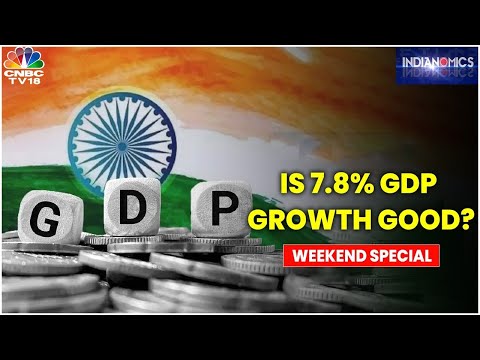
Indian GDP Growth Q1 2023 soared to new heights achieving an impressive growth rate of 7.8% as reported by the National Statistical Office NSO. This figure marked an improvement over the 6.1% growth recorded in the preceding quarter but fell much short of the staggering 13.1% growth seen in the April to June quarter of 2022. Press Release Press Information Bureau (pib.gov.in)

Key Sectors Driving Growth
This surge in economic activity can be attributed to stellar performances in two key sectors : manufacturing and services. The manufacturing has sector recorded an astounding growth rate of 19.6% while the services sector expanded by 8.4%. Even the agriculture sector despite facing its share of challenges, managed to grow by 3.5%.
Factors Fueling the Surge
Several factors played a pivotal role in driving this high growth during the April-June quarter:
Global Economic Rebound: The global economy’s ongoing recovery provided a significant boost to India’s exports.
Domestic Demand Surge: Factors like increased festive season spending and government investments in infrastructure fueled a rise in domestic demand.
Monsoon Revival: Improved monsoon conditions contributed to increased agricultural production.
A Closer Look at the Engines
When examining the sectors that made the most substantial contributions to India’s GDP growth in the April-June quarter, it becomes evident where the driving forces lie:
Manufacturing: 19.6%
Services: 8.4%
Recommended Product
Magnesium Body Spray – Muscle Recovery & Lavender Scent
🛒 View on Amazon →As an Amazon Associate, we earn from qualifying purchases. Price and availability may vary.
Agriculture: 3.5%
Construction: 6.3%
Mining and Quarrying: 2.4%
Electricity, Gas, and Water Supply: 4.5%
The Powerhouses Behind the Numbers
Manufacturing Sector’s Dominance
The manufacturing sector spearheaded by the robust growth in the automobile electronics and textiles industries emerged as the primary driver of GDP growth. Following closely behind was the services sector, led by notable expansions in IT, financial services, and transportation. Even the agriculture sector though facing challenges posed by the monsoon made a significant contribution to the nation’s economic growth.
Weighing Strengths and Weaknesses
The GDP growth rate of 7.8% is undoubtedly a positive sign indicating that the Indian economy is steadily recovering from the shadows of the COVID 19 pandemic. However, it’s essential to acknowledge the nuances:
Deceleration in Growth: Concerns and Analysis
One notable weakness is that this growth rate falls short of the 13.1% achieved in the April-June quarter of 2022. This suggests a a loss of momentum or a deceleration in the pace of economic recovery.
Uneven Growth Distribution: Addressing Disparities
Another aspect to consider here is the uneven distribution of growth. While sectors like manufacturing and services are flourishing others, particularly agriculture are experiencing slower growth.
Nonetheless despite all these challenges the 7.8% GDP growth rate remains a testament to India’s resilience and its firm determination to move forward in the right direction.
Projections and Predictions
Reserve Bank of India the RBI has projected an overall GDP growth rate of 6.5 % for the entire 2023 – 24 fiscal year. This projection is notably lower than the remarkable 8.7% growth rate achieved in 2022-23.
Factors Shaping India’s Economic Destiny
Several factors will come into play when assessing India’s GDP growth for the rest of the year:
Global Economic Momentum: The pace of global economic recovery will significantly influence India’s exports and overall growth.
Domestic Demand Dynamics: The strength of domestic demand, driven by consumer spending and government policies, will continue to play a pivotal role.
Monsoon’s Impact: The performance of the monsoon will remain a significant factor in shaping agricultural production.
Government Policies: The government’s policies, especially those aimed at managing inflation, will have a substantial impact on the economic landscape.
Navigating Potential Challenges
The RBI has expressed concerns about the rising inflation which could potentially dampen demand. The government in response has introduced measures to control inflation which could in turn affect overall growth.
In conclusion – the overall outlook for GDP growth in the remainder of the year remains quite positive. However it’s crucial to remain vigilant as there are potential risks that could impact this trajectory. India’s overall ability to navigate through these challenges will solely be instrumental in maintaining its upward economic trajectory.
Summary of Potential Measures to Stimulate Indian GDP Growth:
Infrastructure Investment: Allocating resources to enhance infrastructure projects like roads and railways, ports as well as airports in order to create jobs and spur economic activity.
Tax Reduction: Lowering taxes for businesses and individuals to encourage investment and spending, promoting economic growth.
Ease of Business Operations: Simplifying business setup and operations to attract investments and generate employment.
Export Promotion: Providing incentives for businesses engaged in exports to boost foreign exchange earnings and contribute to economic growth.
Education and Skill Development: Investing in educational and skill development programs to build a productive workforce essential for growth.
Research and Development Support: Facilitating R&D activities through funding and resources to drive innovation and create new products and services.
Entrepreneurship Encouragement: Supporting entrepreneurship with improved access to finance and training, fostering new businesses and driving economic growth.
A Link to Reference YouTube Video by CNBC Watch here
Streamlining the Economy through Digitization : The steady rise in the number smartphones and the generation of vast amounts of Big Data via 4G 5G offer immense opportunities for leveraging technology to advance society and drive substantial economic gains. One notable outcome of digital payment is the transition towards a cashless economy in India resulting due to significant surge in digital transactions.
Revitalizing Agriculture for Economic Growth: Unlike the typical trajectory of transitioning from agriculture to factory work and eventually urbanization, the current landscape sees potential in boosting agricultural growth to bolster the economy.
Establishing a National Water Grid : Given the rising uncertainty in global climate and unpredictable nature of the Indian Monsoon the creation of a national water grid becomes imperative for efficient water resource management, particularly benefiting the agricultural sector.
Prioritizing Equal Access to Education : Investment in education emerges as a key strategy to cultivate a skilled and productive workforce a crucial element for sustainable growth.
Fostering Community Empowerment : Empowering local communities can stimulate economic development at the grassroots level contributing significantly to overall economic expansion.
Ensuring Economic Stability : The implementation of sound fiscal and monetary policies is pivotal in achieving and maintaining economic stability laying the foundation for long term growth.
Expanding the Realm of Large Firms: To tap into emerging opportunities, India must triple its number of large firms. These entities are known for their heightened productivity they have the potential to substantially boost GDP growth.
Reforming the Financial Sector : Comprehensive reforms within the financial sector can address India’s capital requirements facilitating increased investment and consequently supporting economic growth.
These measures combined could probably hold the potential to invigorate Indian GDP growth if executed effectively and expeditiously.
An agenda for India’s economic growth | McKinsey
Consider Watching a YouTube Video or Subscribe to YouTube Channel
