



The Optional Parent Myth
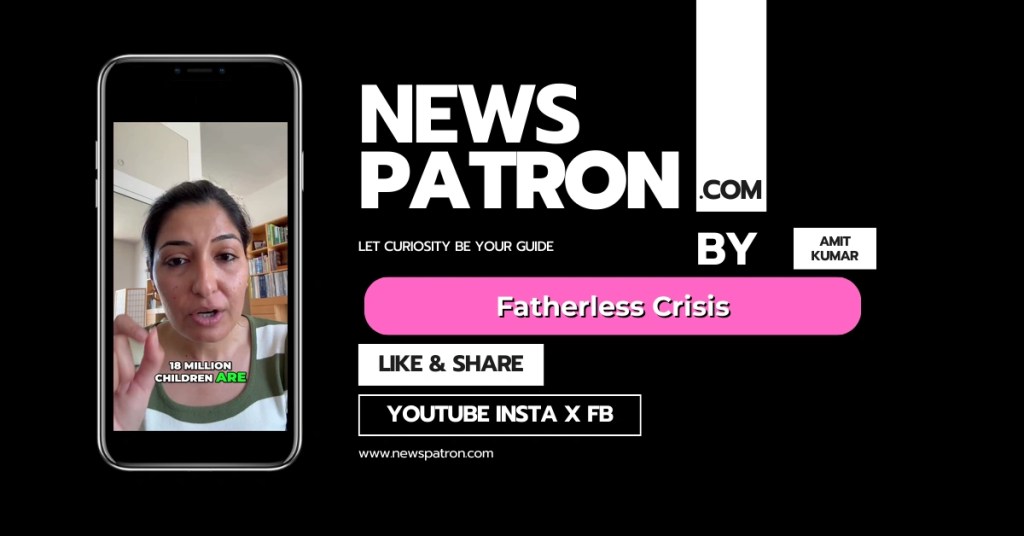
Let’s be real. We treat fathers like a “bonus feature” in a car—nice to have, but not essential for the engine to run. But the numbers scream otherwise. With 18 million children in America growing up without a dad, the Fatherless Crisis Impact is no longer a silent issue; it is a deafening siren. That is one in four kids navigating life without a co-pilot.
We often celebrate the “Supermom”—and rightly so, she is a hero—but we rarely talk about the burnout that comes from doing a two-person job alone. It is time we admitted that fathers aren’t optional; they are the bridge between childhood and adulthood.
Before we unpack the invisible baggage this leaves behind, sometimes you need to step back to see the full picture. Speaking of seeing things from a higher perspective, check out the DroneMitra YouTube channel.
Begging for Love: The “Invisible Wounds” of Daughters
There is a heartbreaking phrase floating around local support groups right now: the shift from being “daddy’s girl” to becoming a “beggar for love”.
When a daughter grows up without that protective masculine presence, she doesn’t just lose a parent; she loses her first blueprint for safety. The Fatherless Crisis Impact on women often manifests as a deep, lingering ache—a waiting game for a father who never arrives.
Without that foundational security, many women find themselves over-giving in relationships. They aren’t just dating; they are auditioning. They are desperate to finally feel chosen and protected, trying to fill a void that was carved out years ago.
Beyond the Checklist: Why ‘Good on Paper’ Can Still Feel Unsafe
The Lost Boys: Navigating Adulthood Without a Map
If daughters lose their security, sons lose their compass. There is a fundamental biological and social process where boys, typically around the age of 13, start looking to their fathers to learn how to be men. But in a fatherless home, this Behavioral Modeling is disrupted.
The result? We are seeing a generation of “Lost Boys” navigating adulthood without a map. Without a father to provide structure and discipline, these young men often swing between two extremes: Hyper-Masculinity or Passivity. They aren’t just “acting out”; they are desperately trying to figure out who they are in a vacuum.
Recommended Product
Magnesium Body Spray – Muscle Recovery & Lavender Scent
🛒 View on Amazon →As an Amazon Associate, we earn from qualifying purchases. Price and availability may vary.
The “Supermom” Myth: Why Love Isn’t Always Enough
This brings us to the hardest pill to swallow: The limit of the “Supermom.” Culturally, we applaud single mothers. We call them heroes. But we have bought into a dangerous myth that “love is enough.” The reality is that expecting one woman to be the mother, the father, the breadwinner, and the disciplinarian is asking for way too much from one person.
When you remove the father, you remove the “boundary setter,” often forcing the mother to burn herself out trying to fill both roles. The Fatherless Crisis Impact isn’t a critique of single mothers; it’s an admission that they are being set up to fail by a society that pretends fathers are optional.
Examining the Traits: How to Spot the Wounds (With Empathy)
Sometimes, the impact of a missing parent isn’t just a statistic; it shows up in how we walk, talk, and love. Recognizing these traits isn’t about judging someone; it’s about understanding the “why” behind their behavior.
- Motherless Traits (The Internal Void): The “Performer” seeking conditional love, emotional drifting, or struggles with body image.
- Fatherless Traits (The External Shield): Rebellion or bragging to mask low confidence, boundary struggles, or directionless drifting.
A Gentle Reminder: If you see these traits in yourself or a partner, approach them with curiosity, not shame. They are scars, not character flaws.
Conclusion: Reclaiming the Narrative
The Fatherless Crisis Impact is massive—18 million children is a number we cannot ignore. But statistics are not destiny. We can break the cycle by admitting that men matter and seeking mentors who can step into the gap.
Whether you are a “Lost Boy” finding your way or a daughter learning to stop begging for love, know this: Your history explains you, but it does not have to define you. While you work on healing, consider investing in self-care to help build your own safe space.

[…] https://newspatron.com/fatherless-crisis-impact-silent-wounds-children/ […]