



Image Source PTI
Learn about the historical significance, challenges, and potential reforms of the Election Commission of India. Understanding the controversies, various recommendations from committees and the debate over the involvement Supreme Court in shaping its future.
editor@newspatron.com
Evolution of the Election Commission of India
73 years ago, on January 25, 1950, India established a constitutional body that would regulate elections. One of those who suggested the commission to the constituent assembly was Baba Saheb Ambedkar. He believed that the commission should oversee and supervise elections for the positions of the country’s President and Vice President, as well as the Lok Sabha, Rajya Sabha, State Legislative Assemblies, and State Legislative Councils. The Election Commission has been operating as an independent, autonomous body since its establishment, initially with just one chief election commissioner. However, in 1989, two additional commissioners were appointed for a temporary position, and on January 1, 1990, the Election Commissioner Amendment Act, 1989, was passed. Since then, a majority vote of the commission’s three members has been required for decisions to be made. The provisions relating to the electoral commission’s appointment, powers, and other authorities are covered under Articles 324 to 329 of the Indian Constitution. The provisions do not provide a clear mechanism for the selection or election of the Chief Election Commissioner. However, it is traditional for the Indian President to choose the Chief Election Commissioner and other commissioners based on the recommendations of a committee chaired by the Prime Minister and other ministries.
Supreme Court’s Role and Recommendations
In January 2015, Anoop Baranwal filed a PIL claiming that the Election Commission of India’s (ECI) current member selection process is unconstitutional. In order to interpret Article 324, the Supreme Court referred the PIL to a five-judge Constitution panel in October 2018. Later, identical petitions filed by the non-profit Association for Democratic Reforms (‘ADR’) and the politician and attorney Ashwini Kumar Upadhyaya were linked to the initial PIL of 2015. The petitioners questioned if they could refer to different appointed commissions and their suggested collegium, which may include the Prime Minister, the Leader of the Opposition, and the Chief Justice of India. The Indian Supreme Court questioned the Indian government on the lack of legislation that may specify the process for appointing members of the Election Commission. To which the government strongly stated that just because there is a provision does not automatically imply that legislation should be passed and in place right away, as such issues might be subject to debate in parliament. Tushar Mehta, the Attorney General for the Government of India, requested that the court simply look at whether there was any government interference or deviation from the Election Commission’s entire impartiality. On August 4, 2023, the Supreme Court dismissed a litigation filed in the public interest that challenged Arun Goel’s appointment as India’s election commissioner. The Supreme Court recommended during March 2023 a high power committee consisting of the Prime Minister, The CJI as well as the Leader of the Opposition for the appointment of the Cheif of Election Commissioner. The Government has to consider passing an act through Parliament; otherwise, the Supreme Court bench may order some sort of corrective action, at least temporarily. The Indian government is additionally considering whether to replace the Chief Justice of India with ministers in a collegium for the recommendation of members of the Election Commission. As the opposing parties continue to take opposing stances on every particular occasion, this may also lead to another situation involving a controversy. In a thorough letter to the then-prime minister Dr Manmohan Singh in June 2012, senior BJP member Shri Lal Krishna Advani made recommendations for the selection process for the new head of the Election Commission. Shri Lal Krishna Advani emphasized two key points in the letter, the first of which was the importance of upholding democratic traditions and trust in the institution itself. The second is the implementation of the recommendations offered by the Verappa Moily-led Administrative Reforms Committee (ARC). The ideal recommendation of the ARC was to form a five-member committee that would nominate the Chief of the Election Commission. This included the Chief Justice of India, the Law Minister, the Opposition Leader in the Lok Sabha, and the Leader of the Opposition in the Rajya Sabha. The government, led by the Congress Party and headed by the former Prime Minister Dr Manmohan Singh, did not, however, take the proposals into consideration. There have been allegations for the past few decades that different governments have influenced election commissioners. Despite the fact that there may be a wide range of viewpoints on the subject and that each model may have advantages and disadvantages depending on the context of the discussion. Please feel free to share your thoughts in a comment.

Read about the Constitution of India
Constituent Assembly Debates – Constitution of India Visit website of the Election Commission of India (eci.gov.in)
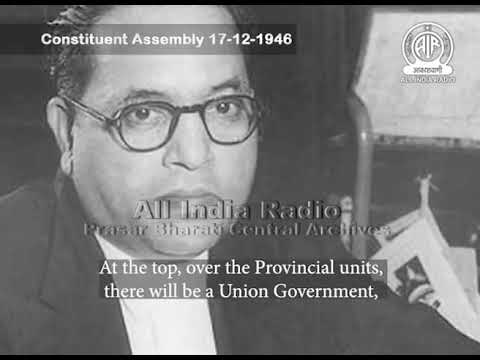
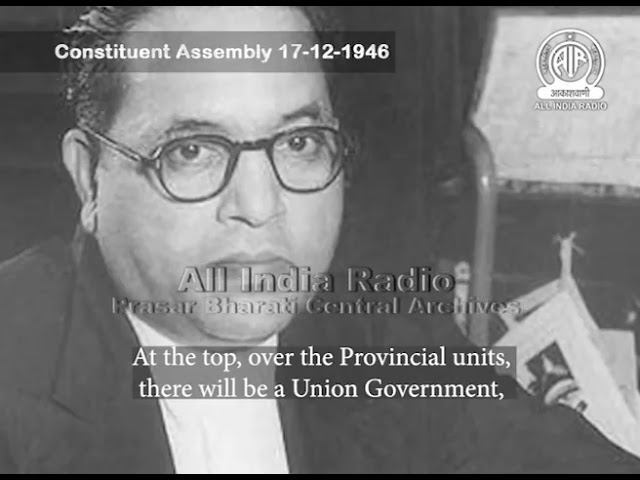
Listen to the original voice track of Babasaheb Ambedkar dated 17th December 1946
Recommended Product
Casio Enticer Men's Analog Green Dial Watch MTP-VD01D
🛒 View on Amazon →As an Amazon Associate, we earn from qualifying purchases. Price and availability may vary.
