




Content warning: This advisory discusses deportation, legal risk in foreign countries, and limits on online speech.
The Viral Clip: “If You Make Negative Videos About Dubai, You Could Be Deported”
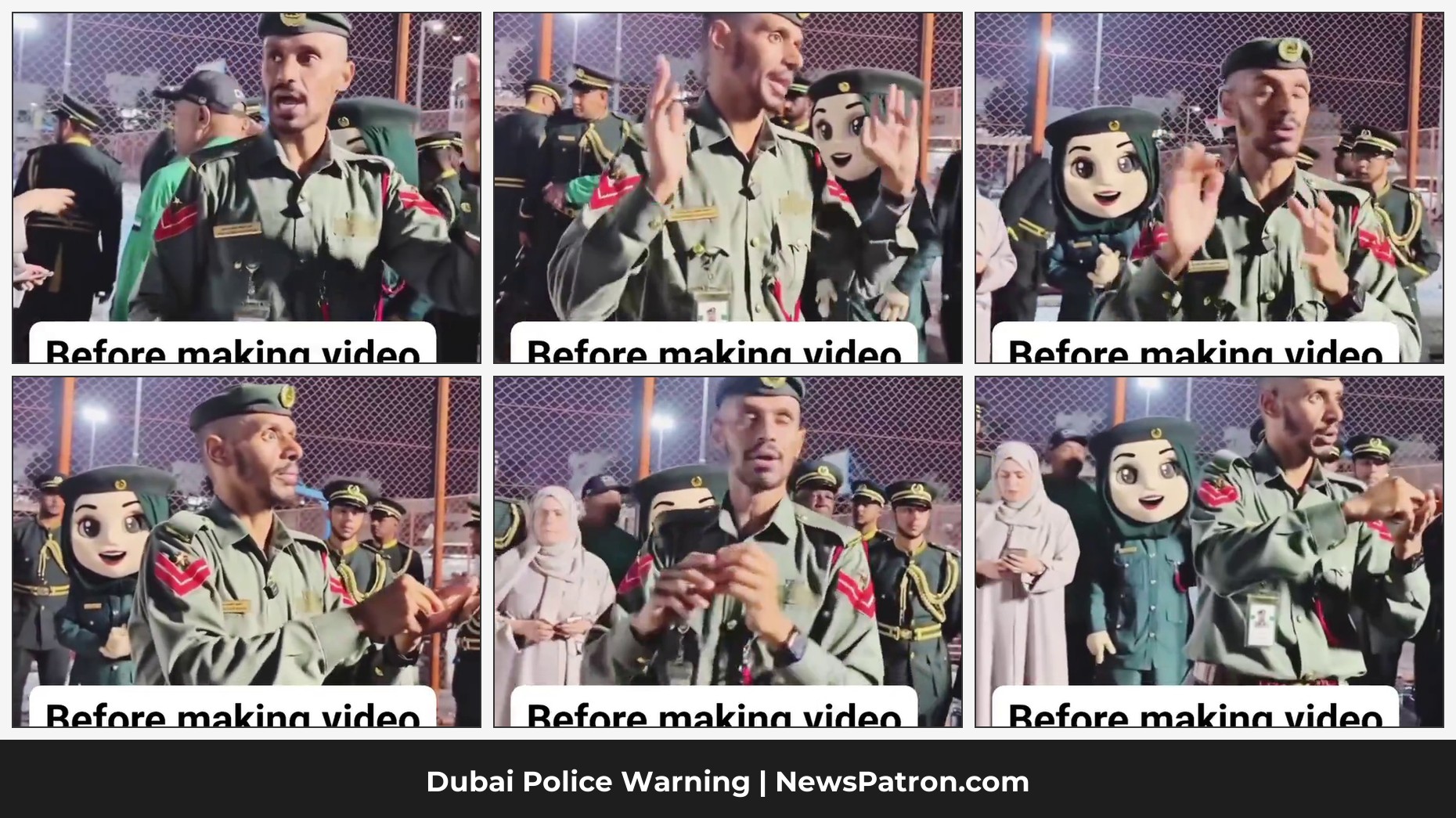
A short video of a Dubai Police officer calmly warning a small group — many appearing Indian or South Asian — has set expat WhatsApp groups on fire. In the clip, the officer explains in Hindi-tinged English that if you shoot “negative videos” about Dubai, you could face consequences up to deportation, and urges people to complain to police instead of blasting the city on social media.
The video itself is not a new “incident” — similar warnings have surfaced since at least 2024 as the UAE tightened enforcement of its cybercrime and “rumours” laws. What is new is the timing: it is recirculating in March 2026, right when Indians and other expats are already anxious about wars, visa rules, and job security, so the message hits harder than ever.
What The Law Actually Says (UAE & Saudi Snapshot)
Before panic, it helps to understand what is law and what is social-media exaggeration.
UAE: Federal Decree-Law No. 34 of 2021 (Rumours & Cybercrimes)
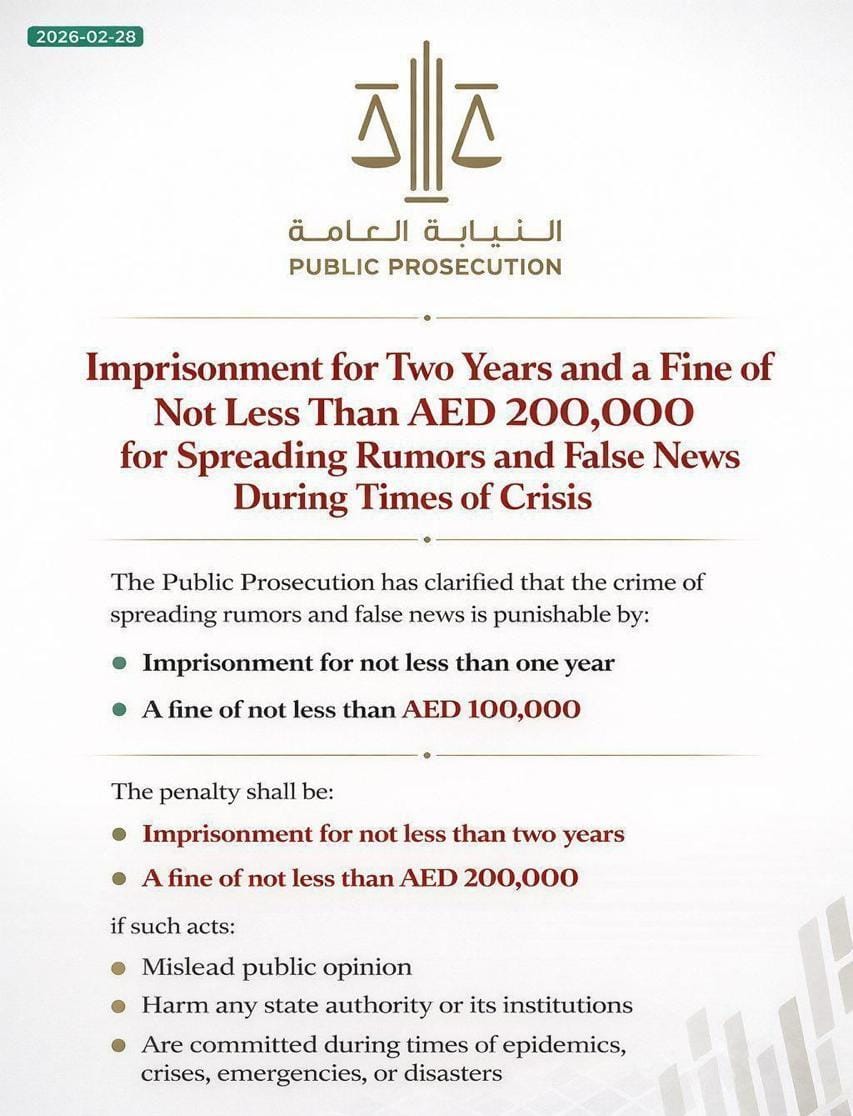
The UAE’s core online law is Federal Decree-Law No. 34 of 2021 On Countering Rumors and Cybercrimes, in force since January 2022. It replaced the older 2012 law and explicitly targets content that harms national security, public order, or the country’s reputation, on any digital platform.
Relevant parts for “negative videos”:
- Spreading rumours or false news that harm public order or the state’s reputation can bring heavy fines and jail.
- Publishing content that does not comply with “media content standards” can mean up to one year in prison and fines from AED 30,000 to AED 300,000.
- Using online content to harm the UAE’s reputation or prestige can lead to temporary imprisonment and very high fines.
- Deportation is not always written line-by-line in the cybercrime law, but courts routinely deport non-citizens after conviction under related offences.
We have already seen:
- Group deportations for “indecent” viral videos shot in Dubai high-rises.
- Warnings and fines for sharing old fire or disaster clips that create panic or mislead people about current events.
So the police officer in the viral clip is not inventing a new rule. He is summarising a real landscape where publicly shaming the city, its infrastructure, or its security online — especially with misleading or sensational framing — can be treated as a crime, not “free speech.”
Saudi Arabia: Anti-Cyber Crime Law (Royal Decree M/17 of 2007)
Saudi’s Anti-Cyber Crime Law (M/17 of 2007) is older but similarly strict.
Recommended Product
Amazon India – Shop Today's Best Offers
🛒 View on Amazon →As an Amazon Associate, we earn from qualifying purchases. Price and availability may vary.
Key points:
- Producing, transmitting or storing material that impinges on public order, religious values, public morals or privacy can lead to up to one year in jail and fines up to SAR 500,000.
- More serious offences (e.g., promoting “unauthorized” ideologies or terror content) can bring up to ten years in jail and multi-million riyal fines.
- Expats convicted under these articles are routinely deported after serving sentences, often with long re?entry bans.
Again, the pattern is clear: “negative” videos or posts that authorities say harm public morals, religion, or state reputation can flip from “venting” to a criminal file very quickly.
Why Indians And Other Expats Should Take This Seriously
The UAE and Saudi are not exceptions; many countries now have strict cyber and speech laws. But a few factors make them especially sensitive for Indians and other foreign workers:
- You are not a citizen. You have fewer rights and less tolerance for “borderline” speech than locals. Deportation is always on the table as a “safety valve.”
- The state’s image is part of the business model. Dubai in particular markets itself as a perfect, safe, luxury hub; viral videos implying chaos, failure, or disrespect are treated as economic and reputational threats, not just opinions.
- Scale of expat presence. In the UAE, around 90% of the population are foreigners; Indians alone are a huge share. That makes authorities extremely wary of social-media?driven panic or criticism snowballing inside expat communities.
So when a uniformed officer looks into your camera and says “If you make negative videos, you could be deported,” he is not being metaphorical. He is telling you which side of the invisible line you are standing on.
When You Are “The Alien”: A Practical Guide For Any Country
Imagine you are not just a tourist; you are the alien — a non?citizen in someone else’s jurisdiction. Whether you are Indian in Dubai, Filipino in Riyadh, German in Bangkok, or American in Mumbai, the survival rules are very similar.
1. Assume Local Law > Your Idea Of Free Speech
- In many countries, defamation is a criminal offence, not a civil dispute. A bad review, ranting reel, or sarcastic meme can trigger police, not just a lawyer’s notice.
- “Truth” is not always a defence. If a post is seen as harming “public order,” “morals,” “religion,” or “state prestige,” it can be punished even if factually accurate.
Rule of thumb: If you wouldn’t say it in front of an immigration officer at that country’s airport with your full name and passport number on screen, don’t say it online with your face visible.
2. Know The “Red Zones” Of Content
Across strict jurisdictions, the same themes keep appearing in prosecution files:
- State image and security: Videos mocking the country as “unsafe,” “unlivable” or “fake.” Clips of accidents, fires, floods, posted with panic captions.
- Public morals and religion: “Indecent” clothing, behaviour, or gestures in public. Jokes about religion. Drunken misbehaviour, abusive hand gestures (e.g., middle finger) filmed and posted.
- Defamation and workplace complaints: Naming and shaming employers, hotels, landlords, or officials. Filming people without consent and accusing them of cheating, racism, or corruption.
- Rumours and unverified “news”: Forwarding old disaster videos as if they are new. Claiming a city is “under attack” or “collapsing” without proof.
You do not have to agree with these rules; you have to survive them.
3. Don’t Confuse Group Chats With “Private”
- Many laws treat anything shared in a group as “public” if enough people see it or if it can be screenshot and spread.
- A single angry voice note in a big WhatsApp group, or a “private” Telegram channel post, can become evidence.
4. When You’re Angry, Use Complaints — Not Reels
The Dubai officer in the viral video makes one point every expat should internalise: “If you see something wrong, complain to us. Don’t put it on social media.”
In many countries, the only “legal” outlet for anger is filing a police or regulator complaint, or escalating through proper channels. Publicly venting blows up your risk, not your chance of solution, and gives authorities an easy response: punish the complainer instead of fixing the problem.
5. Remember: Deportation Is Default, Not Last Resort
For non?citizens, deportation is the easiest “fix” from the host country’s perspective. They don’t have to keep you in prison for years, they remove the “trouble source” from their jurisdiction entirely, and they send a strong deterrent message.
Once a deportation order is stamped, your life is not just reset — it is rerouted: jobs lost, visas cancelled, bans on coming back, and questions on every future immigration form.
Practical Do’s And Don’ts For Foreigners With Phones
- Do check if the subject touches police, military, borders, courts, royal families, or religious sites.
- Do ask: “Is this just venting, or is it truly necessary information for others’ safety?”
- Don’t record people (especially officials) and post without consent.
- Don’t share old disaster clips as if they are new.
- Keep politics and religion completely off your public profiles tied to that country.
- Use neutral language (e.g., “This experience was difficult for me” instead of “This country is garbage”).
How To Still Tell The Truth Without Destroying Your Life
Being careful does not mean being blind or silent forever.
You can still collect documentation (emails, contracts, photos) and share them with lawyers, NGOs, or journalists outside the jurisdiction. Tell your story anonymously or from a safer country. Many whistle-blower accounts about Gulf labour issues are published after workers leave the region.
The key mental shift is this: When you are the alien in a foreign country, your phone is both your shield and your trap. Use it to stay informed, documented and connected — not as a weapon you wave around on social media in a place where the state always has a bigger weapon in response.
Bottom Line: Respect The House Rules, Protect Your Future
The Dubai police officer’s message, stripped of tone and politics, is blunt but accurate: if you live in their house, you play by their rules or you leave.
For Indians and other expats in 2026, that doesn’t mean silence; it means strategic speech. Complain through official channels, not viral reels. Think like a lawyer before you think like a vlogger. Keep your passport, not your post, as your main identity.
Because the worst kind of “content” is the one that costs you your job, your visa, and your right to ever board that flight back in again.
Sources
Context and details regarding the viral Dubai Police warning video circulating on social media, where a police official cautions residents against shooting negative videos about the city. Background on the UAE’s Federal Decree-Law No. 34 of 2021 on Countering Rumors and Cybercrimes and its strict provisions on misinformation and public order. General provisions of Saudi Arabia’s Anti-Cyber Crime Law (M/17 of 2007) and past instances highlighting how expats face fines, imprisonment, and deportation for breaching content and media standards across these jurisdictions.

[…] Dubai Police Viral Warning: Can “Negative Videos” Get You Deported? A Survival Guide For Expats … […]