




Have you ever paused mid-sip and wondered if your favorite soft drink—maybe a fizzy Coke—is actually doing any good for your gut? It’s a fair question, especially now that “gut health” and the “microbiome” are everywhere in health conversations.
If terms like gut health or microbiome sound unfamiliar, you’re not alone. These ideas have become popular but can still feel confusing. To help out, we’ve previously covered these topics in detail in our blogs “Unlocking Gut Health: Your Ultimate Guide to a Thriving Microbiome” and “Vagus Nerve Gut Health: Your Key to Healing”. They’re perfect primers if you want to catch up before we explore how what sweetens your soda might affect more than just your taste buds.
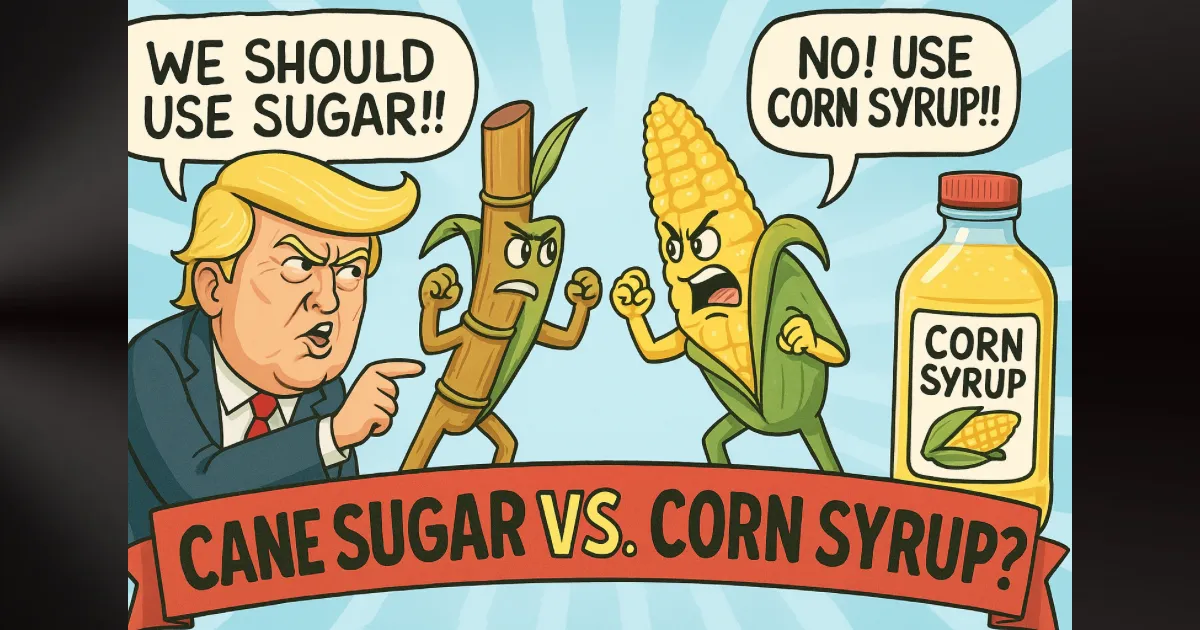
It turns out, what’s inside your soda bottle matters not just for flavor but for your body’s inner ecosystem. Plus, with recent headlines about President Trump pushing Coca-Cola to switch to cane sugar, there’s a storm of food politics, changing recipes, and consumer debates brewing—all of which can impact what you drink and how it interacts with your health.
To stay on top of these stories and discover more about science, technology, and culture, check out our YouTube channels: the “old” DroneMitra—Your Sky is Digital with a Drone as a Friend—and the “new” Newspatron—Let Curiosity Be Your Guide. Both offer fresh, thoughtful content that complements what you read here.
Ready to clear up the sweetener confusion and understand the real story behind cane sugar vs. high fructose corn syrup? Let’s begin.
Cane Sugar vs High Fructose Corn Syrup
Before diving into the latest developments, it’s essential to understand the sweeteners at the heart of the debate: cane sugar and high-fructose corn syrup (HFCS). Both are widely used as sweeteners in sodas but differ in origin, chemical makeup, cost, and cultural perception.
Cane sugar is traditionally derived from sugarcane or sugar beets. Chemically, it is sucrose, a disaccharide made of equal parts glucose and fructose bound together. Usually appearing in granulated solid form, cane sugar has long been prized for its “clean” and nostalgic sweetness found in beverages such as the beloved “Mexican Coke.”
Recommended Product
Casio Vintage A168WA Digital Grey Unisex Watch
🛒 View on Amazon →As an Amazon Associate, we earn from qualifying purchases. Price and availability may vary.
On the other side, high-fructose corn syrup is made from cornstarch, a cheap and abundant crop in the United States. Primarily offered as HFCS 42 and HFCS 55, it contains roughly 42% or 55% fructose respectively, with glucose making up the rest. Unlike cane sugar, HFCS is liquid, making it convenient for large-scale beverage production. Many consumers describe the taste as heavier or more syrupy compared to cane sugar-sweetened sodas.
Despite these differences, both sweeteners share several characteristics. They deliver nearly the same calories per gram and ultimately break down into glucose and fructose after digestion. Their main function is to provide a cost-effective source of sweetness in many processed foods and drinks, especially sodas.
When it comes to differences, cane sugar remains pricier in the United States due to import restrictions and tariffs, while HFCS benefits from corn subsidies and domestic abundance. Taste-wise, cane sugar versions often have a crisper, more immediately refreshing profile, beloved by purists. HFCS, however, has dominated American soda since the 1980s mainly because of its cost advantage.
For consumers weighing health concerns, the metabolic effects of cane sugar and HFCS are remarkably similar. Both cause rapid blood sugar spikes and, if consumed excessively, contribute to obesity, diabetes, and metabolic issues. HFCS has a slightly higher fructose content, which some studies loosely associate with liver fat and insulin resistance, but the consensus among health experts is that typical consumption levels see little meaningful difference between the two.
In short, deciding which sweetener is “better” is as much about personal taste and cultural nostalgia as scientific fact.
The Trump Coca-Cola Directive: What Happened?
The debate over sweeteners took an unexpected turn recently when former President Donald Trump publicly urged Coca-Cola to produce a version of their flagship soda sweetened with cane sugar instead of high-fructose corn syrup. Trump touted cane sugar as a “better, cleaner” option and positioned the call as part of a broader push to support American agriculture and reduce corn dependency.
In mid-2025, Coca-Cola responded by announcing the launch of a new version of Coke in the United States made with domestically sourced cane sugar. The announcement came soon after Trump’s statements received significant media attention, sparking discussions about governmental influence on corporate product choices.
This move by Coca-Cola contrasts its usual recipe for the American market, which has relied heavily on HFCS since the 1980s. The company framed the decision as a response to consumer interest but also acknowledged the complexity of supply chains and ingredient sourcing.
Industry analysts note this decision is part marketing, part addressing consumer demand for “natural” ingredients, and part navigating evolving trade and agricultural policies. However, critics argue the move is more symbolic than substantive in improving health outcomes.
How Coca-Cola Recipes Shape Public Taste
Coca-Cola’s choice of sweetener transcends mere ingredient lists—it shapes consumer taste preferences, availability, and culture. Globally, many Coke variants are sweetened with cane sugar, including the Mexican export often fondly called “Mexican Coke.” This version has a near-cult following in the US for its distinct flavor and perceived authenticity.
In contrast, the American mainstream version’s HFCS recipe creates a different taste profile. Over decades, generations of consumers have grown accustomed to this version, making the cane sugar alternative a novelty or niche product.
Coca-Cola’s recipe shifts have often mirrored broader economic trends, including corn production policies and international trade agreements. The company’s strategy balances cost efficiency with catering to consumer demand for diversification.
The ongoing debate about which Coke tastes “better” may also reflect deeper issues like nostalgia, food politics, and identity, illustrating how a simple sweetener can carry cultural weight.
Health Debate: Is Cane Sugar Really Better Than HFCS?
Health experts largely agree that both cane sugar and HFCS contribute similarly to the risk of obesity, diabetes, and metabolic syndrome when consumed in excess. The marginally higher fructose concentration in HFCS has raised concerns, as excessive fructose can promote liver fat buildup, insulin resistance, and related disorders. Still, at typical consumption levels, clinical evidence does not show meaningful differences in health outcomes between HFCS and cane sugar.
Public health organizations emphasize cutting down total added sugar intake without overemphasizing the type of sugar. The latest research also highlights that overall diet quality, physical activity, and lifestyle weigh more heavily than the choice between cane sugar and HFCS.
Nonetheless, consumer perception often diverges from scientific nuance, which affects purchasing behavior and ingredient priorities.
Economic and Policy Drivers Behind Sugar Choices
The prevalence of HFCS in American sodas primarily stems from historical corn subsidies and sugar import quotas that make cane sugar more expensive domestically. These agricultural policies have incentivized food and beverage manufacturers to turn to corn derivatives.
Trade restrictions on imported sugarcane result in price disparities favoring HFCS, shaping supply chains across the food industry. These policy choices have long-term impacts on American farming, food prices, and public health.
By pushing Coca-Cola towards cane sugar, some see an attempt to support domestic sugar producers and recalibrate agricultural policies, though the economic implications remain complex.
Market and Consumer Impact: Will This Change What We Drink?
Early indicators suggest the cane sugar Coke will occupy a niche segment, priced slightly higher and marketed toward enthusiasts seeking “original” taste or natural ingredients. Widely switching all sodas back to cane sugar at scale faces supply, cost, and consumer preference challenges.
Stock market reactions have been mixed, with analysts cautious about the move’s financial impact. For consumers, this choice offers more variety and sparks interest, but HFCS-based sodas remain dominant in mass market channels.
The trend may fuel further product diversification across beverages, reflecting growing demand for transparency and ingredient sourcing.
Social Media and Pop Culture: How the Story Took Off
The Trump-Coca-Cola sugar story inspired a wave of memes, tweets, and debates on social media. Supporters praised the idea as a patriotic and health-conscious step, while critics mocked it as a publicity stunt or questioned the health claims.
Influencers, nutrition experts, and everyday users fueled the conversation with humor and insight, delivering a lively mix of information and entertainment. It exemplifies how social media now plays a central role in shaping public opinion on food and policy.
Conclusion: What This Battle over Sweeteners Reveals About American Food Politics
The debate over cane sugar versus high-fructose corn syrup is about more than sweetness or flavor. It reflects the intertwining of consumer tastes, health science, agricultural policy, and cultural identity.
President Trump’s directive accelerated a conversation already simmering over ingredient transparency and national food choices. Whether cane sugar’s return in Coke marks meaningful change or a symbolic gesture remains to be seen.
What is certain is that our choices around food and drink remain deeply political, economical, and personal all at once.
Connect with Me

I’m always eager to hear your thoughts and perspectives, so feel free to share your comments below or connect with me, Kumar, Editor at Newspatron, on your favorite platform:
- For quick updates and insights: Follow me on Instagram, Twitter, YouTube, or Reddit.
- For deeper conversations: My Facebook profile is open to authentic friend requests. You can also like the Newspatron page.
- For a visual journey: Follow me on Tumblr for captivating content and inspiring imagery.
- For instant updates: Subscribe to my WhatsApp Channel (privacy protected).
- For quick chats and discussions: Connect with me on Telegram.
- For convenient updates: Subscribe to my RSS feed.
- For professional networking: Let’s connect on LinkedIn.
You can find all relevant links on the Newspatron homepage as well. Looking forward to connecting with you!
[https://docs.google.com/document/d/1TU29BbY7mmSMIyEPQfeoreomkmpY-lHF8AuME5mZfrQ/edit?usp=drivesdk]

[…] choices affect more than taste. Discover how they shape your health in the cane sugar vs high fructose corn syrup […]