


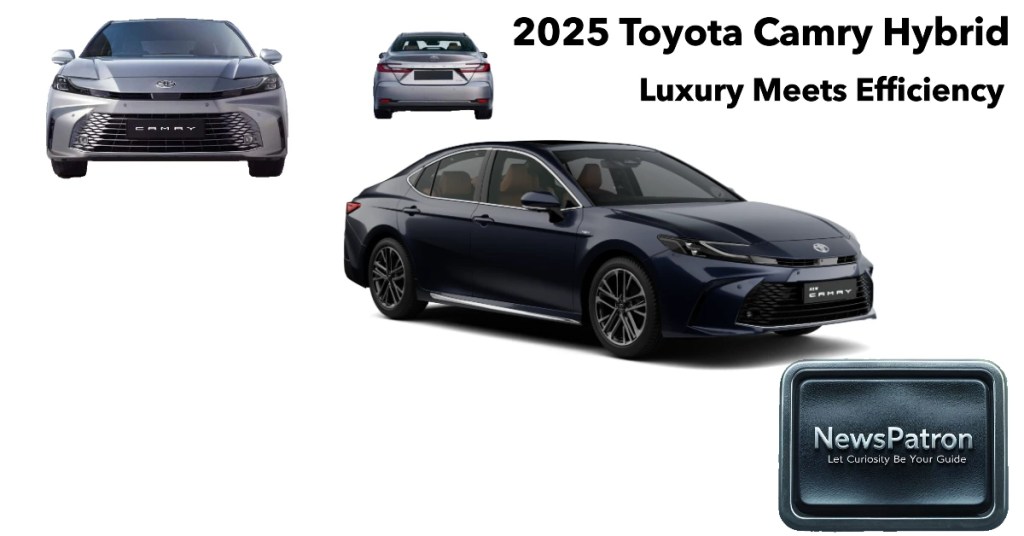

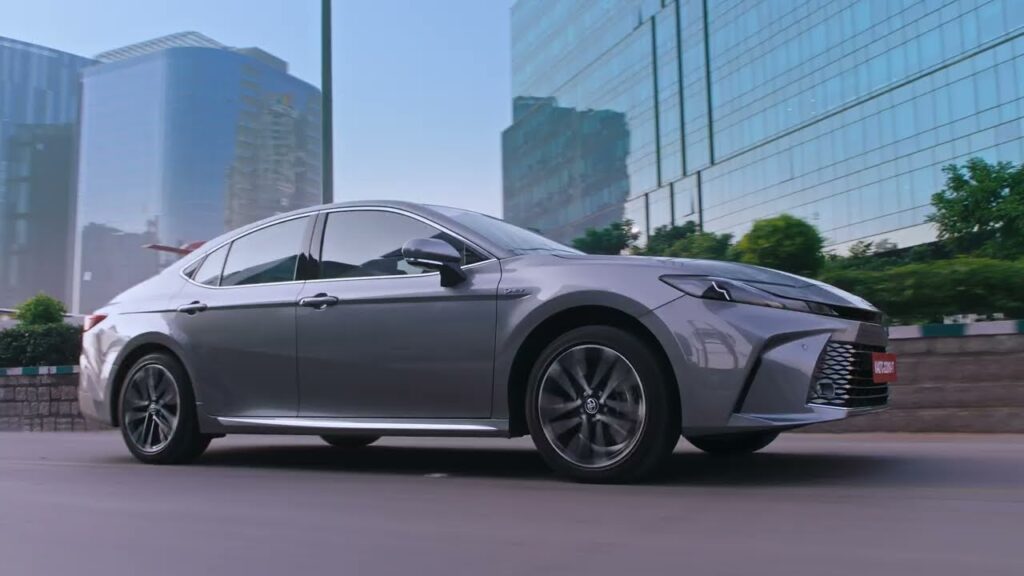

Welcome to the world of the 2025 Toyota Camry Hybrid. Here, efficiency isn’t just a feature; it’s the star of the show. This car is incredibly easy to drive. Its sleek design enhances the driving experience. Tech features cater to everyone, not just enthusiasts. We’ll explore how Toyota has turned this sedan into a luxury experience. It is also budget-friendly, achieving 25.49 km/L in India. Do you love to see the world from above? Check out some fantastic drone shots over at DroneMitra. They promise, “Your Sky is Digital with a Drone as a Friend.” You can also explore more content on Newspatron. They invite you to “Let Curiosity Be Your Guide.“
[View and Download Full Size Image]
[All Images ToyotaBharat.com]
Download Brochure
Direct from the Scene
Virtual Showroom
The Toyota Camry has long been synonymous with reliability, comfort, and efficiency. The 2025 Toyota Camry Hybrid elevates these qualities. It blends luxury with innovative technology. This makes it a standout in the midsize sedan market in India. This model not only delivers an impressive 25.49 km/L (as per ARAI standards) but also introduces a new level of sophistication and convenience. Let’s explore why this Camry is not just another car but a statement on Indian roads.
Toyota Hybrid Technology: A Comprehensive Overview
Toyota Hybrid Technology: How It Differs from Others
Toyota’s Hybrid Synergy Drive (HSD) is a full hybrid system. It allows the vehicle to run on the electric motor alone. It can also run on the gasoline engine alone or a combination of both. This flexibility sets it apart from mild hybrids, which can’t function solely on electric power. The HSD system integrates a gasoline engine, an electric motor, and a planetary gearset. The gearset functions similarly to a continuously variable transmission (CVT). This integration ensures seamless power delivery and efficiency(1).
Toyota Camry Hybrid Engine

Heart
The Toyota Camry is equipped with a 2.5L Dynamic Force Engine, which acts as the heart of the vehicle. This engine features the latest 5th Generation Hybrid Technology. It also has a high-capacity lithium-ion battery. It pumps power throughout the car. This ensures the vehicle runs smoothly and efficiently. It delivers 221 Nm of torque at 3200 rpm, providing the necessary force to keep the vehicle moving.
Lungs
The high-capacity lithium-ion battery in the Camry Hybrid functions like the lungs, storing and supplying energy to the engine. This battery ensures the vehicle breathes efficiently, contributing to an impressive fuel efficiency of 25.49 km/l*. It helps the car switch seamlessly between electric and gasoline power, optimizing performance and reducing emissions.
Recommended Product
Alpino Peanut Butter Chocolate Protein Bar – Gluten Free
🛒 View on Amazon →As an Amazon Associate, we earn from qualifying purchases. Price and availability may vary.
Nervous System
The advanced e-CVT (Electronically Controlled Continuously Variable Transmission) in the Camry Hybrid functions like the nervous system. It coordinates the vehicle’s movements. It ensures smooth acceleration. The e-CVT transmission adjusts seamlessly to driving conditions, providing a responsive and efficient driving experience.
Muscles
The different driving modes—Sport, Eco, and Normal—are like the muscles of the vehicle, adapting to various driving needs:
- Sport Mode: Enhances the vehicle’s performance, providing more power and a quicker throttle response for a dynamic driving experience.
- Eco Mode: It optimizes fuel efficiency by adjusting the throttle response. It also modifies air conditioning settings. This makes it ideal for city driving and long commutes.
- Normal Mode: Balances performance and efficiency, offering a comfortable and smooth driving experience for everyday use.
Technicals Explained in Simpler Terms
Click to Read About The Engine Type
Engine Type
The Toyota Camry comes with a 2.5-liter Dynamic Force Engine that meets the latest BS6 Phase 2 emission standards for petrol engines.
Number of Cylinders
This engine has four cylinders arranged in a straight line, which helps in delivering smooth and efficient performance.
Engine Size
The engine’s size, or displacement, is 2,487 cubic centimeters (cc), which is a measure of the total volume of all the cylinders.
Maximum Power
The engine can produce a maximum power of 137 kilowatts (kW), which is equivalent to 187 horsepower (PS), at 6,000 revolutions per minute (rpm). This means the engine is capable of delivering strong performance when needed.
Maximum Torque
The engine generates a maximum torque of 221 Newton-meters (Nm), or 23 kilogram-meters (kg-m), between 3,600 and 5,200 rpm. Torque is the force that helps the car accelerate. This range indicates the engine’s ability to offer good acceleration. It also ensures strong pulling power.
Click to Read About the Hybrid.
The Hybrid
Total Peak Power
The merged power output of the engine and electric motor in the Toyota Camry Hybrid is 169 kilowatts (kW). This is equivalent to 230 horsepower (PS). This means the car has plenty of power for strong performance.
Drive Mode
The Camry Hybrid offers an Electric Vehicle (EV) mode. This allows the car to run on electric power alone for short distances. It is great for reducing fuel consumption and emissions in city driving.
Hybrid Battery
The hybrid system uses a lithium-ion (Li-ion) battery, which is known for being lightweight and efficient. The battery operates at a nominal voltage of 251.6 volts, providing the necessary power to the electric motor.
Motor Generator
The electric motor in the Camry Hybrid is a Permanent Magnet Synchronous Motor, which is highly efficient and reliable.
Maximum Motor Power
The electric motor can produce a maximum power of 100 kilowatts (kW), which is equivalent to 136 horsepower (PS). This helps the car accelerate quickly and smoothly.
Maximum Motor Torque
The electric motor generates a maximum torque of 208 Newton-meters (Nm), or 21.2 kilogram-meters (kg-m). Torque is the force that helps the car accelerate. This force indicates the motor’s ability to provide strong and immediate acceleration.
Click to Read About The Chassis and Transmission
Chassis and Transmission
Suspension (Front/Rear)
- Front Suspension: The front suspension of the Toyota Camry uses a MacPherson Strut system. This type of suspension is known for its simplicity and effectiveness in providing a smooth ride and good handling.
- Rear Suspension: The rear suspension uses a Double Wishbone setup. This design helps improve the car’s stability and handling, especially during cornering and over uneven road surfaces.
Brakes (Front & Rear)
- Front and Rear Brakes: Both the front and rear brakes are disc brakes. Disc brakes are effective at stopping the car quickly and are known for their reliability and performance.
Tyres & Wheels
- Tyres and Wheels: The Camry comes with 235/45R18 alloy wheels. The numbers indicate the tyre size. The width in millimeters is 235. The aspect ratio is 45, representing the height of the sidewall as a percentage of the width. The diameter of the wheel is 18 inches. Alloy wheels are lighter and often more stylish than steel wheels.
Transmission
- e-CVT (Electronic – Continuously Variable Transmission) – PB11: The Camry uses an e-CVT, which stands for Electronic Continuously Variable Transmission. Unlike traditional automatic transmissions, a CVT doesn’t have fixed gears. Instead, it smoothly adjusts to the optimal gear ratio for the driving conditions, providing a seamless and efficient driving experience. The “PB11” refers to the specific model of the transmission used in the Camry.
Driving Modes
Normal Mode: This mode balances performance and efficiency, offering a comfortable and smooth driving experience for everyday use.
Sport Mode: This mode enhances the car’s performance by providing more power and a quicker throttle response, making the driving experience more dynamic and exciting.
Eco Mode: This mode optimizes fuel efficiency by adjusting the throttle response and air conditioning settings, making it ideal for city driving and long commutes.
Click to Read About The Dimensions & Weight
Dimensions & Weight
Overall Length x Width x Height
The Toyota Camry measures 4,920 mm (492 cm) or approximately 193.7 inches in length, 1,840 mm (184 cm) or about 72.4 inches in width, and 1,455 mm (145.5 cm) or roughly 57.3 inches in height. These dimensions give the Camry a sleek and spacious profile, providing ample room for passengers and cargo.
Wheelbase
The wheelbase of the Camry is 2,825 mm (282.5 cm) or approximately 111.2 inches. The wheelbase is the distance between the front and rear axles. A longer wheelbase generally contributes to a smoother ride. It also provides more interior space.
Track (Front/Rear)
The front track of the Camry is 1,580 mm (158 cm) or about 62.2 inches, while the rear track is 1,590 mm (159 cm) or approximately 62.6 inches. The track width is the distance between the wheels on the same axle. A wider track can enhance stability and handling.
Minimum Turning Radius
The minimum turning radius of the Camry is 5,700 mm (570 cm) or roughly 224.4 inches. This is the smallest circular turn the vehicle can make, which is important for maneuverability in tight spaces.
Fuel Tank Capacity
The Camry has a fuel tank capacity of 50 liters, which is equivalent to approximately 13.2 gallons. This capacity allows for a good range between refueling stops, especially when joined with the car’s efficient fuel consumption.
Seating Capacity
The Camry is a 5-seater, providing comfortable seating for the driver and four passengers. The spacious interior ensures that all occupants have ample legroom and headroom.
Kerb Weight
The kerb weight of the Camry is 1,645 kg. Kerb weight is the weight of the car with all standard equipment and fluids. It includes a full tank of fuel, but excludes passengers and cargo.
Gross Weight
The gross weight of the Camry is 2,100 kg. Gross weight includes the kerb weight plus the maximum payload (passengers and cargo) the vehicle can safely carry.
Click to Read About the Longer Wheelbase
Longer Wheelbase
A longer wheelbase offers several benefits for a vehicle, enhancing both its performance and comfort. Here are some key advantages:
Improved Ride Comfort
A longer wheelbase generally provides a smoother ride. The increased distance between the front and rear axles helps to better absorb road imperfections, reducing the impact of bumps and potholes on the passengers.
Enhanced Stability
Vehicles with a longer wheelbase tend to be more stable, especially at higher speeds. The extended length helps to distribute the vehicle’s weight more evenly, which can improve handling and reduce the likelihood of swaying or rolling during sharp turns.
More Interior Space
A longer wheelbase often translates to more interior space, particularly for rear-seat passengers. This can result in increased legroom and overall comfort, making the vehicle more suitable for long journeys.
Better Weight Distribution
With a longer wheelbase, the weight of the vehicle is spread out over a larger area. This can enhance the vehicle’s balance and handling, making it easier to control, especially in challenging driving conditions.
Improved Towing Ability
Vehicles with a longer wheelbase are generally better suited for towing. The increased stability and weight distribution help to manage the extra load more effectively, reducing the risk of trailer sway.
Reduced Overhang
A longer wheelbase can reduce the front and rear overhangs (the portions of the vehicle that extend beyond the wheels). This can improve the vehicle’s approach and departure angles, making it more capable in off-road conditions.
A longer wheelbase offers a more comfortable driving experience. It also adds stability and spaciousness. These qualities enhance both the practicality and performance of the vehicle. If you have any more questions or need further details, feel free to ask!
Maintenance of Hybrid Electric Cars vs. Fully Electric Cars
Hybrid Electric Cars:
- Pros: Lower fuel consumption, regenerative braking reduces brake wear, and the gasoline engine can extend the driving range.
- Cons: More complex systems can lead to higher maintenance costs compared to conventional cars.
- Maintenance: Regular oil changes, brake inspections, and battery health checks. Hybrid batteries are designed to last the life of the vehicle, with warranties typically covering 8-10 years or 100,000-150,000 miles(2).
Fully Electric Cars:
- Pros: Zero emissions, lower running costs, fewer moving parts, and less frequent maintenance.
- Cons: Limited driving range, longer refueling(recharging) times, and higher starting costs.
- Maintenance: Battery health checks, tire rotations, and brake inspections. Battery replacement can be costly, ranging from ?4,27,000 to ?12,80,000 (approximately $5,000 to $15,000) depending on the model (3).
Toyota’s Unique Selling Proposition (USP) in Hybrid Technology
Toyota’s USP in hybrid technology lies in its extensive experience and proven reliability. Since the launch of the Prius in 1997, Toyota has sold millions of hybrids worldwide. This success demonstrates the durability and efficiency of its hybrid systems. Toyota hybrids are recognized for integrating electric and gasoline power seamlessly. They offer a smooth and efficient driving experience 4.
Key Components and Their Prices
- Alternator: In Toyota hybrids, the traditional alternator is replaced by the electric motor and inverter system. This system charges the battery and powers the vehicle’s electrical systems. This system is more efficient and reduces the need for auxiliary belts. Traditional alternators in non-hybrid vehicles cost between ?10,000 to ?20,000 ($120 to $240) to replace.
- Battery Replacement Cost: Replacing a hybrid battery typically costs between ?1,70,000 and ?6,80,000. This amount is approximately $2,000 to $8,000. The cost varies depending on the model and labor costs. In contrast, fully electric vehicle (EV) battery replacements can range from ?4,27,000 to ?12,80,000 (approximately $5,000 to $15,000) (3.
Power Switching Pattern in Toyota Hybrids
Toyota’s hybrid system intelligently switches between electric and gasoline power based on driving conditions:
- Electric to Gasoline: The vehicle starts in electric mode for low-speed driving. When more power is needed, like during acceleration or climbing hills, the gasoline engine kicks in.
- Gasoline to Electric: During deceleration or light cruising, it switches back to electric mode. This change saves fuel and reduces emissions.
Use Cases:
- City Driving: The hybrid system primarily uses electric power, reducing fuel consumption and emissions in stop-and-go traffic.
- Highway Driving: The gasoline engine provides the necessary power for higher speeds, while the electric motor assists during acceleration.
- Regenerative Braking: When braking, the electric motor acts as a generator. It converts kinetic energy into electrical energy. This electrical energy is used to recharge the battery.
Design and Aesthetics
Exterior Design
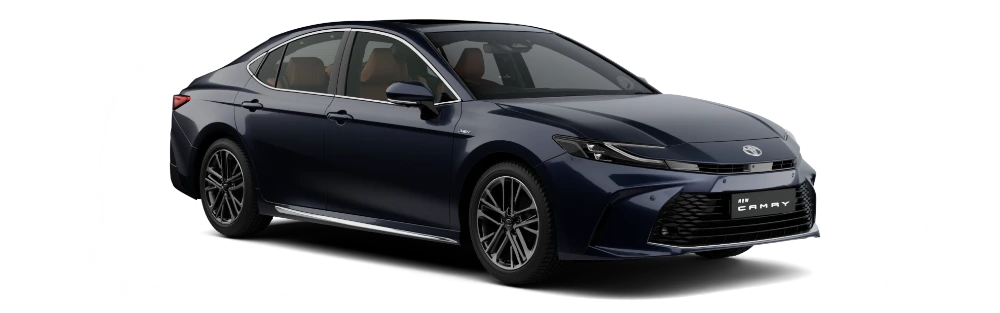
The Camry’s front grille now sports a more aggressive and modern look. It is complemented by C-shaped LED daytime running lights (DRLs) and dual projector LED headlights. These features give the car a sleek and sophisticated appearance. The sculpted bonnet enhances its sporty aesthetics. A subtly repositioned Toyota badge further makes the Camry stand out in its class3.
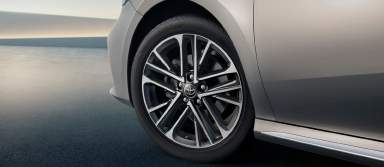
The new Camry Hybrid boasts 18-inch alloy wheels with a distinctive spoke design that adds a touch of sportiness to its overall look. These wheels not only improve the car’s aesthetics but also contribute to its performance and handling, making the Camry Hybrid a stylish and efficient choice for drivers.
Interior Layout
Step inside, and you’re greeted with a dual 12.3-inch screen setup, featuring both the digital instrument cluster and the infotainment system integrated into a multi-layered dashboard. The interior uses soft-touch materials and boasts elegant leather stitching, which has been commended for adding a touch of luxury. The seats are plush and supportive. They offer ample legroom and headroom in the rear. This ensures comfort for all passengers during long journeys. (3.
Consumer Feedback (Worldwide)
- John, a retired GM employee, shares his experience: “The 2025 Camry restyling is eye-catching. The white pearl color with a black interior looks fantastic. The instrumentation panel is very interactive and easy to use while driving. This Camry drives very well, and the safety features work seamlessly”6.
- AP, a former Prius owner, adds: “What a nice smooth ride. The adaptive cruise control is excellent, and the blind side monitors are a great feature. The Camry offers better comfort and a more luxurious ride compared to my old Prius”6.
Performance and Drive Experience
Real-World Performance Data
On-the-road tests in India have shown that the 2025 Camry Hybrid can achieve approximately 25.49 km/L, demonstrating the hybrid system’s adaptability to Indian driving conditions (1).
Owner Drive Anecdotes
- John, a new Camry owner, expresses his satisfaction: “I recently switched from a 2017 Mazda3 to the 2025 Camry SE. The ride is amazingly smooth, and the hybrid system is fantastic. I got over 60 mpg on my drive to work today, which is right up there with my old Prius!”3.
- AP, a former Prius owner, notes: “The adaptive cruise control is excellent. The blind spot monitors are also a great feature. The Camry offers better comfort and a more luxurious ride compared to my old Prius”3.
Comparisons
The Honda Accord Hybrid and Hyundai Sonata Hybrid are not available in India. The Camry compares favorably to the Skoda Superb. It offers superior hybrid efficiency and a more extensive array of standard features (8).
Technology and Features
Infotainment System
The Camry Hybrid in India features a dual 12.3-inch digital setup for both the instrument cluster and infotainment system, with wireless Apple CarPlay and wired Android Auto. The audio experience is enhanced by a nine-speaker JBL system (3).
User Feedback (Worldwide)
- Red21Camry on forums shares: “The infotainment system is very intuitive. Pairing my phone was a breeze, and the JBL sound system is fantastic. The screen is responsive, and the layout is user-friendly.”
- Karen001 adds: “I love the new navigation system. I wish Toyota offered a way to buy map updates without a subscription. The voice assistant is very helpful, though.”
Safety Features
Toyota Safety Sense 3.0 comes standard. It provides safety tech like adaptive cruise control, lane-keeping assist, and blind-spot monitoring. These features are tailored to Indian road conditions (5) .
Unique Tech Applications
Extra conveniences include a head-up screen, three-zone climate control, and a wireless charging pad. These features make the Camry a tech-advanced choice for Indian drivers.
Pricing and Value
The 2025 Camry Hybrid is priced starting at ?48 lakh (ex-showroom). It offers a strong value proposition in India. Maintenance costs over five years are estimated at ?29,690. It also has excellent resale value (29).
Consumer Reception and Market Position
The 2025 Toyota Camry Hybrid has been warmly welcomed in India for its efficiency, comfort, and safety features. Analysts expect strong sales performance due to its compelling features and Toyota’s reputation for reliability (11).
Conclusion
The 2025 Toyota Camry Hybrid is not just another car. It showcases efficiency, technological advancement, and dependability. This is tailored for the Indian market. It blends fuel efficiency and modern design. It also offers advanced technology and strong value. It’s an ideal choice for anyone seeking a sedan that’s both practical and stylish. We encourage you to consider the Camry Hybrid for your next vehicle buy.
Read Earlier Blog Post
From Qualis to Fortuner: How Toyota Won the Hearts of Indian Motorists:
- Explore Toyota’s journey in India. The transition goes from the iconic Qualis to the luxurious Fortuner. Discover how the brand has become a beloved companion on Indian roads (#A-Beloved-Companion-on-Indian-Roads).
- Toyota’s Global Ascendancy: A Chronicle of Innovation and Excellence: Discover Toyota’s global success story. It is driven by innovation and excellence (#Toyota’s-Global-Ascendancy-A-Chronicle-of-Innovation-and-Excellence).
- The Power of the J-Factor: Toyota’s Secret to Success: Discover the unique cultural elements behind Toyota’s success. These elements have propelled Toyota to the forefront. They achieved this status with the power of the J-Factor (#The-Power-of-the-J-Factor-Toyota’s-Secret-to-Success).
- Toyota in India: A Brand Woven into the Fabric of Daily Life. Discover Toyota’s integration into the daily lives of Indian motorists. This occurs through reliable and innovative vehicles (#Toyota-in-India-A-Brand-Woven-into-the-Fabric-of-Daily-Life).
Read Taisor Review: Toyota’s New Star in India
Sources:
- [1] CARS24: autos.maxabout.com/cars/toyota/camry/camry-2025
- [2] Evo India: www.evoindia.com/news/car-news/2025-toyota-camry-launched
- [3] DriveSpark: www.autocarindia.com/car-reviews/2025-toyota-camry-review-lexus-for-less-433910
- [4] Pune Mirror: www.toyotabharat.com/showroom/camry/specifications.html
- [5] Toyota Bharat: www.drivespark.com/car-reviews/2025-toyota-camry-review-driving-impressions-specs-features-images-063441.html
- [6] Autocar India: ackodrive.com/reviews/2025-toyota-camry-hybrid-india-spec-review-is-it-worth-the-price-tag-1/
- [7] 91Wheels: www.91wheels.com/cars/toyota/camry/service-cost
- [8] Autocar India: wheelwale.com/toyota-camry-hybrid-price-in-india/
- [9] Autocar India: www.autocarindia.com/auto-features/toyota-camry-new-vs-old-price-engine-features-comparison-433832
- [10] GaadiWaadi: gaadiwaadi.com/all-new-2025-toyota-camry-hybrid-to-launch-in-india-on-december-11/
- [11] Times Now News: www.timesnownews.com/auto/car-news/2025-toyota-camry-to-launch-in-india-on-december-11-article-115409536
- [12] Pune Mirror: punemirror.com/Business/toyota-calls-for-tax-incentives-for-hybrid-vehicles-to-align-with-india-s-national-goals/cid1733935351.htm
