


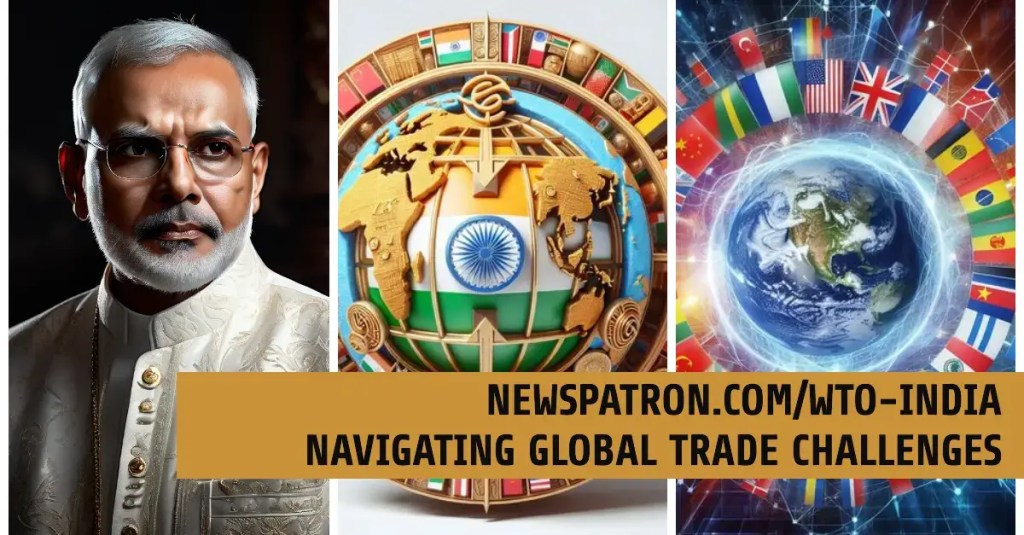

The World Trade Organization (WTO) is a key player in the complex web of international trade. For India, a nation with both historic skepticism and growing involvement in international markets, the WTO represents a complex set of challenges, opportunities, and an ever-evolving relationship. From intellectual property battles to the future of e-commerce, India’s stance within the WTO has global implications. In recent times, India has asserted itself more forcefully, raising far-reaching questions about trade, protectionism, and the evolving rules shaping the world economy. Let’s explore these themes and dissect the complex interplay between India and the WTO.
Timeline
India and the WTO – A Journey of Friction and Transformation
- 1948: India becomes a signatory to the General Agreement on Tariffs and Trade (GATT), the predecessor to the WTO.
- 1995: India, as a founding member, joins the World Trade Organization.
- Early 2000s: Disputes emerge between India and developed nations over intellectual property (particularly pharmaceuticals) and agricultural subsidies.
- 2013: India champions a victory on fisheries subsidies at the WTO, a sign of its growing influence.
- 2014: Narendra Modi assumes the role of India’s Prime Minister, marking a shift in India’s trade policy trajectory.
- 2018-Present: Increasing friction on e-commerce regulations, data localization, and proposed import duties signal India’s bolder stance and willingness to challenge the status quo within the WTO framework.
- 2023-24: India’s discussions on a possible WTO exit send shockwaves through the global trade system, reflecting a more assertive nation focused on domestic priorities and strategic protectionism.
The Story Unfolds: India’s Path from Participant to Challenger
India’s relationship with the World Trade Organization is a complex saga of economic aspirations intertwined with domestic pressures and rising nationalism. Initially joining the WTO in 1995, India sought the benefits touted by trade liberalization – greater market access, economic growth, and attraction of foreign investment. Yet, the journey has proven to be far from smooth.[WTO WEBSITE]
Challenges Along the Way
India, like many developing nations, has felt the sting of imbalanced power dynamics within the WTO. Intellectual property disputes, often with the United States, centered on patent rights and the affordability of vital medicines. Agricultural trade remains a contentious arena, as developed nations push for open access to Indian markets while heavily subsidizing their own farmers. This clash between the world’s wealthiest economies and those striving for economic growth fuels resentment and a feeling of injustice.
Narendra Modi and a New Era of Economic Nationalism
Since the rise of Prime Minister Narendra Modi in 2014, India’s WTO posture has changed significantly. His ‘Make in India‘ initiative and focus on reducing Chinese imports signal an inward turn motivated by self-sufficiency and strategic protection of domestic industries. Modi’s government has not shied away from confrontations challenging the existing trade order. Read an article about how former bureaucrats in Modi government are transforming India.
E-commerce, Food Security, and Data Sovereignty
The battlegrounds for India’s WTO tensions are increasingly found in the digital realm. India advocates for regulations on foreign e-commerce players and policies that support homegrown digital enterprises. The debate over data localization, where nations seek to keep data within their borders, finds India pushing back fiercely against what it sees as undue external control.
Food security remains paramount in a country with a vast population facing poverty. India has staunchly resisted pressures to roll back its agricultural subsidies and food stockpiling programs. This led to its bold “peace clause” push, highlighting the needs of developing nations.
India Flexes Its Muscles: The WTO Exit Proposal
India’s proposed exit from the WTO, however drastic, is the culmination of frustrations over perceived unfairness and inaction on reforms it deems critical. It’s a testament to India’s economic might and the belief that it can chart an independent trade course, focusing on bilateral deals and selective regional agreements.
The Future: Uncertain and Full of Potential
Whether India exits the WTO remains to be seen, but the reverberations of its forceful stance are undeniable. It underscores a global shift away from blind faith in unfettered free trade towards a more nuanced approach balancing domestic concerns with global economic cooperation. The India-WTO saga highlights the ongoing struggle to find equilibrium within a changing world order.
Deep Dive: Friction Points in India’s WTO Relationship
E-commerce Standoff: Protecting Domestic Players
India’s booming e-commerce sector has become a battleground within the WTO. The Indian government advocates for regulations that require foreign e-commerce giants like Amazon and Walmart to source a certain percentage of their products from local sellers. This “level playing field” approach aims to protect smaller Indian e-commerce companies from the overwhelming dominance of established international players. Additionally, India pushes for data localization policies, mandating e-commerce companies to store user data within the country. This raises concerns about data privacy and potential restrictions on the free flow of information. Developed nations, however, argue that such regulations stifle competition and create unnecessary hurdles for international businesses.
Recommended Product
Magnesium Body Spray – Muscle Recovery & Lavender Scent
🛒 View on Amazon →As an Amazon Associate, we earn from qualifying purchases. Price and availability may vary.
Intellectual Property Fights: Balancing Innovation and Affordability
One of the most contentious issues between India and developed nations like the US revolves around intellectual property (IP) rights, specifically pharmaceuticals. India’s patent laws allow for compulsory licensing, enabling domestic companies to produce generic versions of patented drugs under certain conditions. This ensures access to affordable medicines for millions in India, but it clashes with the interests of pharmaceutical companies seeking higher profits from branded drugs. The debate centers on striking a balance between promoting innovation and ensuring affordability of life-saving medications in developing nations.
Food Security vs. Trade Liberalization: The Subsidy Standoff
The issue of food security is paramount for India, with a large population vulnerable to hunger. The WTO’s Agreement on Agriculture (AoA) encourages reduction of agricultural subsidies, a point of contention for India. The government argues that subsidies are essential to support its farmers and ensure food self-sufficiency. Developed nations, however, view these subsidies as trade distortions, favoring Indian agricultural exports. The proposed cap on subsidies by the WTO raises concerns in India about the impact on its food security programs and the livelihood of millions of farmers.
Ground Realities: Why a One-Size-Fits-All Approach Doesn’t Work
The proposed WTO subsidy cap on agriculture fails to consider the unique challenges faced by developing nations like India. Millions of Indian farmers are small-scale producers with limited resources. Subsidies help them buy essential inputs like fertilizers and seeds, boosting productivity and income. Additionally, these subsidies act as a safety net during droughts and other natural calamities. A blanket cap on subsidies, without considering these ground realities, could have severe consequences for food security and rural livelihoods in India.
Indian IT Industry and Intellectual Property Concerns: A Myth or a Muddle?
Accusations of Indian IT companies “stealing” resources from international counterparts are often exaggerated. However, concerns exist surrounding the patent landscape in India. India’s simple patent procedure, while meant to encourage innovation, can be susceptible to misuse. Critics argue that companies may exploit loopholes by obtaining patents on slightly modified versions of existing technologies. Additionally, the extensive use of open-source software raises questions about whether Indian IT companies always comply with licensing terms when developing commercial products.
Here’s a more nuanced perspective:
- Free Resources and Innovation: Open-source software plays a crucial role in fostering innovation globally. Indian IT companies may leverage this freely available code as a foundation for building new products. However, ethical considerations dictate adherence to open-source licensing terms that often require attribution or open-source contributions from those using the code commercially.
- Redevelopment vs. Copying: Simply re-developing an existing technology with slight modifications doesn’t necessarily constitute intellectual property theft. However, concerns arise if core functionalities or innovations are copied without proper licensing or attribution.
The Indian government is actively taking steps to strengthen its IP regime and address these concerns. Increased awareness about responsible use of open-source software and stricter enforcement of patent laws are crucial to fostering a culture of legitimate innovation within the Indian IT sector. [Read an Article on The Changing Landscape of the Jubilant Indian IT Industry Intellectuals Readily Embracing Flexibility in the Age of AI]
The Road Ahead: Finding Common Ground
While tensions exist, both India and the WTO have a shared interest in fostering a stable and predictable global trade environment. Continued dialogue and a willingness to find common ground are essential. Developed nations need to acknowledge the specific challenges faced by developing countries like India. Similarly, India should strive for a robust IP framework that encourages innovation while ensuring responsible access to vital technologies. By working together, the WTO and its members can create a more inclusive and equitable trade system for the 21st century.
The story of India’s relationship with the WTO is far from over. It’s a dynamic saga of complex challenges, shifting dynamics, and continuous negotiation. Here’s why this isn’t the end:
- WTO Exit? While India’s proposed WTO exit remains a possibility, it’s far more likely that India will push for reforms from within. With increased economic power, India has greater leverage on the world stage. It will continue to champion the concerns of developing nations and advocate for structural changes in the WTO system.
- Ongoing Intellectual Property Disputes: The battle between pharmaceutical companies, governments seeking affordable medicine, and India’s stance on compulsory licensing will continue to evolve. We may see compromises and revisions in both WTO rules and India’s approach to intellectual property.
- E-commerce Evolution: India’s e-commerce sector is set for explosive growth. Ongoing negotiations over data localization, foreign company participation, and domestic market protection are likely to reshape the e-commerce landscape in the coming years.
- The Future of Food Security: With climate change, unpredictable weather patterns, and growing populations, the debate over agricultural subsidies isn’t going away. How the WTO balances food security for developing nations with developed countries’ push for market liberalization will remain a crucial question.
- Global Power Realignments: The rise of India, China, and other emerging economies will continue to challenge the current WTO structure. As global power shifts, so too will the rules governing international trade.
Environmental Protection and the WTO: India’s Green Push
India is increasingly vocal about incorporating environmental considerations into trade agreements. With its vast population and rapid industrialization, India faces severe environmental challenges, including air pollution, water scarcity, and climate change vulnerability. As such, India might champion the following at the WTO:
- Harmonizing Environmental Standards: Pushing for stricter environmental standards across WTO members to mitigate the negative impact of trade on the planet. This could involve stricter rules on pollution, carbon emissions, and sustainable resource management.
- Addressing Trade in Environmentally Sensitive Goods: Regulating or even restricting trade in goods deemed harmful to the environment. This could encompass trade in endangered species, hazardous waste, or products contributing to deforestation.
- Support for Green Tech Transfer: India could advocate for easier access to clean technologies, pushing developed nations to provide technical assistance and relax intellectual property barriers.
Challenges and Potential Traction
Including environmental provisions in trade agreements often sparks resistance from nations fearing it could become a form of disguised protectionism. However, concerns about climate change and sustainable development are gaining global momentum. India, alongside other like-minded nations, could propel a stronger “green” agenda within the WTO.
Labor Rights: India’s Responsibility and Potential Influence
While India has its own domestic labor rights challenges, the WTO provides a platform for advocating for better labor standards across global trade. India could champion:
- Linking Trade with Core Labor Standards: Incorporating the International Labor Organization’s core standards (like freedom of association, elimination of forced labor, etc.) into trade agreements. This could include enforcement mechanisms and penalties for non-compliance.
- Promoting Fair Competition: Raising standards in other countries prevents a “race to the bottom” where nations compete by lowering worker protections and wages.
- Social Clauses in Trade Agreements: Similar to environmental concerns, India could advocate for “social clauses” in trade agreements that address issues like child labor, worker safety, and minimum wages.
Challenges and Considerations
Critics argue that incorporating labor standards into trade agreements amounts to protectionism by developed nations. There’s a fear that strict standards might disproportionately burden developing countries. India will need to carefully navigate this tension, focusing on genuine human rights protection while finding ways to support the development and progress of poorer nations.
The Changing Face of Protectionism: India’s Path and Consequences
India’s moves towards greater protectionism, exemplified by tariff increases and domestic industry support, mirrors a broader global trend. Here’s the potential fallout:
- Ripple Effects on Developing Nations: If India, a leading developing nation, embraces protectionism, it could embolden others to follow suit. Increased trade barriers across the developing world hurt smaller economies more reliant on exports.
- Slowing Global Growth: Protectionism often leads to higher prices, lower economic efficiency, and decreased innovation. This has the potential to stifle global economic growth.
- Risk of Trade Wars: Protectionist measures by one nation can lead to retaliation by others, spiraling into trade wars that damage all parties involved.
It’s not a simple ‘good or bad’ situation. Some argue a degree of strategic protectionism may be necessary for young industries to develop. It’s about finding a balance. India will have to walk a fine line between protecting legitimate national interests and working towards a more equitable and open global trading system.
If you are wondering on where could it go from here then here are some –
Speculative Possibilities: The Future of the India-WTO Relationship
- Reform Champion: India could emerge as a strong voice within the WTO, advocating strenuously for reforms that address the imbalances faced by developing nations. It may find common ground with other emerging economies, creating a powerful coalition for change.
- The Bilateral Route: If frustrations mount, India might focus increasingly on bilateral and regional trade agreements that offer more flexibility and cater better to its specific interests. This could lead to a fragmented global trade landscape with less dominance by the WTO.
- Strategic Protectionism with a Twist: India may continue calibrated protectionist policies, but with increasing emphasis on domestic innovation and self-reliance. This path would aim to boost Indian industry while maintaining strategic engagement with the global trading system.
- WTO Realignment: Under sufficient pressure from developing nations, we could witness a major realignment within the WTO. Power dynamics might shift, leading to significant changes in rules over intellectual property, subsidies, and dispute resolution mechanisms.
A Crossroads for Global Trade
The India-WTO relationship encapsulates the tensions and opportunities inherent in 21st century globalization. India’s growing economic clout and assertive stance foreshadow a world where the old rules of trade are no longer unchallenged. Whether the outcome is fragmentation, reform, or something in between remains to be seen. One thing is certain: India’s decisions will shape not just its own economic future but the broader course of global trade governance. The world – and the WTO – would do well to pay attention.
