


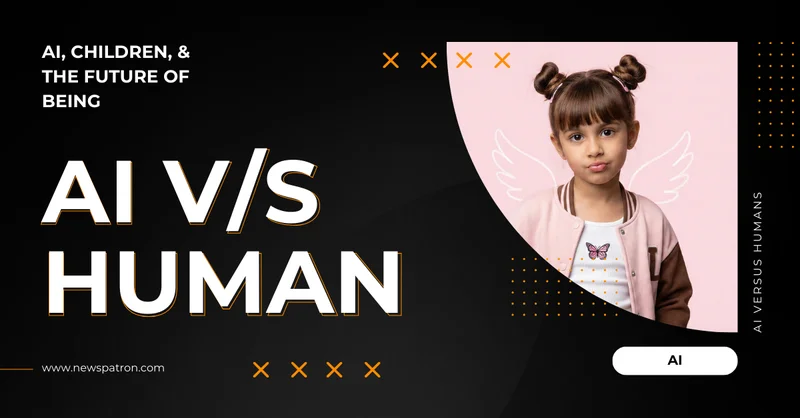

Artificial Intelligence is becoming part of daily life, but its deepest impact may not be on jobs or productivity. It may be on how children grow up.
Adults usually encounter AI as a tool. Children encounter it as a constant presence. This difference shapes how they learn patience, handle frustration, and interact with other people.
What AI Is — and What It Is Not
AI systems are designed to perform tasks such as answering questions, generating content, and recognizing patterns. They are efficient and consistent, but they do not possess personal history or emotional experience.
AI can replace tasks. It cannot replace lived human experience.
Why Emotions Still Matter
Human emotions are fast decision systems developed through evolution. They help people respond quickly to danger, connection, and uncertainty.
AI processes information without personal risk. It can simulate emotional responses but does not experience emotion itself. This difference matters most in relationships, caregiving, and education.
Children and Instant Responses
Children growing up with AI experience immediate answers and constant stimulation. However, human development relies on delay, frustration, and negotiation.
Without these experiences, emotional tolerance and attention control may weaken. This pattern is already visible in increased screen dependence and difficulty handling unpredictability.
Education and Understanding
AI-generated schoolwork often looks advanced but may hide shallow understanding. As a result, schools are returning to oral exams and live problem-solving to test real comprehension.
Recommended Product
Casio Vintage A168WA Digital Watch – Classic Retro Style
🛒 View on Amazon →As an Amazon Associate, we earn from qualifying purchases. Price and availability may vary.
The goal is not to ban AI, but to preserve thinking.
What Happens Next
AI will continue to expand. The key question is whether societies can protect spaces where effort, emotion, and human interaction remain central.
Want the deep dive?
Read the full report on AI, children, and human development.
