



Remember the time when Banke Bihari Temple, the spiritual heart of Vrindavan, was almost swallowed up by a paperwork snafu? Yep, the property belonging to the temple was wrongly labelled as a graveyard in government records! That’s the kind of mess the Waqf Board situation in India can create – a big, tangled knot of bureaucracy, history, and religion. And guess what? It’s not just temples; entire communities have been caught in this web of confusion.
But this isn’t just about temples or graveyards. It’s about land, power, and a whole lot of drama. We’re talking property disputes, accusations of shady dealings, and a potential legal showdown that could rewrite the rules of the game.
So, buckle up and get ready for a deep dive into the Waqf Board – what it is, why it matters, and why it’s about to become the hottest topic since that viral dance challenge. We’ll even throw in some juicy tidbits about the India-Pakistan angle that you won’t find in your textbooks.
BJP-Mahayuti government has promptly allocated 10 crores to the Maharashtra Waqf Board – Fake News
-
But first, let’s untangle this Waqf Board Controversy (mess), shall we? We’ll spill the beans on what the Waqf Board actually is and why it’s causing such a ruckus. You won’t want to miss it! ?
-
The Maharashtra BJP clarified that the decision was made by administrative officers and announced that the Government Resolution (GR) had been revoked following strong opposition from the party. They emphasized their stance that the Waqf Board is not recognized in the Constitution.
“False news is circulating that the BJP-Mahayuti government has immediately allocated 10 crores to the Maharashtra Waqf Board. This incorrect decision was made jointly by officials at the administrative level. However, this decision has now been overturned after strong objections from BJP leaders,” stated BJP Maharashtra in a post on X.
Sponsored
Waqf (Amendment) Bill, 2024
Hon UHM Shri Amit Shah said Waqf (Amendment) Bill, 2024 would be passed in the Parliament in the coming days
[Video courtesy ANI News Channel]
What is the Waqf Board and Why Is It Important? (What is Waqf Board India?)
Watch Full Video
Anand Ranganathan to PM Modi Thought Provoking Video Clip
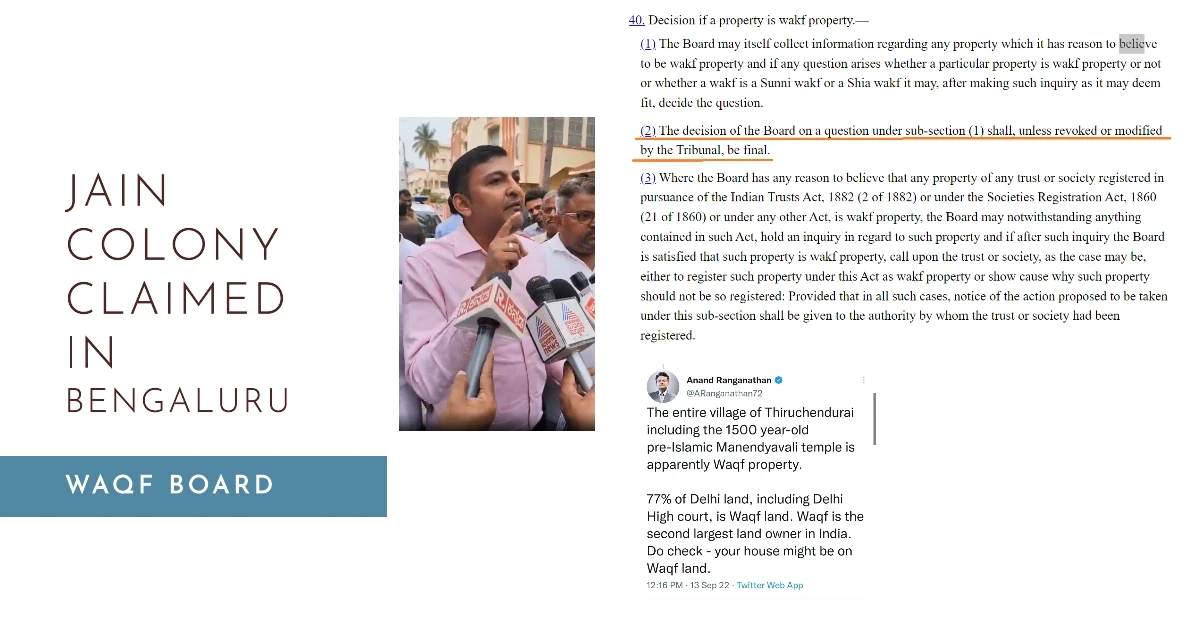
Entire Jain Colony Claimed in Bangalore
Alright, folks, let’s get down to brass tacks and understand what this Waqf Board business is all about.
Recommended Product
Waterproof Car Body Cover for Maruti Dzire 2017-2023
🛒 View on Amazon →As an Amazon Associate, we earn from qualifying purchases. Price and availability may vary.
"The entire village of Thiruchendurai, including the 1500 year-old pre-Islamic Manendyavali temple, is apparently Waqf property. 77% of Delhi land, including the Delhi High Court, is Waqf land. Waqf is the second largest land owner in India. Do check - your house might be on Waqf land.

Such is the travesty of this law that you have to plead your case before the very board that set its rapacious eyes on your land in the first place.

The most draconian aspect of this law is that the decision of the WAQF board (which comprises ONLY Muslims) will be final and binding."
Curious about the Banke Bihari Temple drama? Hop on over to my other blog post, “Preserving India’s Legacy: Protecting Banke Bihari Temple’s Property Rights”. It’s a wild ride, I promise.[References – Shillong Times – Live Law]
What is Waqf?
In a nutshell, “waqf” is a permanent dedication of property by a Muslim for a religious, pious, or charitable purpose. Think of it like a trust fund for good deeds. The property could be anything – land, buildings, even cash. Once dedicated as waqf, it’s meant to be used for the benefit of the community, like building mosques, schools, hospitals, or providing for the poor.
So, What’s the Waqf Board?
The Waqf Board is basically the big boss of all waqf properties in a particular state or region. It’s a government-appointed body responsible for managing, regulating, and protecting these properties. Think of it like the HOA of the waqf world, but with a lot more power and responsibility.
Why Does it Matter?
Waqf properties play a crucial role in the social and economic fabric of the Muslim community in India. They provide essential services and support to millions of people. That’s why the Waqf Board is such a big deal – it’s not just about managing property; it’s about safeguarding the interests and well-being of an entire community.
A Brief History Lesson
The concept of waqf dates to the early days of Islam. It was a way for wealthy Muslims to ensure their wealth was used for good even after they were gone. The Waqf Board system in India, however, is a relatively recent creation. It was established under the Waqf Act of 1954 to streamline the management of waqf properties and prevent their misuse.
The Waqf Act has been amended several times over the years, with the most recent amendment in 2013 granting more autonomy to Waqf Boards. This autonomy, however, has also been a source of controversy, with accusations of mismanagement and corruption.
But for now, you’ve got the basics down. Now you know what the Waqf Board is, what it does, and why it’s so important. So, stick around – the plot thickens from here!
The Current Controversies Surrounding the Waqf Board (Waqf Board News)
Alright, now that we’ve got the basics out of the way, let’s get into the juicy stuff – the controversies that have turned the Waqf Board into a hotbed of debate and discussion.
Mismanagement Allegations: Where’s the Money, Honey?
One of the biggest criticisms levelled against Waqf Boards across India is mismanagement. We’re not just talking about minor accounting errors here, folks. Think missing funds, shady property deals, and a general lack of transparency. Some boards have been accused of selling or leasing waqf properties for a pittance, lining their own pockets while the community suffers. It’s like finding out your building manager has been using the maintenance fees for their own lavish vacations – not cool!
Waqf Board Controversy Explained: Dr. Sudhanshu Trivedi Clears the Air
The Waqf Board’s Dirty Secret: Land Grabbing Without Proof
Land Disputes: Who Owns What?
Another major issue plaguing the Waqf Board is land disputes. You see, over the years, some Waqf Boards have made claims on properties that others argue don’t rightfully belong to them. This has led to some high-profile legal battles, like the Babri Masjid case, which has been a source of tension and conflict for decades. It’s like that neighbour who keeps trying to claim your backyard as their own – it’s bound to cause some friction!
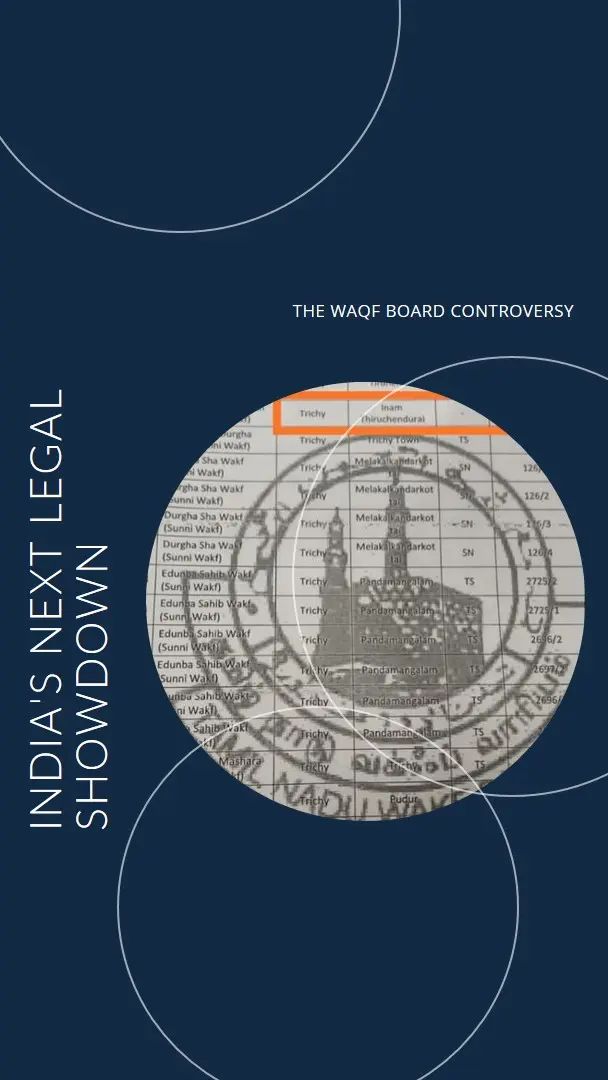
This village has 1500-year-old Manendiyavalli Sametha Chandrasekhara Swamy Temple.
TN: Manendiyavalli Sametha Chandrasekhara Swamy temple was built around 600AD.
So temple existed 775 years before Muslims arrived.
Few of things claimed by WAQF board :

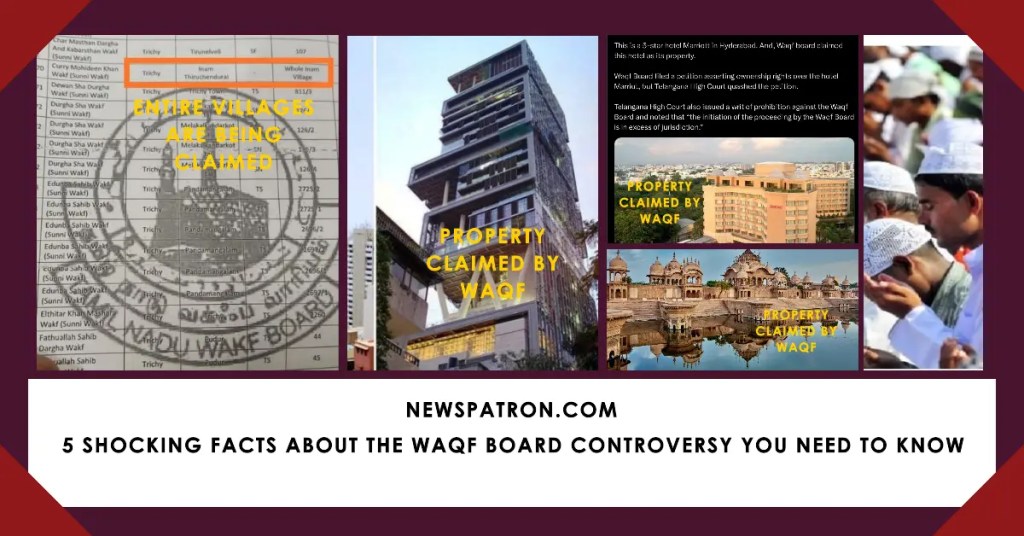
From 5 star hotels in big cities, to International airport in Hyderabad to Temples the list never ends.

You show a developed spot, they (The WAQF Board) will claim it.
[Read about Empowering WAQF: An Examination of Land Acquisition Authority
Political Interference: Whose Side Are You On?
To make matters even more complicated, some folks believe that Waqf Boards are being used as political pawns. They argue that certain political parties are interfering in the boards’ operations, using them to further their own agendas. This has led to concerns about the boards’ independence and impartiality. It’s like a referee in a football game who keeps favouring one team – it doesn’t exactly inspire confidence in the outcome, does it?
[Read about the Quest for Resolution: Banke Bihari Ji Trust’s Battle for Land Rights
Is the Waqf Board Under Government Control?
Now, this is where things get a bit tricky. Technically, Waqf Boards are autonomous bodies, meaning they’re supposed to operate independently of the government. But has the government a significant say in their appointments and can they even dissolve them if necessary. So, are they truly independent? That’s a question that has been fiercely debated.
So, there you have it – a glimpse into the controversies swirling around the Waqf Board. It’s a complex issue with no easy answers.
The Proposed Changes and Their Potential Impact (Waqf Board Amendment Bill)
Alright, folks, now that we’ve got a handle on the controversies, let’s turn our attention to the government’s proposed changes to the Waqf Board and its laws. It’s like a reality show twist that could shake things up big time!
Government Proposal: What’s on the Table?
While the exact details of the proposed changes are still under wraps, there have been some leaks and rumours swirling around. Some reports suggest that the government is considering a complete overhaul of the Waqf Board system, while others indicate that the changes may be more incremental.
One of the key proposals being discussed is bringing Waqf Boards under stricter government control. This could mean anything from increasing government oversight of their operations to giving the government the power to appoint and remove board members. Another proposal is to conduct a comprehensive survey of all waqf properties in India, which could potentially lead to the reclamation of some properties that are currently under dispute.
What is the Waqf Board Bill?
The Waqf Board Bill is the proposed legislation that would enact these changes. It’s currently being debated within the government and has not yet been made public. However, the mere possibility of such changes has already sparked a heated debate within the Muslim community and beyond.
Impact on Muslim Community: A Blessing or a Curse?
The proposed changes could have a significant impact on the Muslim community’s ability to manage their waqf properties. Some argue that stricter government control could lead to greater transparency and accountability, while others fear that it could further marginalize the community and erode their autonomy.
Can Waqf Board be Challenged in Court?
Of course, any changes to the Waqf Board laws are likely to face legal challenges. Some legal experts believe that such changes could be unconstitutional, as they may infringe on the religious freedom of Muslims. Others argue that the government has the right to regulate waqf properties in the public interest. It’s a legal battle that could drag on for years, with far-reaching consequences for both the Waqf Board and the Muslim community.
So, there you have it – a sneak peek into the proposed changes and their potential impact. It’s a complex issue with no easy solutions. But one thing is for sure: the future of the Waqf Board is uncertain, and the stakes are high.
[Read more about Mogul Empires and India’s Historical Landscape: A Glimpse into Our Past]
The Bigger Picture: Waqf, Partition, and Pakistan
Alright folks, let’s zoom out for a moment and take a look at the bigger picture – the historical and political context surrounding the Waqf Board, and its implications for both India and Pakistan.
Partition and Waqf Properties: A Tale of Two Nations
The partition of India in 1947 was a tumultuous time, marked by mass migration and communal violence. It also had a profound impact on waqf properties. Many properties were left behind in Pakistan, while others were claimed by the newly formed Waqf Boards in India. This led to numerous disputes and legal battles, some of which are still ongoing today. It’s a painful reminder of the scars left behind by Partition, and the unresolved issues that continue to haunt both nations.
[Read about The Impact of the Partition of India and Pakistan]
India-Pakistan Tensions: A Brewing Storm?
The Waqf Board issue has the potential to further escalate tensions between India and Pakistan. Both countries have a vested interest in waqf properties, and any changes to their legal status could be seen as a provocation by the other side. It’s a delicate situation that requires careful diplomacy and a willingness to find common ground. But with both countries facing internal political pressures, the path to a peaceful resolution seems fraught with challenges.
Global Implications: Beyond Borders
The Waqf Board issue is not just a domestic matter for India and Pakistan. It has broader global implications as well. Religious property disputes are a common source of conflict in many parts of the world, and their resolution can have far-reaching consequences for international relations. The way India handles this issue could set a precedent for other countries grappling with similar challenges.
[Effective Heartburn Solutions Unveiling Relief Strategies for those suffering from GERD-Heartburn]
The Way Forward: A Quest for Justice and Peace
So, what’s the way forward? That’s the million-dollar question, isn’t it? The Waqf Board issue is a complex one, with deep historical roots and conflicting interests. There’s no easy solution, but finding a way forward is essential for both India and Pakistan.
It requires a willingness to confront the past, acknowledge the grievances of both sides, and work towards a fair and equitable solution. It requires a commitment to justice, peace, and the rule of law. And it requires a recognition that the Waqf Board issue is not just about property, but about people – their livelihoods, their faith, and their future.
Looking Ahead: What’s Next for the Waqf Board? (Will Waqf Board Be Banned in India?)
Alright folks, we’ve journeyed through the past and present of the Waqf Board. Now, let’s peer into the crystal ball and see what the future might hold.
Possible Scenarios: The Fork in the Road
The fate of the Waqf Board hangs in the balance, with several possible scenarios on the horizon. If the proposed changes are implemented, we could see a major shift in the way waqf properties are managed and controlled. The government could tighten its grip on the boards, leading to greater transparency and accountability. But it could also spark a backlash from the Muslim community, who may feel their rights and autonomy are being eroded.
On the other hand, if the proposed changes are watered down or scrapped altogether, the status quo may prevail, with the Waqf Board continuing to operate under its current legal framework. This could lead to continued allegations of mismanagement and corruption, further eroding public trust in the institution.
Another possibility is that the proposed changes are challenged in court, leading to a lengthy legal battle. The outcome of such a battle is uncertain, but it could have far-reaching consequences for the future of the Waqf Board.
Join the Discussion
Your opinion matters! We invite you to express your views. Join our forum, engage in thoughtful discussions, share information, and submit your content. Let’s delve into diverse perspectives together.
[bbp-single-topic id=6308]
Calls for Reform: A Voice from Within
Amidst the external pressures and debates, there’s a growing voice within the Muslim community calling for internal reforms. Many are advocating for greater transparency, accountability, and community participation in the management of waqf properties. They believe that by addressing the issues of mismanagement and corruption from within, the Waqf Board can regain the trust of the community and secure its future.
Conclusion: A Balancing Act
The Waqf Board controversy is a complex issue with no easy answers. It’s a balancing act between the rights of the Muslim community to manage their religious endowments and the government’s responsibility to ensure the proper utilization of public resources.
Finding a way forward requires a nuanced approach that respects the historical and cultural significance of waqf properties, while also addressing the legitimate concerns about mismanagement and corruption. It requires a dialogue between the government and the Muslim community, based on mutual trust and understanding.
The future of the Waqf Board is uncertain, but one thing is clear: it’s a critical issue that deserves our attention and engagement. The decisions made today will have far-reaching consequences for the Muslim community, for India, and for the broader global community.
Let’s hope that wisdom, compassion, and a commitment to justice will guide us towards a solution that respects the rights of all and ensures a bright future for the Waqf Board and the communities it serves.
Waqf Board, Waqf Board India, Waqf Board Controversy, Waqf Board News, Waqf Board Amendment Bill, Waqf Board Bill, Waqf Land, Waqf Property, Waqf Board Mismanagement, Waqf Board Land Disputes, Waqf Board Political Interference, Waqf Board Government Control, Waqf Board Reform