




Sources and references at the end of this post ?
Children Talking Like Adult Warriors
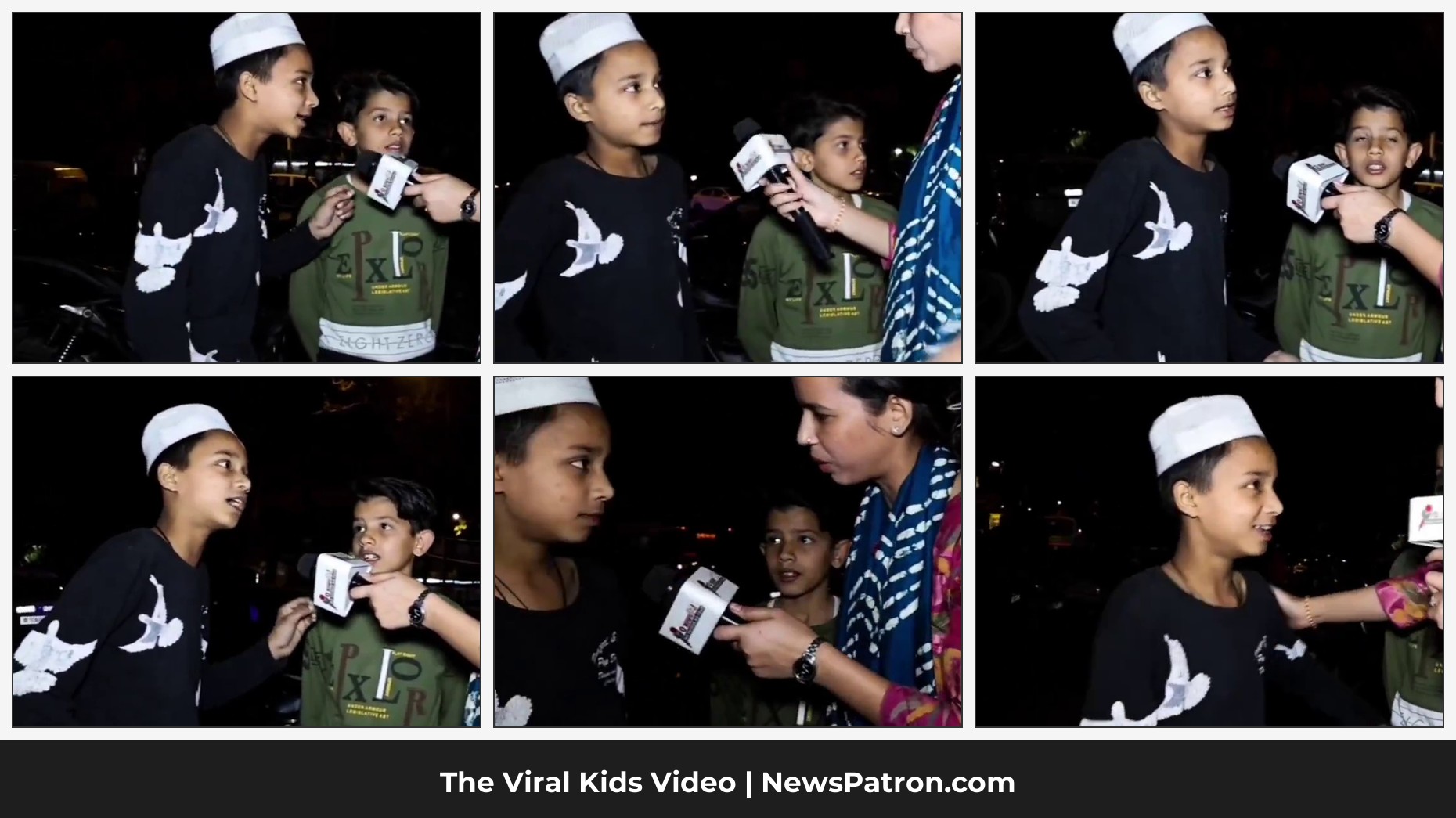
In a short, shaky video from a recent gathering, a group of young boys are being interviewed on camera. They look like school?age kids, but the words that come out of their mouths are anything but childlike.
One confidently claims that the Indian Prime Minister “went to Iran, did spying there and gave Israel the address of Khamenei’s house.” Another says that if he were older, he would “stab Israel in the chest even if it meant twenty years in jail.” The adults around them don’t push back; instead, it feels like this is normal talk in that circle.
The person sharing the clip sums it up in one bitter line: this is the kind of “training” being given to children.
“School” Replaced By Propaganda
People who watched the clip have reacted with a mix of shock, anger and worry. One recurring observation is that for some of these families, school seems to have been replaced by a full?time diet of propaganda.
Instead of textbooks and classes, the day appears filled with:
- Endless videos pushing a single political or religious narrative.
- Speeches by preachers whose language is exclusively inflammatory, not educational.
- Stories and “analysis” so extreme that, as one viewer put it, “if ordinary people like us listened to that content all day, we would lose our minds.”
In that environment, it is not surprising that a child starts to believe that world events are controlled by a handful of villains, and that violence is a reasonable response.
When Children Repeat Battle Lines They Barely Understand
The most disturbing part is not just what the kids are saying. It is how easily those lines roll off their tongues. They talk about espionage, betrayal and stabbing another country as if they are reciting a poem.
That suggests three uncomfortable things:
Recommended Product
Trylo Riza T-Fit Women's Bra – Comfortable Daily Wear
🛒 View on Amazon →As an Amazon Associate, we earn from qualifying purchases. Price and availability may vary.
- These lines are being repeated at home or in their learning spaces. Children at that age do not independently construct geopolitical conspiracy theories.
- Emotion is being trained before understanding. They are being taught whom to hate long before they are old enough to grasp what a foreign policy, a war or a peace process even is.
- Adults are using children as megaphones. Putting a mic in a child’s hand and prompting them to deliver charged opinions lets adults pretend “it’s just their feelings”, while hiding the coaching behind them.
This is how prejudice becomes generational: not through one angry speech, but through years of normalising violent fantasies in young minds.
Foreign Policy Isn’t Decided At The Tea Stall
There is another voice that needs to be heard alongside this video — a calmer reminder that India’s foreign and defence policy do not get written in comment sections or over plastic cups of tea at the corner shop.
A more reflective take puts it like this:
- The country’s external decisions are not shaped by whoever shouts the loudest on a given day.
- In institutions like the foreign ministry and defence ministry, there are professionals who have decades of experience and far deeper information than any of us.
- Before a single step is taken, teams of diplomats, strategic thinkers and security analysts work through possible gains and losses, long?term consequences, and likely reactions from other countries.
In other words, serious policy is built on data, history and risk assessment — not on viral clips, slogans or wishful thinking.
Feelings Are Real. They Still Need A Seatbelt.
People are angry. Many feel hurt or betrayed by events in West Asia. That emotion is real. But as the reflective voice points out, when we let ourselves be completely swept away by feelings, we start saying anything and everything, including things that can damage social trust at home.
A healthier approach looks like this:
- Acknowledge what you feel — anger, grief, solidarity.
- Still ask: “What do I actually know, beyond forwards and fiery speeches?”
- Keep a close, detailed eye on the full picture, not just on the one clip that reinforces your side.
You can care deeply about civilians in another country and still accept that India’s leadership has to think in terms of decades, alliances and national interest, not in terms of YouTube thumbnails.
Why This Video Is A Warning Sign, Not Just A “Gotcha”
This clip will be used by different camps for different agendas — to attack a community, to demand shutdowns of certain schools, or to score points in ongoing political battles. That is predictable.
The more important conversation is tougher and quieter:
- What are we letting our children absorb all day?
- Are we giving them room to ask questions, or only teaching them to chant conclusions?
- Do they see politics as a space for participation and debate, or as a battlefield where the only honour lies in hurting an “enemy”?
A child who believes foreign leaders are spies and dreams of stabbing another country is not just someone else’s problem. In a few years, that child will be a voter, a worker, a neighbour.
If we want a saner future, it will not be enough to clap for “our” side’s smart one?liners. We will have to dial down our own rhetoric, demand better from our teachers and preachers, and remember that the loudest hot take is rarely the wisest.
Sources
Viral children’s video with claims about spying in Iran and Khamenei’s house being revealed, and follow-up discussion around the kind of “training” young minds are receiving. Context from recent foreign-policy analysis and coverage of India’s diplomatic choices in the Iran–Israel crisis, highlighting how decisions are made by experienced professionals rather than social-media rhetoric.
