





Shadows of Injustice: Vaishnavi Agawane’s Case and India’s Enduring Battle Against Dowry Violence
I. Introduction: A Life Extinguished, A System Questioned
The untimely death of Vaishnavi Agawane was a tragedy. She was a young woman whose life was tragically cut short in May 2024. There were harrowing allegations of dowry harassment and domestic violence. Her death casts a long, dark shadow over claims of progress in contemporary India. Her story, deeply personal and devastating for her loved ones, is unfortunately not an isolated incident. Instead, it serves as a grim reminder of a deep-rooted societal malaise. This issue continues to claim the lives and dignity of countless women. Many of these tragedies occur behind the closed doors of their marital homes. This analysis examines the circumstances surrounding Vaishnavi’s death. It is not merely a recounting of events. Instead, it critically examines the systemic failures and societal pathologies her case starkly illuminates.
Vaishnavi’s narrative, tragically intertwined with the prior harrowing experiences of her sister-in-law, Mayuri Jagtap, offers a crucial lens. Through it, we scrutinize the multifaceted crisis of dowry. We examine the pervasive nature of domestic violence. We analyze the efficacy of India’s legal protections for women. We also explore the troubling intersections of power, politics, and justice. The alleged suffering endured by both women at the hands of the same family serves as a powerful indictment. It compels a closer look at societal structures that enable such abuse. It also highlights institutional mechanisms that too often fail.
This blog post argues that Vaishnavi Agawane’s tragic end starkly manifests the tenacious grip of the dowry system. It also highlights the horrific realities of domestic abuse shielded by the pernicious concept of “family honor.” The post critiques critical fault lines within India’s justice delivery system, particularly when confronted by political influence. The echoes of Mayuri Jagtap’s prior ordeal, and her allegations of police inaction and political pressure, amplify the urgency. These interconnected tragedies demand profound re-evaluation of our collective responses to gender-based violence. The involvement of a politically connected family, the Hagawanes, highlights the issues with power dynamics. Rajendra Hagawane was an office-bearer of the Nationalist Congress Party (NCP) but has now been expelled. This sharpening focus shows how power dynamics can exacerbate victim vulnerability and impede justice. This is a recurrent, troubling theme in India’s law enforcement discourse. The repetition of alleged abuse within the same family first targeted Mayuri. Then Vaishnavi experienced similar abuse. This points towards a pattern emboldened by a failure of early interventions.
II. The Unfolding Tragedy: The Vaishnavi Agawane Case
Vaishnavi Agawane (née Kaspate), 26, was found dead on May 16, 2024. It was an alleged suicide by hanging at her in-laws’ residence in Pune district, Maharashtra. What followed painted a grim picture of marital torment.
Allegations of Dowry and Persistent Harassment
Vaishnavi’s parents alleged relentless physical and mental torture for dowry since her marriage. They detailed providing substantial dowry: 51 tolas of gold, silver articles, and an SUV. However, demands allegedly persisted, including Rs 2 crore for land. “She was repeatedly tortured,” her father stated, adding a heartbreaking disclosure: “My daughter was pregnant again. She couldn’t take the torture anymore but didn’t want to opt for divorce because of the pregnancy.” Supriya Sule, a prominent political figure, noted visible bruises on Vaishnavi’s body. She insisted on investigating whether it was suicide or murder. She emphasized, “It is clearly visible that she was brutally beaten.”
An FIR was registered against five Hagawane family members. They are husband Shashank, father-in-law Rajendra, mother-in-law Lata, brother-in-law Sushil, and sister-in-law Karishma. This registration is under relevant Bharatiya Nyaya Sanhita (BNS) sections for abetment to suicide and domestic violence.
The Political Dimension and its Immediate Ramifications
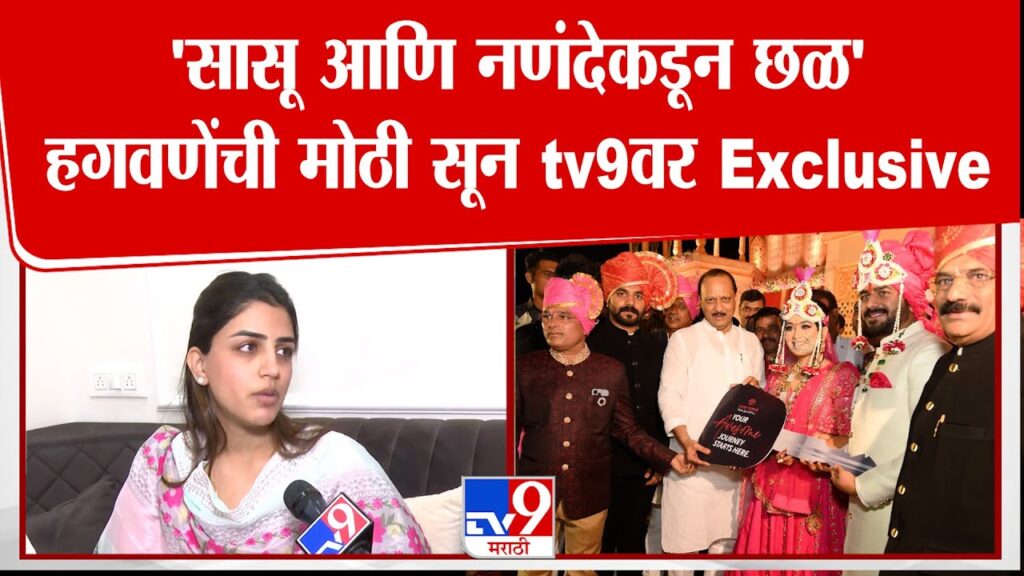
Rajendra Hagawane’s status as an NCP leader (Ajit Pawar faction) brought intense media scrutiny. Amidst public outrage, the NCP expelled Rajendra and his son Sushil. Deputy CM Ajit Pawar asserted an impartial investigation and promised a fast-tracked trial with no political protection. A viral photo of Ajit Pawar at their wedding reception drew flak, fueling perceptions of patronage.
Supriya Sule (NCP-Sharadchandra Pawar) was vocal, demanding a thorough inquiry, highlighting the family’s prominence and questioning societal morals. She revealed skipping a recent Hagawane family function due to prior domestic violence complaints.
The Critical Testimony of Mayuri Jagtap – A Precursor to Tragedy
Mayuri Jagtap, Rajendra Hagawane’s estranged elder daughter-in-law, came forward with accounts of severe torture by the same family. She described her father-in-law allegedly assaulting her: “knocked me, pulled my hair, and ran off with my phone…tore my clothes and humiliated me.”
Recommended Product
Trylo Riza T-Fit Women's Bra – Comfortable Daily Wear
🛒 View on Amazon →As an Amazon Associate, we earn from qualifying purchases. Price and availability may vary.
Mayuri also claimed systemic obstruction: “When I tried to lodge a complaint at Paud police station, I was met with resistance. Political pressure was used…I was even pressured with a false complaint.” She accused police of taking money to “hush up the case.” Her assertion that Vaishnavi’s life might have been saved had her complaints been heeded underscores alleged institutional failure.
Key Developments in the Vaishnavi Agawane Case
Vaishnavi’s husband Shashank, mother-in-law Lata, and sister-in-law Karishma were arrested. Father-in-law Rajendra and brother-in-law Sushil initially absconded but were later arrested while reportedly fleeing.
The custody of Vaishnavi’s 10-month-old son was critical. After alleged threats by an acquaintance holding the child, and high-level interventions, the child was united with Vaishnavi’s parents. The Maharashtra State Commission for Women also intervened. Extensive media coverage maintained public focus. The contrast between the alleged suppression of Mayuri’s complaints and the response after Vaishnavi’s death suggests external scrutiny’s impact. Vaishnavi’s reported subsequent pregnancy highlights the vulnerability of women trapped by abuse and societal pressures.
III. Dowry’s Deadly Grip: A Cultural Scourge with Modern Manifestations
Vaishnavi Agawane’s case is inextricably linked to dowry, a social evil persisting despite legal prohibition.
The Enduring Problem of Dowry – A Perversion of Tradition
Dowry, now a demand by the groom’s family for substantial gifts, is outlawed by the Dowry Prohibition Act, 1961. Historically, “Stridhan” was wealth for the bride’s security. Colonial-era laws curtailing women’s property ownership helped transform this into a coercive demand, commodifying women. This cultural issue perpetuates gender inequality, leading to harassment, violence, and death.
Socio-Economic Impact in Maharashtra and the Maratha Community
Dowry is prevalent in Maharashtra, especially rural areas. The Maratha community, politically influential, isn’t immune. Lavish weddings as status symbols, a broader Indian trend, apply. The Maratha community, with its socio-economic stratifications and historical emphasis on social standing, participates in these pressures.
A Maharashtrian tradition, “Rukhwat,” an elaborate display by the bride’s family, historically showcased skills and status. While not direct dowry, expectations for a grand display can escalate costs, blurring lines with dowry culture.
The fatal consequences are seen in Marathwada. Young women, often from indebted Maratha farming families, have died by suicide. They did this to spare parents marriage expenses and dowry demands. Sheetal Vyankat Vayal’s suicide note explicitly stated this motive. She aimed to lessen my father’s burden and to end the dowry practise in my Maratha community. This highlights the deadly culmination of hardship and coercive pressures. The persistence of dowry, despite reformers like Savitribai Phule championing women’s education, points to a societal failure.
IV. The Law’s Promise vs. Reality: Navigating a Flawed System
India has laws against dowry and marital cruelty, yet Vaishnavi’s story highlights a chasm between law and reality.
Key Legal Provisions Against Dowry and Marital Cruelty
- The Dowry Prohibition Act, 1961:
- Section 2 defines “dowry.”
- Section 3 criminalizes giving/taking dowry (imprisonment ?5 years, fine).
- Section 4 penalizes demanding dowry.
- Section 8 makes offences cognizable, non-bailable, non-compoundable.
- Indian Penal Code (IPC), Section 498A (Cruelty by Husband or Relatives): Addresses cruelty (mental/physical) likely to drive suicide or related to unlawful property demands. Punishment up to 3 years imprisonment and fine. (Source for IPC sections)
- IPC, Section 304B (Dowry Death): Applies if a woman dies unnaturally within seven years of marriage due to dowry-related cruelty. Punishment ?7 years to life imprisonment. (Source for 304B details)
- IPC, Section 306 (Abetment of Suicide): Relevant if harassment leads to suicide. Punishment up to 10 years and fine. (Source for 306 details)
- Indian Evidence Act, Section 113B (Presumption as to dowry death): If cruelty for dowry soon before death is shown, the court presumes dowry death, shifting burden to the accused.
The Statistical Starkness – A Grim Reality Painted by NCRB Data
The National Crime Records Bureau (NCRB) provides crime data. The latest is for 2022 (Source: NCRB ‘Crime in India 2022’).
- Dowry Deaths (Sec 304B IPC):
- All India (2022): 6,450 cases. (Source: NCRB Vol 1, Chapter 5, PDF page 254/CSV line 36 or Rural India Online summary)
- Maharashtra (2022): 180 dowry deaths. ([Source: Same NCRB report, state-wise details])
- Cruelty by Husband or His Relatives (Sec 498A IPC):
- All India (2022): 141,095 cases (31.4% of IPC crimes against women). (Source: NCRB Vol 1, Chapter 5, Table 5.2)
- Maharashtra (2022): 17,881 cases.
- Cases under the Dowry Prohibition Act, 1961:
- All India (2022): 13,479 cases.
- Maharashtra (2022): 760 cases.
Low Conviction Rates: Persistently low. For 2001-2010, only about 32.5% of dowry-related charges resulted in conviction. In 2022, only 2.6% of Dowry Prohibition Act cases were declared false, challenging narratives of widespread misuse.
Table 1: Dowry-Related Crimes in India and Maharashtra (NCRB 2022 Data)
| Crime Category | Relevant Section(s) | All India (2022) | Maharashtra (2022) |
|---|---|---|---|
| Dowry Deaths | Sec. 304B IPC | 6,450 | 180 |
| Cruelty by Husband or his Relatives | Sec. 498A IPC | 141,095 | 17,881 |
| Cases under Dowry Prohibition Act | D.P. Act, 1961 | 13,479 | 760 |
Source: National Crime Records Bureau (NCRB), ‘Crime in India 2022’ Report. Specific tables vary by volume, e.g., Vol 1 for overall, Vol 3 for state-wise details on some crimes. (Access general NCRB data portal)
These figures quantify a pervasive crisis, showing Vaishnavi’s ordeal is part of a widespread pattern.
Systemic Failures and Enduring Challenges in Accessing Justice
- Gap Between Law and Enforcement: Women face systemic barriers.
- Police Apathy and Alleged Corruption: Indifference, hostility, or pressure to “settle” are reported. Mayuri Jagtap’s allegations of police demanding money and political influence exemplify this. Police often exercise unacknowledged discretion adversely affecting justice.
- Political Interference: Influence over police undermines impartiality. The Hagawane case raises these questions. The colonial-era Police Act of 1861 is cited as enabling this.
- “Family Honor” and Societal Stigma: These deter victims. Societal judgment and victim-blaming (where a woman’s character, attire, or behavior is unfairly scrutinized) are common.
- Judicial Delays and Low Conviction Rates: Protracted battles and low conviction rates erode faith. Proving cruelty “soon before death” linked to dowry (for Sec 113B presumption) remains challenging.
- Deficiencies in Legal Awareness and Access to Legal Aid: Many women, especially marginalized ones, lack awareness of legal aid. They also lack the financial means to access it. (Challenges women face in accessing justice).
V. Power, Politics, and Impunity: The Hagawane Case in a Broader Context
Vaishnavi Agawane’s case is amplified by the accused family’s political connections. Rajendra Hagawane’s role in the NCP is central.
Mayuri Jagtap alleged political pressure suppressed her complaint and police took money. The initial absconding of Rajendra and Sushil Hagawane suggests attempts to evade legal process. Mounting public outrage and media pressure likely made evasion untenable. The NCP’s expulsion of the Hagawanes can be seen as reactive damage control.
The Hagawane case illustrates how alleged criminal actions by politically connected individuals become enmeshed with inter-party rivalries. The Sharad Pawar-led NCP (SP) criticized the Ajit Pawar-led faction. While political pressure can compel action, it risks obscuring core issues.
These dynamics reflect broader patterns. Police forces often face political interference. The colonial-era Police Act of 1861 is blamed for perpetuating police accountability to the political executive over the law. The fact that many elected MPs face criminal cases illustrates this nexus. Even agencies like the CBI face accusations of political susceptibility. The Supreme Court has voiced concern, but reforms are slow.
VI. Beyond the Headlines: The Human Cost and Calls for Accountability
The trauma inflicted by such abuse is immense. Vaishnavi, pregnant and tortured, felt trapped. Her parents’ anguish is immeasurable. Her mother’s words on seeing her grandson—”For a moment, it felt like Vaishnavi had come home…then reality hit again”—capture their sorrow. Mayuri Jagtap’s ordeal highlights long-lasting impacts.
Public consciousness, media scrutiny, and political activism are critical. Supriya Sule’s demands for justice resonated. The NCP (SP)’s planned protests amplified calls. Extensive media coverage fueled “mounting public outrage.” Institutional responses highlight this attention’s impact. These include the Maharashtra State Commission for Women’s intervention and the CM’s reported involvement in child custody.
Robust support systems for victims are vital. India has helplines and organizations (e.g., Swayam, Aks Foundation, NARI, One Stop Centres). Yet, underutilization is severe. Only a small percentage of women experiencing spousal violence seek police help, and most seek no help at all. Barriers include lack of awareness, stigma, economic dependence, “family honor,” and mistrust in systems. Access to legal aid is often hampered. More trauma-informed safe spaces and proactive outreach are needed. Vaishnavi’s family—”This was all for money… This should not happen to any other daughter”—and Mayuri’s belief Vaishnavi could have been saved, plead for systemic change.
VII. Conclusion: From Outrage to Action – Forging a Path to a Dowry-Free Future
Vaishnavi Agawane’s death and Mayuri Jagtap’s ordeal represent profound systemic failures. Public outrage must fuel sustained action for comprehensive reform. This requires transformed societal attitudes, unwavering political will, and an empathetic, efficient, fair justice system.
Actionable Recommendations for Systemic Change
- Strengthening Law Enforcement and Judicial Processes:
- Mandatory, unbiased, time-bound investigations for dowry/domestic violence complaints. Penalties for police inaction/complicity.
- Insulate police from political interference via comprehensive reforms.
- Expand effective fast-track courts for crimes against women.
- Enhanced training for police/prosecutors in handling these cases.
- Tackling Detrimental Societal Norms:
- Comprehensive gender sensitization in education, challenging patriarchal mindsets and “family honor.”
- Promote narratives of women’s autonomy, education, economic independence.
- Engage community/religious leaders to denounce dowry and champion gender equality.
- Economic Empowerment and Holistic Support for Women:
- Expand educational/economic opportunities for women, echoing Savitribai Phule’s vision.
- Strengthen and guarantee accessible support services (legal aid, counseling, shelters).
- Simplify processes for women to claim legal rights (property, maintenance).
- Ensuring Political Will and Accountability:
- Zero-tolerance in political parties for members credibly accused of gender-based violence.
- Center survivors’ voices in policymaking and legal reforms.
The path is arduous. It demands more than laws. A societal shift is required. Political commitment is essential. We need a system that protects the vulnerable and holds perpetrators accountable, regardless of power. Vaishnavi’s memory and Mayuri’s courage must impel this transformation. The fight against dowry violence is connected to women’s empowerment. Empowerment includes education, economic independence, and political participation. This fosters a society where women’s lives and dignity are paramount.
