



? Short on Time? Read the 60-Second Summary
Click here for the Quick Read version.
In the early hours after a corporate birthday party in Udaipur, an IT firm’s manager entered a car believing she was being dropped home. Three colleagues were already inside. What followed, according to police records and the survivor’s complaint, was not a lapse of judgment or a private dispute, but an alleged crime shaped by hierarchy, intoxication, and the abuse of workplace authority.
The principal accused is the Chief Executive Officer of the firm. Alongside him are two others who worked at the same company, including a senior woman executive. All were known to the complainant. The case, now under investigation, has drawn national attention not only because of the allegations themselves, but because of what it exposes about corporate power, consent, and safety in white-collar workplaces.
? Connect with NewsPatron
? WhatsApp Channel ? Instagram ? Facebook Page ? Facebook Profile
The Alleged Sequence of Events
According to the FIR and police statements, the incident dates to December 20. A birthday party was organised for the CEO at a hotel in the Shobhapura area of Udaipur. Employees, including the complainant—an IT manager at the firm—were invited. She arrived at the venue around 9 pm, met colleagues, and consumed alcohol during the course of the evening.
The party reportedly concluded around 1:30 am. At that point, the woman was said to be in a condition where she could not safely manage on her own. A senior female executive, later named as an accused, offered to help and drop her home. The complainant was seated in a car in which the CEO and another male colleague—who is the woman executive’s husband—were already present.
What happened next forms the crux of the case. The car allegedly stopped briefly en route, purportedly to purchase cigarettes, before continuing. The complainant has alleged that she was sexually assaulted during the journey, that she was further incapacitated, and that two male colleagues raped her one after the other in the moving vehicle. She has also alleged that the woman executive participated in the assault.
Why the Case Has Resonated So Widely
On X (formerly Twitter), the case has triggered a surge of commentary that goes far beyond the specifics of one crime. Much of the discourse centres on power imbalance—not simply between men and women, but between employers and employees.
Recommended Product
Casio Vintage A168WA Digital Watch – Classic Retro Style
🛒 View on Amazon →As an Amazon Associate, we earn from qualifying purchases. Price and availability may vary.
A dominant theme in online discussions is that consent cannot be meaningfully assessed in isolation from hierarchy. Users point out that when a CEO or senior executive offers a drink, an invitation, or a ride, it does not operate like a peer-to-peer interaction. Refusal, many argue, carries unspoken professional risk: poor appraisals, stalled careers, or informal retaliation.
The Woman Co-Accused and the Collapse of Assumed Safety
Public reaction has been particularly intense around the allegation that a senior woman executive was involved. Many women on X describe this as a deeper betrayal: the presence of a female authority figure often creates a sense of safety at corporate events, especially late at night.
At the same time, feminist voices have pushed back against the idea that women are inherently protective or morally different. A recurring phrase in discourse is that patriarchy operates through systems, not genders, and that proximity to power can override solidarity. The case has thus become a flashpoint for uncomfortable conversations about complicity, not just male violence.
Evidence, Law, and Skepticism
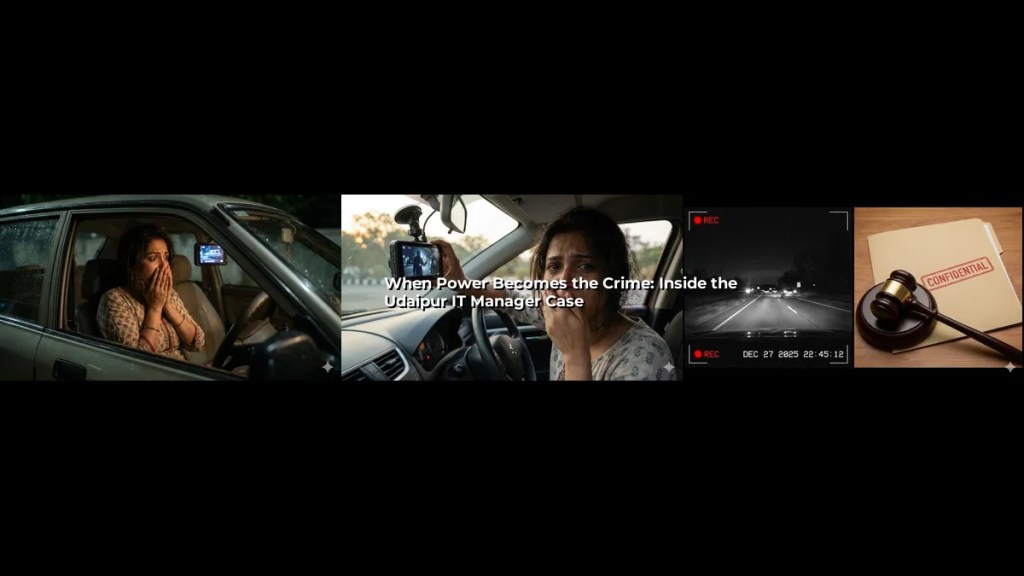
Legal commentators have described the dashcam recording as an unusually strong form of corroboration in a sexual violence case, where evidentiary disputes often dominate trials. Under the Bharatiya Nyaya Sanhita, discussions have centred on provisions relating to gang rape and common intention, including the potential liability of all participants.
Alongside this, there is cynicism. Many users question whether wealth, influence, or prolonged legal processes will dilute accountability despite the evidence. The case has thus come to symbolise both hope—because of technological evidence—and distrust, because of past outcomes in high-profile cases.
A Broader Reckoning
What has emerged online is not only outrage, but recognition. Women working in technology and corporate sectors have shared experiences of pressure to stay late, drink with seniors, or accept rides that felt unsafe but professionally unavoidable. The refrain “this could have been me” appears repeatedly.
The case has also revived demands for reform: independent external POSH committees, stricter employer liability for off-site events, regulated transport policies, and clearer boundaries between work and socialising when power disparities exist.
Conclusion: The Cost of Silence
As the legal machinery begins its work, the Udaipur case stands as a grim milestone in India’s corporate narrative. It has dismantled the comforting illusion that professional success insulates women from violence, or that the presence of other women guarantees safety. Whether this leads to a conviction depends on the courts, but the cultural verdict is already forming: a demand for workplaces where authority stops at the office door, and where “no” does not require a witness to be heard.

[…] Click here to read the detailed report on the Udaipur case. […]