


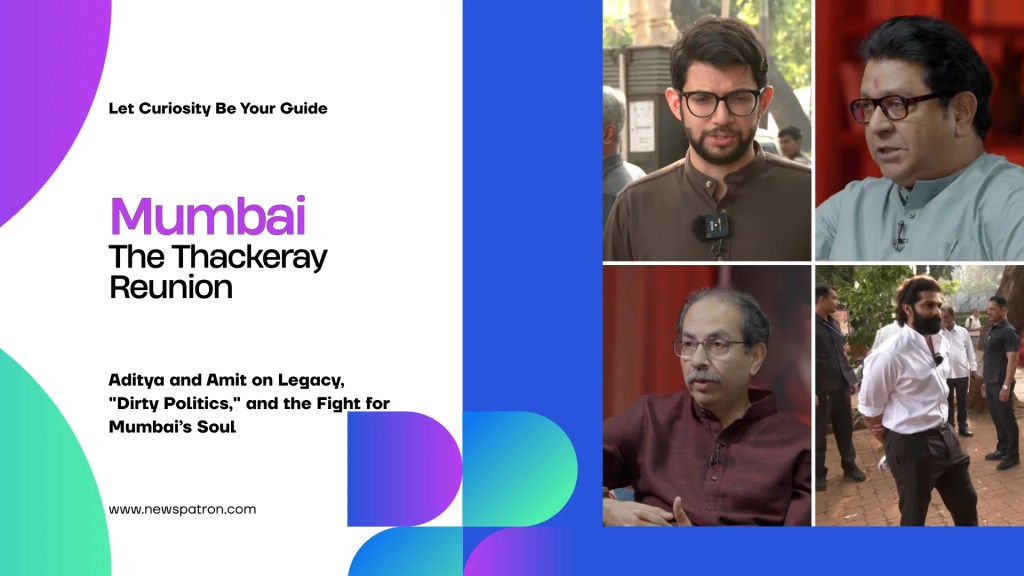

The Thackeray Reunion: Aditya and Amit on Legacy, “Dirty Politics,” and the Fight for Mumbai’s Soul
A Tale of Two Brothers (and Two Fathers)
For two decades, a single question haunted Maharashtra’s political corridors: “When will they come together?” It was a query born of nostalgia for the era of Balasaheb Thackeray, when the Shiv Sena roared as a singular, unified force.
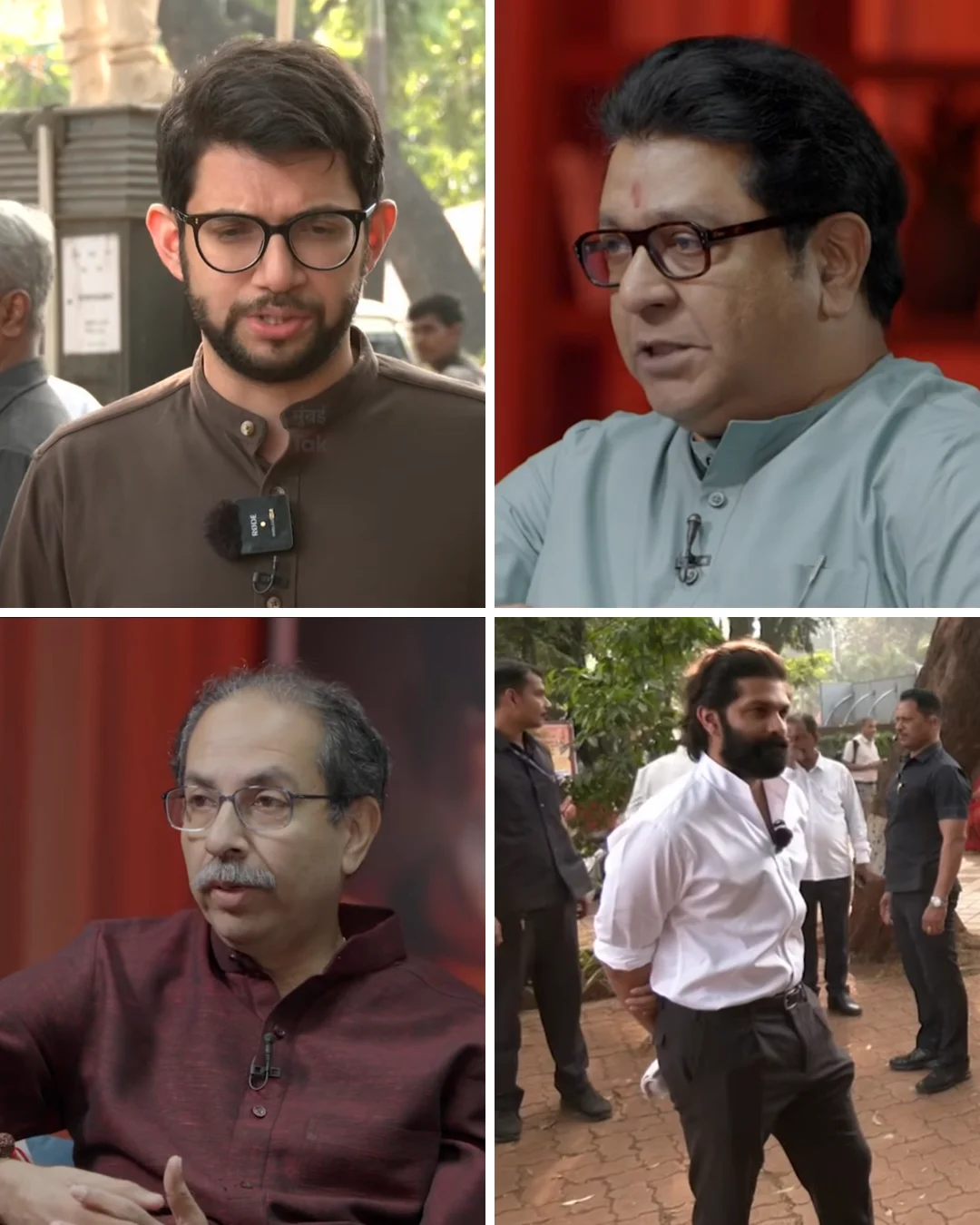
Now, as the state braces for critical municipal elections, the answer has arrived—not with a bang, but with a quiet, strategic alignment involving both generations. While Aditya Thackeray (Shiv Sena – UBT) and Amit Thackeray (MNS) sat down for a rare joint interview with Mumbai Tak at the iconic Shivaji Park, their fathers, Uddhav and Raj Thackeray, also broke their silence in a powerful segment featuring filmmaker Mahesh Manjrekar.
We took a closer look at these candid conversations to understand what this reunion truly means. Is it just political survival, or a genuine attempt to reclaim the narrative of the “Marathi Manoos”?
“Maharashtra is Greater Than Any Dispute”: The Fathers Speak
In a moment that stunned political observers, Raj Thackeray addressed the elephant in the room regarding his decades-long estrangement from his cousin. Referencing his interaction with Mahesh Manjrekar, he stated, “Maharashtra is greater than any dispute or conflict.”
The message was clear: The time for nursing old wounds is over. Raj emphasized that the crisis facing Mumbai, Thane, and the entire Mumbai Metropolitan Region (MMR) is existential. “This is not about our political survival,” he urged. “It is about the existence of the Marathi man in Maharashtra.”
Uddhav Thackeray echoed this sentiment with emotional gravity. He framed their reunion not just as two brothers coming together, but as a signal for the entire Marathi community to unite. “If we keep cooking on separate stoves,” Uddhav warned, using a potent Marathi metaphor, “those who want to break Maharashtra will bake their own bread on our fire.”
Their joint appearance underscored a sobering reality: if they don’t act now, “Maharashtra won’t forgive us.”
The “Yuvraj” Label and the Burden of Legacy
While the fathers set the strategic tone, the sons—Aditya and Amit—tackled the generational expectations. The Mumbai Tak interview began by addressing the “Yuvraj” (Prince) tag. Both cousins were quick to dismantle the notion of entitlement.
Aditya Thackeray criticized the prevailing political culture of excessive hoardings and unearned honorifics like “Saheb” or “Loknete.” He emphasized that respect should be commanded by work, not demanded by lineage. Amit echoed this sentiment, admitting his discomfort when elders touch his feet—a gesture he recognizes as respect directed at his father and grandfather, rather than himself.
Recommended Product
Jockey Women's Hipster Brief – Comfort Fit, Assorted Colors
🛒 View on Amazon →As an Amazon Associate, we earn from qualifying purchases. Price and availability may vary.
Their approach to legacy appeared refreshing. Instead of being crushed by the weight of Balasaheb’s monumental shadow, they seemed to view it as a responsibility to be enjoyed and carried forward.
Why Now? The “Non-Negotiable” Fight for Mumbai
The narrative emerging from both generations suggests the alliance is a response to an “existential threat.”
Aditya Thackeray positioned the reunion as a necessary defense against what he described as the systematic “looting” of Mumbai. He highlighted issues ranging from the transfer of key industries to neighboring states to controversial urban projects like the Dharavi redevelopment involving the Adani Group.
For the Thackerays, certain issues remain non-negotiable. Aditya passionately argued that handing over Mumbai’s prime land to specific corporate interests was unacceptable. Amit reinforced this by noting that despite their parties’ separate paths, they had consistently found themselves on the same side of ecological battles, such as the Aarey forest conservation.
The “Dirty Politics” of Defection
The conversation with the younger Thackerays took a sharper turn when discussing the split within the Shiv Sena. Aditya’s resentment towards Eknath Shinde—whom he disparagingly referred to as “Mindhe”—was palpable.
He recounted the rebellion not just as a political loss but as a deep personal betrayal. He recalled how Shinde, who had been entrusted with significant power and respect by the Thackeray family, turned against them, describing it as a brand of “dirty politics” he had never witnessed before.
The cousins also addressed the recent rhetoric about “finishing the Thackeray Brand.” They ridiculed the rebel faction’s attempts to appropriate the family legacy while simultaneously trying to dismantle the family that built it.
The Personal Equation: “We Speak Daily”
Perhaps the most revealing aspect of the interaction was the personal bond shared by the cousins. Despite the well-documented years of political estrangement between their fathers, Aditya and Amit revealed they are in constant contact.
Aditya shared anecdotes of spending festivals like Diwali and Bhaubeej together, discussing everything from urban planning issues like the Pune Metro to personal milestones. Amit praised Aditya’s studious approach to policy, while Aditya lauded Amit’s practical grasp of ground-level issues and his dedication.
This personal chemistry, backed by the newfound unity of Raj and Uddhav, suggests that this alliance might be more durable than skeptical political pundits predict. It appears built on blood, shared childhood memories, and a mutual disdain for the current trajectory of Maharashtra’s politics.
Conclusion: A New Chapter or a Last Stand?
The Thackeray reunion—across two generations—adds a potent emotional layer to the upcoming elections. It aims to consolidate the Marathi vote bank while offering a counter-narrative to the BJP-Shinde alliance’s pitch of development.
However, challenges remain. Can they translate this “brotherly love” into electoral seats? As Uddhav Thackeray put it, the Marathi people must unite beyond party lines to save the state’s identity.
As they left Shivaji Park, carrying the legacy of Balasaheb and the hopes of a fragmented cadre, one thing was clear: The Thackerays are not going down without a fight. And for the first time in decades, they are fighting together.
Connect with the Editor
I’m always eager to hear your thoughts and perspectives. Share your comments below or connect with me, Kumar, Editor at Newspatron, on your favorite platform:
- For quick updates: Follow me on Instagram, Twitter, YouTube, or Reddit.
- For deeper conversations: My Facebook profile is open to new friends!
- For instant updates: Subscribe to my WhatsApp Channel.
- For professional networking: Let’s connect on LinkedIn.
You can find all the relevant links on the Newspatron homepage too. Looking forward to connecting with you!
