


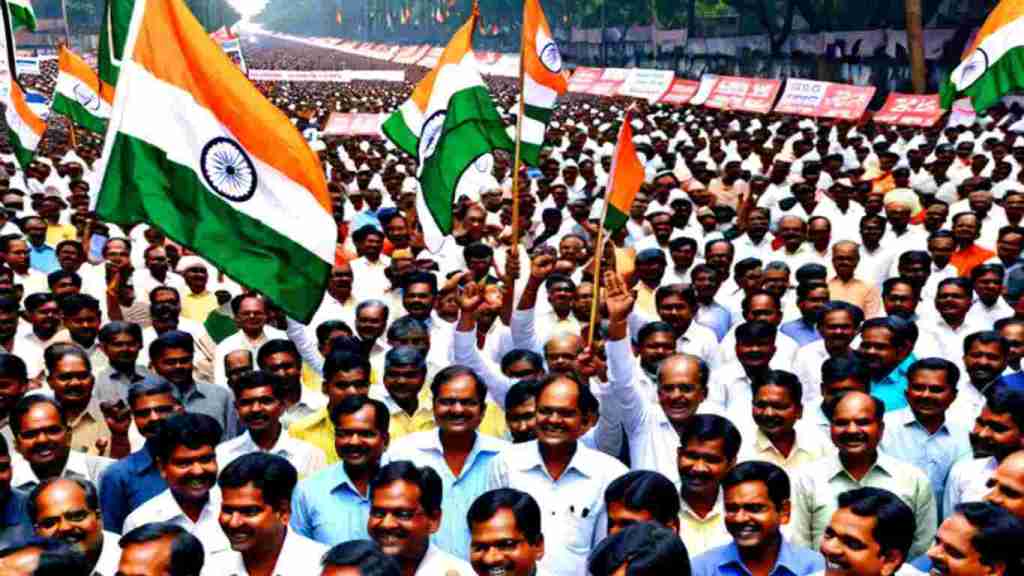

India, the world’s largest democracy, is gearing up for another round of state assembly elections in 2023. Five states, namely Mizoram, Madhya Pradesh, Chhattisgarh, Rajasthan, and Telangana, will go to the polls to elect their representatives and form their governments. These elections are crucial not only for the states themselves, but also for the national political scenario, as they will reflect the mood of the voters and the performance of the ruling and opposition parties. Who will emerge victorious in these crucial elections and what will it mean for India’s future? In this article, we will provide a comparative analysis of the expected outcomes of the elections in these five states. We will examine the factors that may influence the voting behavior and the results, such as the electoral system, the regional issues, the voter turnout, and the campaign strategies. We will also discuss the possible implications and challenges that the newly elected governments may face in their respective states.
editor@newspatron.com
In 2023, the world’s largest democracy is gearing up. It’s already time for another round of State Assembly Elections in India. Five states, namely Mizoram, Madhya Pradesh, Chhattisgarh, Rajasthan, and Telangana, will go to the polls to elect their representatives and form their governments. These elections are crucial not only for the states themselves but also for the national political scenario, as they will reflect the mood of the voters and the performance of the ruling and opposition parties. Who will emerge victorious in these crucial elections and what will it mean for India’s future?
The Battle for Five States: Why They Matter
The five states that are holding elections in 2023 are among the most diverse and populous regions of India. Together, they account for about 20% of India’s population and 15% of its GDP. They also represent different geographical, cultural, and socio-economic realities of the country. Mizoram is a small northeastern state with a predominantly Christian population and a history of insurgency. Madhya Pradesh and Chhattisgarh are two central states with large tribal populations and rich natural resources. Rajasthan is a desert state with a vibrant culture and tourism industry. Telangana is a newly formed state in southern India with a strong regional identity and a booming IT sector.
These states are also important for the balance of power in India, as they are ruled by different parties at present. Mizoram is governed by the Mizo National Front (MNF), which is allied with the Bharatiya Janata Party (BJP), the ruling party at the center. Madhya Pradesh and Chhattisgarh are ruled by the BJP itself, which has been in power in these states for over 15 years. Rajasthan ruled by the Indian National Congress (INC), the main opposition party at the center, which won these states from the BJP in 2018 Telangana is ruled by the Telangana Rashtra Samithi (TRS), which is a regional party that is not allied with either the BJP or the INC but could change its strategy.
The outcome of these elections will have a significant impact on the political fortunes of both the BJP and the INC, as well as their allies and rivals. The BJP, led by Honourable Prime Minister Shri Narendra Modi, will try to retain its stronghold in Madhya Pradesh and Chhattisgarh and regain its lost ground in Rajasthan and Telangana. The INC, led by Shri Rahul Gandhi, will try to defend its turf in Rajasthan and Telangana, and challenge the BJP in Madhya Pradesh and Chhattisgarh. The MNF will try to retain its hold on Mizoram, while other regional parties such as the Telangana Rashtra Samithi (TRS), the Bahujan Samaj Party (BSP), and the Aam Aadmi Party (AAP) will also try to make their presence felt in these elections.
The results of these elections will also have implications for the next general elections in India, which are due in 2024. The performance of the BJP and the INC in these states will indicate their popularity and credibility among the voters across the country. The results will also influence their alliances and strategies for the national polls. Moreover, these elections will also test the leadership and vision of Modi and Gandhi, who are likely to face each other again in 2024.

The Burning Issues: What Voters Care About
The upcoming state assembly elections in India in 2023 are taking place amid a challenging economic and social situation in the country. The COVID-19 pandemic, which hit India hard in 2020 and 2021, has left a lasting impact on the lives and livelihoods of millions of people. The country’s GDP contracted by 7.3% in 2020-21, the worst performance since independence. The unemployment rate rose to 11.9% in May 2021, the highest since June 2020. The inflation rate reached 6.3% in May 2021, breaching the Reserve Bank of India’s target range of 2-6%. The poverty rate increased by 15 percentage points in 2020, pushing an additional 230 million people into poverty.
These economic woes have been compounded by other social and political issues, such as farmer protests, communal violence, corruption scandals, and environmental degradation. The farmers’ agitation against the three farm laws passed by the central government in 2020 has been going on for over a year, with no resolution in sight. The communal clashes in Delhi in February 2020, which claimed over 50 lives and injured hundreds more, exposed the deep-rooted religious polarization and intolerance in the country. The corruption allegations against several politicians and bureaucrats continue to erode the trust and confidence of the public in the institutions of governance. The environmental crisis, manifested by frequent floods, droughts, cyclones, and air pollution, has threatened the health and well-being of millions of people and endangered the natural resources and biodiversity of the country, as is elsewhere in the world.
Recommended Product
Amazon Renewed — Best Deals of the Day
🛒 View on Amazon →As an Amazon Associate, we earn from qualifying purchases. Price and availability may vary.
These are some of the burning issues that are likely to influence the voters’ choices and preferences in the upcoming elections. The voters will evaluate the performance of the incumbent governments and their handling of these issues, as well as the promises and proposals of the opposition parties and their vision for the future. The voters will also consider their own personal experiences and expectations, as well as their identities and affiliations, such as caste, religion, region, gender, and age.
If you are interested in reading more about politics you can Subscribe for free before December 2024 and get updates on the articles as they are published. Here is another article that was published recently. [Subscribe]
Reservation in India: A Critical Analysis
The different parties are trying to woo the voters by highlighting their achievements and criticizing their rivals. They are also offering various schemes and benefits to attract different sections of society, such as farmers, women, youth, minorities, and backward classes. Some of the key promises made by the major parties are:
Some of the common themes that feature in the manifestos of various parties are farm loan waivers, job creation, reservation for backward classes, health insurance, education, women empowerment, infrastructure, electricity, water supply, etc. However, each party also has some specific and unique promises that cater to the needs and aspirations of the local population.
Read External Articles about manifestos
For example, in Madhya Pradesh, the Congress has promised to conduct a caste census and form an IPL team for the state12.
In Telangana, the BRS party has released its manifesto focusing on the welfare of the poor and middle-class people45.
In Mizoram, the Congress has raised the issue of the crisis in Manipur to target the BJP1.
- The BJP has promised to provide free healthcare facilities to double the income of farmers by 2022, to create more jobs and opportunities for youth, to protect national security and sovereignty, and to promote development and good governance.
- The INC has promised to repeal the three farm laws and ensure minimum support price for crops, to provide a monthly income support of Rs. 6000 to poor families, to create 10 crore jobs in five years, to strengthen federalism and democracy, and to protect secularism and social justice.
- The MNF has promised to maintain peace and harmony in Mizoram, to implement socio-economic development programs for all sections of society, to safeguard the rights and interests of Mizoram in relation to inter-state disputes, to promote tourism and culture, and to improve health and education facilities.
- The TRS has promised to continue its flagship schemes such as Rythu Bandhu (farmers’ investment support), Kalyana Lakshmi (financial assistance for marriage), Aasara (pension for old age and disabled), Mission Bhagiratha (drinking water supply), Mission Kakatiya (irrigation development), etc. It has also promised to provide free electricity to farmers up to 250 units per month, to increase reservation for backward classes from 29% to 34%, to implement a new industrial policy with incentives for investors, and to fight for more autonomy and resources from the center.
The voters will have to weigh these promises against their realities and aspirations and decide who deserves their mandate.
Political Leaders
Rajasthan
- Shivraj Singh Chouhan: He is the current Chief Minister of Madhya Pradesh and the leader of Bharatiya Janata Party (BJP) in the state. He has been the Chief Minister since March 2020, after the collapse of the Congress government led by Kamal Nath. He is contesting from the Budhni constituency, which is considered a BJP stronghold12
- Kamal Nath: He is the former Chief Minister of Madhya Pradesh and the leader of Indian National Congress (INC) in the state. He was the Chief Minister from December 2018 to March 2020, when he resigned after losing the majority in the assembly due to defection of 22 Congress MLAs to BJP. He is contesting from the Chhindwara constituency, which is his home turf31
- Jyotiraditya Scindia: He is a Rajya Sabha MP and a BJP leader in Madhya Pradesh. He was formerly a Congress leader and a close aide of Kamal Nath, but he switched sides to BJP in March 2020 along with 22 Congress MLAs, triggering the fall of the Congress government. He is seen as a potential chief ministerial candidate of BJP in the future1
- Digvijaya Singh: He is a Rajya Sabha MP and a senior Congress leader in Madhya Pradesh. He was the Chief Minister of Madhya Pradesh from 1993 to 2003, when he was defeated by Shivraj Singh Chouhan. He is considered a mentor of Kamal Nath and a rival of Jyotiraditya Scindia. His son Jaivardhan Singh is contesting from Raghogarh constituency31
- Vikram Mastal: He is a television actor and a Congress candidate in Madhya Pradesh. He is contesting against Shivraj Singh Chouhan from the Budhni constituency. He is known for playing the role of Hanuman in the popular TV show Ramayan. He is seen as a surprise choice of Congress to challenge Chouhan41
Chhattisgarh
- Bhupesh Baghel: He is the current Chief Minister of Chhattisgarh and the president of the Congress party in the state. He is a former journalist and a veteran politician who has been active in Chhattisgarh politics since its formation in 2000. He is known for his welfare and development schemes, such as providing free rice, electricity, and health insurance to the poor, waiving farm loans, and increasing the minimum wages of workers. He is also known for his tough stance against the Maoist insurgency, which has plagued the state for decades.
- Raman Singh: He is the former Chief Minister of Chhattisgarh and a senior leader of the BJP in the state. He is a medical doctor and a three-time chief minister who ruled the state from 2003 to 2018. He is known for his pro-industry and pro-infrastructure policies, such as attracting investments, building roads, and providing 24-hour power supply. He is also known for his flagship schemes, such as providing subsidized salt, sugar, and bicycles to the poor, and distributing laptops and smartphones to students.
- Ajit Jogi: He is the founder and chief patron of the Janta Congress Chhattisgarh (JCC), a regional party that was formed in 2016 after he broke away from the Congress. He is also the first Chief Minister of Chhattisgarh, who served from 2000 to 2003. He is known for his populist and opportunistic politics, as well as his controversial identity and caste claims. He is currently paralyzed and bedridden after suffering a cardiac arrest in 2020.
Rajasthan
- Ashok Gehlot: He is the current Chief Minister of Rajasthan and one of the most experienced and respected leaders of the Congress party in India. He has served as the Chief Minister of Rajasthan for three terms, in 1998-2003, 2008-2013, and 2018-present. He is known for his grassroots and inclusive approach, as well as his initiatives for social welfare and development, such as providing free medicines, pensions, scholarships, and jobs to various sections of society. He is also known for his political acumen and survival skills, as he managed to save his government from a rebellion by his deputy Sachin Pilot in 2020.
- Sachin Pilot: He is the former Deputy Chief Minister of Rajasthan and the president of the Congress party in the state. He is a young and dynamic leader who belongs to the influential Gujjar community in Rajasthan. He is known for his modern and progressive outlook, as well as his achievements in improving the infrastructure, tourism, and investment climate in Rajasthan. He is also known for his ambition and dissatisfaction with Ashok Gehlot’s leadership, which led him to revolt against him in 2020, but later reconciled after intervention by Rahul Gandhi.
- Vasundhara Raje: She is the former Chief Minister of Rajasthan and a leader of the BJP in the state. She is a member of the erstwhile royal family of Dholpur and a close relative of Madhya Pradesh’s Scindia family. She is known for her charismatic and authoritative style, as well as her schemes for women empowerment and rural development, such as Bhamashah Yojana (direct benefit transfer), Mukhyamantri Jal Swavlamban Abhiyan (water conservation), and Annapurna Rasoi Yojana (subsidized meals). She is also known for her strained relations with some of her party colleagues and central leaders.
Telangana
- K Chandrasekhar Rao: He is the current Chief Minister of Telangana and the president of the Telangana Rashtra Samithi (TRS). He is the founder and chief architect of the Telangana movement, which led to the creation of India’s youngest state in 2014. He is known for his charismatic and populist politics, as well as his schemes for regional development and welfare, such as KCR Kit (maternal care), Kalyana Lakshmi (marriage assistance), Rythu Bandhu (farmers’ support), Mission Bhagiratha (drinking water supply), etc. He is also known for his autocratic and dynastic tendencies, as he has appointed several of his family members to key positions in his party and government.
- K T Rama Rao: He is the son of K Chandrasekhar Rao and a minister in his cabinet. He is also the working president of the TRS and a popular leader among the youth and urban voters. He is known for his dynamic and visionary leadership, as well as his achievements in transforming Hyderabad into a global IT hub and attracting investments from various sectors. He is also known for his cordial relations with other parties and leaders, both at the state and national level.
- N Chandrababu Naidu: He is the former Chief Minister of Andhra Pradesh and the president of the Telugu Desam Party (TDP). He is one of the most experienced and influential leaders in southern India, having served as the Chief Minister of Andhra Pradesh for three terms, in 1995-2004 and 2014-2019. He is known for his visionary and reformist policies, such as developing Hyderabad into a cyber city, implementing e-governance, and launching various welfare schemes. He is also known for his political opportunism and flip-flops, as he has switched alliances and ideologies several times in his career.
- Asaduddin Owaisi: He is the president of the All India Majlis-e-Ittehadul Muslimeen (AIMIM), a Muslim-centric party that has a strong base in Hyderabad and other parts of Telangana. He is also a member of the Lok Sabha, the lower house of the Indian Parliament, representing the Hyderabad constituency. He is known for his fiery and controversial speeches, as well as his advocacy for the rights and interests of the Muslim community. He is also known for his expansionist ambitions, as he has tried to contest elections in other states such as Bihar, Uttar Pradesh, and West Bengal.
- Bandi Sanjay Kumar: He is the president of the BJP in Telangana and a member of the Lok Sabha, representing the Karimnagar constituency. He is a young and aggressive leader who has been leading the BJP’s campaign to emerge as a viable alternative to the TRS in Telangana. He is known for his hardline and nationalist views, as well as his criticism of the TRS and the AIMIM for their alleged appeasement of minorities. He is also known for his involvement in various controversies, such as making derogatory remarks against KCR and Owaisi, and calling for surgical strikes on Pakistan.
These are some of the candidates who are relevant with regards to the upcoming state assembly elections in India in 2023. They will try to woo the voters with their charisma, ideology, and agenda, while also facing challenges from their rivals and critics.
Honourable Prime Minister Shri Modi
Prime Minister Shri Narendra Modi is one of the star campaigners for the BJP in the upcoming assembly elections in various states. He is expected to address several rallies and roadshows across the states to woo the voters and boost the morale of the party workers. Here are some of the ways he will affect the campaign and help the political fortunes of the party:
- He will highlight the achievements of his government at the Centre and the BJP-led governments in the states, such as the COVID-19 vaccination drive, the welfare schemes for the poor, the infrastructure projects, the defence and security measures, and the foreign policy initiatives. He will also contrast these with the alleged failures and corruption of the opposition parties, especially the Congress123
- He will appeal to the nationalist sentiments of the people and project himself as a strong and decisive leader who can protect the country from external and internal threats. He will also invoke his personal popularity and charisma to connect with the masses and mobilize them in favour of the BJP145
- He will target specific regions and communities in each state and tailor his speeches according to their local issues and aspirations. He will also use local languages and dialects to communicate with them effectively. He will also showcase the diversity and inclusiveness of the BJP by highlighting its candidates from various backgrounds and sections of society126
- He will leverage his social media presence and digital platforms to reach out to a wider audience, especially the young and urban voters who are more tech-savvy and aspirational. He will also use innovative methods such as holograms, 3D projections, virtual rallies, etc., to create a buzz and attract attention1
- He will coordinate with other senior leaders of the BJP, such as Amit Shah, Rajnath Singh, J.P. Nadda, etc., to ensure a smooth and effective campaign strategy and execution. He will also seek support from allies and regional parties to form a broad coalition and expand the BJP’s base12
These are some of the ways Prime Minister Narendra Modi will influence the campaign and help the BJP’s prospects in the upcoming assembly elections. However, he will also face challenges from the opposition parties, who will try to counter his narrative and expose his shortcomings. The final outcome will depend on various factors, such as voter turnout, anti-incumbency, caste equations, local dynamics, etc.
Here are some remarkable achievements of India and articles for you to read on this website
How India Became a Global Leader in Telecom
Vande Bharat Sleeper: India’s First Indigenous Sleeper-Class Semi-High Speed Train
Foreign Funding in India: Unraveling the Web of Transparency and Security
How Narendra Modi is a Great Leader Who Fulfills the Dreams of India’s Great Leaders
Unveiling the Power of Helium 3 : The Future of Energy
Significance of G20 2023 and Bharatmandapam: Shaping a Global Future
The voters will have to judge them on their merits and demerits and choose their representatives wisely.
Conclusion
The upcoming state assembly elections in India in 2023 are shaping up to be a close contest between the BJP and the INC, with inflation and unemployment being the key issues for voters. The elections will also be a test of the leadership and vision of Honourable Prime Minister Shri Modi and Shri Rahul Gandhi, who are likely to face each other again in 2024. The outcome of these elections will have a significant impact on the political landscape and the future of India.
Based on the current trends and surveys, or even exit polls it is difficult to predict the outcome of these elections with certainty. However, some possible scenarios are:
Possibilities
- The BJP retains its stronghold in Madhya Pradesh and Chhattisgarh and regains its lost ground in Rajasthan and Telangana. The MNF retains its hold on Mizoram. The BJP emerges as the clear winner in these elections, boosting its confidence and momentum for 2024.
- The INC defends its turf in Rajasthan and with BRS retaining Telangana, BJP is challenged in Madhya Pradesh and Chhattisgarh. The MNF retains its hold on Mizoram. The INC puts up a strong fight in these elections, denting the BJP’s image and credibility for 2024.
- The regional parties, such as the TRS, the BSP, the AAP, and the ZPM, play a spoiler role in these elections, cutting into the vote share of both the BJP and the INC. The MNF retains its hold on Mizoram. The elections result in a hung or fractured verdict in some states, creating uncertainty and instability for 2024.
These are some of the possible scenarios that could unfold in these elections. However, the final outcome will depend on various factors, such as voter turnout, campaign strategies, media coverage, opinion polls, exit polls, etc.
The voters will have to make their choice based on their own judgment and wisdom without being influenced by any of the factors.
Additional Sections
You could also include additional sections in your article, such as:
A History of State Assembly Elections in India
State assembly elections are held every five years in India, unless they are dissolved earlier due to various reasons, such as no-confidence motions, defections, or emergencies. State assembly elections are conducted by the Election Commission of India (ECI), an independent constitutional body that is responsible for ensuring free and fair elections in India. The ECI decides the dates, phases, and schedules of the elections, as well as the electoral rolls, candidates’ nominations, polling booths, security arrangements, etc.
The first state assembly elections in India were held in 1952, along with the first general elections. Since then, there have been several state assembly elections in different states at different times. Some of the most notable state assembly elections in India’s history are:
- The 1967 state assembly elections, which marked the end of Congress dominance and the rise of regional parties and coalitions.
- The 1977 state assembly elections, which followed the Emergency imposed by Indira Gandhi and saw a massive anti-Congress wave in favor of the Janata Party.
- The 1984 state assembly elections, which followed the assassination of Indira Gandhi and saw a massive pro-Congress wave in favor of Rajiv Gandhi.
- The 1993 state assembly elections, which followed the demolition of Babri Masjid and saw a rise of communal polarization and violence.
- The 2002 state assembly elections, which followed the Gujarat riots and saw a consolidation of Hindu nationalism and Modi’s emergence as a national leader.
- The 2013 state assembly elections, which preceded the 2014 general elections and saw a sweeping victory for Modi-led BJP in four out of five states.
- The 2018 state assembly elections, which preceded the 2019 general elections and saw a revival of Congress fortunes in three out of five states.
These are some of the state assembly elections that have shaped India’s political history and culture.
An Analysis of the Strengths and Weaknesses of the Major Parties
The upcoming state assembly elections in India in 2023 will witness fierce competition between the major parties, such as the BJP, the INC, the MNF, the TRS, and others. Each of these parties has its strengths and weaknesses, which will determine their chances of winning or losing in these elections. Here is an analysis of some of the key factors that will influence their performance:
The BJP
The BJP is the ruling party at the centre and in two out of five states that are holding elections in 2023. It is also the main opposition party in two other states. The BJP has several advantages that could help it win these elections, such as:
- The popularity and charisma of Prime Minister Narendra Modi, who is widely seen as a strong and decisive leader who can deliver development and security to the country.
- The organizational and financial strength of the party, which has a vast network of workers and supporters across the country, as well as access to ample resources and media coverage.
- The ideological and nationalist appeal of the party, which has a loyal and committed base of voters who support its vision of a Hindu Rashtra (Hindu nation) and its stance on issues such as Kashmir, Pakistan, China, etc.
- The alliance and coalition strategy of the party, has managed to forge partnerships with various regional and smaller parties, such as the MNF in Mizoram, to expand its reach and influence.
However, the BJP also faces several challenges that could hamper its prospects in these elections, such as:
- The anti-incumbency and dissatisfaction factor, could affect its performance in Madhya Pradesh and Chhattisgarh, where it has been ruling for over 15 years, as well as in Rajasthan and Telangana, where it lost power in 2018.
- The economic and social crisis, which has hit the country hard due to the COVID-19 pandemic and its aftermath, resulting in loss of lives, livelihoods, incomes, and opportunities for millions of people.
- The farmer protests and backlash, which have been going on for over a year against the three farm laws passed by the central government in 2020, which are seen by many farmers as anti-farmer and pro-corporate.
- The communal and caste polarization and violence, which have increased in recent years due to various incidents and issues for example the CAA-NRC controversy.
The INC
The INC is the main opposition party at the center and in two out of five states that are holding elections in 2023. It is also the ruling party in two other states. The INC has some advantages that could help it win these elections, such as:
- The revival and resurgence factor could boost its morale and confidence after its victories in Rajasthan in 2018 as well as its improved election performance in Karnataka.
- The “traditional” welfare and development agenda could attract voters looking for relief and support from the government amid the economic and social distress caused by the pandemic and other factors.
- The “secular” and inclusive approach, could appeal to voters who are concerned and who value the diversity and pluralism of India.
- The leadership and charisma of Shri Rahul Gandhi, who is the de facto leader of the Congress party and the main challenger to Shri Modi. He is known for his youthful and energetic style, various antiques, as well as his attempts to reform and revitalize the party.
However, the INC also faces several challenges that could hamper its prospects in these elections, such as:
- The lack of organizational and financial strength could affect its ability to mobilize and motivate its workers and supporters across the country, as well as to counter the propaganda and influence of the BJP and its allies.
- The internal conflicts and factionalism could undermine its unity and stability, as well as its credibility and image among the voters. The recent rebellion by Sachin Pilot in Rajasthan, and the dissent by some senior leaders such as Kapil Sibal and Shashi Tharoor, are examples of this problem.
- The ideological and strategic confusion could make it difficult for the party to articulate a clear and coherent vision and agenda for the country, as well as to position itself as a viable alternative to the BJP. The party has been accused of being soft on issues such as terrorism, corruption, and nationalism, as well as of appeasing minorities and neglecting the majority.
Read articles on related topics
Uncovering the Truth Behind Minority Benefit Scams in the Great Indian Nation
Preserving India’s Legacy Protecting Banke Bihari Temple’s Property Rights
The MNF
The MNF is the ruling party in Mizoram and an ally of the BJP at the centre. It is also a member of the North-East Democratic Alliance (NEDA), a coalition of regional parties in northeastern India led by the BJP. The MNF has some advantages that could help it win the elections in Mizoram, such as:
- The incumbency and popularity factor could work in its favour, as it has been delivering good governance and development in Mizoram since 2018 when it ousted the Congress government after 10 years. The party has also been maintaining peace and harmony in Mizoram, which has a history of insurgency and violence.
- The regional and nationalist appeal could attract voters who support its demand for greater autonomy and protection for Mizoram within India. The party has also been opposing the CAA, which it considers a threat to Mizoram’s identity and culture.
- The alliance and coalition strategy could help it gain support from other parties and groups in Mizoram, as well as from the centre. The party has been maintaining cordial relations with both the BJP and the INC, as well as with other regional parties in northeastern India.
However, the MNF also faces some challenges that could hamper its prospects in Mizoram, such as:
- The anti-incumbency and dissatisfaction factor, could affect its performance in some areas where it has failed to meet the expectations of the people. Some of the issues that have been raised against the party are corruption, nepotism, unemployment, drug abuse, etc.
- The competition and rivalry from other parties, such as the Congress, which is trying to regain its lost ground in Mizoram, and the ZPM, which is trying to emerge as a third force in Mizoram politics. These parties have been criticizing the MNF for its alleged failures and shortcomings.
- The ideological and strategic dilemma, which could make it difficult for the party to balance its interests and commitments with both the BJP and the INC. The party has been facing pressure from both sides to either join or quit their respective alliances.
The BRS or TRS
The TRS or BRS is the ruling party in Telangana and a regional party that is not been clear in its “alignment part” its neither allied with the BJP or the INC. It is also the party that led the movement for the creation of Telangana as a separate state from Andhra Pradesh in 2014. The BRS has some advantages that could help it win the elections in Telangana, such as:
- The incumbency and popularity factor could work in its favour, as it has been delivering good governance and development in Telangana since 2014 when it formed the first government of the new state. The party has also been implementing various flagship schemes for the welfare and empowerment of various sections of society, such as farmers, women, youth, minorities, and backward classes.
- The regional and identity appeal could attract voters who support its demand for more autonomy and resources for Telangana from the centre. The party has also been championing the cause of Telangana’s culture and language, and celebrating its history and achievements.
- The leadership and charisma of K Chandrasekhar Rao, who is the current Chief Minister of Telangana and the president of the BRS. He is the founder and chief architect of the Telangana movement and one of the most popular and influential leaders in southern India. He is known for his charismatic and populist politics, as well as his vision and ambition for Telangana.
However, the BRS also faces some challenges that could hamper its prospects in Telangana, such as:
- The anti-incumbency and dissatisfaction factor, could affect its performance in some areas where it has failed to meet the expectations of the people. Some of the issues that have been raised against the party are corruption, nepotism, unemployment, water scarcity, power crisis, etc.
- The competition and rivalry from other parties, such as the BJP, which is trying to emerge as a strong contender in Telangana by playing on its nationalist and Hindu agenda, and the INC, which is trying to revive its lost ground in Telangana by playing on its secular and inclusive agenda. These parties have been criticizing the BRS for its alleged failures and shortcomings.
- The ideological and strategic dilemma, which could make it difficult for the party to balance its interests and commitments with both the BJP and the INC. The party has been maintaining a friendly but cautious relationship with both sides, but it may have to choose one or the other in case of a hung or fractured verdict.
/
How to Participate in the Elections
The upcoming state assembly elections in India in 2023 are an opportunity for the citizens of these states to exercise their democratic rights and responsibilities, and to choose their representatives and governments. However, to participate in these elections, the citizens need to fulfill some eligibility criteria and follow some procedures. Here are some of the steps that the citizens need to take to participate in these elections:
- Check your voter eligibility and registration status. To be eligible to vote in these elections, you need to be an Indian citizen, at least 18 years old, and a resident of the state where you want to vote. You also need to have a valid voter ID card, which is issued by the Election Commission of India (ECI). You can check your voter eligibility and registration status online on the ECI website or on the Voter Helpline app. You can also call the toll-free number 1950 or visit your nearest electoral office for assistance.
- Update or enroll your name in the electoral roll. The electoral roll is a list of all the registered voters in a constituency. If your name is not in the electoral roll, you will not be able to vote in these elections. You can update or enroll your name in the electoral roll online on the ECI website or on the Voter Helpline app. You can also fill out and submit Form 6 at your nearest electoral office or common service center. You will need to provide some documents as proof of your identity, age, and address, such as an Aadhaar card, passport, driving license, etc.
- Know your polling station and booth number. The polling station is the place where you have to go to cast your vote on the day of the election. The booth number is the specific number assigned to you within the polling station. You can find your polling station and booth number online on the ECI website or on the Voter Helpline app. You can also call the toll-free number 1950 or visit your nearest electoral office for assistance.
- Know your candidates and parties. The candidates are the individuals who are contesting for a seat in the state assembly from a constituency. The parties are the political organizations that support or nominate these candidates. You can find out more about the candidates and parties online on their websites, social media platforms, manifestos, etc. You can also watch their debates, interviews, rallies, etc. on various media channels. You should compare and contrast their policies, promises, achievements, and backgrounds, and make an informed choice based on your own judgment and wisdom.
- Cast your vote on the day of the election. On the day of the election, you should go to your polling station with your voter ID card and any other identity proof. You should follow
You should follow the instructions and guidelines given by the election officials and staff at the polling station. You should also maintain social distancing and wear a mask to prevent the spread of communicable a disease. You should press the button on the electronic voting machine (EVM) corresponding to the symbol of the candidate or party of your choice. You should also verify your vote on the voter-verifiable paper audit trail (VVPAT) machine, which will display a slip with your vote for seven seconds. You should then exit the polling station and wait for the results to be announced.
The Impact of the Elections on India’s Politics and Future
The state assembly elections in India in 2023 will have a significant impact on India’s politics and future, as they will determine the balance of power and influence between the BJP and the INC, as well as between the centre and the states. The elections will also reflect the aspirations and expectations of the people of these states and the country, as well as their satisfaction or dissatisfaction with the performance and policies of the governments. The elections will also influence the course and direction of India’s development and democracy, as well as its relations with other countries and regions. Some of the possible impacts of these elections are:
- The BJP could consolidate its position as the dominant party in India, if it wins most of these states, especially Rajasthan and Telangana, where it lost power in 2018. The BJP could also gain more confidence and momentum for the 2024 general elections, where it will face Shri Modi’s third term bid. The BJP could also pursue its ideological and nationalist agenda more aggressively, such as implementing the CAA-NRC, building the Ram temple, and other economic agenda.
- The INC could revive its fortunes as the main opposition party in India, if it wins some of these states, especially Madhya Pradesh and Chhattisgarh, where it lost power in 2020. The INC could also dent the BJP’s image and credibility, by exposing its failures and shortcomings on various issues such as economics, farmer protests, communal violence, etc. The INC could also present itself as a viable alternative to the BJP, by offering a secular and inclusive vision for India.
- The regional parties could play a crucial role in these elections, by either supporting or opposing the BJP or the INC in some states. The regional parties could also assert their regional and identity interests more strongly, by demanding more autonomy and resources from the centre. The regional parties could also form alliances or coalitions with other parties or groups, to expand their reach and influence in other states or regions.
- The people of these states and the country could express their voice and choice in these elections, by voting for or against the candidates and parties that represent their interests and aspirations. The people could also hold their governments accountable for their actions and promises, by rewarding or punishing them based on their performance and policies. The people could also participate in the democratic process and governance of these states and the country, by engaging in various forms of civic and political activism, such as joining or forming parties, movements, or groups, organizing or attending rallies, protests, or campaigns, writing or signing petitions, letters, or articles, etc. The people could also influence the public opinion and discourse on various issues and policies, by using various media platforms and channels, such as newspapers, magazines, radio, television, social media, blogs, podcasts, etc. The people could also educate themselves and others about their rights and duties as citizens of India, by reading or watching various sources of information and knowledge, such as books, journals, reports, documentaries, etc.
Conclusion
- The state assembly elections in India in 2023 are a crucial and decisive event for the future of India’s politics and democracy. They will determine the fate and fortunes of various parties and leaders, as well as the aspirations and expectations of millions of people. They will also influence the course and direction of India’s development and governance, as well as its relations with other countries and regions.
- The elections will be a close contest between the BJP and the INC, with inflation and unemployment being the key issues for voters. The elections will also be a test of the leadership and vision of Modi and Gandhi, who are likely to face each other again in 2024. The outcome of these elections will depend on various factors, such as voter turnout, campaign strategies, media coverage, opinion polls, exit polls, etc.
- The voters will have to weigh the pros and cons of each candidate and party, and make their choice based on their own judgment and wisdom. The voters will also have to participate in the democratic process and governance of their states and the country, by engaging in various forms of civic and political activism, education, and discourse. The voters will also have to hold their governments accountable for their actions and promises, by rewarding or punishing them based on their performance and policies.
- The state assembly elections in India in 2023 are an opportunity for the citizens of these states to exercise their democratic rights and responsibilities, and to choose their representatives and governments. The elections are also a challenge for the parties and leaders to prove their worth and credibility to the people. The elections are also the responsibility for the media and the civil society to ensure free and fair elections and to inform and educate the people about their options and implications.
- The state assembly elections in India in 2023 are a momentous occasion for India’s politics and future. They will shape the destiny of India for years to come. They will also reflect the voice and choice of India’s people.
References:
-
- [1]: Election Commission of India. (2023). Statistical Reports of Assembly Elections.
- [2]: Chhibber, P., & Verma, R. K. (2018). Ideology and identity: The changing party systems of India. Oxford University Press.
- [3]: Sridharan, E. (2014). Coalition politics in India: selected issues at the centre and the states. Springer.
- [4]: Palshikar, S., Kumar, S., & Lodha, S. (Eds.). (2019). Electoral politics in India: The Resurgence of the Bharatiya Janata Party. Routledge.
- [5]: Chandra, K., & Wilkinson, S. I. (2008). Measuring the effect of “ethnicity”. Comparative Political Studies, 41(4-5), 515-563.
