




THIS IS NOT AN ADVERTISEMENT: The “Proof of the Pudding”
Before diving into the legal framework, let’s look at a real-world example operating openly. Below is a translated flyer for a service running multiple daily trips across major cities.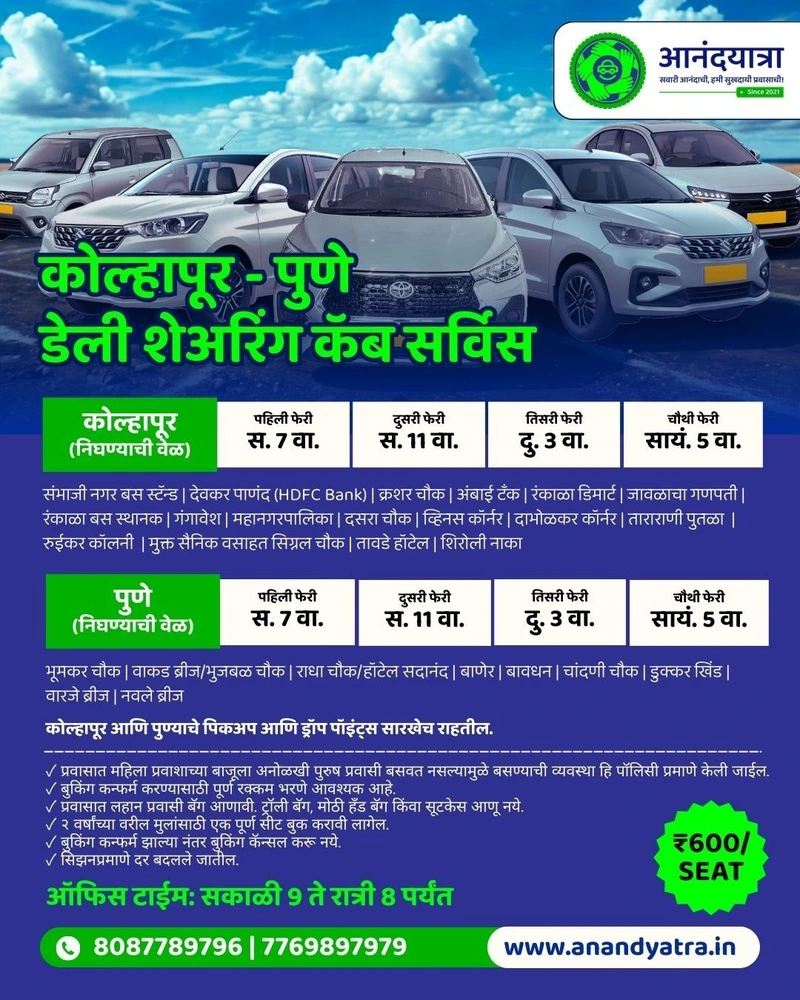
English Translation of the Flyer:
Anandyatra: Affordable Anandyatra, Excellent Safe Travel (Since 2021)Kolhapur – Pune | Daily Sharing Cab Service
- Departures (Both Cities): 7:00 AM, 11:00 AM, 3:00 PM, 5:00 PM
- Pickup Points: Available throughout Kolhapur and Pune, including major junctions like Baner, Wakad, and Dasara Chowk. Home delivery service available.
- Safety & Comfort: CCTV cameras, GPS tracking, insurance protection, separate seating for women, air-conditioned, sanitized vehicles, and trained drivers.
- Fare: ?600 per seat.
In India’s vast and uneven transport landscape, shared cabs have emerged as a practical solution for intercity commuters. They offer a lifeline on routes with limited bus options or where private taxis are prohibitively expensive. As seen in the flyer above, they promise convenience and safety while filling critical gaps in public transport. Yet, this model operates in a regulatory grey area. They blend elements of personalized taxis with multi-passenger, multi-stop pickups. They are not fully illegal, but rarely fully compliant. This creates a silent revolution—valued by users, quietly tolerated by authorities, but vulnerable to enforcement whims.
The Legal Framework Governing Shared Cabs
India’s passenger transport is primarily governed by the Motor Vehicles Act, 1988 (MVA), which separates vehicles into two main categories:- Contract Carriage: Hired for a single contract (point A to B) at a fixed rate, without picking up unrelated passengers en route.
- Stage Carriage: Vehicles carrying multiple passengers at separate fares, with stops for pickups/drop-offs along fixed routes (like buses). Permits are stringent.
Grey Areas and Risks
- Insurance Gaps: Advertised “passenger insurance” may not cover commercial multi-passenger use if the permit is violated.
- Interstate Inconsistencies: Maharashtra may tolerate these services, while neighboring states might seize vehicles.
- Safety Concerns: Variable driver training and multi-stop routes increase accident risks on highways.
Why Authorities Tolerate It
They fill massive demand-supply gaps. Intercity buses are often overcrowded, and private taxis cost 3-5 times more. Furthermore, these operators pay road taxes and GST, generating local employment. For authorities, cracking down would disrupt affordable mobility for middle and lower-income groups. Their tolerance isn’t endorsement; it’s pragmatic inaction.Toward Uniform Regulation?
Shared cabs represent grassroots innovation meeting unmet needs. They thrive quietly because they deliver value where formal systems fall short. Uniform national guidelines—perhaps a low-burden “shared IPT” permit category—could formalize them, enforce safety standards, and integrate with digital infrastructure without destroying their affordability. Disclaimer: This is informational analysis based on public sources and does not constitute legal advice. Consult transport authorities for specific cases.?? Let’s Connect: I’m Kumar, Editor at Newspatron.
Join Facebook Group | X/Twitter | YouTube