




Sources and references at the end of this post ?
Saharsa, Bihar: Reels On The Highway
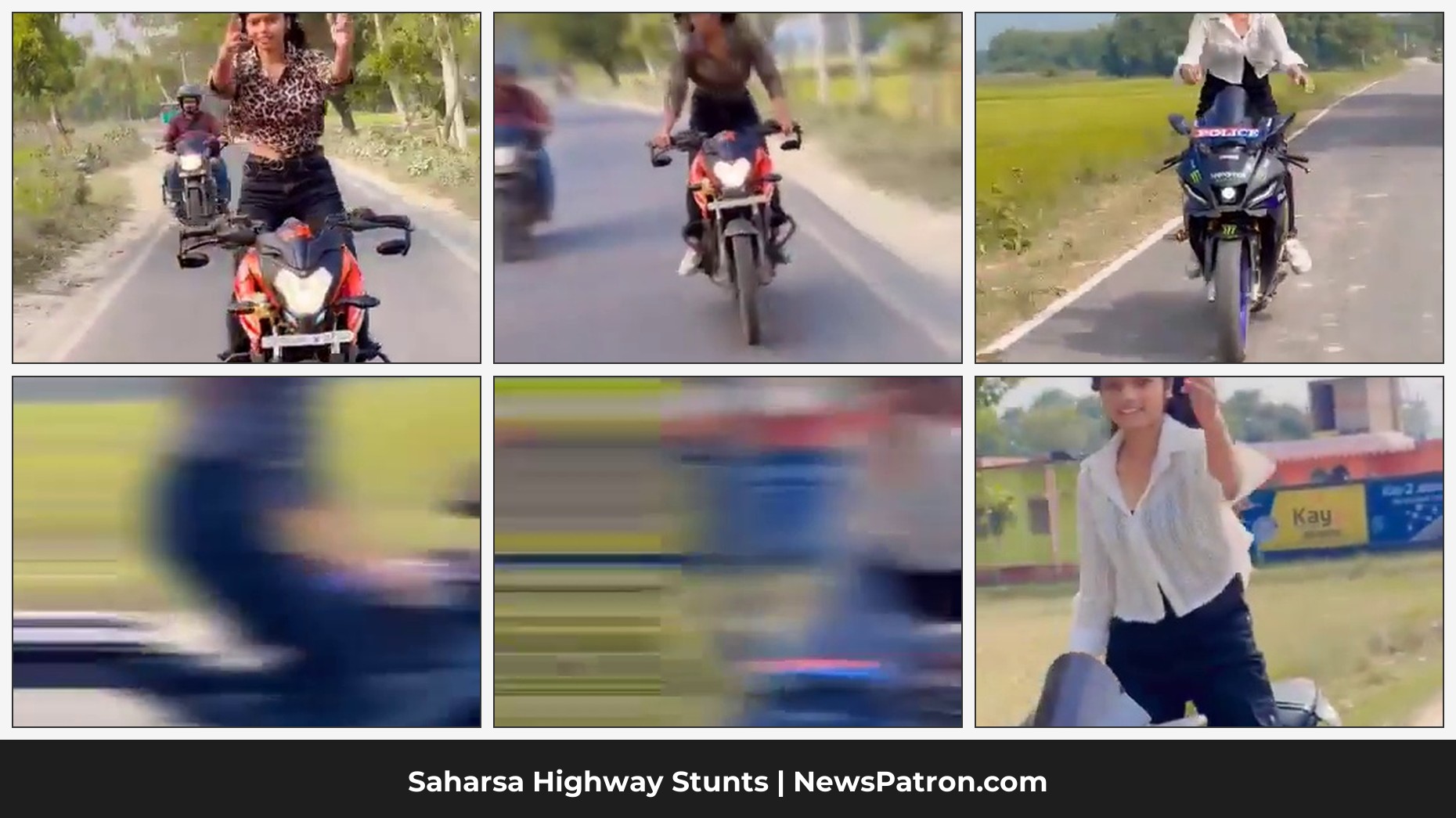
In Saharsa, Bihar, bikes and cars are being turned into mobile tripods for Instagram fame.
A clip from the district shows young riders and pillion passengers — boys and girls — pulling dangerous stunts on public roads: standing on moving bikes, weaving through traffic without helmets, and treating the highway like a private racetrack.
There are trucks and other vehicles in the background. None of them signed up to be part of this “reel.”
From Viral Clip To Police Tag
The video was posted with an open warning:
Advertisement“Saharsa, Bihar Alert!
Chhapri boys riding like maniacs, and girls showing they’re no less… Bihar Police, wake up!”Sponsored
Handles like @Nalanda_index tagged @bihar_police and @SaharsaPolice, calling the trend an “epidemic” in the making and asking the police to act before it turns into a headline about deaths.
Bihar Police replied in their standard format, forwarding the complaint to district authorities for “necessary legal action,” signalling that number plates can and will be used to identify riders.
The message from citizens to the police is blunt:
Recommended Product
Casio Vintage A168WA Digital Watch – Classic Retro Style
🛒 View on Amazon →As an Amazon Associate, we earn from qualifying purchases. Price and availability may vary.
AdvertisementIf you don’t step in now, the algorithm will — by rewarding the next, even riskier stunt.
Not An Isolated Saharsa Problem
Look slightly beyond Saharsa and a pattern appears across Bihar:
- In Madhepura, a young woman doing bike stunts for Instagram Reels was tracked by her vehicle’s registration number and fined ?11,000 for dangerous driving, no helmet and no licence.
- In another viral video, bikers in Bihar performed stunts on a busy highway and even overtook a Bihar Police vehicle while standing on the bike, prompting outrage and demands for strict action.
- Local channels have profiled Saharsa’s own “stunt queens” like Barsa Rani — a minor who rides and stunts on multiple bikes and has gone viral while also coming under police radar.
In each case, the script is the same:
- A risky video goes viral.
- Viewers are half impressed, half horrified.
- Only after public tagging and outrage do authorities begin tracing plates and issuing challans.
The road is the constant. The difference is how close the camera dares to zoom in on disaster.
Why These Stunts Are More Than “Kids Having Fun”
For people scrolling on a phone, a Saharsa stunt reel looks like 30 seconds of thrill.
For someone driving behind that bike, it can be:
- A sudden swerve that leaves no braking distance.
- A fall that turns a human body into an obstacle at 60 or 80 km/h.
- A split-second choice between hitting the rider or crashing yourself trying to avoid them.
Bihar already records thousands of road accidents and deaths every year, and police have said they are increasingly acting on viral clips as evidence of offences like rash driving, riding without helmets, and stunt riding on public roads.
Social media, meanwhile, rewards the most extreme version of any trend:
- A normal ride gets no views.
- A risky stunt gets likes.
- A near-miss or crash gets shares — and sometimes becomes an inspiration for the next person chasing the same spike of attention.
In that feedback loop, fear of the law often loses to the high of going viral.
“Chhapri Culture” Or System Failure?
A lot of the commentary under the Saharsa clip uses one word: “chhapri.” It is meant as an insult — shorthand for loud, flashy, irresponsible youth.
But if we stop the clip and look closely, the picture is larger than slang:
- These are mostly young people from modest backgrounds, using the cheapest, most available stage they have: public roads.
- Bikes and phones become status symbols and identity tools, especially where other avenues for recognition are limited.
- The system’s response, until recently, has been inconsistent — a few fines here, some warnings there, but no sustained campaign that makes the cost of the stunt feel real and immediate.
Calling them “chhapri” might feel satisfying, but it does not answer the real question:
Why is a dangerous stunt, done on a road full of strangers, the easiest way to feel seen?
Until that combination of boredom, lack of safe spaces, and weak enforcement changes, the next Saharsa-style clip is only one reel away.
What Would “Waking Up” Look Like?
When people tag @bihar_police and @SaharsaPolice and say “wake up,” they are asking for more than a polite reply.
Real “wake up” would look like:
- Consistent enforcement using the same tech that powers virality. Scraping popular stunt clips for number plates, linking them to registration databases, and issuing fines or summons automatically, as Bihar traffic police have already done in cases like Madhepura and Muzaffarpur.
- Targeted campaigns in districts like Saharsa. Short, hard?hitting videos and local events where police show actual crash footage (with faces blurred) and explain the legal and physical consequences in schools and coaching centres.
- Clear rule: roads are for travel, not stunts. Dedicated, controlled spaces (closed tracks, supervised events) for those who genuinely want to learn stunt riding — and strict zero?tolerance on highways and city roads.
For someone working at the intersection of tech and safety, there is also a natural extension:
- Using cameras, analytics and even drones where feasible to monitor known hotspots for stunt activity, so officers are not always one viral clip behind the trend.
Until then, videos from Saharsa and other districts will keep surfacing with the same caption dressed in different words:
“Roads are for travel, not thrill?seeking disasters.”
The cameras will keep rolling. The question is whether the law — and our sense of responsibility — can catch up before the inevitable headline about a stunt that did not end with everyone getting up.
Sources
The Saharsa Stunt Phenomenon: Barsha (also spelled Barsa/Varsha) Rani is a teen bike?stunt creator from Saharsa district in Bihar who has gone viral across social media platforms for performing motorcycle stunts. Local media describe her as a minor who rides high-powered bikes like the R15 and Royal Enfield Bullet.
In multiple interviews with local channels, she explains her motivations, stating she genuinely loves riding bikes and has a strong passion for stunts, not just for views. She repeatedly mentions that her dream is to join the police after studying, while also maintaining her identity as a “rider girl.” She acknowledges her parents’ worries and claims she tries to stunt where there are fewer vehicles so “no one else is harmed.” However, local reports note that her viral fame has put her directly on Bihar Police’s radar over obvious public safety concerns.
Broader Bihar Context: General coverage of viral stunt videos from Bihar, including bikers performing dangerous manoeuvres on highways—sometimes even in front of police vehicles—and the public tagging Bihar Police for action. Reports from districts like Madhepura and Muzaffarpur show where police have actively used viral social media clips to trace riders by their number plates, impose heavy fines, and issue stern warnings to families.
