


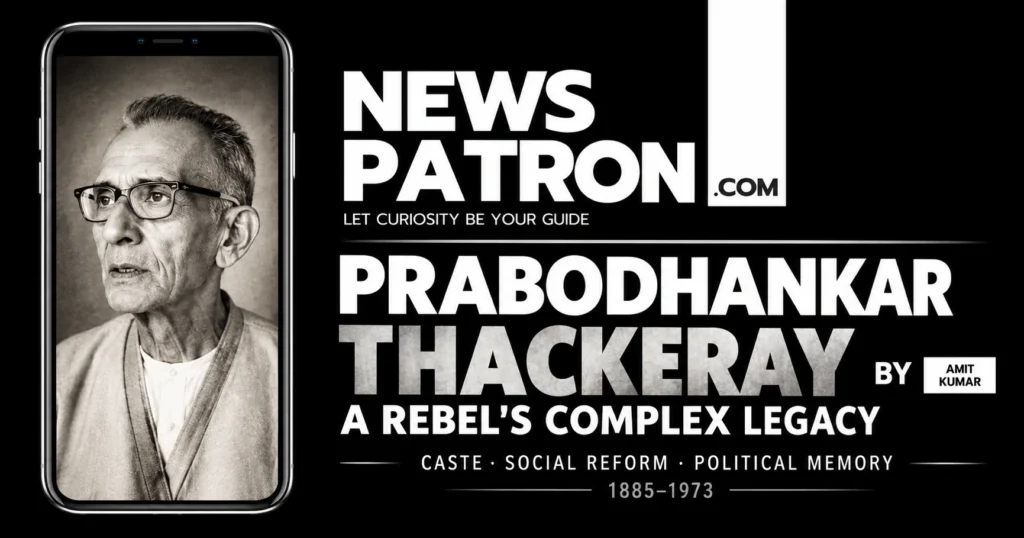

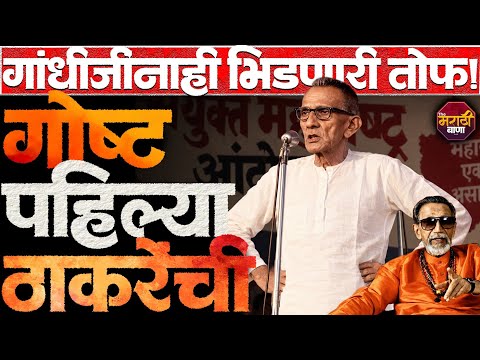
How this story began: This NewsPatron article began with Ranjit Yadav’s Marathi Bana video and follows the story through Prabodhankar Thackeray’s writings, published histories and reporting.
Watch Ranjit Yadav’s original Marathi Bana video above. It is the starting point for this investigation; the historical context and additional sources below help tell the wider story.
The man behind the name
Prabodhankar Thackeray was more than the father of Shiv Sena founder Bal Thackeray. Born Keshav Sitaram Thackeray in Panvel on 17 September 1885, he became a journalist, writer, public speaker and social reformer whose work challenged established ideas about caste, religion and social authority.
He died on 20 November 1973, aged 88. The date was not his birthday, despite a repeated claim in some retellings. His intellectual legacy remains contested: his criticism of caste discrimination and priestly authority sits alongside his arguments about Hindu identity and historical status. His influence on early Shiv Sena politics matters too, although his own ideas should not automatically be equated with the politics that developed under later generations of the Thackeray family.
The available Marathi text of his autobiography, Majhi Jeevangatha, is an essential starting point for understanding how he remembered his life. Readers can also browse Prabodhankar Thackeray books on Amazon. An autobiography is a person’s own account of events, so it is best read alongside independent records, historical research and later interpretations.
The ₹5,000 cheque story
One of the best-known stories about Prabodhankar begins in 1921, when he was seriously ill and short of money. Ranjit Yadav’s Marathi Bana account says that Shahu Maharaj of Kolhapur sent a ₹5,000 cheque through Shripatrao Shinde, hoping to help him recover and write a book based on the Puranas. Prabodhankar refused the money in strikingly blunt terms. When the news reached Kolhapur, Shahu Maharaj is said to have admired the young writer’s refusal to be bought.
The story is striking not simply because of the amount, but because of the independence behind the refusal. Prabodhankar was willing to speak plainly to a powerful ruler rather than accept money for work he did not want to undertake. Shahu Maharaj’s response is equally important: rather than ending their relationship in anger, he respected the man’s convictions. Their friendship left room for disagreement, including public criticism of the Maharaj’s administration.
That freedom to disagree was not just a story about one cheque. In the early issues of Prabodhan, Prabodhankar also criticised a decision by the Kolhapur administration over the arrest of Maratha students who had worshipped at the Ambabai temple. He could challenge Shahu Maharaj publicly and still retain his respect. Their relationship was not simply that of patron and dependent; it was built around ideas, reform and the freedom to speak openly.
Recommended Product
Trylo Riza T-Fit Women's Bra – Comfortable Daily Wear
🛒 View on Amazon →As an Amazon Associate, we earn from qualifying purchases. Price and availability may vary.
The same account describes a second meeting in which Shahu Maharaj found a different way to support the writer. He bought 2,000 copies of Prabodhankar’s book Bhikshukshahiche Band and gave him another ₹5,000 as payment for the books. Prabodhankar accepted. The difference was clear: he would not take money for a commission he did not want, but he accepted payment for work he had completed. The episode captures the mutual respect at the heart of their relationship.
What the correspondence between Shahu Maharaj and Prabodhankar may add
There is another documentary lead beyond the cheque story. In May 2022, ABP Majha reported that seven letters exchanged between Shahu Maharaj and Prabodhankar had come to light during the centenary year marking the Maharaj’s death. This matters because correspondence can help historians test how two people communicated, what subjects concerned them and how their relationship developed beyond stories repeated later.
However, the discovery of seven letters does not by itself prove the cheque episode or establish the exact words attributed to either man. To make that connection responsibly, the letters’ dates, full text, provenance and archival context would need to be examined. Unless the relevant letter directly mentions the cheque or the proposed book, the article should treat the correspondence as evidence of a relationship—not as proof of every detail in the anecdote.
The broader relationship is consistent with accounts of Prabodhankar assisting Shahu Maharaj with historical references and debates over caste status and religious authority. A report on the 2022 centenary commemoration also records the Thackeray family’s recollection that Shahu Maharaj provided Prabodhankar with reference material for his writing. See the report on the relationship and the centenary remarks. These accounts strengthen the case for exploring the intellectual connection, while leaving the cheque story open to careful source checking.
From early hardship to public life
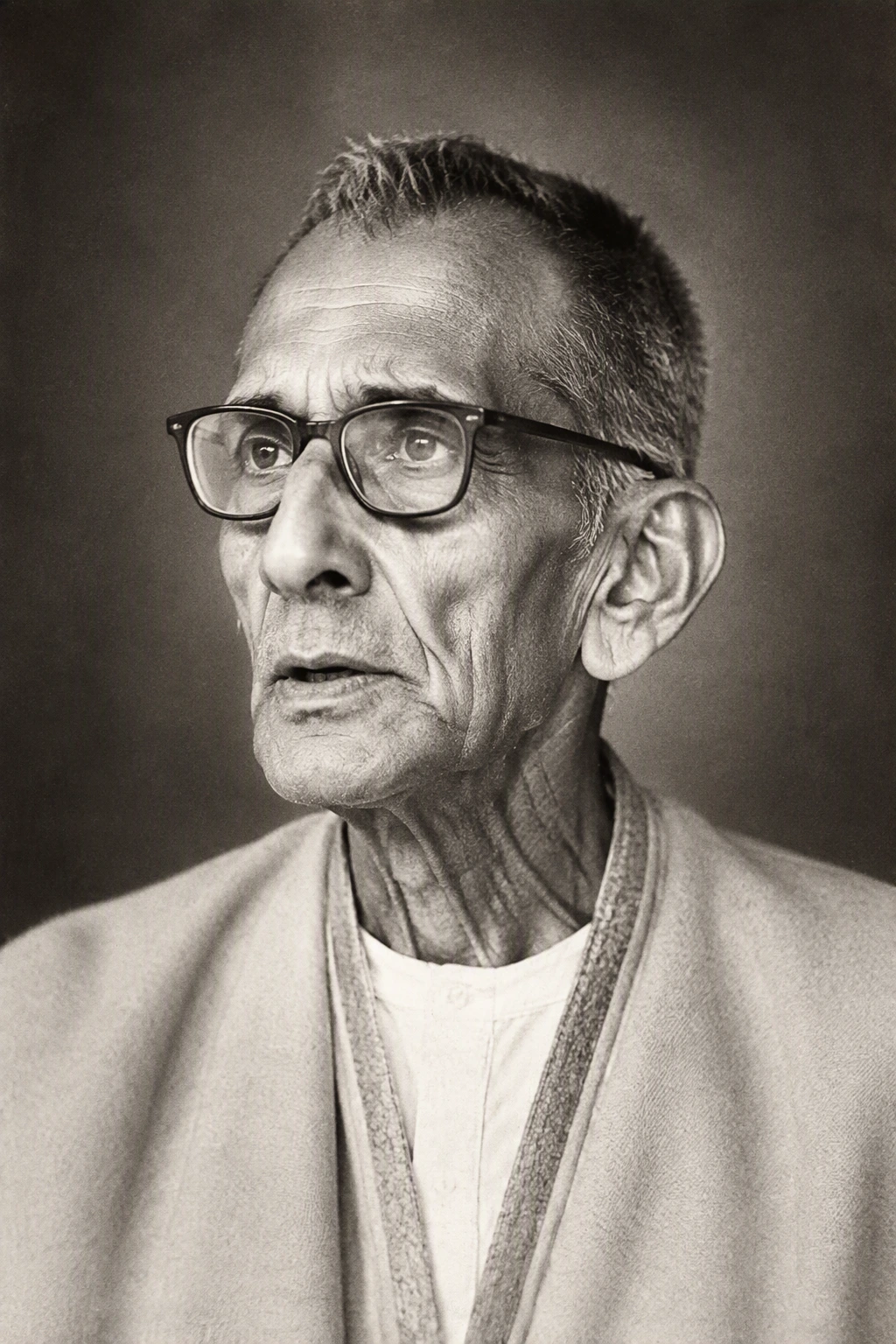
Prabodhankar’s early life is often presented through stories about family influence, financial difficulty and experiences of caste discrimination. His autobiography and later biographies describe a varied working life. He reportedly worked in signboard painting, rubber-stamp making, bookbinding, teaching, sales, theatre and other occupations before building his reputation as a writer and public speaker.
These experiences matter because his career was not confined to a university, a political office or a single newspaper. He moved through different working environments and encountered people outside the narrow circles of established public leadership. Several stories about his childhood and family are similarly important but need attribution, including accounts of his grandfather’s Warkari devotion, his grandmother’s assistance with childbirths across communities, and his early objections to caste-based exclusion.
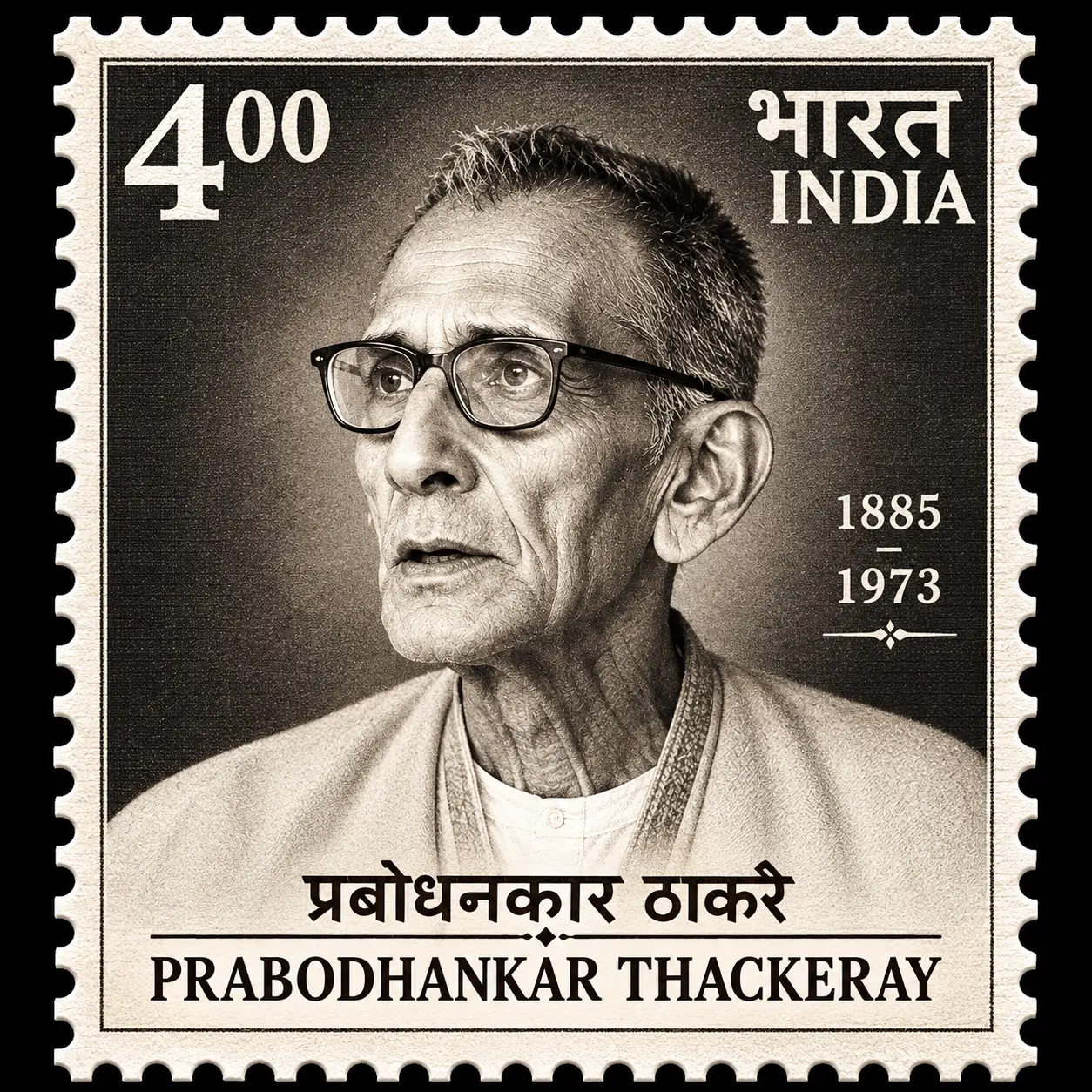
Such stories help explain how later biographers understood his character. They should nevertheless be distinguished from events independently documented by contemporary records. His public standing came largely through writing, speech, practical experience and participation in social movements.
A magazine that gave him his name
Prabodhankar’s influence can be understood through the relationship between journalism and social reform. His magazine Prabodhan became closely connected with his public identity. The publication addressed social and religious questions and provided a platform for arguments challenging established hierarchies.
The precise launch date remains disputed in published accounts. The Indian Express reports 16 October 1920, while a Maharashtra State Sahitya and Sanskriti Mandal publication gives 16 October 1921. The original issue or a contemporary publication record would be the best way to resolve the difference.
The disagreement should not obscure the magazine’s larger significance. Print publications allowed reformers to circulate arguments beyond a single meeting or speech. In Marathi-speaking society, newspapers, pamphlets, public lectures and performances helped create new audiences for debates over caste, religion, education and political representation.
The Oxford doctoral research by Surajkumar Thube on non-Brahmin Hinduism and the Marathi public sphere places Prabodhankar’s work within this wider intellectual world. It examines how non-Brahmin writers used print and performance to challenge Brahminical authority while developing their own ideas about caste, dharma and Hindu identity.
This context makes Prabodhankar’s journalism more than a personal achievement. It was part of a broader effort to change who could speak publicly, whose history counted and who could challenge established social and religious authority.
Challenging caste hierarchy
Prabodhankar’s social reform work included campaigns against dowry, criticism of caste discrimination and efforts to challenge restrictions on religious participation. One widely repeated account describes activists associated with the Hunda Vidhwanshak Sangh organising donkey processions outside weddings connected with dowry demands. The stated purpose was to shame the practice and challenge the prestige attached to dowry-seeking families.
Such stories should be checked against contemporary newspaper accounts and relevant passages in his writings. His wider reform agenda is central to understanding his public role. His writings also challenged priestly authority and what he saw as the exploitation of people through ritual and superstition. Works such as Bhikshukshahiche Band and Devalancha Dharma Ani Dharmachi Devale are particularly important for understanding those arguments. Readers can also find these titles in the four-in-one Marathi collection of Hindutva, Devlancha Dharma Aani Dharmachi Devale, Hindu Dharmache Divya, Hindujanancha Rhas Aani Adhappat and Akherche Bhashan.
His criticism was not simply an attack on individual religious practices. It raised wider questions about power: who had the authority to interpret religion, who benefited from established rituals, and why certain communities were treated as unworthy of participation.
These questions connect his work to the non-Brahmin movement associated with Jotirao Phule and Shahu Maharaj. That movement was not a single, uniform ideology, but it challenged caste hierarchy and sought a different distribution of social and political authority.
The Dadar festival dispute and public Navratri
A particularly significant episode concerns the reported refusal to allow an untouchable person to participate in Ganpati worship at a Dadar celebration. Later accounts describe Prabodhankar confronting this exclusion and participating in negotiations involving Dr B. R. Ambedkar and Rao Bahadur S. K. Bole. The episode is often connected to the development of public Navratri celebrations in Dadar.
The chronology remains contested. Accounts associated with Prabodhankar place important events in 1926, while historian C. B. Khairmode and later reconstructions have been associated with a 1928 date. The difference matters because the story is often repeated as a simple founding legend. A careful account should explain both the disputed year and the roles of the different people involved.
The deeper significance is the struggle over public religious participation. It was not merely a quarrel about a festival. It raised the question of whether people excluded by caste could enter a shared public religious space as equals. ThePrint’s historical reconstruction of Prabodhankar, Ambedkar and the Dadar festival dispute discusses the disputed chronology and the wider social context.
The article should not claim that Prabodhankar alone invented public Navratri across Maharashtra. The evidence needs to support the particular initiative and its participants, rather than an unlimited claim of ownership over a wider tradition.
Reformers, education and public life
Prabodhankar’s place in Maharashtra’s reform history also depends on his relationships with other public figures. His relationship with Shahu Maharaj is an example of engagement with a powerful supporter without reducing his independence to a single anecdote. Shahu Maharaj’s support for non-Brahmin education and political representation created a wider context for Prabodhankar’s work.
His connection with Ambedkar deserves more attention than the Ganeshotsav confrontation alone. Both figures confronted caste exclusion, although their ideas and political strategies should not be treated as identical. Ambedkar must be understood as an independent thinker and political leader, not simply as an assisting figure in somebody else’s story.
The relationship with Karmaveer Bhaurao Patil connects Prabodhankar’s public arguments to education. Later biographies describe his support for residential educational initiatives and his involvement in efforts to secure resources for students.
An account of a meeting with Mahatma Gandhi shows the same directness in another setting. Prabodhankar and Karmaveer Bhaurao Patil sought help for a hostel serving students who faced caste discrimination and poverty. When Gandhi questioned why Bhaurao had taken on work without secure funding, Prabodhankar explained the sacrifices being made to keep the students fed, including the reported sale of Bhaurao’s wife’s mangalsutra. He pressed Gandhi to move beyond praise and provide practical help. In the Marathi Bana account, Gandhi agreed to a one-month deadline, and a grant of ₹1,000 a month was subsequently approved for the hostel.
Hindu identity and the non-Brahmin movement
One of the most important questions in interpreting Prabodhankar is how his criticism of caste hierarchy related to his ideas about Hindu identity. His writings challenged the dominance of Brahminical religious authority. At the same time, he engaged with questions of Kshatriya status, Hindu history and the place of non-Brahmin communities within Hindu society.
That combination complicates any attempt to label him simply as a modern secular reformer or, at the opposite extreme, to treat him as an uncomplicated predecessor of later Hindu nationalist politics. Thube’s Oxford research examines the development of non-Brahmin articulations of Hindu identity in the Marathi public sphere between approximately 1890 and 1930.
The related Scroll analysis of Prabodhankar’s contribution to Hindutva in Maharashtra is another useful interpretation, although it should be read as historical analysis rather than a substitute for the original texts.
The central question is not whether one modern political label fits him perfectly. It is how his own words developed within a particular period, which communities and institutions he sought to challenge, and how later thinkers selected parts of his legacy for different political purposes.
The legacy passed on to Bal Thackeray
Prabodhankar’s influence on his son Bal Thackeray is an essential part of his later history. The Marathi weekly Marmik, launched on 13 August 1960, became an important vehicle for Bal Thackeray’s cartoons, commentary and mobilisation around the position of Marathi-speaking residents in Mumbai. The name was suggested by Prabodhankar.
The Indian Express history of Marmik and its relationship with Shiv Sena explains how the publication helped create an audience for the political organisation that followed in 1966.
Prabodhankar is also associated with the choice of the name Shiv Sena and the idea of creating a political organisation around Marathi-speaking rights. Nevertheless, Bal Thackeray was the organisation’s founder, and the two men’s roles should remain distinct.
Later accounts of the first Dussehra rally at Shivaji Park in 1966 attribute to Prabodhankar a statement offering his son to Maharashtra. That quotation is best treated as a reported recollection unless the original speech is located.
This family connection reveals both continuity and change. Prabodhankar’s direct language, public campaigning and interest in Marathi identity mattered to the political world that developed around his son. Yet intellectual influence does not prove that every later political position was a straightforward continuation of the father’s ideas.
Related NewsPatron investigation: The “Green Danger” Prophecy: Balasaheb’s Warning vs. Sahar’s Admission.
Why his legacy still sparks debate
Prabodhankar’s writings continue to produce debate because they touch on questions that remain politically sensitive: caste hierarchy, religious criticism, the meaning of Hindu identity and the relationship between social reform and political power.
A modern example occurred in 2025, when books by Prabodhankar Thackeray and social reformer Dinkarrao Javalkar became the subject of a controversy at Mumbai’s Kasturba Hospital. Contemporary reporting recorded conflicting accounts of the incident and described inquiries by hospital authorities and police. The Week’s PTI report on the controversy and Deccan Herald’s report on the competing accounts provide background.
The incident should not be treated as proof of a general change in public attitudes. Rather, it illustrates how a book written decades earlier can become part of a contemporary argument about religion, reform and public identity.
Individual online discussions show a similar range of reactions. In a public Reddit discussion about the incident, users expressed different views about his writing, asked for explanations of the book and debated whether criticism of religious practices should be interpreted as hostility to religion itself.
These comments are individual opinions, not a representative survey. They are useful because they show the kinds of questions readers are asking, but the answers should be grounded in the texts themselves. Public reaction can help identify current questions; it cannot settle the history.
Five things to remember
- Independence and patronage: The cheque story is an important part of his remembered public character, but its exact dialogue needs attribution.
- Journalism as reform: Prabodhan belongs to a wider transformation in Marathi print culture and the circulation of non-Brahmin ideas.
- Caste exclusion as a central issue: His social reform work challenged who could participate in religious and public life.
- Hindu identity was historically complicated: His criticism of Brahminical dominance coexisted with his own engagement with Hindu identity and Kshatriya status.
- Political inheritance was not identical to ideological continuity: His influence on Bal Thackeray and Shiv Sena matters, but later politics cannot automatically be equated with his own writings.
A legacy beyond admiration
Prabodhankar Thackeray’s life offers more than a story about an uncompromising man who refused money from a powerful ruler. It provides a window into the arguments, institutions and social conflicts that shaped modern Maharashtra.
His writing challenged established caste and religious authority. His journalism helped bring reformist arguments to a wider public. His relationships with Shahu Maharaj, Ambedkar and Bhaurao Patil connect him to broader efforts to change education, public participation and social power.
At the same time, his ideas about Hindu identity and his influence on later political movements demand careful historical examination. They should be neither ignored nor used to reduce his life to a single modern political label.
In Ranjit Yadav’s telling, Shahu Maharaj knew how to help people who could change society. He supported Dr B. R. Ambedkar and Prabodhankar, whose work helped shape Maharashtra over the decades that followed.
In the 52 years after Shahu Maharaj’s death, Prabodhankar gave Maharashtra books, a movement, the image of a leaping tiger, an organisation and a distinctive public style. Yet he is remembered as a man who kept little for himself. The pile of footwear outside his doorstep became a measure of his real wealth: the many people who came to meet him.
Born on 17 September 1885, he died on 20 November 1973, aged 88. His 141st birth anniversary fell on 17 September 2026. The best tribute is not simply to remember him on an anniversary, but to carry forward the ideals that animated his life: question injustice, speak honestly and stand by the freedom to think.
Disclosure: This article contains Amazon affiliate links. NewsPatron may earn a commission from qualifying purchases, at no additional cost to the reader.
Sources and further reading
- Prabodhankar Thackeray’s autobiography, Majhi Jeevangatha, read alongside the biographical account on Prabodhankar.com.
- ABP Majha’s 2022 report on seven letters between Shahu Maharaj and Prabodhankar; the report is a lead for further archival verification, not proof of the cheque anecdote.
- Marathi e-Batmya on the Shahu Maharaj–Prabodhankar relationship and the 2022 centenary remarks.
- Surajkumar Thube’s Oxford doctoral thesis, Towards a Non-Brahmin Hinduism: Caste, Dharma, and the Marathi Public Sphere, circa 1890–1930.
- The Indian Express on the history and chronology of Prabodhan.
- ThePrint on Prabodhankar, Ambedkar and the Dadar Ganeshotsav dispute.
- Scroll on Prabodhankar and the history of Hindutva in Maharashtra.
- The Indian Express on Marmik and the origins of Shiv Sena.
- The Week’s report on the 2025 Kasturba Hospital book controversy.
- Deccan Herald on the competing accounts of that controversy.
- India Post’s commemorative stamp records.
This article draws on the sources linked above and Ranjit Yadav’s Marathi Bana video.
