


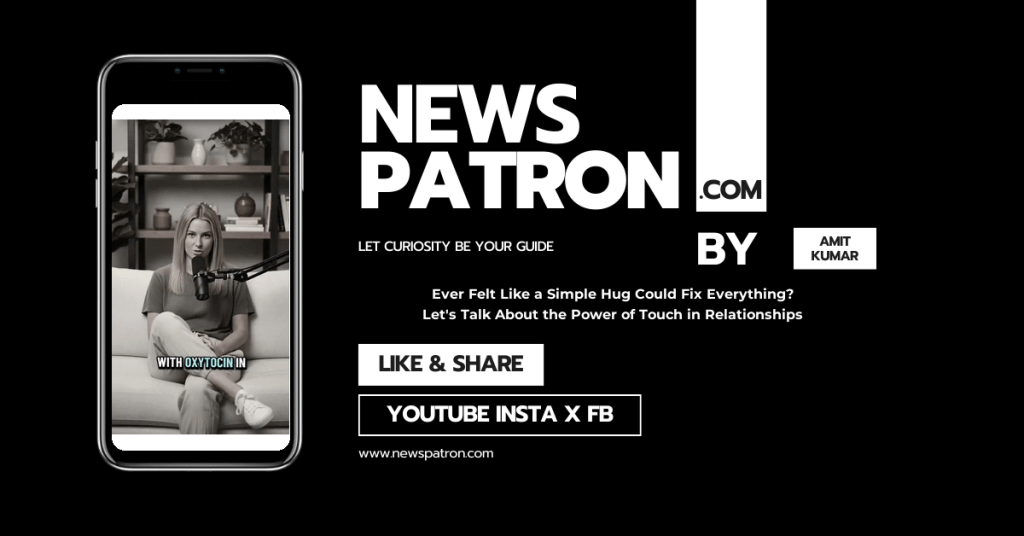

By the NewsPatron Lifestyle Desk
Hey there, friend. Picture this: You’re scrolling through your feed late at night, and bam—a viral video pops up claiming that “a woman’s touch is actual medicine for a man.” It hits you right in the feels, especially if you’ve been feeling that quiet ache of disconnection in your own life. Sound familiar? ? In a world where we’re more “connected” than ever via screens but often starving for real human contact, this idea isn’t just poetic—it’s backed by some fascinating science. And for us in India, where cultural norms can make vulnerability feel like a battlefield, it’s a conversation we need to have.
Today, we’re diving into this topic inspired by relationship expert Sadia Khan, whose podcast clips have been lighting up social media. Sadia isn’t just another voice in the crowd; she’s a psychologist who blends biology, emotions, and real-talk advice to help couples thrive. Her take on touch as a healer? It’s gone viral for a reason. But is it all hype, or is there truth to it? Let’s unpack the facts, bust the fluff, and zoom in on what this means for Indian relationships. Buckle up—we’re making this relatable, science-y, and zero-judgment.
Direct from the Scene
The Science Behind the Spark: Why a Loved One’s Touch Feels Like Magic ??
Let’s be real—have you ever melted into a hug from someone you love and felt your stress just… evaporate? That’s not just in your head; it’s happening in your brain and body. Sadia Khan nails it when she says, “When a man feels the touch of a woman he loves… his brain floods with oxytocin.” Oxytocin, often called the “cuddle hormone,” is like nature’s chill pill. Studies show that affectionate touch—like holding hands or a quick massage—triggers a rush of this stuff, dropping cortisol (your stress hormone) levels in minutes.
But does it really “heal” you? Well, kind of. Research from places like PubMed backs this up: A 10-minute partner massage can slash cortisol by up to 50%, calming your nervous system, lowering blood pressure, and even boosting your mood. It’s not a miracle cure, but for everyday stress? Absolutely medicinal. And touch starvation? That’s the flip side—going without it ramps up anxiety, messes with sleep, and weakens your immune system. We’re wired for this connection, folks.
Now, the big question: Do men benefit more? The science says it’s nuanced. Biologically, both genders get the oxytocin boost, but culturally? Men often crave more non-sexual touch than they get, leading to higher risks from deprivation. Surveys reveal guys rate cuddling as a top happiness factor in relationships—82% in one study! Women might find touch more emotionally soothing overall, but for men, it’s like plugging into a recharge station after a long day. Spoiler: It’s not about one gender “needing” it more; it’s about how society shapes our access to it.
Fact vs. Fluff: Separating the Viral Claims from Real Research ?
Okay, let’s address the elephant in the room—that viral claim about touch dropping cortisol and healing “in minutes.” Is it legit, or just feel-good fluff? From what the studies say, it’s mostly spot-on, with a dash of exaggeration for emphasis. Yes, partner touch spikes oxytocin and tanks cortisol fast—think seconds to minutes for the initial effects. One real-time study even tracked how daily affectionate touches buffer stress and anxiety on the spot.
But “disproportionate benefits for men”? Here’s the verdict: It’s more cultural than purely biological. Men report higher “affection deprivation,” meaning they want more hugs and hand-holds but often don’t get them. This amps up issues like depression and loneliness. Women aren’t immune, but societal norms let them seek comfort more openly. The “medicine” metaphor? It holds water—touch combats stress-related health woes like high blood pressure or poor immunity. Just skip the over-the-top stats (like “400% oxytocin surge”) unless they’re study-backed; the real magic is in the consistent, loving connection.
Recommended Product
Magnesium Body Spray – Muscle Recovery & Lavender Scent
🛒 View on Amazon →As an Amazon Associate, we earn from qualifying purchases. Price and availability may vary.
We dug into this with a critical eye because, hey, not every viral tidbit is gold. But Sadia’s core message? Solid. It reminds us that touch isn’t luxury—it’s essential for our well-being.
Skin Hunger in India: The Silent Struggle Hiding in Plain Sight ???
Alright, let’s bring this home to India, where the conversation gets even more layered. Ever heard of “skin hunger”? It’s that deep, physiological craving for touch—like your body yelling for a nutrient it’s missing. And in our culture? It’s becoming a hot topic, especially around male loneliness and intimacy gaps in marriages.
Leading relationship coaches in India have highlighted a surge in these stories. They describe guys in their 30s feeling isolated even in marriages, often referring to them as “business deals” without emotional spark. Single men talk about shrinking social circles and zero platonic touch, amplifying that ache. Experts are now flagging a “male loneliness epidemic,” linking it to modern stresses, patriarchy, and the pressure to be “tough.”
Here’s the counter-narrative that hits hard: Indian men are often boxed into “macho” expectations—be rough, don’t show weakness, suppress those needs for comfort. “Men don’t cry,” right? But studies on toxic masculinity show this restrictive emotionality blocks help-seeking and vulnerability. Sure, we’re cool with bro-hugs or hand-holding as friends (love that about our culture!), but in relationships? Expressing a need for non-sexual intimacy can feel emasculating. Result? An “intimacy gap” where men crave affection but bottle it up, worsening everything from marital disconnect to solo struggles.
It’s not all doom—conversations are shifting. More folks are calling out “skin hunger” as a real issue, urging us to normalize touch as comfort, not just romance. In bustling spots like Maharashtra (shoutout to our readers there!), where life moves fast, this reminder couldn’t be timelier. We’re all in this together, navigating tradition and modernity.
Wrapping It Up: Your Touch Could Be Someone’s Lifeline—Including Yours
So, what have we learned on this journey? Touch isn’t just nice-to-have; it’s a biological powerhouse that floods us with oxytocin, dials down stress, and combats the very real risks of skin hunger. Sadia Khan’s viral wisdom? Mostly science-backed, with a cultural twist that makes men especially vulnerable to deprivation. In India, where macho norms clash with our innate need for connection, it’s time to bridge that intimacy gap—one hug at a time.
Key takeaways? Prioritize affectionate touch in your relationships—it heals in minutes, strengthens bonds, and fights loneliness. Validate those feelings; you’re not alone. And hey, if you’re feeling that skin hunger, start small: Reach out, literally. Your body (and heart) will thank you. Let’s make our connections deeper, warmer, and more human. You’ve got this—what’s one step you’ll take today? ?
