





Get ready, readers, for a story that’s shaking the Indian Civil Services to its core. It’s a tale of ambition, privilege, and alleged deception that has everyone talking, from aspiring bureaucrats to seasoned veterans. At the center of it all is Pooja Khedkar, a young woman who seemed to have a golden path paved for her—a family legacy in the civil services, a coveted IAS rank, and a promising future. But as the saying goes, appearances can be deceiving.
In this in-depth exploration, we’ll unravel the layers of the Pooja Khedkar controversy, examining the allegations of fake certificates, the astonishing demands for VIP treatment, and the legal battles that have ensued. But this story is more than just a scandal; it raises crucial questions about fairness, meritocracy, and the integrity of the UPSC examination process. Prepare for a captivating journey as we uncover the truth behind this modern-day IAS saga.
Topics
Who is Pooja Khedkar? The Woman Behind the Controversy
Pooja Khedkar, a name that’s been making headlines for all the wrong reasons, is a 2022-batch IAS officer of the Maharashtra cadre. But her journey to this prestigious position has been anything but ordinary. Born into a family steeped in civil service tradition, with her grandfather and mother both having served in government roles, Khedkar seemed destined for a career in public service.
But here’s where things get interesting. Khedkar’s path to becoming an IAS officer wasn’t a straight shot. In 2019, she attempted the UPSC exams under a different name (Khedkar Puja Deeliprao) and a different PwBD (Persons with Benchmark Disabilities) category (PwBD-1: Low Vision). While she didn’t make the final cut that year, she did secure a position as an Assistant Director at the Sports Authority of India (SAI).
IAS Mock Interview uploaded by coaching centre
Fast forward to 2022, and Khedkar reappears on the UPSC scene, this time under the name Puja Manorama Dilip Khedkar. And not only does she clear the exams, but she also secures an impressive All India Rank (AIR) of 821. But there’s a catch – she’s now in a different PwBD category (PwBD-5: Multiple Disabilities). This sudden change in category and the significant improvement in her rank have raised more than a few eyebrows.
But that’s just the tip of the iceberg. As we delve deeper into Khedkar’s story, we’ll uncover a series of events and allegations that paint a troubling picture of privilege, entitlement, and a possible disregard for the rules. So, stay tuned as we unravel the layers of this controversy and explore its implications for the UPSC and the civil services as a whole.
[Watch an Indian Express Video]
Recommended Product
Magnesium Body Spray – Muscle Recovery & Lavender Scent
🛒 View on Amazon →As an Amazon Associate, we earn from qualifying purchases. Price and availability may vary.
The Controversy Unveiled: A Timeline of Events
Pooja Khedkar’s journey as an IAS officer quickly took a controversial turn, marked by a series of events that raised red flags about her conduct and integrity.
VIP Treatment and Demands
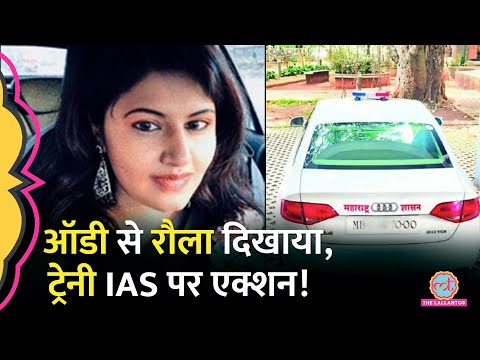
Even before officially joining her duties as a trainee, Khedkar allegedly exhibited a sense of entitlement that went beyond the norms for probationary officers. She insisted on using her private Audi car, equipped with a red-blue beacon light and a VIP number plate – privileges not typically granted to officers of her rank. Additionally, she made repeated demands for a separate cabin, a dedicated car, residential quarters, and personal staff, raising eyebrows among her colleagues and superiors.
Fake Certificates and Category Change
As the controversy deepened, reports emerged suggesting that Khedkar had submitted fake disability and Other Backward Class (OBC) certificates to gain an advantage in the UPSC exams. The most glaring discrepancy was the change in her PwBD category between her 2019 and 2022 attempts. In 2019, she claimed to have “Low Vision” (PwBD-1), but in 2022, she switched to “Multiple Disabilities” (PwBD-5), a category with a significantly lower cut-off mark. This abrupt change, coupled with her impressive improvement in rank, fueled suspicions about the authenticity of her claims.
Medical Examination Refusal
Adding fuel to the fire, Khedkar repeatedly refused to undergo a medical examination at the All India Institute of Medical Sciences (AIIMS) in Delhi, despite being asked to do so four times. She cited Covid infection as the reason for her non-compliance, further raising doubts about the legitimacy of her disability claims.
Legal Battles
Khedkar’s journey has also been marked by legal battles. In 2020, under the name Khedkar Puja Deeliprao, she filed a petition in court seeking a revaluation of her 2019 UPSC prelims marks. This was followed by another petition in the Delhi High Court, where she was represented by J Sai Deepak, a prominent lawyer known for his conservative views. Later, under the name Puja Manorama Dilip Khedkar, she filed a petition with the Central Administrative Tribunal (CAT), claiming to be mentally ill with low vision and seeking relaxation of certain rules for PwBD candidates.
Implications for UPSC Aspirants and the System
The Pooja Khedkar controversy has sent shockwaves through the UPSC aspirant community and raised serious concerns about the integrity and fairness of the civil services examination process.
Impact on Morale
For countless aspirants who dedicate years of their lives to preparing for the UPSC exams, the allegations against Khedkar have been a major blow. The idea that someone could potentially secure a coveted position through fraudulent means undermines the hard work and dedication of genuine candidates. The controversy has led to widespread demoralization and a sense of injustice among aspirants who feel that the system is rigged against them.
Questioning the System
The Khedkar case has exposed potential loopholes in the UPSC’s verification process for disability and OBC certificates. It raises questions about the rigor of the medical examinations and the ease with which candidates can potentially manipulate the system to gain an advantage. The controversy has sparked calls for stricter verification measures, greater transparency, and accountability in the selection process.
Coaching Centers and Corruption
The involvement of a prominent lawyer like J Sai Deepak in Khedkar’s legal battles has also fueled speculation about the role of coaching centers in the UPSC preparation process. Some critics argue that these centers not only provide guidance but also exert undue influence on the selection process, leading to favoritism and corruption. The Khedkar controversy has brought these concerns to the forefront, prompting discussions about the need for greater transparency and regulation in the coaching industry.
Reactions and Responses: A Nation Outraged
The Pooja Khedkar controversy quickly snowballed into a national outrage, capturing the attention of the media and the public alike. The allegations of fake certificates, misuse of privileges, and the blatant disregard for rules and regulations struck a nerve with many, especially among UPSC aspirants who felt deeply betrayed by the system they aspired to join.
Public Outrage and Media Coverage
Social media platforms erupted with discussions and debates about the case, with hashtags like #PoojaKhedkar and #UPSCScam trending for days. Newspapers and news channels extensively covered the controversy, highlighting the discrepancies in Khedkar’s claims and the potential damage to the reputation of the civil services. The public outcry was not just limited to online spaces; protests and demonstrations were held in various parts of the country, demanding a thorough investigation and strict action against Khedkar.
Official Statements and Actions
In the wake of the mounting pressure, government officials and UPSC authorities were forced to respond. Initial statements were cautious, emphasizing the need for a fair investigation before jumping to conclusions. However, as more evidence emerged, the tone shifted towards acknowledging the seriousness of the allegations and the need for swift action. The Maharashtra government initiated an inquiry into the matter, and Khedkar was transferred from her position in Pune. The UPSC also launched an internal investigation to verify the authenticity of her certificates and assess the extent of her misconduct.
Opinions from Experts and Aspirants
Experts, former bureaucrats, and UPSC aspirants weighed in on the controversy, expressing their disappointment and concern. Many highlighted the need for stricter verification processes for disability and OBC certificates, emphasizing that any compromise on merit and fairness in the selection process would erode the credibility of the civil services. Some aspirants shared their personal experiences of struggling to clear the exams despite genuine disabilities, feeling disheartened by the apparent ease with which Khedkar allegedly manipulated the system.
The Road Ahead: Justice and Reforms
As the investigation into the Pooja Khedkar controversy continues, the road ahead is fraught with uncertainty and calls for both justice and reform.
Potential Legal Consequences
If found guilty of the allegations, Khedkar could face severe legal consequences, including dismissal from service, criminal charges for forgery and fraud, and potential imprisonment. The case has the potential to set a precedent for future instances of misconduct and deception in the civil services.
Reforms in UPSC Selection Process
The Khedkar controversy has exposed the vulnerabilities in the UPSC selection process, particularly in the verification of disability and OBC certificates. There is a growing demand for a more robust and transparent system that ensures a level playing field for all aspirants. Potential reforms could include stricter medical examinations, background checks, and the use of technology to prevent fraudulent practices.
Ensuring Integrity of Civil Services
The integrity and credibility of the civil services are crucial for the effective governance and development of the nation. The Pooja Khedkar case serves as a stark reminder of the importance of upholding these values. It calls for a collective effort from the government, the UPSC, and society at large to ensure that the civil services remain a beacon of meritocracy, fairness, and public service.
Conclusion: A Wake-Up Call for the Nation
The Pooja Khedkar controversy is more than just a scandal involving a single individual; it is a wake-up call for the nation. It exposes the potential for corruption and manipulation within the system and the need for urgent reforms to safeguard the integrity of the civil services. As the investigation unfolds, it remains to be seen whether justice will be served and whether the necessary changes will be implemented to prevent similar incidents in the future.
But beyond the legal and administrative aspects, this controversy is a stark reminder of the importance of upholding values like honesty, integrity, and hard work. It is a call for all of us, as citizens and as aspirants, to strive for a society where merit and fairness prevail, and where those who dedicate themselves to public service are recognized and rewarded for their genuine efforts.
The question that lingers is this: Will the Pooja Khedkar controversy be a turning point in the history of the UPSC and the civil services, leading to meaningful reforms and a renewed commitment to integrity? Or will it be just another forgotten scandal, swept under the rug of complacency and inaction? Only time will tell.
Join the Discussion
Your opinion matters! We invite you to express your views. Join our forum, engage in thoughtful discussions, share information, and submit your content. Let’s delve into diverse perspectives together.
[bbp-single-topic id=6308]
