




?? ????? ?????? ?? ??????, ?????????, ?????????, ????? ????, ????????? ?????? ????? ??????? (???????) ?? ?? ????? ??? ??.. ??? ?? ????? ??????? ????????? ?? ??????? ??????????!
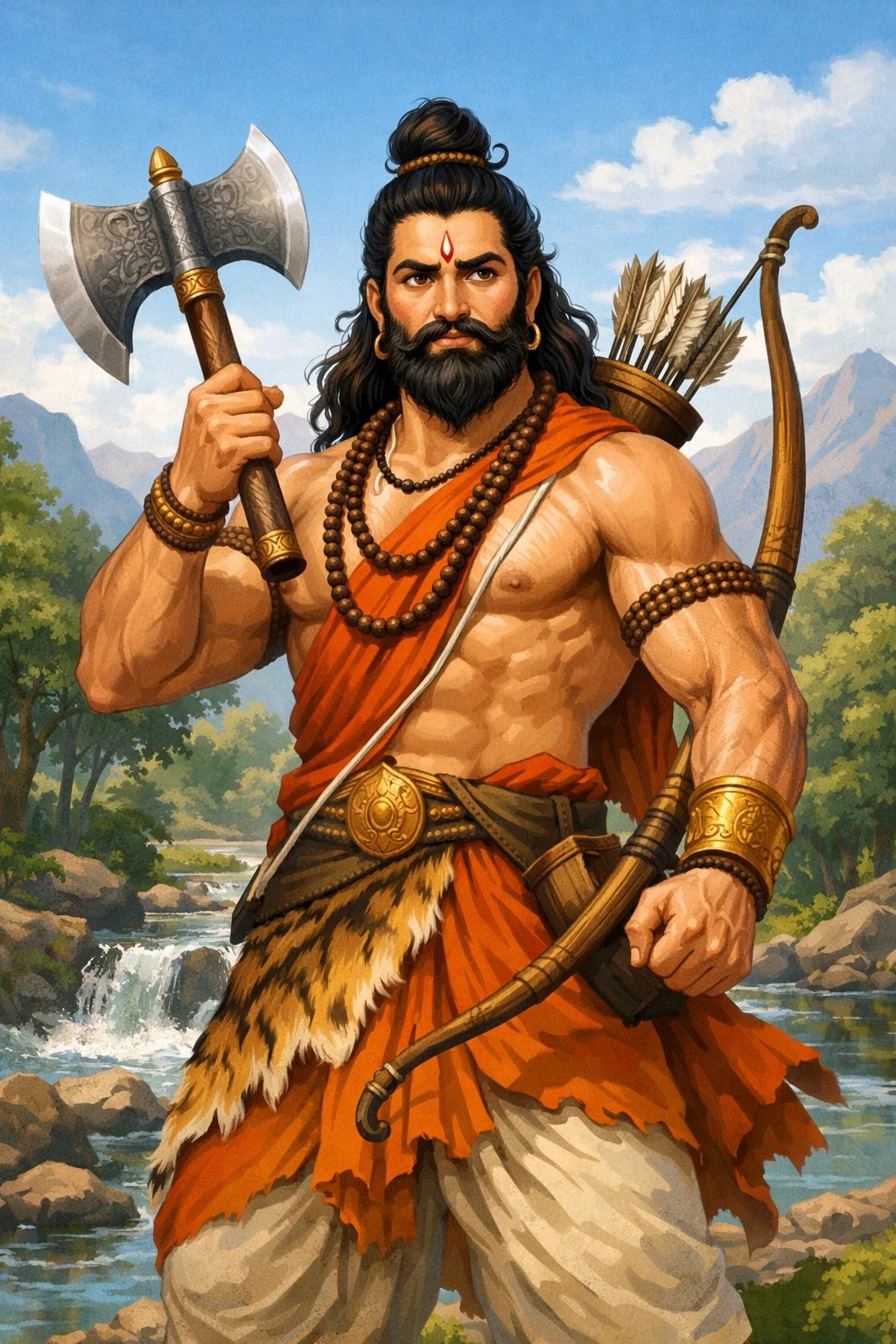
Parshuram’s name resonates throughout Hindu mythology. Born under the lucky stars of Akshaya Tritiya, he is revered as a form of Lord Vishnu, the preserver god. Counted among the immortal Chiranjivis, Parshuram’s story illuminates eternal themes of justice, devotion, and the constant struggle against evil. His life exemplifies unwavering faith, upholding Dharma (righteous conduct), and the cycle of creation and destruction. Join us as we explore the many sides of Parshuram and his profound influence. Let’s delve into the legend of this powerful warrior-sage, a symbol of strength and righteousness who continues to inspire generations of seekers of truth.
#Parshuram #HinduMythology #VishnuAvatar #WarriorSage #Chiranjivi #Righteous #Immortal #Axe #Legend #India
[bbp-single-forum id=4852]
Akshaya Tritiya: A Day of Auspicious Beginnings
Akshaya Tritiya, also known as Akha Teej, holds immense astrological significance as it is considered one of the most auspicious days in the Hindu calendar. Falling on the third lunar day of the bright half (Shukla Paksha) of the Vaisakha month, it is a time when the Sun and Moon are believed to be at their brightest, symbolizing the peak of cosmic energy and radiance. Astrologically, the day is marked by the Sun's presence in Aries and the Moon in Taurus, creating a powerful alignment that enhances positive energies and is thought to bring good luck and success. It is said that any venture started on this day will flourish and lead to prosperity, as the word 'Akshaya' signifies that which is never diminishing or eternal. Traditionally, it is a day for new beginnings, be it marriages, business ventures, or long-term investments like buying gold, which is believed to invite never-ending fortune. The day also commemorates significant mythological events, such as the birth of Lord Parasurama, the sixth incarnation of Lord Vishnu, and the beginning of the writing of the epic Mahabharata by Veda Vyasa and Lord Ganesha. In essence, Akshaya Tritiya is a celebration of unending prosperity, hope, and success, deeply rooted in both celestial alignments and cultural mythology.
Akshaya Tritiya: Influence of Combust Planets in 2024
Akshaya Tritiya, also known as Akha Teej, is a day of immense significance in both Hindu cosmology and astrology. It is considered one of the most auspicious periods for new beginnings and investments. However, the presence of combust planets can introduce complexities to this auspicious day.
Understanding Combust Planets
In astrology, a planet is considered combust when it comes too close to the Sun. This proximity causes the planet's influence to be weakened or overshadowed by the Sun's powerful rays. Each planet has a specific combust distance - for example, Mercury becomes combust within 14 degrees of the Sun.
Akshaya Tritiya 2024: Combust Planets and Their Impact
Akshaya Tritiya in 2024, which fell on May 9th, occurred with specific astrological alignments that could alter the day's typical auspiciousness. While the day itself remains favourable for positive actions and investments, the presence of combust planets may require additional caution and awareness. Depending on the specific combust planets and an individual's astrological chart, some actions or investments might be less favorable than usual.
For instance, astrological predictions suggest that Librans might be advised to avoid investing in gold or silver during Akshaya Tritiya 2024. This advice could stem from the influence of combust planets during this period. [Read our previous article on Angaraka Yoga [Dosha] of May 2024, its effects on individual star signs and the world] [THE FORMATION OF ANGARAK YOGA]
A Balanced Approach
It's essential to remember that combust planets are just one factor in the complex tapestry of astrological influences. Seeking personalized guidance from an astrologer can provide a more complete understanding of how combust planets might affect your actions during Akshaya Tritiya. Despite potential complications, the day retains its significance as a time for positive action and considered investments aligned with your astrological chart. [Read how to know your ascendant sign, and lunar sign (and not at all relevant sun sign as per Indian astrology]
Introduction to Parshuram


In the world of Hindu mythology, Parshuram stands as a complex and fascinating figure. Revered as a symbol of strength, righteousness, and wisdom, he is also known for his flashes of fiery temper. His unique legacy stems from his role as the sixth incarnation of Lord Vishnu, the preserver god within the Hindu trinity.
Parshuram as the Sixth Avatar of Vishnu
The Dashavatara, a Sanskrit term meaning “ten avatars,” refers to the ten primary incarnations of Lord Vishnu. These avatars appear throughout different Yugas (cosmic ages) to restore balance, uphold Dharma, and protect the world from chaos and evil. Parshuram holds a significant place within this sequence as the sixth avatar of Vishnu.
Born during the Treta Yuga, Parshuram’s birth name was Rama. He was born to the sage Jamadagni and his wife, Renuka. He was a devoted son and a skilled student, mastering the scriptures and the art of warfare.
The Origin of the Name ‘Parshuram’
The name ‘Parshuram’ translates to ‘Rama with the axe’ and reflects his mastery over this weapon. The transformation from Rama to Parshuram was marked by an event where he was required to wield his axe in response to a grave injustice.
Recommended Product
Casio Enticer Men's Analog Green Dial Watch MTP-VD01D
🛒 View on Amazon →As an Amazon Associate, we earn from qualifying purchases. Price and availability may vary.

The Iconic Axe of Parshuram
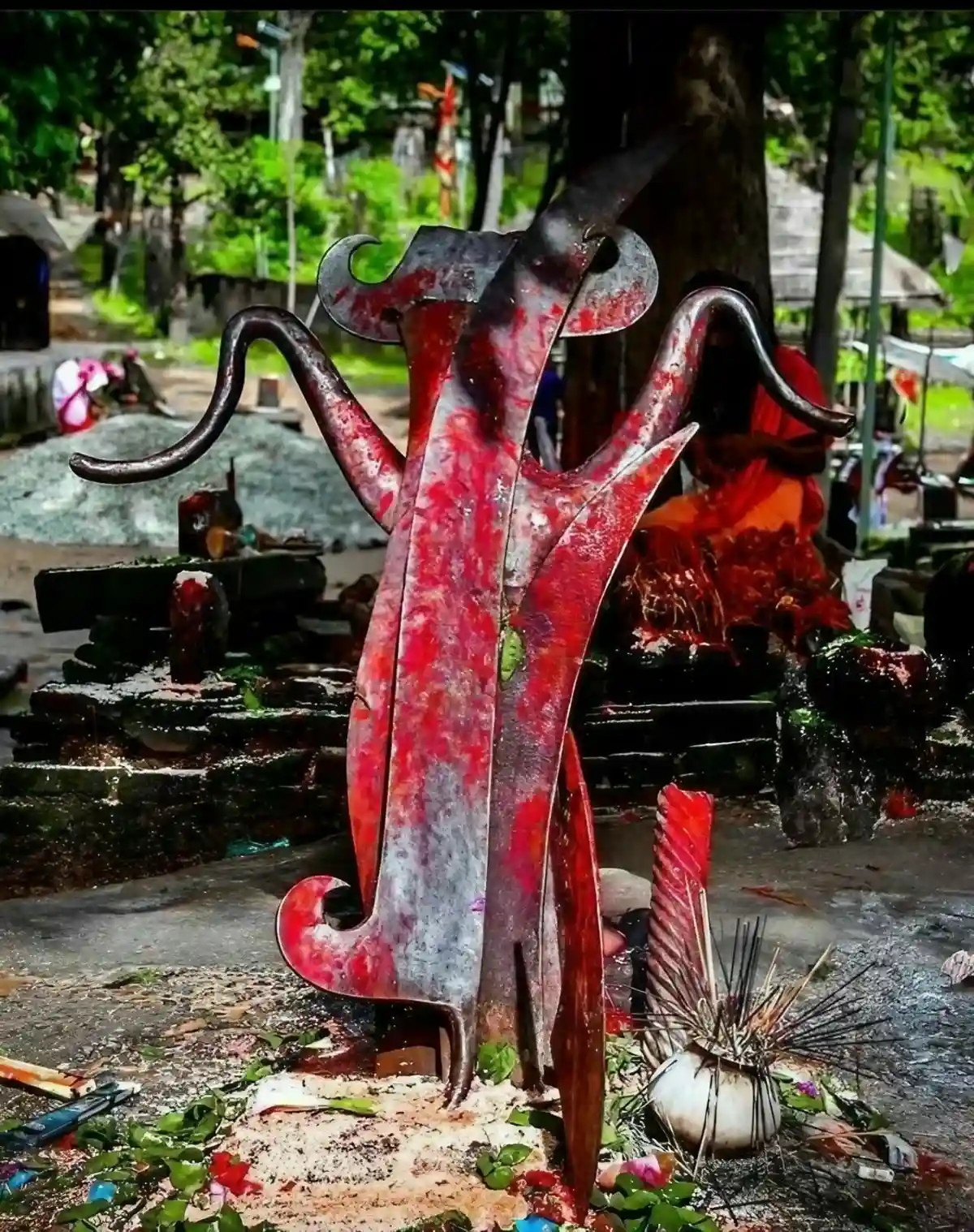
Parshuram’s image is inseparable from his legendary axe, often referred to as ‘Parashu’. More than just a weapon, the axe holds profound symbolism in Hindu mythology, embodying both his destructive and protective powers.

The Story of the Axe
Legend says that Parshuram received his divine axe as a boon from Lord Shiva after undertaking intense penance. Shiva, pleased with Parshuram’s devotion and determination, not only granted him the axe but also imparted knowledge of celestial weaponry and warfare. This powerful weapon became an extension of Parshuram’s righteous mission.
Symbolism of the Axe
The axe of Parshuram represents:
- Justice: It symbolizes his unwavering commitment to upholding Dharma and punishing those who strayed from the path.
- Power: The axe represents his unmatched destructive power, capable of eliminating evil. However, it is tempered by his wisdom, ensuring its use in service of righteousness.
- Divine Protection: As a gift from Lord Shiva, the axe also represents a form of divine guardianship, guiding and protecting Parshuram on his path.
The Myth of Parashurama Kshetra
Parshuram’s axe holds a prominent place in Hindu mythology and iconography. Its significance underscores his role as a destroyer of evil and protector of the righteous. Beyond its use as a weapon, Parshuram is also credited with a remarkable act of creation.
Legend recounts how Parshuram, angered by the constant encroachment of the sea upon the land, hurled his axe into the Arabian Sea. The mighty axe cleaved the waters, forcing the sea to recede and creating an expanse of land along the western coast of India. This land, known as Parashurama Kshetra, stretches from the Western Ghats to the Arabian Sea, encompassing regions within modern-day Kerala, Karnataka, and Goa. This sacred land stands as a testament to Parshuram’s extraordinary abilities and his determination to create a safe, flourishing region for his devotees.
The Divine Aspect of Parshuram
Though known for his skills as a warrior, Parshuram’s importance goes beyond the battlefield. He is believed to be the sixth incarnation of Lord Vishnu, the preserver god. He was born in the Treta Yuga, a time when unfair and power-hungry rulers threatened peace and order. As an avatar of Vishnu, Parshuram’s purpose was to restore balance and protect what is right. Often, Vishnu’s power guided his actions for the greater good.
Student of Lord Shiva
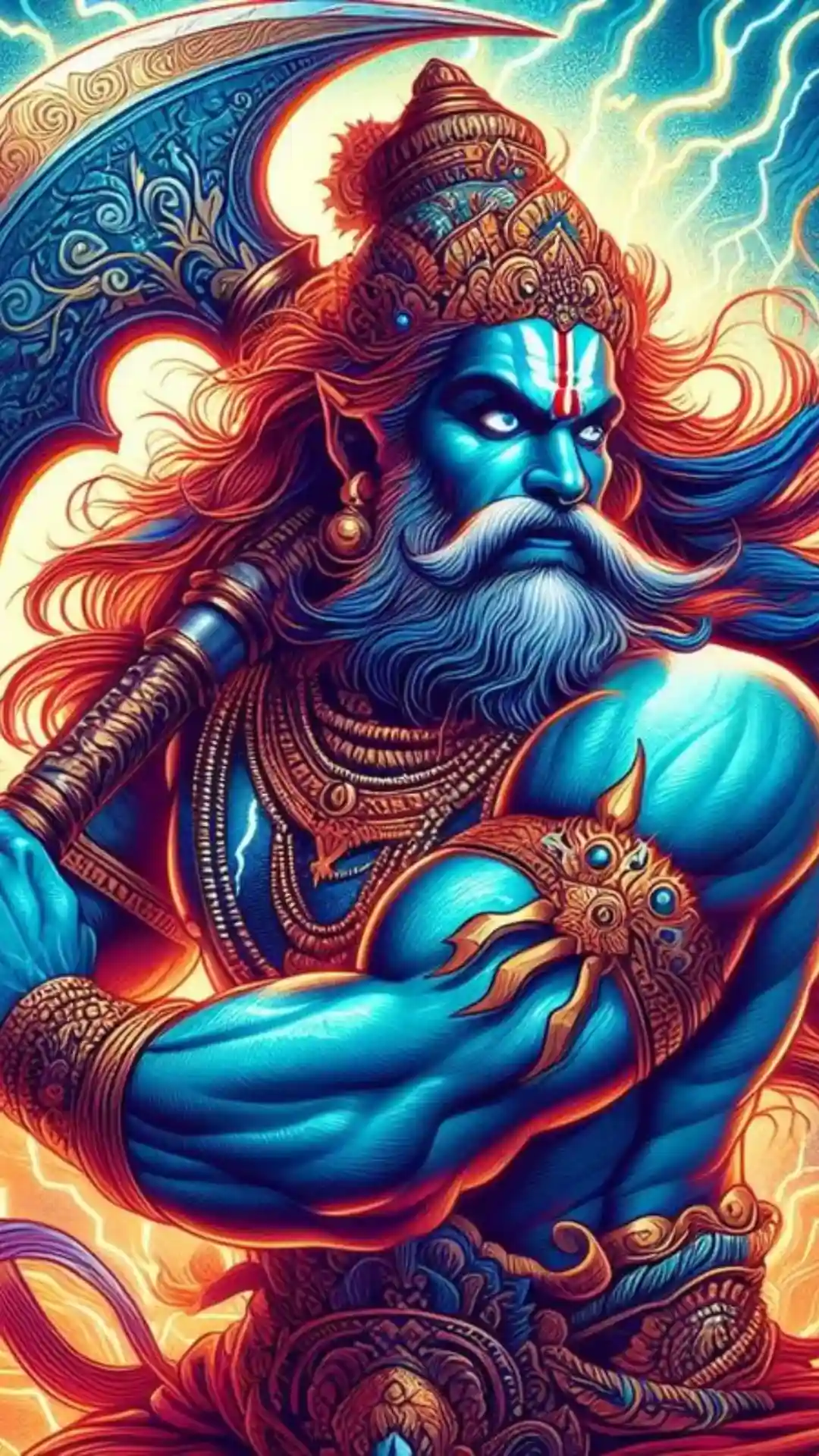
Parshuram was also a deeply devoted follower of Lord Shiva, the god of destruction and renewal. Parshuram spent years in intense prayer and practice, finally earning favour from Shiva.
Lord Shiva became his teacher, or guru, training him to be a master warrior. Not only did Shiva teach him how to use celestial weapons, but he also gifted Parshuram his own powerful axe. This shows how strong Parshuram became in both body and spirit.
The Battle of Teacher and Student
One story tells of a long and fierce battle between Parshuram and Shiva, a testament to the incredible skills Parshuram learned from his teacher. Despite his own strength, Lord Shiva had difficulty overcoming his student, praising Parshuram as a powerful warrior in the end. This battle emphasizes Parshuram’s special place among the Hindu gods, blessed by both Vishnu and Shiva.
Parshuram: Warrior-Sage and Mentor
Parshuram’s legacy is etched deeply within Hindu tradition. Beyond his divine connections, he stands out as a complex figure who defied simple categorization. He was both a fierce warrior driven by a sense of justice and a wise sage seeking to guide those around him.
Parshuram and Kartavirya Arjuna: A Pivotal Conflict
The story of Kartavirya Arjuna, a powerful yet arrogant king, serves as a turning point in Parshuram’s life and underscores his role as a warrior-sage. Seeking the wish-fulfilling cow Kamadhenu, Kartavirya Arjuna’s forces unjustly attacked Parshuram’s father, the revered sage Jamadagni. Witnessing this terrible act and his mother’s overwhelming grief ignited a deep fury within Parshuram, igniting his transformation. He vowed to avenge his father and cleanse the world of rulers who abused their power.
Mentor and Student: Parshuram’s Teachings
Parshuram’s influence extends far beyond his own battles. He served as a mentor to several important figures of Hindu mythology, including Bhishma, Drona, and Karna. His teachings shaped their destinies and, as a result, influenced significant events in major epics.
- Bhishma: Parshuram instructed Bhishma in the art of warfare, making him one of the most skilled warriors of his time. Their complex relationship would be tested in a future battle, demonstrating the sometimes-unpredictable paths forged by a teacher’s guidance.
- Drona: Drona, a poor but gifted Brahmin, sought Parshuram’s instruction and was granted mastery over celestial weapons. Drona’s skills later played a crucial role in the training of the Pandava and Kaurava princes, central figures in the Mahabharata.
- Karna: Karna, initially disguised as a Brahmin, became Parshuram’s student. Although skilled, Karna’s deception angered Parshuram, leading him to place a curse on his student. This curse proved instrumental in the Kurukshetra War of the Mahabharata.
Parshuram in the Epics
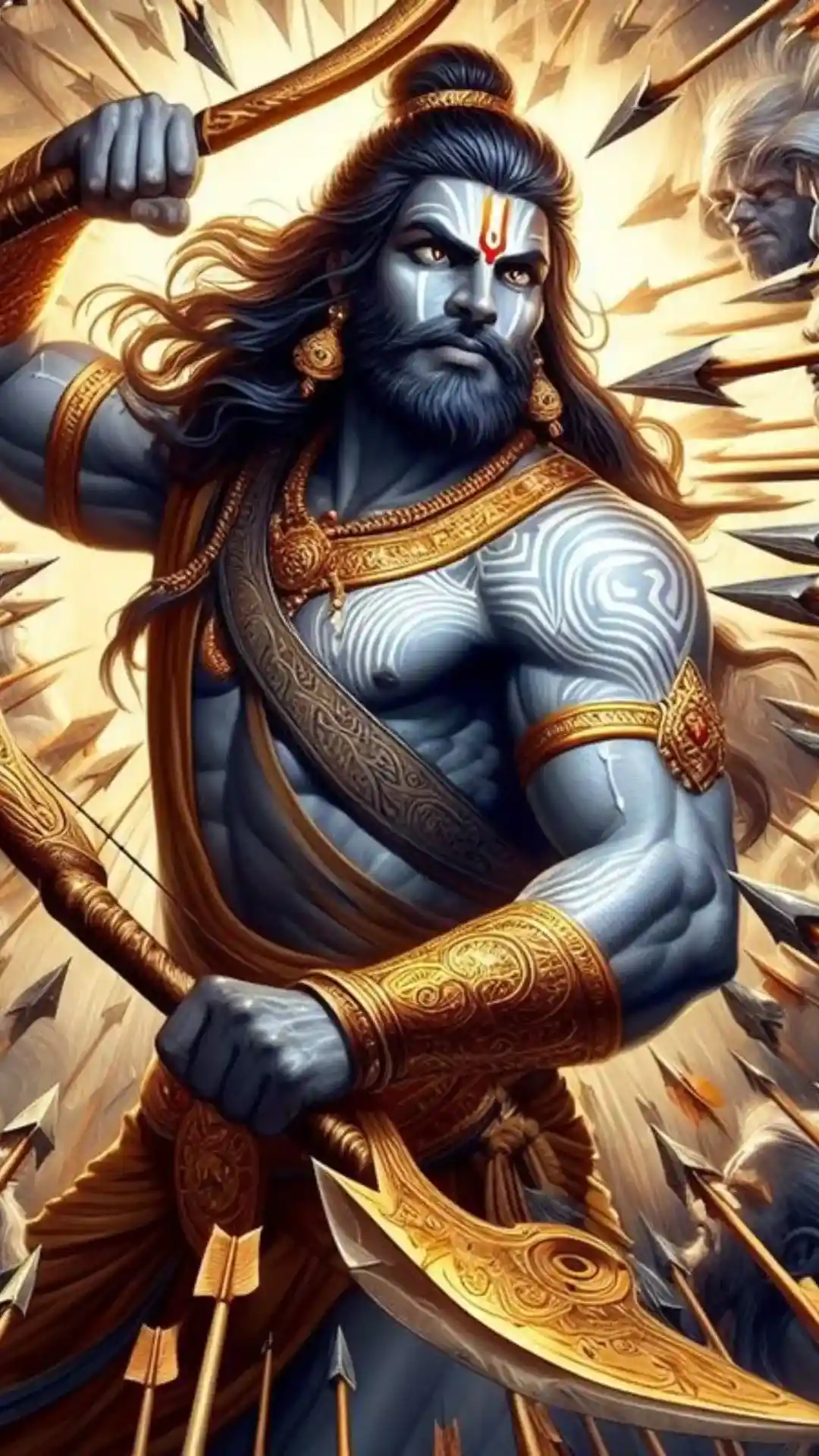
Parshuram’s influence extends far beyond his own battles and teachings, as he plays significant roles within the vast narratives of the Ramayana and Mahabharata. His appearances in these epics further highlight his complexities and significance within Hindu mythology.
The Ramayana: Encounter with Rama
In the Ramayana, Parshuram appears during the swayamvara (a ceremony for choosing a husband) of Princess Sita. When the mighty bow of Shiva, a test of worthiness, breaks in the hands of Lord Rama, Parshuram arrives in anger. However, upon recognizing Lord Rama as another incarnation of Vishnu, Parshuram’s rage subsides. He bestows his own divine bow upon Rama and acknowledges his shared connection with the divine. This encounter underscores Parshuram’s occasional flashes of temper and his reverence for the divine even in others.
The Mahabharata: Battle with Bhishma
Among Parshuram’s most legendary conflicts is his epic battle against his former student, Bhishma, within the Mahabharata. The conflict arose over the plight of Princess Amba, who sought Parshuram’s help to avenge her dishonour at the hands of Bhishma. Despite their past relationship, Parshuram’s devotion to justice leads him into a prolonged clash with his exceptionally skilled former student. The battle raged for days, ultimately ending in a stalemate due to divine intervention. This encounter demonstrates how deeply Parshuram valued righteousness, even when it meant facing those he had trained and held dear.
Parshuram in the Mahabharata: Mentor and More
Beyond his battle with Bhishma, Parshuram’s presence looms large within the Mahabharata. His actions in mentoring Drona and cursing Karna shaped their paths and influenced some of the central conflicts within the epic. This highlights Parshuram’s multi-faceted nature, where his choices as a teacher and warrior have long-lasting consequences within the broader narrative of Hindu tradition.
Parshuram – The Eternal Warrior Sage
In Hindu mythology, Parshuram holds a unique position as one of the Chiranjivis, a group of beings granted extraordinary longevity and believed to remain on Earth until the end of the current age, Kali Yuga. The term ‘Chiranjivi’ translates to “immortal” or “long-lived.” These figures are often revered for their extraordinary qualities, serving as symbols of enduring principles within Hindu tradition.
The Reasons Behind Immortality
The Cheeranjivi’s were granted their extended lifespans for various reasons:
- Acts of Devotion: Hanuman’s unwavering devotion to Lord Rama and Vibhishana’s loyalty to righteousness earned them their status.
- Boons and Curses: Ashwatthama’s immortality was a curse for his misdeeds, while King Mahabali was granted a boon to visit his beloved kingdom annually.
- Wisdom and Knowledge: Veda Vyasa, the sage who composed the Mahabharata, and Kripacharya, the impartial teacher of the Kuru princes, represent the enduring power of knowledge.
- Divine Purpose: Markandeya’s devotion earned him a blessing from Shiva, while Parshuram, as an avatar of Vishnu, embodies a timeless connection to the divine.
Parshuram’s Unique Role
As a Chiranjivi, Parshuram transcends the limitations of a single era. He stands as an enduring figure across different Yugas, a constant force dedicated to upholding Dharma. While other avatars of Vishnu appear for specific purposes within a defined timeframe, Parshuram’s continued presence allows him to interact with the world and shape its evolution across time.
Bridge Between Eras
Parshuram’s mentorship of figures from various ages, such as Bhishma, Drona, and Karna, exemplifies his role as a bridge between mythological periods. His teachings and actions have a ripple effect throughout history, making him an eternal champion of righteousness.
Encounters with the Divine
Parshuram’s journey is filled with interactions with other deities and heroes. Legends tell of his training under Lord Shiva’s son, Ganesha, where he honed his martial skills and expanded his spiritual knowledge. His presence in both the Ramayana and the Mahabharata further solidify his pivotal role in Hindu cosmology.
Mentoring the Final Avatar
Parshuram’s status as an immortal has a profound purpose. He is believed to be the destined mentor of Kalki, the tenth and final avatar of Vishnu, who is prophesied to appear at the end of Kali Yuga. Training the final avatar highlights Parshuram’s unending dedication to upholding Dharma and his guiding role in the grand scheme of cosmic events.
Parshuram’s Influence Today
Parshuram’s legacy extends far beyond ancient scriptures. His influence lives on in temples, festivals, and modern expressions of Hindu culture.
Temples and Places of Worship:
- There are numerous temples and shrines dedicated to Parshuram across India, particularly in regions like Kerala, Karnataka, and Maharashtra. These sacred sites attract devotees who seek his blessings for strength, protection, and righteousness.
Festivals and Rituals:
- Parshuram Jayanti, celebrated with particular enthusiasm in South India, marks his birth anniversary. Devotees offer special prayers, observe fasts, and perform rituals in his honour.
Art, Literature, and Media:
- Parshuram remains a popular figure in contemporary depictions. His image can be found in paintings, sculptures, and his stories are retold through literature, television, and films. These modern representations ensure that new generations continue to learn about his life and teachings.
Conclusion: The Enduring Legacy of Parshuram
Parshuram’s story is one of unwavering righteousness, incredible power, and selfless devotion. He defies simple categorization, standing as both a destroyer of evil and a teacher seeking to impart wisdom and strength. As the sixth avatar of Vishnu, he embodies the cyclical nature of creation and destruction, reminding us of the constant battle between good and evil.
His status as a Chiranjivi underscores his timeless importance in Hindu cosmology. He is a bridge between the ancient and the modern, a symbol of eternal principles that guide Hindu philosophy and culture. Whether celebrated in temples, remembered through festivals, or depicted in art, Parshuram’s presence continues to inspire and shape the faith of countless devotees.
Parshuram’s complex persona and multifaceted mythology invite contemplation and reflection. His journey highlights the struggle to navigate conflicting emotions, uphold moral principles, and find inner balance amidst a tumultuous world. By studying his life, we are granted a deeper understanding of Hindu beliefs, the role of the divine in shaping human destiny, and the enduring pursuit of a righteous existence.

[…] Parshuram: The Immortal Warrior-Sage of Hinduism Ramakrishna Mission: Empowering Lives Through Education Dagdusheth Halwai Ganpati: Pune’s Spiritual Icon, History, and the Timeline That Shaped Ganesh Chaturthi […]