




Content warning: This article discusses fuel safety risks and legal limits on storage. It is not legal or safety advice – consult authorities for your situation.
Videos Show People Filling Massive Tanks Amid Rumors
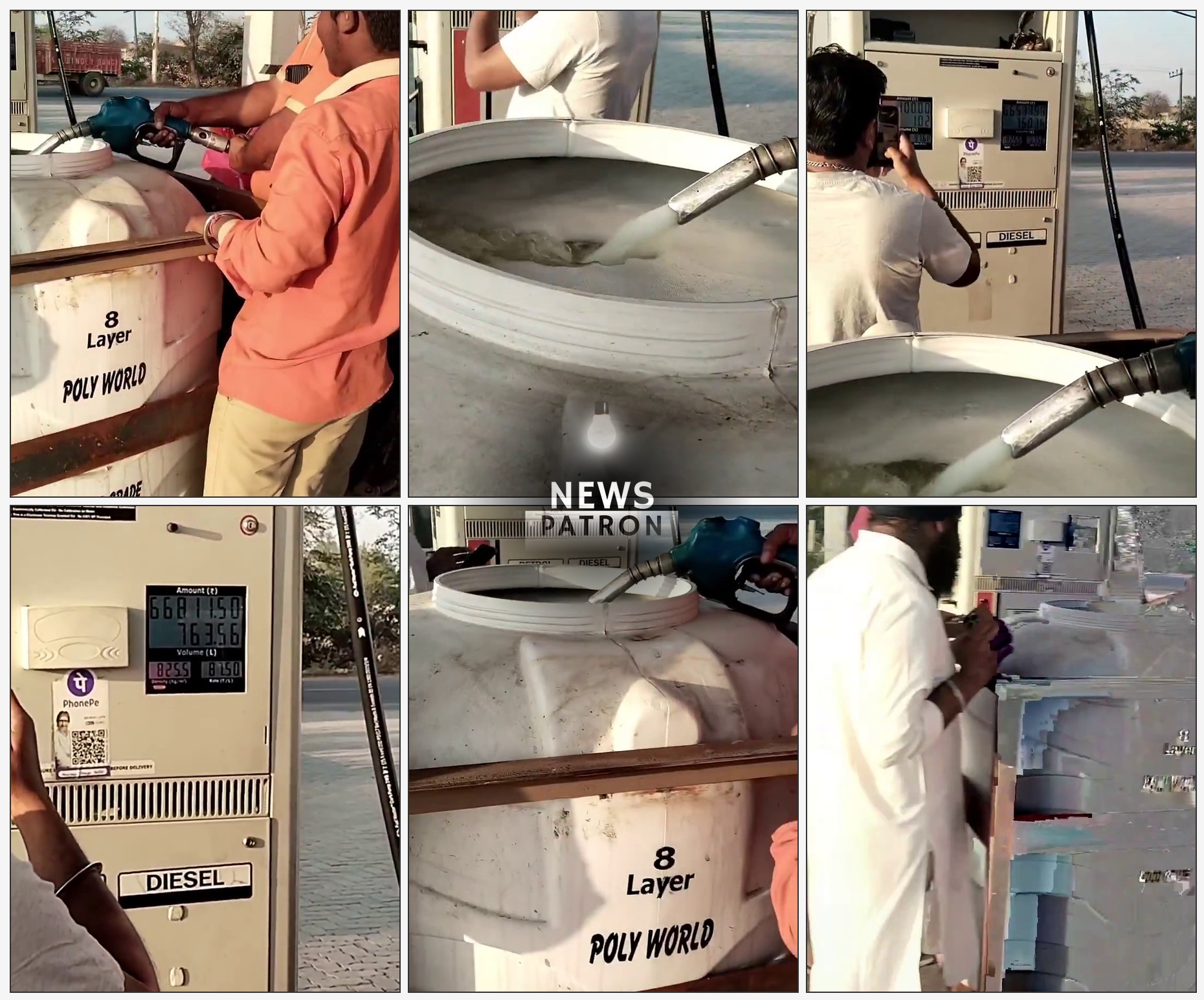
A short video circulating widely shows people at a petrol pump in India filling large plastic tanks and drums with petrol or diesel.
The scene:
- A white poly tank (looks like a 1,000?litre food?grade container) connected to the pump hose.
- A blue drum nearby, also getting topped up.
- Workers or individuals handling the flow, with no obvious vehicle tanks in use.
This footage comes amid rumors of imminent fuel price hikes tied to Middle East tensions, sparking fears of a public rush to pumps to dodge ?5–10 per litre jumps.
However, while social media is quick to scream “panic buying,” it is highly likely this is just routine agricultural stocking. Farmers regularly purchase diesel in bulk for tractors and irrigation pumps, especially ahead of heavy agricultural seasons. But whether it’s a farmer or a panicked civilian, the visuals raise a critical question:
Is it legal for a pump to dispense thousands of litres into containers like this? And more importantly: Can ordinary citizens safely store such huge quantities?
The answer, in short: No – and it’s extremely dangerous.
The Legal Limits: What The Law Actually Says
Dispensing fuel into containers is strictly regulated under India’s Petroleum Act 1934 and rules enforced by the Petroleum and Explosives Safety Organisation (PESO).
Recommended Product
Casio Vintage A168WA Digital Grey Unisex Watch
🛒 View on Amazon →As an Amazon Associate, we earn from qualifying purchases. Price and availability may vary.
Key rules for individuals/households:
- Petrol: Maximum storage without a license is 30 litres in approved metal jerry cans (not plastic).
- Diesel: Up to 2,500 litres allowed in licensed tanks, but only for specific uses like gensets or farm pumpsets – not residential hoarding.
Pumps are also restricted:
- They cannot fill unapproved containers beyond 25 litres per transaction without documentation.
- No dispensing into food?grade poly tanks (designed for water/milk, not flammable liquids) – these can easily leak vapours or rupture in heat.
Violations can lead to immediate pump license cancellation, heavy fines, and the confiscation of illegal storage by fire/police departments.
A local offline source explained it plainly: “Even if you hoard petrol or diesel, you need to use it before one month or else it oxidises and gets spoiled.” Beyond legality, it’s a practical disaster waiting to happen.
The Fire Risk: Why Home Storage Is A Ticking Bomb
Petrol and diesel aren’t like bottled water. They’re highly flammable with explosive vapours.
Storing 1,000 litres in a residential garage or backyard:
- Petrol vapours are heavier than air – they sink into basements, drains, and spread invisibly. A spark from a mobile phone, switch, or cigarette can ignite a fireball.
- Diesel is less volatile but still risks massive fires if leaked near heat sources.
- Poly tanks degrade in sun/heat, leading to leaks.
One insight from a safety expert shared locally: “Only in India you can expect people to fall for rumours so fast. They will literally beg for petrol as if the world will finish in this war.”
Not Shortage – Just Rumors Playing On Fears
Oil companies have repeatedly clarified:
- Stocks are sufficient for 2+ months across India.
- No immediate price hikes planned – global tensions haven’t disrupted supply yet.
- PSUs like IOCL, BPCL, HPCL are monitoring and urging calm.
Yet queues form because WhatsApp forwards claim “prices doubling tomorrow”. People fear black market resale – filling cheap now, selling at markup later. A local source put it bluntly: “It happens to both illiterate and educated people – the enjoyment is done by those who watch such fools spend their hard earned money into foolish ventures.”
What Happens If You Get Caught Hoarding?
If fire/police raid your storage:
- Fuel confiscated as illegal.
- Fines starting at ?10,000, escalating with quantity.
- Criminal case under Petroleum Rules – possible jail for large volumes.
- Vehicle impound if used for transport.
In Tamil Nadu, for example, it’s banned outright to take fuel in any container other than your vehicle – a model other states could quickly enforce if hoarding trends up.
Stay Safe: What You Should Do Instead
Don’t Panic?Buy
- Keep your vehicle tank at 3/4 full as routine.
- No bulk storage – stick to legal jerry cans for emergencies (max 30L petrol).
- Verify rumors via official apps/sites like mypetrolpump.in or PSU apps.
If You Must Store (Legally)
- Only diesel up to 2,500L with PESO license (for gensets/farms).
- Approved metal containers only – no plastic.
- Ventilated, fireproof shed away from home.
Bottom Line: Rumors Fuel Fires – Literally
This bulk?filling video isn’t clever prepping. Whether for farming or out of fear, doing this without safety checks is illegal, unsafe, and exactly what fire departments warn against.
Pumps enabling it risk their licenses. Households storing it risk their homes. And for what? Rumors that vanish by tomorrow, leaving you with spoiled fuel and potential fines.
A simple rule amid the noise:
Fill your tank. Ignore the forwards. Let the hoarders handle their own explosions.
