



🚨 A Heartbreaking System Failure
How does a child die of rabies after receiving the full course of vaccination? The death of 5-year-old Nisha Shinde is not just a tragedy; it is a medical and administrative mystery. For the short summary, read the Quick Read Version (#quickreads) here.
The Death of Nisha Shinde and the Larger Stray Dog Crisis in India
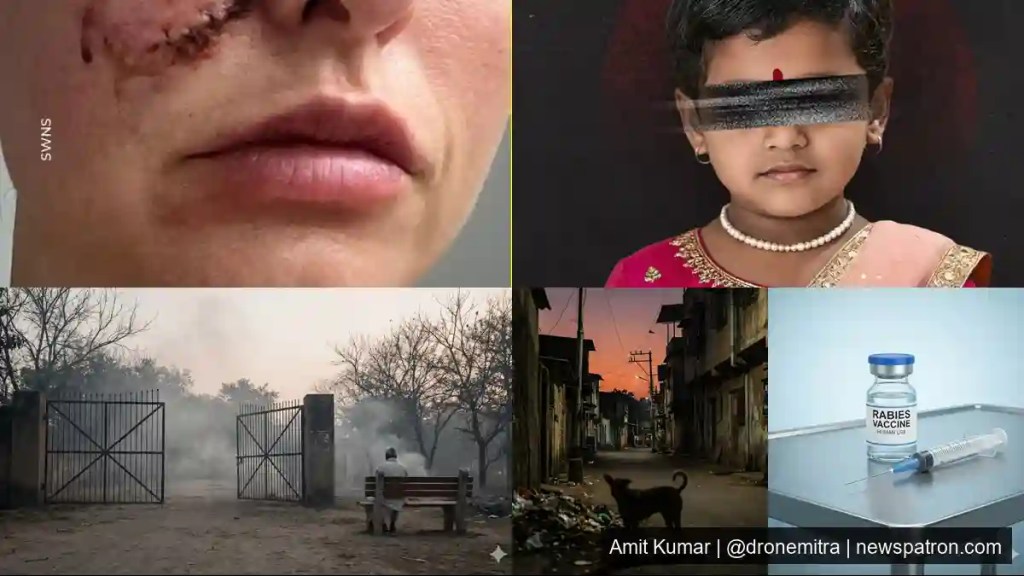
This photograph is of Nisha Shinde, a five-year-old girl who lived in the Diva area of Thane. On November 17, Nisha was playing outside her home. While she was playing, a suddenly aggressive stray dog appeared from somewhere and attacked her. The dog bit her.
Following the dog bite, Nisha was admitted for treatment at a hospital in Dombivli. She was administered anti-rabies injections. After her condition appeared to improve, her birthday was also celebrated.
However, on December 21, news emerged that five-year-old Nisha from Thane had died due to rabies.
On one hand, news of Nisha’s death left her relatives and close family members numb with shock. But even after her last rites were completed, Nisha’s father could not be found. After a search lasting two days, he was finally located at the cremation ground.
What exactly happened to Nisha? How did she die despite receiving rabies injections? And why did her father remain at the cremation ground for two days?
The Night of the Attack: November 17
Nisha lived with her family in the Bedekar Nagar area on Agasan Road in East Diva. She was the Shinde family’s five-year-old daughter. Playing outside the house with friends was part of her daily routine.
On the night of November 17, between approximately 9:00 and 9:30 pm, Nisha was playing near her home as usual. After playing for some time, she sat on a nearby ledge. Suddenly, an aggressive stray dog attacked her.

The attack was so forceful that the five-year-old child fell off the ledge. After she fell, the dog bit her forcefully on her cheek and shoulder and even began dragging her. Frightened by the sudden attack, Nisha began screaming and crying.
Hearing her cries, nearby residents rushed to her aid and immediately took her to Shastrinagar Hospital, run by the Kalyan-Dombivli Municipal Corporation (KDMC).
Medical Response and Vaccination Timeline
Nisha had visible injuries on her cheek and shoulder due to the dog bite. Doctors immediately admitted her and administered anti-rabies injections, beginning treatment at once.
- First dose: Upon admission
- Second dose: November 20
- Third dose: November 24
After the initial treatment, Nisha’s condition appeared to improve. Her health stabilized.
On December 3, Nisha celebrated her birthday with her family. She was happy, and because she seemed to be recovering well, her family felt reassured.
On December 15, Nisha was given what was considered her final dose of treatment and returned home.
Sudden Deterioration and Rabies Symptoms
Soon after returning home, her condition began to deteriorate.
On December 16, Nisha developed:
- Sudden high fever
- Extreme restlessness
- Fear of water
- Severe headaches
- Self-harming behavior (hitting her head on the bed)
- Aggressive biting toward people nearby
This sudden behavioral change shocked her family. For over a month, she had been receiving rabies treatment, and the onset of these symptoms terrified them.
They rushed her back to Shastrinagar Hospital. Seeing her condition, doctors immediately referred her to Kasturba Hospital, Mumbai, for advanced care.
Final Hospitalisation and Death
Nisha was admitted to Kasturba Hospital, where treatment began immediately. Based on her symptoms and behavior, doctors informed the family that she had developed rabies.
Despite four days of treatment, doctors were unable to save her.
On December 21, Nisha died.
Her sudden death devastated her family.
Nisha’s maternal uncle, Samadhan Kadam, alleged that she did not receive proper treatment, stating that she was fine until after the fourth dose, following which her condition worsened.
Nisha’s mother told the media that even on the night before her death, Nisha ate her favorite meal of dal and rice. On December 21, her oxygen levels suddenly dropped, she became restless, and doctors declared her dead.
Medical Explanations and Conflicting Claims
Veterinary science expert Dr. Ashok Bhosale explained that the outcome of a dog bite depends on:
- Whether the dog was rabid
- The location of the bite
Bites near the head significantly increase the likelihood of rabies transmission. In such cases, along with anti-rabies vaccines, Rabies Immunoglobulin (RIG) is extremely important.
Rabies symptoms usually appear between three and twelve weeks.
KMDC doctor Deepa Shukla stated that in Nisha’s case:
- Both the anti-rabies vaccine and immunoglobulin were administered at 1:00 am on November 18
- All protocols were followed
- After Nisha developed fever on December 16, she was referred to Kasturba Hospital
Health officials stated that a detailed investigation would be conducted after receiving reports from both hospitals.
A Father at the Cremation Ground
After Nisha’s funeral, her father left home saying he was going to bring documents. He did not return for two days.
Already grieving the loss of their child, the family panicked when he went missing. After searching for two days, relatives found him sitting at the same cremation ground where Nisha’s last rites had been performed.
He had been sitting there, possibly believing that his daughter might call out to him and that he could hold her once again.
Relatives eventually persuaded him to return home, but his shock and grief were evident.
Public Reaction: What Twitterians Are Saying
The case is widely described as a heartbreaking system failure. Twitter discourse reflects shock, grief, and anger over a child’s preventable death despite medical intervention. Many call it a “wake-up call” for authorities.
Recurring Questions: Why do children die from rabies even after vaccination? Was Rabies Immunoglobulin administered properly and on time? Why do stray dog attacks continue unchecked?
Allegations and Anger: Allegations of hospital negligence. Anger toward municipal authorities for stray dog control failures. Confusion over rabies protocols.
Emerging Demands: Independent medical inquiry. Accountability of hospitals and civic bodies. Stronger stray dog control policies.
The Bigger Picture: India’s Stray Dog Crisis
Shocking Statistics:
- Stray dog population: 15 million (2019 Census) to 62 million (2025 estimates)
- Dog bites: Over 3.7 million annually; ~10,000 per day
- Rabies deaths: India accounts for 35–36% of global fatalities
- Children under 15: 30–60% of victims
Children, elderly, and low-income communities are the most affected.
Supreme Court Intervention (2025): The Supreme Court issued multiple directives in 2025 under the Animal Birth Control (ABC) Rules, 2023, balancing public safety and animal welfare:
- August 11: Ordered removal of all stray dogs from Delhi-NCR streets
- August 22: Modified order; allowed sterilisation, vaccination, and return except aggressive/rabid dogs
- November 7: Ordered removal of dogs from schools, hospitals, transport hubs nationwide
Compliance reports were mandated across states.
When Will We Act?
India’s rabies burden remains among the highest globally. Despite vaccines, protocols, and court orders, implementation gaps persist.
This is not about cruelty toward animals. It is about preventable deaths, public health accountability, and urban governance failures.
The image that remains is not a statistic — it is a father sitting for two days at a cremation ground, waiting for a child who will never return.
Until investigations conclude, Nisha’s story stands as a warning of what happens when systems fail the most vulnerable.
Legal Framework: Where Does Responsibility Lie?
The death of Nisha Shinde raises critical legal questions regarding liability. Indian jurisprudence recognizes two distinct avenues for accountability in such cases:
- Medical Negligence (The Bolam Test): If the administration of the vaccine or RIG deviated from standard medical protocols (e.g., incorrect dosage, cold chain failure, or delayed RIG), the hospital and attending doctors may be liable under consumer protection laws and criminal negligence statutes.
- Municipal Liability (Statutory Duty): Municipal corporations (like KDMC) have a statutory duty to manage stray animal populations and ensure public safety. Courts have previously ruled that sovereign immunity does not apply when civic bodies fail in their mandatory duties, making them liable for compensation.
Constitutional & Public Health Analysis
This incident also highlights a conflict between two constitutional principles:
- Article 21 (Right to Life): The Supreme Court has repeatedly affirmed that the Right to Life includes the right to a safe environment, free from the threat of stray animal attacks and preventable diseases like rabies.
- Article 51A(g) (Fundamental Duties): This article mandates compassion for living creatures. Animal welfare acts protect stray dogs from culling, creating a complex administrative challenge where sterilization (ABC rules) is the only legal population control method.
The failure to balance these rights results in public health crises where the most vulnerable citizens—children in lower-income neighborhoods—pay the highest price.
Is this a failure of medicine or municipal administration? Share your views below.
#nishashinde #divadogbite #rabiesawareness #thanenews #straydogcrisis #justicefornisha

[…] Read the Full Investigation: Nisha Shinde Case: A Child, A City, and a System Under Strain […]
[…] 👉 Click Here for the Deep Dive Report […]