







Mumbai pigeon feeding ban has ignited a complex debate that transcends customary feeding rituals and raises urgent public health concerns. This blog explores the Kabootar controversy Mumbai—where tradition, faith, legal mandates, and science collide in India’s bustling metropolis. Pigeons were once the original messengers of the skies. Today, drones reign supreme. This proves even pigeons have tough competition in modern times. Amidst this backdrop, Newspatron invites readers to dive deep. Enjoy stunning aerial views on the DroneMitra YouTube channel — Your Sky is Digital with a Drone as a Friend. Stay informed with our investigative videos on the Newspatron YouTube channel — Let Curiosity Be Your Guide.
Introduction: The Mumbai Pigeon Feeding Ban and Its Impact
Mumbai’s cherished tradition of feeding kabootars finds itself embroiled in a delicate dispute. The well-intentioned practice clashes with growing evidence. Pigeon droppings serve as vectors for serious respiratory illnesses. These illnesses jeopardize public health. This struggle underscores an uneasy tension between age-old customs and the imperatives of modern urban governance. The Kabootar controversy Mumbai raises tough questions: How can compassion for urban wildlife survive when it threatens human health? How should cities balance faith with science in a fast-changing world?
Legal Framework and BMC’s Actions on Kabootarkhana Closure
The Brihanmumbai Municipal Corporation (BMC) enforces a legally grounded ban on pigeon feeding, backed by the Bombay High Court’s instructions. The BMC is empowered by municipal bylaws since 1888. A July 30 High Court order further strengthens this authority. They sealed 51 kabootarkhanas, including the landmark Dadar site. Fines were issued, and FIRs were lodged against violators. The Supreme Court reinforced this stance. They affirmed that “There cannot be anything more vital than human health”. The Bombay High Court directs continuation of interim orders on pigeon breeding and kabutarkhanas. These rulings emphasize collective wellbeing over individual traditions, marking a crucial shift in Mumbai’s urban management.
Public Health Concerns: Respiratory Diseases and Pigeon Droppings Hazards
Pigeon droppings are a silent menace. Imagine a hardworking boy cramming in a cramped chawl, resting his elbow near a windowsill unsanitary from recent pigeon droppings. The resulting airborne dust carries fungi triggering hypersensitivity pneumonitis, forcing him to miss exams due to chronic illness. At a bus shelter, commuters inhale similar particles from soiled benches, contributing to rising respiratory complaints locally.
A homeowner nets their balcony yet feeds pigeons on streets unknowingly spreading risks to neighbors. Meanwhile, a housewife cleans contaminated terraces without protection, exposing herself to asthma-triggering pathogens. Cutting deeper, city workers combating the infestation bear constant exposure, risking their own health in the line of duty. These real-world stories highlight the gravity of the pigeon feeding ban—an urgent measure to halt a growing public health crisis.
Tragic Realities: The Cost of Inhaling Pigeon Droppings
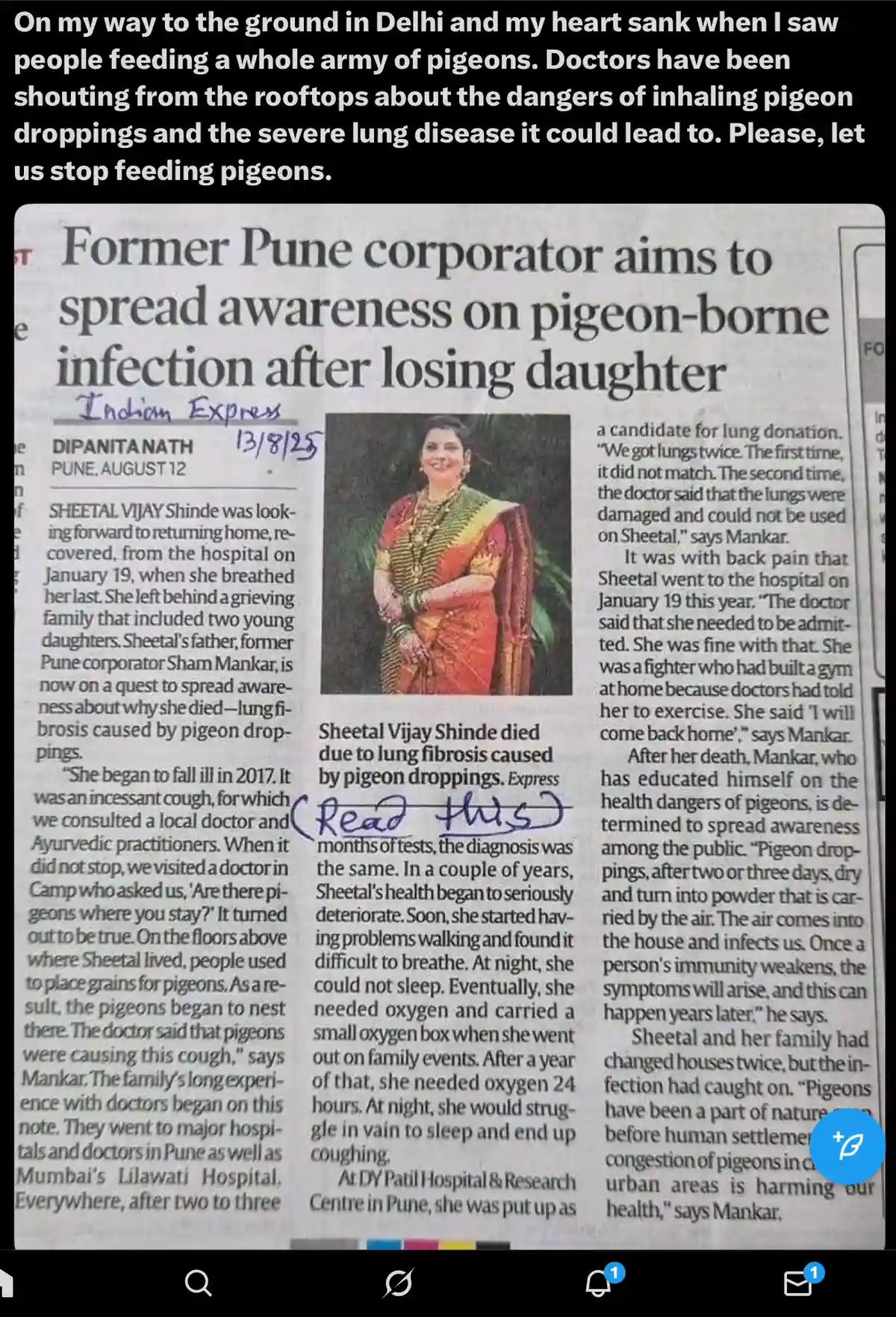
The public health debate around pigeon feeding in India has found heartbreaking validation in recent news from Pune. The loss of Sheetal Vijay Shinde—a young woman whose untimely death was directly caused by lung fibrosis due to inhaling toxic dust from pigeon droppings—serves as a sobering reminder of the hidden dangers lurking in urban environments where pigeons are fed daily. Despite medical interventions, Sheetal succumbed after years of breathing contaminated air in her home, illustrating how airborne fungal spores and dust from dried droppings can cause irreversible respiratory damage, especially in densely populated neighborhoods.[newspatron]
Doctors and bereaved families are now sounding urgent warnings: dried pigeon droppings, once airborne, can enter homes, weaken immune systems, and manifest as severe lung disease, such as hypersensitivity pneumonitis and lung fibrosis. Sheetal’s story resonates deeply with Mumbai residents affected by net removal and increased drop-in pigeon infestation, reinforcing why the BMC and Bombay High Court have prioritized bans—human health must always come first.[newspatron]
The tragic fallout and medical realities confronted by Sheetal’s family bolster calls for public education and stricter controls. Awareness must go hand-in-hand with policy; stopping widespread pigeon feeding in urban areas is not just a legal imperative, but a compassionate, evidence-based choice to protect lives.[newspatron]
Religious and Cultural Significance: Jain Pigeon Feeding and Kabootar Traditions
For Mumbai’s Jains and Gujaratis, feeding kabootars is a sacred devotion. It is woven into spiritual fabric through ahimsa. There is also compassion for living beings. Located near temples, many kabootarkhanas serve as ritual spaces where feeding pigeons earns spiritual merit and ancestral blessings. The ban sparked mass protests, hunger strikes, and civil disobedience, reflecting a community’s fight for religious freedom.
Yet paradoxes emerge—balconies netted to exclude pigeons coexist with street feeding practices, raising tensions between faith and public health. Political leaders call for controlled feeding zones, seeking a middle ground that honors traditions without sacrificing safety. This tug-of-war embodies the challenge of evolving cultural practices amid scientific realities.
Recommended Product
Jockey Women's Hipster Brief – Comfort Fit, Assorted Colors
🛒 View on Amazon →As an Amazon Associate, we earn from qualifying purchases. Price and availability may vary.
Local Voices: The Impact of Net Removal and Court Orders on Mumbai Residents
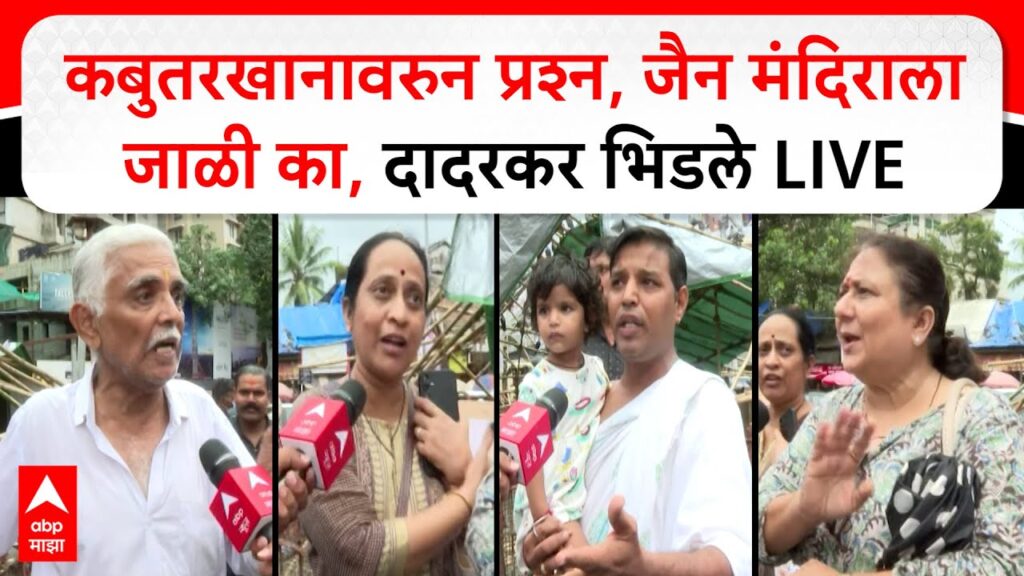
This candid video features Marathi locals describing struggles post-removal of protective nets meant to keep pigeons away. Residents recount increased pigeon droppings inside homes and offices. This is raising health concerns. At the same time, they recognize the need to respect court orders for public safety.
Environmental and Heritage Impacts: Balancing History and Health
Mumbai’s heritage monuments suffer corrosion and decay from acidic pigeon droppings. The High Court mandates strict enforcement to protect these cultural icons while prioritizing human health. Overpopulation of pigeons disrupts native bird species and sanitization efforts, causing ecological imbalance and urban safety hazards.
Displaced pigeons cause street contamination and traffic disruption, complicating urban management. The court’s decisive rulings set the ban’s legal seriousness, demanding comprehensive, balanced urban wildlife policies.
Maharashtra Assembly Insight: The Health Risks and Policy Debate on Bird Feeding
MLA Chitra Wagh shares a personal tragedy linked to diseases caused by bird droppings and urges a statewide feeding ban. Meanwhile, an MNS spokesperson advocates that birds must compete naturally for food, warning against excessive feeding encouraging overpopulation.
Social Response and Political Dynamics of the Kabootar Controversy
Communities led by Jains vocally oppose, staging protests and hunger strikes defending feeding as a sacred duty transcending civic law. Leaders call for balanced solutions, including controlled feeding areas, yet political tensions heighten amid electioneering.
Divided citizens debate cultural preservation versus urban health. Animal welfare groups advocate for humane controls and promote public education. They stress the need for dialogue and cooperation. This approach is crucial in navigating the multifaceted conflict.
Possible Solutions: Towards a Balanced and Scientific Approach to Kabootar Feeding
Designated feeding zones and targeted support for native birds offer practical ways to reduce health risks while respecting religious traditions. Collaborations with animal welfare organizations can guide humane population control and rehabilitation efforts.
Public education promotes safer feeding habits and personal protective measures, while ongoing research monitors ecological and health outcomes. Mumbai stands poised to pioneer coexistence strategies blending faith, science, and responsibility.
Conclusion: Reimagining the Mumbai Pigeon Feeding Ban in Context
This controversy reflects Mumbai’s struggle to balance compassion with public safety. The Bombay High Court’s declaration that human health is paramount underscores the ethical foundation for the ban.
Honoring cultural heritage alongside scientific evidence involves compromise, respect, and progressive policies fostering coexistence. Mumbai’s kabootar story transcends birds—it is about redefining human-nature relations in a growing urban world.
For full transparency and deeper exploration, all researching sources and references for this post can be accessed here:
Researching Sources and References
Related Video Links
Must Watch: Why This Is Trending
Connect with Me
I’m always eager to hear your thoughts and perspectives. Feel free to share comments below. You can also connect with me, Kumar, Editor at Newspatron, on your favorite platform. Stay updated by tracking Newspatron on Instagram, Twitter, and Facebook. Join our growing community on Reddit, Telegram, and subscribe to our WhatsApp channel for instant blog and YouTube updates.
Don’t forget to subscribe to our inspiring YouTube channels—Newspatron and DroneMitra—to fuel your curiosity and explore the digital skies!

[…] Read on blog or Reader […]