


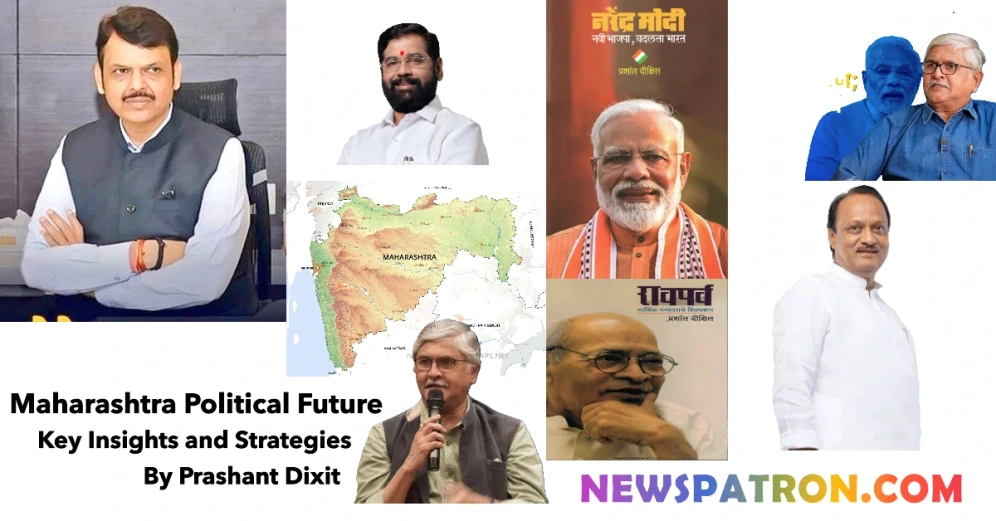

Welcome to an in-depth exploration of Maharashtra’s political landscape, featuring insights from senior Marathi journalist Prashant Dixit. In this article, we delve into the current and future political scenarios in one of India’s key states, especially in the wake of recent assembly elections. We’ll discuss the roles of major political players, the significance of municipal elections, and the evolving dynamics of Hindutva and secularism in Maharashtra.
Prashant Dixit shares his expert views on the challenges and strategies of the Bharatiya Janata Party (BJP), Shiv Sena, and other key parties. We’ll also touch upon the economic and social issues that influence the state’s politics and speculate on future political strategies and potential alliances.
Before we dive into the details, I encourage you to check out our YouTube channels for some fantastic content. Visit DroneMitra for amazing drone shots and insights (“Your Sky is Digital with a Drone as a Friend”) and Newspatron for in-depth political analysis and more (“Let Curiosity Be Your Guide”).
Let’s begin our journey of discovery together! ?
Brief on Prashant Dixit
Prashant Dixit is a renowned marathi journalist and the former editor of ‘Divya Marathi’. He has been honoured with the prestigious Narad Journalism Award for his exemplary contributions to journalism. This award, presented by Vishwasanvad Kendra and Deccan Education Society, recognizes outstanding journalism. Alongside Prashant Dixit, Ajay Kamble, the Pune Bureau Chief of India TV, had been announced as the recipient of the Youth Award. The award ceremony was held on June 2nd some 12 years ago, with senior cartoonist Mangesh Tendulkar presenting the awards. The Narad Journalism Award includes a cash prize of ?11,000 and a memento, while the Youth Award includes a cash prize of ?5,000 and a memento.
Prashant Dixit has been in the field of journalism for 24 years. His reports from Delhi and his coverage of the Kargil War, titled ‘Kargilnama’, have been significant in commenting on the India-Pakistan issues.
Watch: The Incident Explained
Introduction to Maharashtra’s Political Landscape
Maharashtra, one of India’s most politically significant states, has always been a battleground for major political parties. The recent assembly elections have further intensified the political dynamics, with various parties vying for control and influence. In this section, we will provide a brief history of Maharashtra’s political scenario and introduce the key players shaping its future.
Recommended Product
Casio Vintage A168WA Digital Watch – Classic Retro Style
🛒 View on Amazon →As an Amazon Associate, we earn from qualifying purchases. Price and availability may vary.
Brief History and Current Political Scenario
Maharashtra’s political landscape has been dominated by a few major parties, including the Bharatiya Janata Party (BJP), Shiv Sena, and the Nationalist Congress Party (NCP). Historically, the state has seen a mix of coalition governments and single-party rule, with power often shifting between these major players. The recent assembly elections have brought new challenges and opportunities for these parties, as they navigate the complex political terrain.
Key Players and Their Roles
- Bharatiya Janata Party (BJP): The BJP has been a significant force in Maharashtra politics, especially with leaders like Devendra Fadnavis at the helm. The party’s strategies and alliances have played a crucial role in shaping the state’s political future.
- Shiv Sena: Originally founded by Bal Thackeray, Shiv Sena has been a dominant regional party. Under Uddhav Thackeray’s leadership, the party has faced internal splits and challenges but remains a key player in the state’s politics.
- Nationalist Congress Party (NCP): Led by Sharad Pawar, the NCP has been a crucial player in Maharashtra’s political landscape. The party’s alliances and strategies continue to influence the state’s political dynamics.
- Eknath Shinde: A prominent leader who has emerged as a significant force within the Shiv Sena, Eknath Shinde’s influence and ambitions have added new dimensions to the political scenario.
The Role of Shiv Sena and BJP
Maharashtra’s political landscape is significantly influenced by the dynamics between Shiv Sena and the Bharatiya Janata Party (BJP). These two parties, despite their historical alliance, have seen fluctuating relationships and power struggles that shape the state’s governance.
Uddhav Thackeray’s Shiv Sena
Under the leadership of Uddhav Thackeray, Shiv Sena has faced numerous challenges. The party, once a formidable force in Maharashtra, has experienced internal splits and weakening influence. Uddhav Thackeray’s leadership has been tested, especially with the rise of Eknath Shinde, who has carved out his own faction within the party. The upcoming Mumbai Municipal Corporation elections are crucial for Shiv Sena, as a defeat could further weaken their position and force leaders like Aditya Thackeray to rebuild from scratch.
Eknath Shinde’s Influence
Eknath Shinde has emerged as a significant player within Shiv Sena, leveraging his position to gain substantial influence. His insistence on holding key positions, such as the Chief Minister’s office, has empowered many Shiv Sainiks. Shinde’s strategic manoeuvres, including his focus on controlling the Home Department, highlight his ambition to expand his faction’s power. However, his success depends on navigating the complex political landscape and maintaining support within the party.
BJP’s Expansion Strategy
The BJP, led by Devendra Fadnavis in Maharashtra, faces its own set of challenges. Despite Fadnavis being a prominent statewide icon, the BJP lacks strong regional leaders in areas like Vidarbha, Marathwada, and Konkan. The party’s strategy involves creating leadership across these regions to strengthen its presence. The BJP’s expansion plans are also tied to the outcomes of municipal elections, particularly in Mumbai, which is seen as a critical battleground.
Municipal Elections and Their Impact
Municipal elections in Maharashtra, particularly in Mumbai, play a pivotal role in shaping the state’s political landscape. These elections are not just about local governance but also serve as a barometer for the popularity and influence of major political parties.
Importance of Mumbai Municipal Corporation Elections
The Mumbai Municipal Corporation elections are crucial for several reasons. Firstly, Mumbai is the economic capital of India, and controlling its municipal corporation provides significant administrative and financial leverage. For the BJP, gaining control over Mumbai is a strategic priority, especially since they do not currently govern the municipal corporations of other major cities like Delhi, Kolkata, Bangalore, and Chennai. Winning Mumbai would not only enhance their influence in Maharashtra but also boost their national standing.
Potential Outcomes and Their Significance
The outcomes of the Mumbai Municipal Corporation elections will have far-reaching implications. A victory for the BJP would solidify their position and allow them to implement their policies more effectively. On the other hand, a defeat for Shiv Sena, particularly Uddhav Thackeray’s faction, could further weaken their political standing and force them to reassess their strategies. Eknath Shinde’s faction also stands to gain or lose significantly based on these results, as control over Mumbai would empower his supporters and strengthen his position within the party.
Voter Demographics in Mumbai
Understanding the voter demographics in Mumbai is crucial for analyzing election outcomes and predicting future trends. Mumbai, being a diverse and populous city, presents a unique electoral landscape.
Demographic Breakdown
As of the latest data, Mumbai has over 1 crore registered voters[1]. This includes approximately 54.67 lakh male voters, 47.62 lakh female voters, and 1,082 transgender voters[1]. The voter base is spread across the island city and suburban districts, with 25.4 lakh voters in the island city and 76.8 lakh in the suburbs[1]. The city’s electorate is diverse, encompassing various age groups, socio-economic backgrounds, and communities.
Voter Turnout
Voter turnout in Mumbai has historically been lower compared to other regions in Maharashtra. In the 2024 Maharashtra Assembly elections, Mumbai City district recorded the lowest voter turnout at 52.07%, followed by Mumbai Suburban at 55.77%[2]. Despite efforts to encourage voting, urban apathy remains a significant challenge. Factors such as voter convenience, awareness campaigns, and socio-economic conditions influence turnout rates.
Examples of Past Election Outcomes
Analysing past election outcomes provides insights into voting patterns and party performance in Mumbai.
2024 Lok Sabha Elections
In the 2024 Lok Sabha elections, Mumbai had six parliamentary constituencies. The BJP and Shiv Sena (UBT) were the major contenders. Union Minister Piyush Goyal from the BJP won the Mumbai North seat by a significant margin of 3,57,608 votes[3]. In contrast, Shiv Sena’s Ravindra Dattaram Waikar secured the Mumbai North West seat by a narrow margin of just 48 votes[3]. These results highlight the competitive nature of elections in Mumbai and the varying levels of support for different parties.
2019 Lok Sabha Elections
The 2019 Lok Sabha elections also saw intense competition in Mumbai. The BJP and Shiv Sena alliance performed well, securing several key seats. For instance, BJP’s Gopal Shetty won the Mumbai North seat, while Shiv Sena’s Arvind Sawant retained the Mumbai South seat[4]. These outcomes reflected the strong presence of the BJP-Shiv Sena alliance in the city.
Future Political Strategies
Understanding voter demographics and past election outcomes is essential for formulating future political strategies. As parties prepare for upcoming elections, they must consider these factors to effectively engage with the electorate and address their concerns.
References
[1] Mumbai voter count surpasses 1 crore for Maharashtra Assembly polls
[2] Here’s How Mumbai And Thane Voted During The Maharashtra Elections 2024 …
[3] 2024 Mumbai Lok Sabha Election Results: Full List Of Winners – NDTV Profit
[4] Lok Sabha 2019 Election Results: Mumbai Metropolitan Region
Regional Leadership Challenges
For the BJP to solidify its presence in Maharashtra, it must address the significant challenge of creating strong regional leadership. This involves identifying and nurturing leaders who can represent the party in various regions and effectively address local issues.
BJP’s Need for Regional Icons
The BJP’s current leadership in Maharashtra, primarily represented by Devendra Fadnavis, lacks strong regional icons in key areas such as Vidarbha, Marathwada, and Konkan. This absence of regional representation poses a challenge for the party’s expansion plans. To build a robust political base, the BJP needs to cultivate leaders who can resonate with the local populace and address their specific concerns.
Analysis of Leadership Gaps
- Vidarbha: This region has been a stronghold for the BJP, but the party lacks a prominent leader who can consistently mobilize support and address local issues. Developing a strong leadership presence here is crucial for maintaining and expanding their influence.
- Marathwada: Similar to Vidarbha, Marathwada requires a dedicated leader who can represent the BJP’s interests and connect with the local electorate. The party needs to focus on building a leadership pipeline to ensure sustained political engagement.
- Konkan: The Konkan region presents unique challenges due to its distinct cultural and economic landscape. The BJP must identify leaders who understand these nuances and can effectively advocate for the region’s development.
The Impact of Local Issues on Elections
Local issues play a significant role in shaping voter behavior and election outcomes in Maharashtra. Understanding these issues is crucial for political parties as they formulate their strategies and engage with the electorate.
Key Local Issues
- Infrastructure Development: In urban areas like Mumbai, infrastructure development is a major concern. Issues such as traffic congestion, inadequate public transportation, and poor road conditions are frequently highlighted by voters. Political parties often promise infrastructure improvements to gain support.
- Agricultural Distress: In rural regions, agricultural distress remains a critical issue. Farmers face challenges such as water scarcity, fluctuating crop prices, and debt. Addressing these concerns is essential for parties seeking to win rural votes.
- Employment Opportunities: Unemployment and underemployment are significant issues across Maharashtra. Voters, particularly the youth, are concerned about job opportunities and economic stability. Parties that propose effective employment policies can attract substantial support.
- Healthcare and Education: Access to quality healthcare and education is a priority for many voters. Issues such as inadequate healthcare facilities, lack of schools, and poor educational infrastructure are often raised during elections.
Influence on Voter Behavior
Local issues directly influence voter behavior. Candidates and parties that address these concerns effectively are more likely to gain voter trust and support. For instance, in regions facing severe agricultural distress, parties that propose comprehensive solutions for farmers’ issues tend to perform better. Similarly, in urban areas, promises of infrastructure development and improved public services resonate with voters.
BJP’s Strategies for Leadership Development
Understanding the impact of local issues is essential for political parties as they develop their leadership strategies. The BJP has focused on addressing these issues through targeted policies and leadership development initiatives.
The BJP’s success in Maharashtra and other states can be attributed to its strategic approach to leadership development. The party has implemented several initiatives to nurture and promote leaders at various levels.
Identifying and Nurturing Talent
The BJP places a strong emphasis on identifying and nurturing political talent. The party actively scouts for potential leaders from diverse backgrounds, including grassroots workers, professionals, and social activists. These individuals are provided with training and mentorship to develop their political skills and leadership qualities.
Leadership Training Programs
The BJP conducts extensive leadership training programs to equip its members with the necessary skills and knowledge. These programs cover various aspects of political leadership, including public speaking, policy analysis, campaign management, and constituency development. By investing in training, the BJP ensures that its leaders are well-prepared to handle the challenges of governance.
Promoting Regional Leaders
Recognizing the importance of regional representation, the BJP promotes leaders from different regions of Maharashtra. This strategy helps the party address local issues more effectively and build a strong regional presence. Leaders like Devendra Fadnavis have been instrumental in expanding the BJP’s influence in Maharashtra through their regional leadership.
Encouraging Youth Participation
The BJP actively encourages youth participation in politics. The party has established youth wings and student organizations to engage young people and involve them in political activities. By fostering a new generation of leaders, the BJP aims to ensure its long-term sustainability and relevance.
Hindutva and Secularism in Maharashtra
The BJP’s leadership development strategies are closely linked to its ideological stance and policy priorities. In the next section, we will explore the evolving dynamics of Hindutva and secularism in Maharashtra and how these ideologies influence the state’s politics.
Maharashtra’s political landscape is deeply influenced by the interplay between Hindutva and secularism. These ideologies shape the policies and strategies of major political parties, impacting their appeal to different voter bases.
Evolution of Hindutva in Maharashtra
Hindutva, as an ideology, has evolved significantly in Maharashtra. Historically, it has been associated with the Shiv Sena and its founder, Bal Thackeray, who championed a form of aggressive Hindutva. However, in recent years, the BJP has also embraced Hindutva, albeit in a more nuanced manner. The party’s approach combines traditional Hindutva with a focus on development and governance, appealing to a broader electorate.
The BJP’s success in Maharashtra can be attributed to its ability to balance Hindutva with pragmatic governance. Leaders like Devendra Fadnavis have emphasized the importance of economic development and social welfare, while also promoting Hindutva values. This strategy has helped the party gain support across different regions and demographics.
Balancing Hindutva with Secularism
While Hindutva remains a significant force in Maharashtra politics, there is also a strong undercurrent of secularism. The state’s diverse population includes various religious and cultural communities, necessitating a balanced approach. Political parties must navigate this complex landscape, ensuring they do not alienate any particular group.
Prashant Dixit highlights that the brand of Hindutva in Maharashtra is rooted in the Warkari sect and the legacy of Shivaji Maharaj. This form of Hindutva is inclusive and emphasizes social harmony, which distinguishes it from the more aggressive forms seen in other states. The challenge for political leaders is to maintain this balance, promoting Hindutva while respecting the state’s secular traditions.
Voter Reactions to Hindutva
Hindutva, as an ideological and political strategy, has elicited varied reactions from voters in Maharashtra. Understanding these reactions is crucial for analysing the state’s electoral dynamics and the success of political parties that adopt this stance.
Positive Reactions
Many voters in Maharashtra resonate with the principles of Hindutva, particularly those who see it as a means to preserve cultural identity and promote social cohesion. The BJP’s strategy of consolidating the Hindutva vote has been effective in unifying voter bases under a broader ideological appeal[1]. This approach has helped the party outmanoeuvre fragmented caste-based narratives and gain substantial support across different regions.
For instance, in the recent assembly elections, the BJP’s emphasis on Hindutva played a significant role in their electoral success. Voters who prioritize cultural and religious identity over other issues found the BJP’s message appealing. This was particularly evident in regions where the party’s grassroots efforts and community engagement reinforced their Hindutva stance[1].
Negative Reactions
However, not all voters respond positively to Hindutva. Some view it as a divisive ideology that can lead to communal tensions and marginalize minority communities. This perspective is often held by voters who prioritize secularism and social harmony. In Maharashtra, where there is a significant presence of diverse religious and cultural communities, the emphasis on Hindutva can sometimes alienate these groups.
Critics argue that the aggressive promotion of Hindutva can overshadow other critical issues such as economic development, healthcare, and education. For example, during the recent elections, some voters expressed concerns that the focus on Hindutva detracted from addressing pressing local issues like agricultural distress and unemployment[2].
Balancing Act
Political parties in Maharashtra must navigate these varied reactions to Hindutva carefully. While the BJP has successfully leveraged Hindutva to consolidate its voter base, it also faces the challenge of addressing the concerns of those who feel marginalized by this ideology. Balancing Hindutva with inclusive policies that cater to the diverse population of Maharashtra is essential for long-term political success.
References
[1] Women voters to Hindutva plank: Analyst Rajat Sethi’s key takeaways …
[2] Opinion: Understanding the Hindutva factor in Maharashtra elections
Economic and Social Issues
Economic and social issues play a crucial role in shaping Maharashtra’s political landscape. Addressing these challenges is essential for any political party aiming to gain and maintain power in the state.
Economic Disparities and Agricultural Challenges
Maharashtra, despite being one of India’s most industrialized states, faces significant economic disparities. Regions like Vidarbha and Marathwada are particularly affected by poverty and underdevelopment. Agricultural distress is a major issue, with farmers facing challenges such as inadequate irrigation, fluctuating crop prices, and debt. These economic hardships often translate into political discontent, influencing voter behavior and party strategies.
Political parties, including the BJP, have attempted to address these issues through various schemes and policies. However, the effectiveness of these measures is often debated. For instance, while the BJP has implemented several agricultural support programs, critics argue that more comprehensive and sustainable solutions are needed to address the root causes of economic disparity.
BJP’s Economic Policies and Their Impact
The BJP’s economic policies in Maharashtra have focused on infrastructure development, industrial growth, and social welfare. Initiatives like the Mumbai-Nagpur Expressway and various urban development projects aim to boost economic growth and create jobs. Additionally, the party has promoted schemes to support small businesses and entrepreneurs, aiming to stimulate local economies.
However, the impact of these policies varies across different regions. While urban areas like Mumbai and Pune have benefited from infrastructure projects, rural regions still struggle with basic amenities and economic opportunities. The challenge for the BJP and other political parties is to ensure that development is inclusive and reaches all sections of society.
Statistics on Poverty Rates
Poverty remains a significant issue in Maharashtra, despite its status as one of India’s most industrialized states. According to recent data, the poverty rate in Maharashtra stands at approximately 17.35%[1]. This figure highlights the economic disparities within the state, with rural areas experiencing higher poverty rates compared to urban regions. For instance, regions like Vidarbha and Marathwada face severe economic challenges, contributing to higher poverty levels.
The Impact of Urbanization on Poverty
Urbanization in Maharashtra has been rapid, with the state having the highest level of urbanization in India at 45.23% compared to the national average of 29.5%[2]. While urbanization brings economic opportunities and development, it also presents challenges, particularly in terms of poverty and inequality.
Positive Impacts
Urbanization can lead to improved infrastructure, better access to education and healthcare, and increased employment opportunities. Cities like Mumbai and Pune have seen significant economic growth, attracting investments and creating jobs. This growth can help reduce poverty by providing better living standards and economic opportunities for urban residents.
Negative Impacts
However, rapid urbanization also leads to the growth of slums and informal settlements, where living conditions are often poor. Issues such as inadequate housing, lack of basic amenities, and unemployment are prevalent in these areas. The influx of rural migrants to urban centres in search of better opportunities often exacerbates these problems, leading to increased urban poverty[3].
Opposition Parties’ Economic Strategies
Opposition parties in Maharashtra have developed various economic strategies to address the state’s challenges and counter the ruling BJP’s policies.
Focus on Inclusive Growth
Opposition parties, including the Congress and NCP, emphasize inclusive growth. They advocate for policies that address economic disparities and ensure that development benefits all sections of society. This includes targeted programs for rural development, agricultural support, and social welfare schemes aimed at reducing poverty and inequality.
Criticism of BJP’s Economic Policies
Opposition leaders have criticized the BJP for its handling of the state’s economy. They argue that the BJP’s focus on large infrastructure projects often overlooks the needs of rural and marginalized communities. For instance, the decline in Maharashtra’s share of the national GDP has been a point of contention, with opposition leaders blaming the BJP for not prioritizing the state’s economic growth[4].
Proposals for Economic Reforms
To counter the BJP’s strategies, opposition parties propose various economic reforms. These include increasing investment in agriculture, improving rural infrastructure, and enhancing social welfare programs. They also advocate for policies that promote small and medium enterprises (SMEs) and create job opportunities for the youth.
Hindutva and Secularism in Maharashtra
Understanding the economic strategies of opposition parties provides a comprehensive view of the political landscape in Maharashtra.
[1]: Poverty rate in Maharashtra [2]: Urbanization trends in Maharashtra [3]: Impact of urbanization on poverty [4]: Opposition’s criticism of BJP’s economic policies
References
[1] Maharashtra’s GDP Decline Sparks Tensions Between BJP and Opposition …
[2] Maharashtra Elections: A political showdown where economic powerhouse …
[3] Grand narrative vs the here and now: Mahayuti and MVA strategies differ
[4] AN ANALYSIS OF URBANISATION TRENDS IN MAHARASHTRA: ISSUES AND …
Future Political Strategies
As Maharashtra’s political landscape continues to evolve, major parties are formulating strategies to secure their positions and expand their influence. These strategies involve potential mergers, alliances, and long-term plans to address the state’s unique challenges.
Potential Mergers and Alliances
One of the key discussions in Maharashtra’s political circles is the potential merger of Sharad Pawar’s Nationalist Congress Party (NCP) with the Congress. This merger could significantly alter the political dynamics, creating a stronger opposition to the BJP. However, such a merger also presents challenges, including managing internal rivalries and aligning the agendas of both parties.
Prashant Dixit suggests that while a merger seems inevitable, the process will be complex. Leaders like Supriya Sule and Ajit Pawar will play crucial roles in navigating this transition. Additionally, the BJP’s strategy will involve negotiating with regional leaders like Eknath Shinde to maintain their influence in key areas.
Long-Term Strategies for BJP and Other Parties
The BJP’s long-term strategy in Maharashtra focuses on building a robust regional leadership and expanding their influence in underrepresented areas. This involves nurturing local leaders, addressing regional issues, and implementing policies that resonate with the electorate. The party aims to create a sustainable political base that can withstand internal and external challenges.
For Shiv Sena, the focus will be on rebuilding their strength, particularly in Mumbai. The party needs to address internal divisions and present a united front to regain voter confidence. Similarly, the NCP and Congress will need to strategize on how to effectively counter the BJP’s influence while managing their internal dynamics.
Impact of Social Media on Strategies
Social media has revolutionized political strategies in Maharashtra, providing parties with powerful tools to engage with voters, shape public opinion, and mobilize support. The impact of social media on political campaigns is profound, influencing both the methods and outcomes of elections.
Voter Engagement and Outreach
Social media platforms like Facebook, Twitter, Instagram, and WhatsApp have become essential for political engagement. Parties use these platforms to communicate directly with voters, bypassing traditional media channels. This direct communication allows for real-time interaction, feedback, and engagement, making it easier for parties to address voter concerns and build a loyal following[1].
For instance, during the recent elections, political parties extensively used social media to conduct polls, share campaign updates, and engage in discussions with voters. This approach not only increased voter participation but also helped parties tailor their messages to specific demographics[2].
Digital Campaign Strategies
Political parties in Maharashtra have adopted sophisticated digital campaign strategies to maximize their reach and impact. These strategies include targeted advertising, micro-targeting, and data analytics to understand voter behavior and preferences. By analyzing social media data, parties can create customized content that resonates with different voter groups[2].
For example, the BJP has invested heavily in digital campaigns, using data-driven insights to craft messages that appeal to various segments of the electorate. This approach has enabled them to effectively counter opposition narratives and reinforce their own political agenda[1].
Influence on Public Opinion
Social media plays a crucial role in shaping public opinion. Political parties use these platforms to disseminate information, highlight their achievements, and criticize their opponents. The viral nature of social media ensures that messages can reach a wide audience quickly, amplifying their impact[3].
However, the influence of social media is not without challenges. The spread of misinformation and fake news can distort public perception and create confusion among voters. Political parties must navigate this landscape carefully, ensuring that their messages are accurate and credible.
The impact of social media on political strategies underscores the importance of digital engagement in modern elections. As we conclude our exploration of Maharashtra’s political landscape, it is clear that social media will continue to play a pivotal role in shaping the state’s political future.
[1]: How Social Media Campaigns are Shaping the Maharashtra Election [2]: Social Media: The New Electoral Battlefield for Party Strategies [3]: The Impact of Social Media on Political Mobilization
References
[1] How Social Media Campaigns are Shaping the Maharashtra Election
[2] Social Media: The New Electoral Battlefield for Party Strategies | Pune …
[3] The Impact of social media on Political Mobilization and … – Ijesti
Conclusion
Maharashtra’s political landscape is at a pivotal juncture, with major parties strategizing to secure their future. The interplay between Shiv Sena, BJP, and NCP, along with the significance of municipal elections, regional leadership challenges, and the balance between Hindutva and secularism, will shape the state’s political trajectory.
Summary of Key Points
- Shiv Sena and BJP Dynamics: The relationship between Shiv Sena and BJP, particularly the roles of Uddhav Thackeray and Eknath Shinde, is crucial. The BJP’s expansion strategy and the outcomes of the Mumbai Municipal Corporation elections will significantly impact their political standing.
- Regional Leadership: The BJP faces challenges in creating strong regional leadership in areas like Vidarbha, Marathwada, and Konkan. Addressing these gaps is essential for their long-term success.
- Hindutva and Secularism: Balancing Hindutva with secularism is a key challenge for political parties in Maharashtra. The inclusive nature of Maharashtra’s Hindutva, rooted in the Warkari sect and Shivaji Maharaj’s legacy, distinguishes it from more aggressive forms seen elsewhere.
- Economic and Social Issues: Addressing economic disparities and agricultural challenges is critical. The BJP’s policies focus on infrastructure development and social welfare, but their impact varies across regions.
- Future Strategies: Potential mergers, such as the NCP with Congress, and the BJP’s long-term plans to build regional leadership and expand influence, will shape Maharashtra’s political future.
Final Thoughts
Maharashtra’s political future is complex and dynamic, influenced by various factors and key players. The strategies and decisions made by these parties will determine the state’s trajectory in the coming years. As we continue to observe these developments, it is essential to stay informed and engaged.
I’m always eager to hear your thoughts and perspectives, so feel free to share your comments below or connect with me, Kumar, Editor at Newspatron, on your favorite platform:
- For quick updates and insights: Follow me on Instagram, Twitter, YouTube, or Reddit.
- For deeper conversations: My Facebook profile is open to new friends! Feel free to send a friend request from your authentic profile (no fake accounts, please!). Alternatively, you can like the Newspatron page to stay updated on all the latest happenings.
- For a visual journey: Follow me on Tumblr for captivating content and inspiring imagery.
- For instant updates: Subscribe to my WhatsApp Channel and be the first to know about new posts and announcements (your privacy is protected – I can only see the subscriber count, not your phone number).
- For quick chats and discussions: Connect with me instantly on Telegram.
- For a convenient way to stay in the loop: Subscribe to my RSS feed and never miss a post.
- For professional networking: Let’s connect on LinkedIn and share our industry insights.
You can find all the relevant links on the Newspatron homepage too. Looking forward to connecting with you!
