


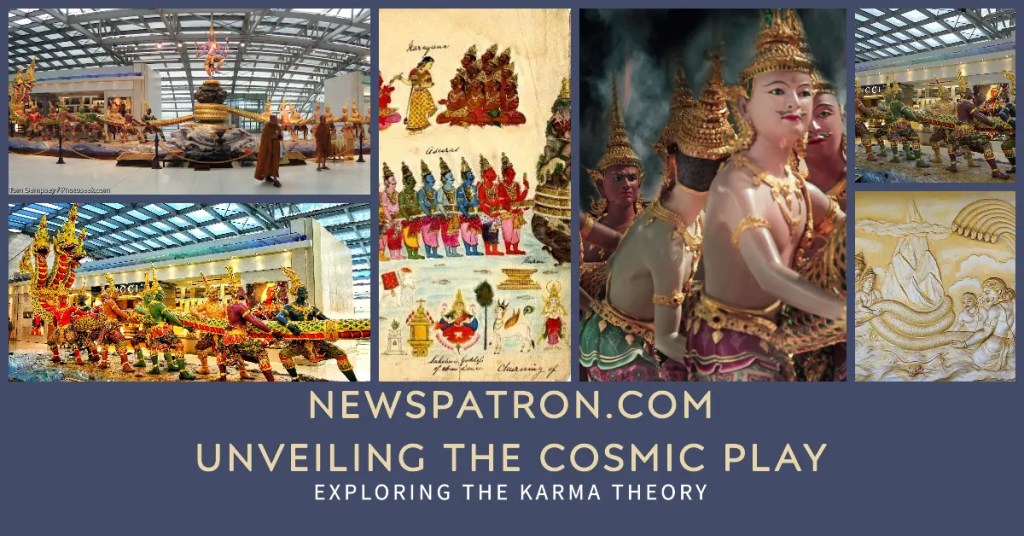


Image Courtesy – Bangkok Tourism
Check more images [Latin American Studies]
Karma, that cosmic boomerang we all secretly dread, is often misunderstood as a punitive force. But what if it’s more like a persistent GPS, constantly recalculating our route based on past choices? Buckle up, because we’re about to embark on a mind-bending journey into the heart of Karma Theory, as beautifully articulated by Pandit Sanjay Rath.
Get ready to explore the surprising link between Karma and Kurma (yes, the turtle!), and how the Earth itself plays a pivotal role in this cosmic dance. We’ll uncover the power of ancient mantras and the unyielding grip of Karma on even the mightiest deities.
Intrigued? You should be! And hey, while you’re pondering these cosmic mysteries, why not check out my YouTube channels for some breathtaking drone footage and AI-generated news? You might just find a new perspective on life, the universe, and everything in between! ? -[Drone Mitra & Newspatron]
Karma and Kurma: The Cosmic Connection ?
Have you ever noticed how similar the words “karma” and “Kurma” sound? ? Well, according to Pandit Sanjay Rath, there’s more than just a sonic resemblance here. These two words are deeply intertwined, and understanding their connection is key to unlocking the mysteries of karma.
Let’s break it down:
- Kurma means tortoise ?. Think slow and steady, just like the planet Saturn. And guess what? Saturn is often associated with our past negative actions – yep, our karma.[Hindi Video by Rahul Kaushik]
- Karma, in this context, is all about those not-so-great things we’ve done in past lives that keep us stuck in the cycle of rebirth. It’s like a cosmic boomerang, always coming back around. ?
But here’s where it gets interesting. The idea is that karma and kurma might share the same linguistic root, “kara,” which means “to do” or refers to your hand ??. Your hands are the tools you use to act in the world, and those actions create karma, whether good or bad.
Recommended Product
Magnesium Body Spray – Muscle Recovery & Lavender Scent
🛒 View on Amazon →As an Amazon Associate, we earn from qualifying purchases. Price and availability may vary.
So, karma isn’t just some abstract concept. It’s intimately connected to your actions, your choices, and the very movement of your soul through countless lifetimes.
Let that sink in for a moment… ????
Earth: The Turtle’s Back ??
Now, let’s zoom out from the individual and take a look at the grand stage where this karmic drama unfolds: our planet Earth. ? You might think of Earth as just a big ball of rock, but in the ancient wisdom of Vedic astrology, it’s something far more profound.
Picture this: Earth is like the shell of a giant turtle, Kurma, swimming through the cosmic ocean. ? From any point on the horizon, the Earth curves away, resembling the rounded back of a turtle. This is no coincidence! This curved horizon, the part of Earth we experience, is called the “Kurma Chakra.”
- Kurma Chakra is the astrological representation of Earth’s surface. It’s where all the action happens, where we live out our karmic destinies.
So, every time you step outside and feel the ground beneath your feet, you’re essentially standing on the back of this cosmic turtle. ? It’s a pretty wild thought, right? ?
But there’s more. This turtle isn’t just floating aimlessly. It’s constantly moving, carrying us along on its back. This movement symbolizes the ever-changing nature of life, the cycle of birth, death, and rebirth that’s driven by karma. ?
In essence, we’re all on this cosmic ride, thanks to Kurma. And the quality of our ride depends largely on the karma we’ve accumulated. It’s a humbling reminder that we’re all connected, not just to each other, but to the very Earth beneath our feet. ???
The Churning of Life: A Cosmic Tug-of-War ??
Okay, so we’re all riding on the back of this giant turtle, Kurma, right? ?? But what’s happening on that shell? It’s not just a leisurely cruise; it’s more like a cosmic tug-of-war. ????
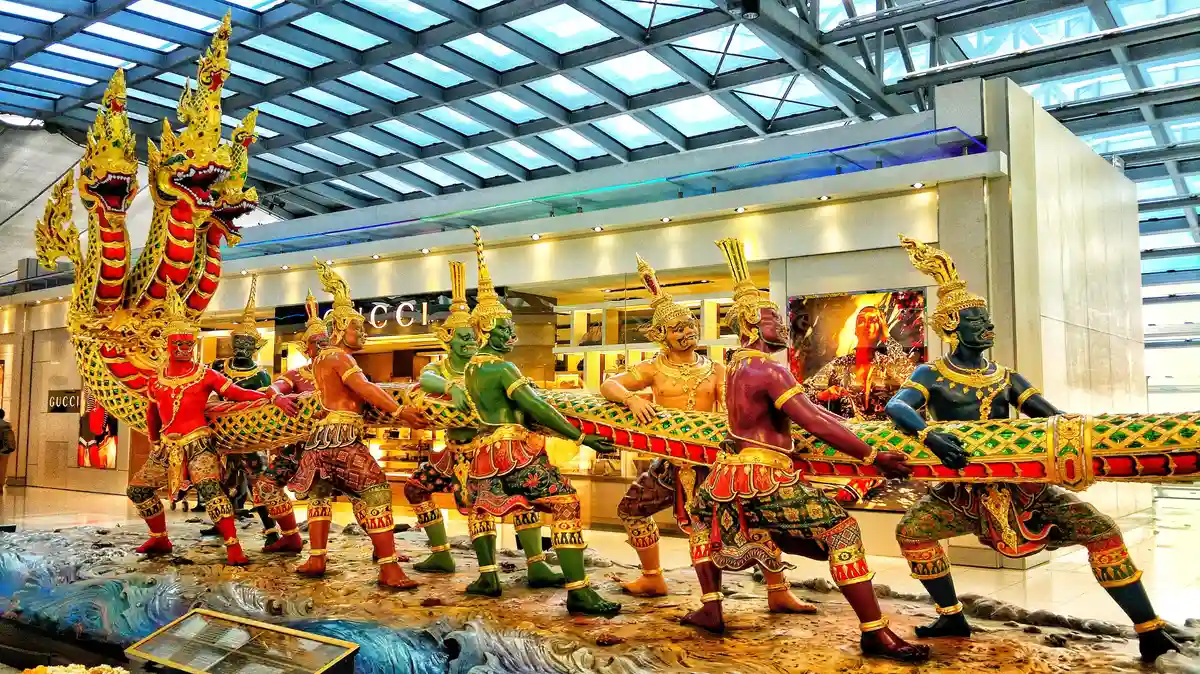
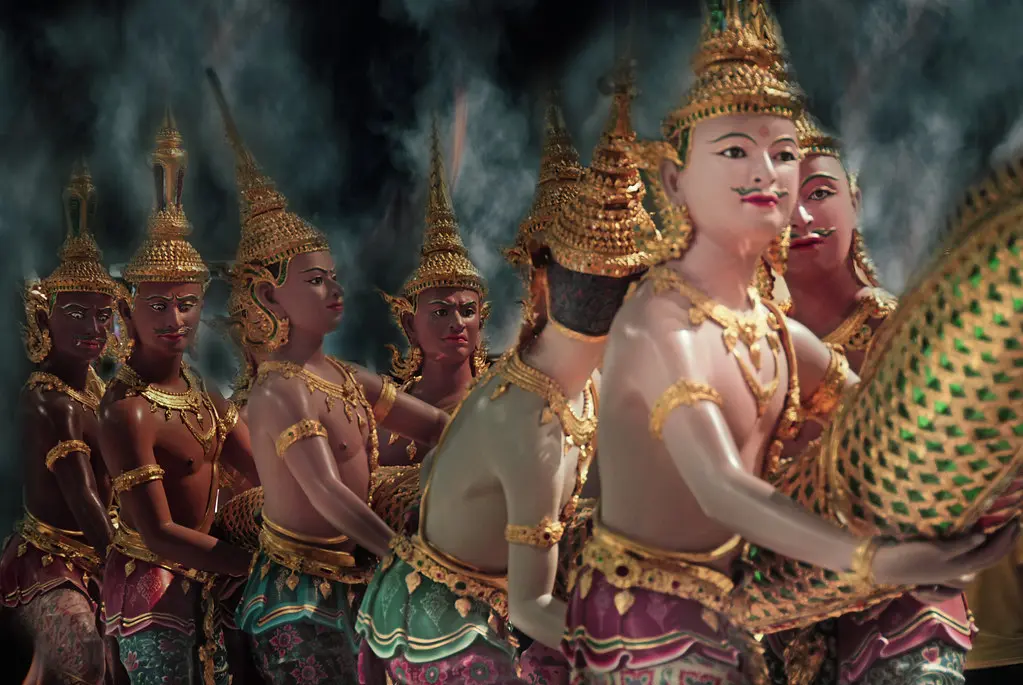
[Image from Suvarnabhumi Airport Bangkok] [See more images here]
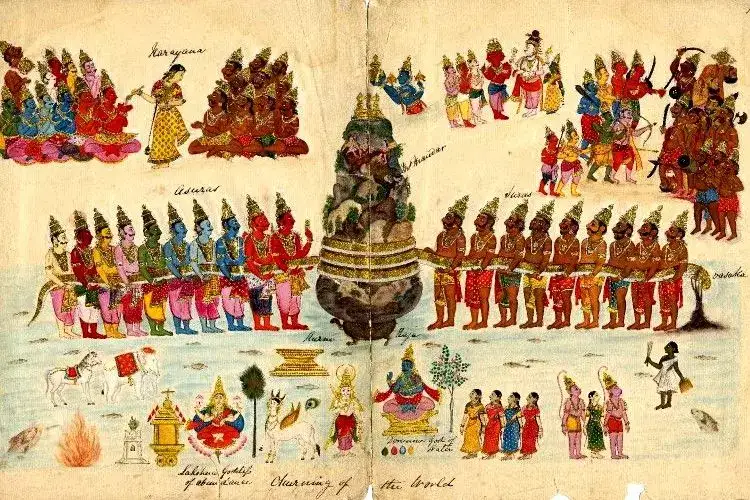
Imagine a massive mountain sitting on Kurma’s back. This mountain represents all the accumulated karma, both good and bad, from countless lifetimes. It’s a heavy burden, and it needs to be churned, or processed, in order for us to evolve and grow. ????
Now, picture a colossal snake wrapped around this mountain. This snake represents Rahu and Ketu, two shadowy planets in Vedic astrology associated with karmic challenges and obstacles. They’re the ones creating the friction, the churning, that forces us to confront our past actions.?
On one side of the mountain, we have the devas, or demigods, representing positive influences and good karma. On the other side, we have the asuras, or demons, representing negative influences and bad karma. They’re constantly pulling back and forth, vying for control over the churning process. ??
This cosmic tug-of-war is a metaphor for the constant struggle between good and evil, light and darkness, within each of us. It’s the battle between our higher selves and our lower impulses, our aspirations and our fears. ??
And guess what? You’re right in the middle of it all! Your life, your choices, your actions – they all contribute to the churning. Every decision you make, every thought you have, tips the scales one way or the other. ??
It’s intense, isn’t it? But remember, Kurma, the divine turtle, is holding it all together. He’s providing the stable foundation for this cosmic drama to unfold. And ultimately, it’s up to you to navigate the churning, to learn from your experiences, and to evolve towards a higher state of being. ??
The Power of “U”: Dissolving Negativity ?
We’ve talked about karma, the cosmic boomerang, and kurma, the turtle carrying the weight of our actions. Now, let’s introduce a secret weapon in the fight against negativity: the syllable “U.” ?(Ooo as in oops).
In the world of mantras and bija mantras (seed sounds), “U” is a powerhouse. It’s like a cosmic eraser, capable of wiping away the stains of negative karma. ?
Here’s the deal:
- When you chant “U” in a short, sharp way, it acts like a suppressor, keeping negativity at bay. It’s like putting a lid on a boiling pot, preventing things from getting out of control. ?
- But when you draw out the sound, chanting “Oooooom,” it becomes a destroyer of negativity. It’s like opening the floodgates, letting all that pent-up negativity wash away. ?
Think of it this way: “U” is like a superhero, swooping in to save the day. It helps you break free from the chains of past mistakes and create a brighter future. ?
But how does this relate to karma and kurma? Remember how we added “U” to “karma” to get “kurma”? That’s not just a linguistic quirk; it’s a symbolic transformation. By adding “U,” we’re essentially neutralizing the negativity associated with karma. We’re turning a heavy burden into a vehicle for growth and evolution. ??
So, the next time you find yourself feeling weighed down by negativity, remember the power of “U.” Chant it, meditate on it, and let it dissolve the darkness within. You might be surprised at how much lighter you feel. ?
The Protection of Vedic Knowledge: Chanting in the Darkness ??
Alright, we’ve explored the connection between karma and kurma, and we’ve discovered the power of “U” to dissolve negativity. Now, let’s shift gears and talk about something equally important: the preservation of Vedic knowledge. ?
In the face of ignorance and darkness, it’s crucial to safeguard the wisdom of the Vedas, the ancient scriptures that form the foundation of Hinduism and Vedic astrology. These texts contain profound insights into the nature of reality, the workings of the universe, and the path to self-realization. ?
But here’s the catch: Vedic knowledge is not just a collection of facts; it’s a living tradition passed down through generations. And in the Kali Yuga, the current age of darkness, this tradition is under threat. ?
So, how do we protect this precious knowledge? Pandit Sanjay Rath points to the power of mantras and bija mantras, specifically those containing the syllable “Hum” (pronounced “whom”). ?
- When you chant “Hum” in a short, rhythmic way, it acts as a shield, warding off ignorance and preserving the light of knowledge. It’s like a beacon in the darkness, guiding us towards truth and understanding. ?
- But when you chant “Hum” in a long, drawn-out manner, it becomes a weapon against darkness itself. It’s like a thunderbolt, shattering the illusions that keep us trapped in ignorance. ?
One powerful mantra for protecting Vedic knowledge is “Om Hum Nilakantaya Tha Tha. [? ? and not ? ?]” This mantra invokes Lord Shiva, the destroyer of ignorance, and calls upon his power to safeguard the Vedas. ??
By chanting this mantra and others like it, we actively participate in the preservation of Vedic knowledge. We become torchbearers, carrying the flame of wisdom through the darkness of Kali Yuga. ?
Remember, knowledge is power. And in a world filled with confusion and misinformation, the wisdom of the Vedas is more important than ever. So let’s raise our voices, chant our mantras, and keep the light shining bright! ?
Karma: The Inescapable Reality ??
We’ve journeyed through the connections between karma, kurma, and the power of mantras. Now, let’s face a stark truth: karma is inescapable. It’s the cosmic law that governs our existence, and even the mightiest deities are bound by its chains.
Pandit Sanjay Rath illustrates this point by invoking the stories of Brahma, Vishnu, and Rudra (Shiva). These are not just mythical figures; they represent the fundamental forces of creation, preservation, and transformation in the universe. ?
- Brahma, the creator, is constantly at work, fashioning worlds and beings. But why? It’s not out of choice; it’s his karma. He’s bound to the wheel of creation, endlessly spinning out new life. ?
- Vishnu, the preserver, incarnates again and again to restore balance and uphold dharma (righteousness). But each incarnation comes with its own set of challenges and sufferings. Even Vishnu, the all-powerful, must endure the consequences of karma. ????
- Rudra (Shiva), the transformer, is often depicted as an ascetic, wandering the cremation grounds with a skull in his hand. This symbolizes his role in the cycle of death and rebirth, a role dictated by karma. ?[Read more About the story of Rudra at Temple Purohit Or speak to one]
These stories remind us that no one, not even the gods, is exempt from the law of karma. It’s a humbling realization, but it also offers a sense of hope. If even the gods must face the consequences of their actions, then we too have the power to shape our own destinies through our choices. ?
Think of karma as a cosmic mirror, reflecting back to us the consequences of our actions. It’s not about punishment or reward; it’s about cause and effect. Every action we take, every thought we have, creates ripples in the fabric of reality. And those ripples eventually come back to us, shaping our experiences and influencing our future. ?
So, the next time you’re faced with a decision, remember the inescapable reality of karma. Choose wisely, act with compassion, and strive to create positive ripples that will benefit not only yourself but the entire universe. ?
Conclusion: Embracing the Karmic Journey ?
We’ve embarked on a fascinating exploration of the Karma Theory as illuminated by Pandit Sanjay Rath. We’ve delved into the profound connections between karma and kurma, the cosmic turtle that carries us through the cycles of life. We’ve witnessed the churning of our karmic burdens and the transformative power of the syllable “U.” We’ve recognized the importance of safeguarding Vedic knowledge and the inescapable reality of karma’s influence, even on the gods themselves.
But what does all this mean for us, here and now? ?
It means that we’re not just passive victims of fate. We’re active participants in the grand cosmic play, co-creating our reality with every thought, word, and deed. Karma is not a punishment; it’s a feedback loop, a constant reminder that our choices matter.
It’s easy to get caught up in the day-to-day struggles and forget the bigger picture. But by understanding the principles of karma, we can gain a deeper appreciation for the interconnectedness of all things. We can see how our actions ripple out into the world, affecting not only ourselves but also those around us. ?
So, let’s embrace the karmic journey with open hearts and minds. Let’s strive to live in alignment with dharma, making choices that promote harmony and well-being. Let’s use the power of mantras and bija mantras to dissolve negativity and cultivate inner peace. And let’s remember that even in the face of challenges, we have the power to create a brighter future for ourselves and the world. ?
As Pandit Sanjay Rath reminds us, the study of Vedanga Jyotish (Vedic astrology) is not just about predicting the future; it’s about understanding the karmic patterns that shape our lives and empowering us to make conscious choices. By aligning ourselves with the cosmic flow, we can navigate the ups and downs of life with grace and wisdom. ?
So, go forth and live your dharma! Embrace the challenges, celebrate the victories, and remember that every moment is an opportunity to create positive karma and shape your destiny. ?
And hey, if you’re still curious about all things karma and astrology, be sure to check out my YouTube channels for more insights and inspiration. Happy exploring! ?
I hope you find these videos helpful in understanding the Karma Theory better.
Here are the links to the videos:
The Visual Proof: See For Yourself
In addition to watching these videos, I also encourage you to join forums and discuss your thoughts on karma. Sharing your knowledge and experiences with others can help you gain a deeper understanding of this complex concept.
Here are some popular forums where you can discuss karma
Join the Discussion
Your opinion matters! We invite you to express your views. Join our forum, engage in thoughtful discussions, share information, and submit your content. Let’s delve into diverse perspectives together.
[bbp-single-topic id=7417]
I hope this helps!

[…] Political Accountability: Cycles of leadership challenges, public trust issues, and governance stress tests driven by karmic cycles of correction. […]