




There is a saying making rounds in plain, unvarnished language that cuts through every flag-waving headline about this story.
It goes something like this: India and Iran friendship — yes, it is strong, we accept that. But let us be honest about India’s real best friend. It is cheap oil. Wherever the price is lowest, the friendship gets strongest. Ideology comes later. At the petrol pump, the price board comes first.
Harsh? Possibly.
Wrong? Not entirely.
But before we get to the oil, let us deal with what actually happened — because the facts here are being stretched in both directions, and someone needs to straighten the record.
Iran Opened the Gate: What Actually Happened
When US-Israel strikes on Iran escalated in early March 2026, something significant occurred on the ground.
Tehran announced that all Iranian land borders were open for Indian nationals to exit. No prior clearance required. Passport at the checkpoint, and you could leave — toward Azerbaijan, toward Turkmenistan, toward Armenia, toward Turkey. For roughly 10,000 Indians stranded in Iran, including over 1,200 Kashmiri students in Tehran alone, this was not a diplomatic headline. It was a lifeline.
The Indian Embassy had already been working — relocating students to safer zones, issuing advisories, coordinating with the Ministry of External Affairs back home. EAM Jaishankar had been on calls with Gulf foreign ministers. The machinery was moving.
And in that context, Iran made its move. Borders open. No bureaucracy. Just a passport. That matters. In a war zone, with airspace closed and tension rising by the hour, that decision was consequential.
The Claim That Needs Correcting
Now here is where the story got stretched.
Recommended Product
Casio Vintage A168WA Digital Grey Unisex Watch
🛒 View on Amazon →As an Amazon Associate, we earn from qualifying purchases. Price and availability may vary.
The narrative pushed hard in several quarters was this: Iran opened its borders exclusively for Indians. Only India got this. Not the USA. Not Israel. Not NATO. Only India. Proof, we were told, of India’s unique diplomatic leverage.
This version is flattering. It is also not accurate.
Iran did not issue an India-specific policy. Multiple nationalities were facilitated through land corridors during this period — this was a broader humanitarian coordination, not a bilateral gift wrapped in tricolour. The Indian Embassy confirmed, in careful language, that the move was best described as Iran’s humanitarian gesture, done in coordination with the Indian mission — not the result of a Modi masterstroke delivered over a direct hotline to Tehran.
The distinction matters. Not because the outcome was less important — it was critically important for every Indian who made it out safely. But because inflating a coordinated diplomatic-humanitarian effort into an exclusive bilateral triumph distorts both the record and the credit.
Iran showed character under pressure. India’s diplomatic machinery performed its function. Both things can be true without turning either into a propaganda win.
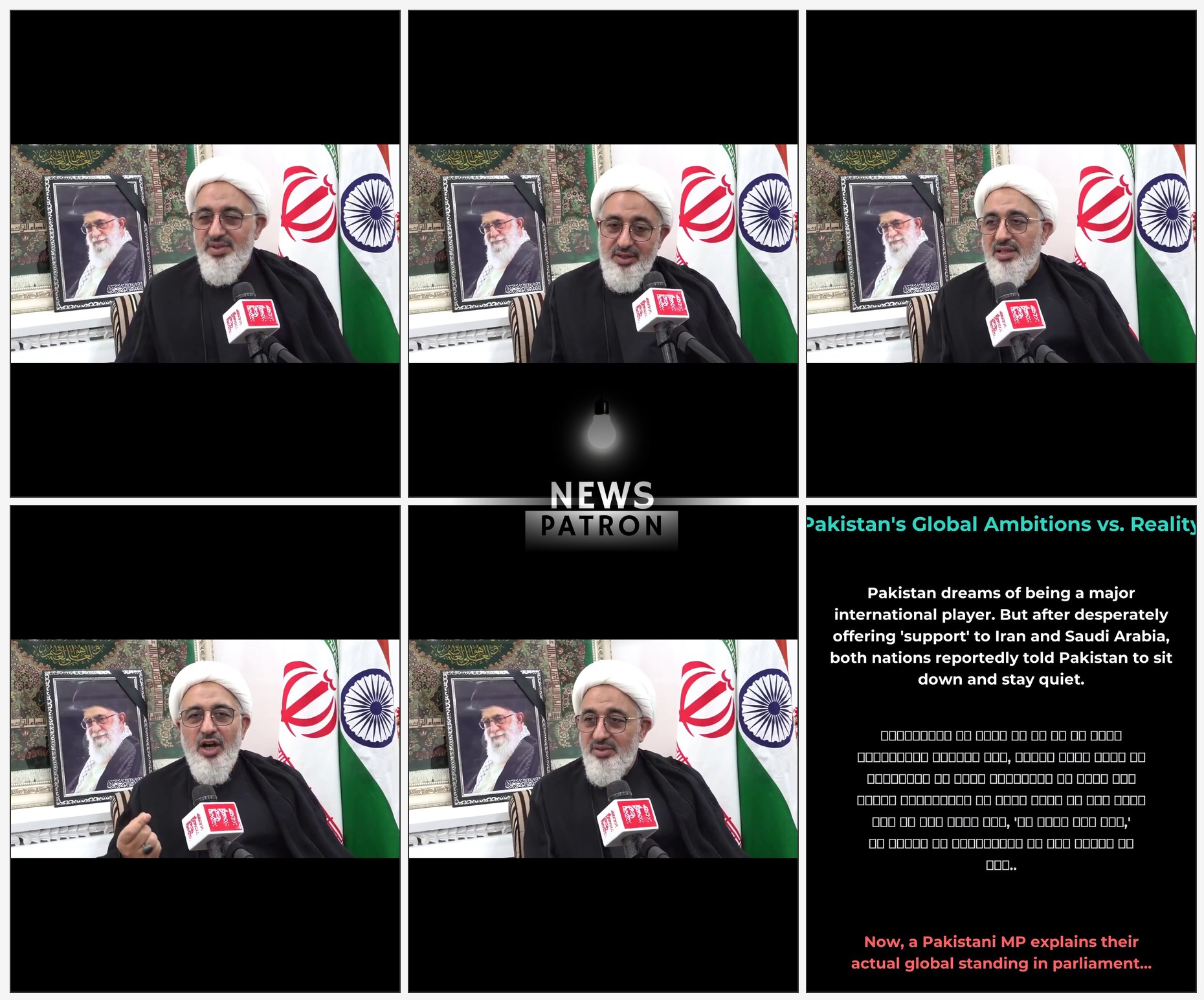
“We have strong relations with India. It cannot be damaged easily.”
— Ayatollah Abdolmajeed, Representative of Iran’s Supreme Leader in India
What the Ayatollah Said
The weight of that statement is in its timing. Iran was under bombardment. It was under pressure from multiple directions. And in that moment, the message sent toward India was one of continuity, not rupture.
That is real. That is earned over decades of non-hostile posture, trade relationship, and India’s consistent refusal to become a party to the Western sanctions architecture that has strangled Iran’s economy. India kept buying Iranian oil when others backed away. India is building the Chabahar Port — a project Iran values deeply for its own economic connectivity. The goodwill here has a foundation. It did not materialise in 48 hours because of one phone call.
The Oil Equation: The Friendship Nobody Admits To
Let us come back to the petrol pump.
India and Iran have a relationship. It is real, it is old, and it is strategically rooted. But if you want to understand why the relationship has remained durable across different Indian governments, across ideological shifts, and across enormous Western pressure — follow the oil.
Iran has historically sold crude to India at competitive prices, with flexible payment arrangements, during periods when global oil markets were painful for India’s import bill. When US sanctions tightened and many buyers backed away, India negotiated quietly and kept the supply flowing as long as it practically could.
This is not cynicism. This is statecraft.
India does not pick its energy partners based on ideology. It picks them based on price, reliability, and strategic independence. Iran offers all three — at different moments and in different proportions. The relationship is transactional in the most honest sense: both sides benefit, both sides know it, and both sides maintain it accordingly.
The question is not whether India’s friendship with Iran is partly transactional. Of course it is. The question is whether the transactional foundation has, over time, built something durable enough to withstand pressure — including the pressure of being in active US alignment on other fronts. The border opening suggests it has. For now.
The Harder Question India Is Not Asking
Here is what the celebratory headlines missed entirely.
India currently finds itself in a structurally awkward position in the Middle East. It has deepened strategic and defence ties with Israel over the past decade — technology transfers, intelligence cooperation, public gestures of solidarity. At the same time, it maintains the Iran relationship, buys discounted Russian oil (with US sanctions relief specifically negotiated for India), and avoids publicly condemning either side in the current conflict.
This is called strategic autonomy. India’s foreign policy establishment is proud of it. But strategic autonomy has a cost. It also has a limit.
The cost is that India is trusted conditionally by everyone and relied on completely by no one. When crises escalate, every side makes its own calculation about India — and India’s value in those calculations is high precisely because it has not committed. The moment it commits, the value changes.
The border opening this week was a good outcome. Indians got out safely. The embassy did its job. Iran showed grace. But the bigger picture — India sitting between two active conflict parties, maintaining ties with both, while depending on one for oil and the other for defence technology — is not a story about masterstroke diplomacy.
It is a story about a country that has bought itself optionality at the cost of clarity. And optionality is valuable, right until the moment someone forces you to choose.
The Bottom Line
Iran opened its borders. Indians got out. The relationship held under pressure. The Embassy coordinated effectively. These are the facts worth celebrating.
What they do not represent is a bilateral exclusivity that no other nation received — because that claim is not supported by what actually happened on the ground. What they do represent is a relationship built on decades of mutual interest, quiet cooperation on energy, and a shared reluctance to let external pressures determine bilateral posture.
The petrol pump joke is funny because it is true. But the deeper truth is that transactional relationships, when managed consistently and with strategic patience, become something more durable than pure ideology ever produces.
The test is whether India can hold that balance as the conflict spreads, pressure mounts, and someone eventually asks New Delhi to stop sitting on both sides of the fence. That test has not arrived yet. When it does, no amount of masterstroke branding will be sufficient.
Fact-Check: Sorting Propaganda from Reality
| Claim | Verdict | Notes |
| Iran opened borders exclusively for Indians | FALSE | Multiple nationalities facilitated; not a bilateral exclusive. |
| USA/NATO/Israel did not receive this | UNVERIFIED | Likely an Iran-wide humanitarian policy, not country-specific. |
| ~10,000 Indians stranded in Iran | VERIFIED | Per MEA and news reports. |
| 1,200+ Kashmiri students in Tehran | VERIFIED | Per Indian Embassy advisory, March 2026. |
| US sanctions relief for India on Russian oil | VERIFIED | Part of US-India energy diplomacy framework to prevent global oil shocks. |
(For a parallel analysis of how India’s interest-driven relationships operate in global systems, read our previous post on the US Pharmacy Insurance Scam — where middlemen extract value while the actual parties bear the cost. Not unlike how geopolitical arrangements work when large powers mediate smaller nations’ interests.)
